
The increasing integration of distributed energy resources (DERs) has positioned small-scale generation and distribution systems at the forefront of energy development. Microgrids, which aggregate DERs and local loads within a unified framework for energy storage, conversion, and protection, are pivotal for enabling efficient and flexible utilization of these resources. They play a fundamental role in enhancing energy efficiency and facilitating the transformation of traditional power grids. However, the inherent intermittency and uncertainty of DERs, such as photovoltaic (PV) and wind, can lead to significant power imbalances and strong disturbances within the microgrid, threatening system stability. To mitigate power fluctuations and maintain bus voltage stability, the local configuration of an energy storage system (ESS) is essential.
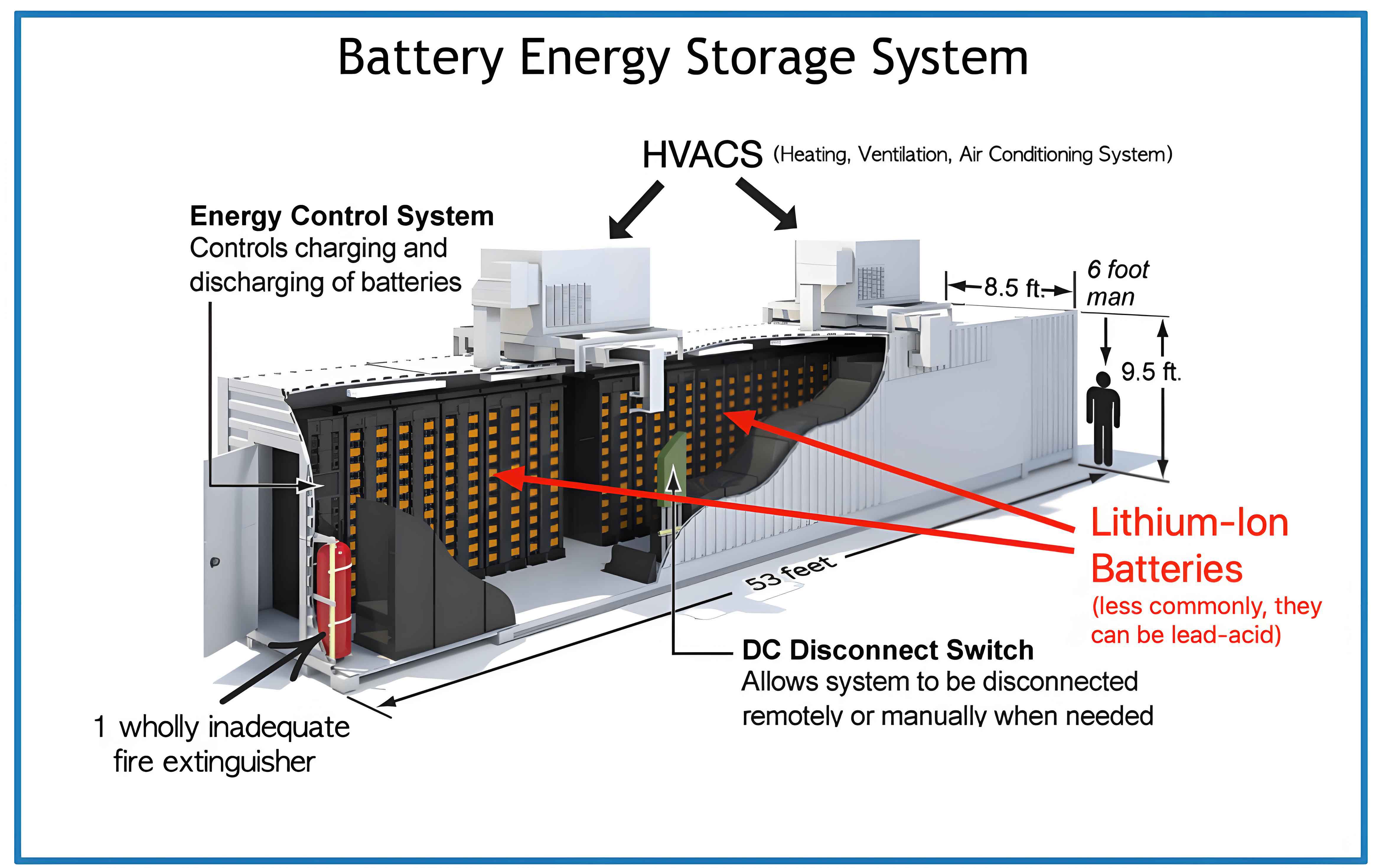
The battery energy storage system (BESS) is a core component for ensuring reliable microgrid operation. In practical applications, to meet capacity and power requirements, multiple battery energy storage units (DESUs) are often connected in parallel to the common DC bus. A critical challenge in such parallel configurations is maintaining consistency among the individual DESUs. Inconsistent states, particularly the State of Charge (SOC), can lead to undesirable situations: units with higher SOC may be over-discharged, while those with lower SOC may be under-utilized or over-charged. This inconsistency reduces the overall usable capacity of the battery energy storage system, accelerates battery degradation, and compromises system safety and reliability.
To address the power sharing and state balancing among parallel DESUs, droop control, inspired by traditional grid practices, has been widely adopted in DC microgrids. The conventional I-U droop control strategy establishes a linear relationship between the output voltage reference and the output current:
$$ U_{ref\_i} = U_{ref} – I_i R_i $$
where \( U_{ref\_i} \) is the output voltage reference for the \( i \)-th DESU, \( U_{ref} \) is the rated bus voltage, \( I_i \) is the output current, and \( R_i \) is the droop coefficient. Assuming an ideal power converter where the reference voltage equals the actual terminal voltage \( U_i \), and considering the line impedance \( R_{li} \), the current sharing ratio between two units \( i \) and \( j \) is derived from the equivalent circuit as:
$$ \frac{I_i}{I_j} = \frac{R_{lj} + R_j}{R_{li} + R_i} $$
The SOC of a battery is typically estimated using the coulomb counting method:
$$ SOC_i(t) = SOC_{0i} – \frac{1}{C_i} \int_0^t I_i(\tau) d\tau $$
where \( SOC_{0i} \) is the initial SOC and \( C_i \) is the rated capacity of the \( i \)-th DESU. Differentiating this equation reveals the relationship between the SOC change rate and the current:
$$ \frac{dSOC_i}{dt} = -\frac{I_i}{C_i} $$
Combining the current sharing ratio with the SOC dynamics, we obtain:
$$ \frac{dSOC_i/dt}{dSOC_j/dt} = \frac{(R_{lj} + R_j) C_j}{(R_{li} + R_i) C_i} $$
This equation indicates that for the SOCs of different units to converge (i.e., have equal change rates), the product of the equivalent impedance \( (R_{li} + R_i) \) and the capacity \( C_i \) must be equal for all units. Since line impedances and capacities are often fixed or unequal, the droop coefficient \( R_i \) becomes the primary adjustable parameter to achieve SOC balancing. Many advanced strategies dynamically adjust \( R_i \) based on the real-time SOC of each unit, forcing units with higher SOC to deliver more power (during discharge) or absorb less power (during charge), and vice versa, thereby driving all SOCs toward a common average value.
However, a significant limitation of these SOC-based balancing strategies lies in the reliance on the estimated SOC value itself. The SOC is an internal state variable that cannot be measured directly; it must be estimated. The coulomb counting method is susceptible to errors from initial SOC inaccuracy, current sensor drift, and capacity fade. While more advanced estimation algorithms (e.g., Kalman filters) exist, they add computational complexity and are not perfect. This estimation error directly translates into an error in the balancing control action. Furthermore, this approach often neglects terminal voltage limits, which is particularly problematic during the beginning and end of charge/discharge cycles.
Problem Analysis: The Voltage-SOC Coupling in Lithium-Ion Batteries
The core of the proposed improvement lies in understanding the intrinsic relationship between the open-circuit voltage (OCV) and the SOC of the battery, which is a fundamental characteristic of lithium-ion chemistries. For lithium iron phosphate (LFP) batteries, a prevalent choice for medium- and large-scale energy storage due to their safety and long cycle life, the OCV-SOC curve exhibits a distinct nonlinear profile.
The characteristic can be segmented into three distinct regions based on the slope \( d(OCV)/d(SOC) \):
Region 1 (High/Full & Low/Empty SOC): This corresponds to the SOC ranges of approximately 0-20% and 80-100%. In these regions, the OCV changes dramatically with small changes in SOC. The curve is steep, indicating a high sensitivity of voltage to SOC.
Region 2 (Mid SOC/Voltage Plateau): This spans the SOC range of approximately 20-80%. Here, the OCV remains relatively flat, showing only a mild increase with SOC. This is the famous voltage plateau of LFP batteries, where the voltage is a very weak indicator of the exact SOC.
During operation, the terminal voltage or closed-circuit voltage (CCV) is related to the OCV by the internal voltage drops:
$$ V_{terminal} = OCV(SOC) – I \cdot R_{internal} $$
where \( R_{internal} \) includes ohmic and polarization resistances. When the current is constant or slowly varying, the difference between CCV and OCV is relatively stable. Therefore, the trends in CCV largely reflect the trends in OCV, especially when comparing multiple similar battery packs under similar load conditions.
This characteristic leads to the central dilemma for control strategies:
- In Region 2, using voltage as the balancing variable is ineffective because packs with significantly different SOCs can have nearly identical terminal voltages. Here, SOC is the correct and necessary variable for balancing.
- In Regions 1, using SOC as the sole balancing variable can be problematic. Due to the steep OCV-SOC slope, a small absolute error in SOC estimation can correspond to a large and unacceptable error in terminal voltage. If controllers force current sharing based on inaccurate SOCs near the voltage limits, some packs may reach over-voltage or under-voltage cut-offs prematurely, while others are under-utilized. Therefore, in these regions, direct voltage control is more precise and critical for protecting the battery energy storage system.
The following table summarizes the challenges of a single-variable approach:
| Control Variable | Region 1 (0-20%, 80-100% SOC) | Region 2 (20-80% SOC) |
|---|---|---|
| Voltage (CCV) | Effective. Voltage is highly sensitive to SOC changes, providing a precise metric for preventing individual pack overcharge/over-discharge. | Ineffective. Voltage plateau makes it impossible to distinguish SOC levels, leading to poor state balancing. |
| State of Charge (SOC) | Problematic. SOC estimation errors cause large terminal voltage errors, risking safety limits and reducing consistency. | Effective. The correct state variable for ensuring long-term energy balance and consistency among packs. |
Proposed Segmented Voltage-SOC Coordinated Balancing Strategy
To overcome the limitations of single-variable approaches, this work proposes a segmented, coordinated control strategy that intelligently switches the primary balancing variable based on the operating region of the battery energy storage system. The strategy leverages the advantages of each variable where it performs best: voltage for precision and protection at the boundaries, and SOC for accurate energy balancing in the mid-range.
The core decision parameter is the average State of Charge of the entire multi-battery energy storage system, \( SOC_{ave} \):
$$ SOC_{ave} = \frac{1}{n} \sum_{i=1}^{n} SOC_i $$
where \( n \) is the number of parallel DESUs. Based on \( SOC_{ave} \), the operation is divided into three segments with corresponding control laws for adjusting the droop coefficient \( R_i \).
Segment A: High/Full & Low/Empty SOC – Voltage-Priority Balancing
Condition: \( SOC_{ave} \leq 20\% \) (discharging) or \( SOC_{ave} \geq 80\% \) (charging).
Primary Variable: Closed-Circuit Voltage (CCV).
Objective: Prioritize terminal voltage consistency to prevent any single pack from hitting its voltage limits prematurely, thereby improving overall consistency and safety.
The average CCV is calculated as \( CCV_{ave} = \frac{1}{n} \sum_{i=1}^{n} V_{terminal\_i} \). The droop coefficient for the \( i \)-th DESU is dynamically adjusted as follows:
During Discharge ( \( I_i > 0 \) ):
$$ R_i = R_{0i} \left( \frac{CCV_{ave}}{CCV_i} \right)^{r_1} $$
A pack with a lower terminal voltage \( CCV_i \) (likely at a lower SOC in this region) will receive a larger effective \( R_i \). According to the droop equation \( U_{ref\_i} = U_{ref} – I_i R_i \), this reduces its output voltage reference, causing it to deliver less current, thus protecting it from over-discharge and allowing its voltage to recover relative to others.
During Charge ( \( I_i < 0 \) ):
$$ R_i = R_{0i} \left( \frac{CCV_i}{CCV_{ave}} \right)^{r_1} $$
A pack with a higher terminal voltage \( CCV_i \) (likely at a higher SOC) will receive a larger \( R_i \). This reduces its voltage reference during charging, causing it to absorb less current, thus protecting it from overcharge.
Here, \( R_{0i} \) is a nominal droop coefficient, and \( r_1 \) is a positive “voltage balancing factor” that controls the aggressiveness of the voltage-based adjustment.
Segment B: Mid SOC / Voltage Plateau – SOC-Priority Balancing
Condition: \( 20\% < SOC_{ave} < 80\% \).
Primary Variable: State of Charge (SOC).
Objective: Achieve accurate energy balancing among all packs, driving their SOCs to converge, which maximizes the usable capacity of the overall battery energy storage system.
The droop coefficient is adjusted based on the deviation of each pack’s SOC from the average:
During Discharge ( \( I_i > 0 \) ):
$$ R_i = R_{0i} \left( \frac{SOC_{ave}}{SOC_i} \right)^{r_2} $$
A pack with a higher \( SOC_i \) will be assigned a smaller \( R_i \), causing it to deliver more current and discharge faster, aligning its SOC with the others.
During Charge ( \( I_i < 0 \) ):
$$ R_i = R_{0i} \left( \frac{SOC_i}{SOC_{ave}} \right)^{r_2} $$
A pack with a higher \( SOC_i \) gets a larger \( R_i \), causing it to absorb less charging current, slowing down its SOC increase relative to lower-SOC packs.
Here, \( r_2 \) is a positive “SOC balancing factor” that controls the speed of SOC convergence.
The complete control law is summarized in the following table:
| Operating Segment | Condition (Based on \( SOC_{ave} \)) | Primary Balancing Variable | Droop Coefficient Adjustment Law ( \( R_i \) ) |
|---|---|---|---|
| A: Voltage-Priority | \( SOC_{ave} \leq 20\% \) or \( SOC_{ave} \geq 80\% \) | Terminal Voltage (CCV) | \( R_i = \begin{cases} R_{0i} \left( \frac{CCV_{ave}}{CCV_i} \right)^{r_1}, & I_i > 0 \\ R_{0i} \left( \frac{CCV_i}{CCV_{ave}} \right)^{r_1}, & I_i < 0 \end{cases} \) |
| B: SOC-Priority | \( 20\% < SOC_{ave} < 80\% \) | State of Charge (SOC) | \( R_i = \begin{cases} R_{0i} \left( \frac{SOC_{ave}}{SOC_i} \right)^{r_2}, & I_i > 0 \\ R_{0i} \left( \frac{SOC_i}{SOC_{ave}} \right)^{r_2}, & I_i < 0 \end{cases} \) |
Simulation Verification and Analysis
To validate the effectiveness of the proposed segmented voltage-SOC balancing strategy, a simulation model of a DC photovoltaic-storage microgrid was built in MATLAB/Simulink. The model consists of a PV source, a constant power load, and three parallel lithium iron phosphate battery energy storage units (DESU1, DESU2, DESU3). Each DESU is represented using a detailed battery model. To manage simulation complexity while clearly observing the control dynamics, the rated capacity of each battery pack was scaled down to 0.1 Ah. The key system parameters are listed below:
| Parameter | Value |
|---|---|
| DC Bus Voltage | 380 V |
| Load Power | 2500 W |
| Battery Pack Rated Capacity | 0.1 Ah |
| Battery Pack Fully Charged Voltage | 221.1576 V |
| Battery Pack Cut-off Voltage | 142.5 V |
Three distinct operational scenarios were designed to test the strategy across all defined segments. The PV generation power is set via irradiance to create either a deficit (requiring battery discharge) or a surplus (enabling battery charging) relative to the fixed load.
Scenario 1: Discharge in High-SOC Region (Segment A)
Objective: Verify voltage-priority balancing when the multi-battery energy storage system’s average SOC is within 80-100%.
Initial Conditions: \( SOC_1 = 86\% \), \( SOC_2 = 90\% \), \( SOC_3 = 94\% \) (\( SOC_{ave} = 90\% \)). PV generation is insufficient, requiring discharge.
Control Mode: Voltage-based adjustment law is active (\( r_1 \) applied).
The simulation results demonstrate the controller’s action. Over a 10-second discharge period, the SOCs converge. The pack with the highest initial SOC (DESU3) experiences the largest discharge (ΔSOC ≈ -3.102%), while the pack with the lowest initial SOC (DESU1) experiences the smallest discharge (ΔSOC ≈ -1.035%). This differential current sharing, governed by terminal voltage differences, effectively pulls the SOCs closer together. Crucially, the terminal voltages of the three packs also show a converging trend, preventing any single unit from approaching the lower voltage cut-off prematurely. This validates that in the high-SOC region, using voltage as the control variable effectively balances both voltage and SOC states, enhancing the consistency of the battery energy storage system.
Scenario 2: Discharge in Mid-SOC Region (Segment B)
Objective: Verify SOC-priority balancing when the battery energy storage system’s average SOC is within the 20-80% voltage plateau.
Initial Conditions: \( SOC_1 = 67\% \), \( SOC_2 = 70\% \), \( SOC_3 = 75\% \) (\( SOC_{ave} \approx 70.7\% \)). PV generation is insufficient, requiring discharge.
Control Mode: SOC-based adjustment law is active (\( r_2 \) applied).
In this scenario, the terminal voltages of all packs remain very close to each other throughout the simulation, clearly exhibiting the voltage plateau characteristic. Despite this voltage similarity, the proposed controller successfully differentiates the packs based on their SOC. DESU3 (highest SOC) discharges the fastest (ΔSOC ≈ -2.306%), and DESU1 (lowest SOC) discharges the slowest (ΔSOC ≈ -1.773%). This results in a clear convergence of the SOC trajectories. The results confirm that during the voltage plateau, SOC is the necessary and effective variable for achieving state balance within the parallel battery energy storage system.
Scenario 3: Charge in Low-SOC Region (Segment A)
Objective: Verify voltage-priority balancing when the system’s average SOC is within 0-20%.
Initial Conditions: \( SOC_1 = 14\% \), \( SOC_2 = 16\% \), \( SOC_3 = 18\% \) (\( SOC_{ave} = 16\% \)). PV generation exceeds load demand, enabling charging.
Control Mode: Voltage-based adjustment law is active (\( r_1 \) applied).
During the charging process, the controller again uses terminal voltage as the primary indicator. The pack with the lowest initial SOC and voltage (DESU1) receives the largest charging current increment (ΔSOC ≈ +4.578%), while the pack with the highest initial state (DESU3) receives the smallest increment (ΔSOC ≈ +2.988%). This intelligent current distribution rapidly reduces the SOC spread. Simultaneously, the terminal voltages rise in a coordinated manner, preventing DESU3 from reaching the upper voltage limit too quickly. This scenario completes the validation cycle, proving the strategy’s effectiveness in the low-SOC region for safeguarding and balancing the battery energy storage system during charge.
Conclusion
This study addresses the critical challenge of maintaining state consistency in parallel-connected multi-battery energy storage systems within DC microgrids. Traditional droop control strategies that rely solely on estimated SOC for balancing face significant drawbacks, particularly large terminal voltage errors during the charge/discharge endpoints due to the steep OCV-SOC gradient of lithium iron phosphate batteries. These errors can lead to premature voltage limit triggers, underutilization of capacity, and reduced system safety.
The proposed segmented voltage-SOC coordinated balancing strategy offers a robust solution. By analyzing the intrinsic OCV-SOC characteristic curve, the operation of the battery energy storage system is partitioned into distinct segments. In the high-sensitivity regions (low and high SOC), where voltage is a precise indicator of state, terminal voltage is employed as the primary balancing variable. This ensures direct control over cell voltages, preventing violations and improving pack-to-pack consistency at the boundaries. In the mid-SOC voltage plateau region, where voltage is insensitive, the strategy seamlessly switches to using SOC as the balancing variable to achieve accurate energy balance across all units.
The strategy is implemented through an adaptive droop control framework, where the droop coefficient for each DESU is dynamically adjusted based on either the deviation of its terminal voltage or its SOC from the system average, depending on the active segment. Simulation results under three representative scenarios—discharge at high SOC, discharge at mid SOC, and charge at low SOC—comprehensively validate the strategy’s effectiveness. The results demonstrate that the multi-battery energy storage system can maintain excellent voltage consistency during endpoint operations and achieve rapid SOC convergence during the plateau, thereby significantly improving the overall consistency, usable capacity, and operational safety of the energy storage system. This work provides a practical and effective control framework for managing large-scale, parallel-connected battery energy storage systems in modern renewable-based microgrids.