
The widespread integration of renewable energy sources into the power grid has created an unprecedented demand for reliable and efficient large-scale energy storage. Among the various technologies, Lithium-ion (Li-ion) battery energy storage systems (BESS) have emerged as a dominant solution due to their high energy density, flexible configuration, and rapid response capabilities. These systems are pivotal for grid services such as peak shaving, frequency regulation, and enhancing power supply reliability. However, the performance and longevity of a BESS are intrinsically tied to a fundamental challenge: the inconsistency among its constituent battery cells.
Cell inconsistency refers to the unavoidable variations in parameters such as capacity, internal resistance, and self-discharge rate across thousands of individual cells within a system. These disparities originate from minor differences in manufacturing processes and are exacerbated during operation by factors like uneven temperature distribution within the battery enclosure and varying connection resistances. Crucially, this inconsistency is not static; it diverges progressively over the system’s operational life. In a series-connected battery string, the usable capacity and releasable energy of the entire string are constrained by the weakest cell—the one with the lowest capacity or highest resistance. During charging, the process must stop when the highest-voltage cell reaches its limit, leaving other cells undercharged. Conversely, during discharge, the process halts when the lowest-voltage cell hits its lower cut-off, trapping unused energy in the other cells. This “bucket effect” severely limits the overall utilization rate of the installed capacity in a battery energy storage system, leading to significant economic losses and reduced return on investment.
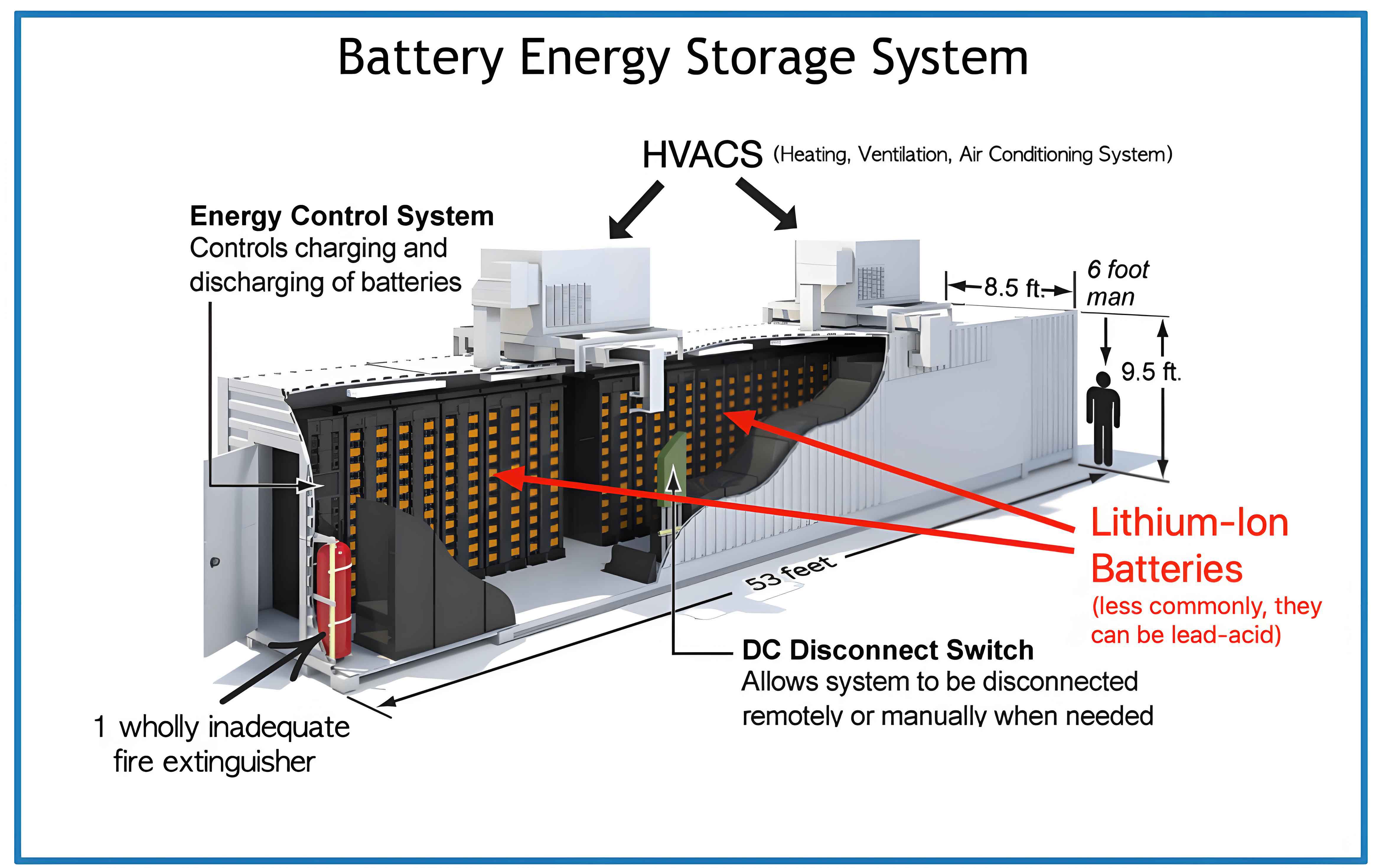
To mitigate this issue, battery equalization technology is employed. The core principle is to redistribute energy among cells, bringing their State of Charge (SOC) or terminal voltage to a consistent level. Equalization techniques are broadly categorized into passive and active methods. Passive equalization, the most common commercial approach, dissipates excess energy from higher-SOC cells as heat through resistors. While simple and low-cost, its equalization current is typically low (often below 100 mA), making the process too slow for large-capacity cells used in modern battery energy storage systems. Active equalization, on the other hand, transfers energy from higher-energy cells to lower-energy ones using capacitors, inductors, or converters. Although more efficient, traditional active equalizers often suffer from complex circuitry, high cost, and limited balancing currents (usually below 5 A), which are still insufficient for timely balancing within a typical charge/discharge cycle of a large-scale battery energy storage system.
This article delves into a novel hierarchical equalization strategy designed specifically for large-scale, high-capacity Li-ion phosphate (LFP) battery energy storage systems. The approach synergistically combines intra-module passive balancing with inter-module high-power active balancing, aiming to maximize usable energy, improve operational consistency, and enhance the overall efficiency of the battery energy storage system.
1. The Hierarchical Equalization Strategy
The proposed solution is architected to tackle inconsistency at different levels within a battery energy storage system. A typical system hierarchy consists of Cells -> Modules -> Packs -> Racks (or Clusters). Our strategy implements a two-tiered equalization scheme:
Tier 1: Intra-Module Passive Equalization (Cell Level)
Within each battery module, which comprises several cells connected in series (e.g., 16 or 18 cells), a conventional passive balancing circuit is deployed on the module’s Battery Management Unit (BMU). This circuit typically uses a switched resistor topology across each cell. Its primary role is to correct minor voltage/SOC deviations that arise from self-discharge differences or small imbalances during low-current operation. It operates continuously or during static periods, slowly bleeding off excess charge from cells that are slightly ahead of others within the same module. The governing principle for the dissipated energy for a cell \(i\) is given by:
$$E_{diss,i} = \int V_{cell,i}(t) \cdot I_{bal,i}(t) \, dt$$
where \(I_{bal,i}\) is the balancing current (typically 50-200 mA). While effective for small corrections, this method is too slow to handle the larger capacity divergences that develop between different modules over time.
Tier 2: Inter-Module Active Equalization (Module Level)
This is the core innovation. To address the major energy discrepancies that develop between entire battery modules connected in series to form a high-voltage string (cluster), a high-power Battery Module Equalizer (BME) is introduced for each module. Unlike traditional active equalizers that transfer energy, this equalizer functions as an intelligent, controllable bypass switch.
Design and Operating Principle: The BME is connected in parallel with its corresponding battery module. It contains two main switches: a series switch \(S_1\) in line with the module and a parallel bypass switch \(S_2\). A diode is installed to prevent a direct short-circuit path. The control logic is integrated with the cluster-level master BMS.
The equalization strategy is SOC-based. The BMS continuously estimates the SOC of each module in the string. During operation, the BME enables dynamic, real-time equalization:
- During Charging: As the cluster charges, if a particular module reaches 100% SOC ahead of others, its BME is activated. Switch \(S_1\) opens and switch \(S_2\) closes, effectively bypassing the fully charged module. The charging current now flows through the bypass, allowing the remaining, lower-SOC modules to continue charging until they all reach 100% SOC.
- During Discharging: Similarly, if a module’s SOC depletes to the minimum threshold (e.g., 10%) before others during discharge, it is bypassed. This prevents the weak module from being over-discharged and allows the other modules with remaining energy to continue discharging down to the same threshold.
The critical advantage is the equalization current magnitude. The bypass current \(I_{bypass}\) is the same as the main charge/discharge current \(I_{sys}\) of the battery energy storage system, which can be hundreds of Amperes. This stands in stark contrast to the milliamp-level currents of traditional equalizers. The time \(t_{eq}\) required to balance a module’s SOC difference \(\Delta SOC\) can be approximated by considering the effective current diverted:
$$t_{eq} \approx \frac{\Delta SOC \cdot C_{module}}{I_{sys}}$$
where \(C_{module}\) is the module’s capacity. For a system with 280 Ah modules and a 150 A system current, bypassing a module for just 10 minutes can compensate for a significant energy difference. This makes it possible to complete balancing within a single standard 2-hour charge or discharge cycle of the battery energy storage system, which was previously unattainable.
2. Performance Simulation via Monte Carlo Analysis
To quantify the long-term benefits of this hierarchical equalization on a battery energy storage system, a Monte Carlo simulation was conducted. This method is ideal for modeling systems with inherent variability. The simulation models the capacity degradation and divergence of 378 cells (forming 21 modules in one cluster) over a 10-year period.
Simulation Process:
1. Initial Cell Distribution: Cell capacities are randomly sampled from a statistical distribution derived from real manufacturing data, reflecting initial factory variance.
2. Random Assembly: Cells are randomly assigned to 21 modules.
3. Aging Model: An aging algorithm simulates capacity fade and increased internal resistance over time. Crucially, the model incorporates the diverging nature of aging, where initial small differences are amplified due to uneven stress during cycling.
4. System Operation: The simulation runs numerous charge-discharge cycles. For the “without equalizer” case, the cluster stops when any single cell/module hits its voltage limit. For the “with equalizer” case, the BME logic is applied, allowing modules to be bypassed.
5. Energy Calculation: The total discharge energy of the cluster for each cycle is calculated and aggregated annually.
The key output metric is the Annual Energy Boost Rate, which measures the additional energy released by the cluster equipped with BMEs compared to an otherwise identical cluster without them.
Simulation Results Summary:
The results, aggregated over multiple simulation runs, demonstrate a compelling and growing benefit over the system’s lifetime.
| Year | Annual Energy Boost (kWh) | Annual Energy Boost Rate (%) | Cumulative Energy Boost (kWh) |
|---|---|---|---|
| 1 | ~1,200 | ~1.2 | ~1,200 |
| 3 | ~2,100 | ~2.1 | ~5,400 |
| 5 | ~2,800 | ~2.9 | ~11,000 |
| 7 | ~3,094 | ~3.15 | ~17,200 |
| 10 | ~4,057 | ~5.17 | ~30,330 |
The analysis reveals two critical trends for a battery energy storage system employing this technology:
1. The energy boost rate increases over time, from approximately 1.2% in Year 1 to over 5% in Year 10. This is because cell inconsistency widens with age, making the equalizer’s role progressively more valuable.
2. The cumulative energy recovered over a decade is substantial, reaching about 30,330 kWh for a single cluster in the simulation. Averaged over 10 years, the mean annual energy boost rate is approximately 3%. This translates directly to increased revenue from energy arbitrage or grid services and a higher effective utilization of the capital invested in the battery energy storage system.
3. Experimental Validation and Field Data
Theoretical simulation was complemented by empirical testing on actual grid-connected battery energy storage systems utilizing 280 Ah LFP cells. Tests were designed to measure the immediate impact of enabling the Battery Module Equalizers on cluster performance.
A. Consistency Improvement:
The primary function of the equalizer is to ensure all modules start and end a cycle at nearly the same SOC. Field data from a full charge-discharge cycle confirms this. After a charging cycle with BMEs active, the SOC of all 18 cells in a monitored module were at 100%, with a maximum cell voltage difference of only 8 mV. Following a subsequent discharge, the SOC was uniformly between 9% and 10%, with the voltage difference maintained at 9 mV. This high level of consistency ensures that no single cell is subjected to overcharge or over-discharge stress, thereby promoting longer life for the entire battery energy storage system.
B. Direct Energy Gain Measurement:
A controlled experiment was performed on 15 separate battery clusters. Each cluster underwent a standard discharge cycle with the BMEs disabled, and the total discharge energy was recorded. The test was then repeated with the BMEs enabled, under the same conditions. The increase in discharge energy was calculated for each cluster.
| Battery Cluster ID | Discharge Energy without BME (kWh) | Discharge Energy with BME (kWh) | Energy Increase (kWh) | Energy Gain Rate (%) |
|---|---|---|---|---|
| Cluster 01 | 935.2 | 960.4 | 25.2 | 2.69 |
| Cluster 02 | 922.7 | 989.3 | 66.6 | 7.22 |
| Cluster 03 | 941.5 | 1010.8 | 69.3 | 7.36 |
| Cluster 04 | 905.8 | 1076.8 | 171.0 | 18.87 |
| Cluster 05 | 928.3 | 970.3 | 42.0 | 4.52 |
| Cluster 06 | 919.4 | 1042.1 | 122.7 | 13.35 |
| Cluster 07 | 933.1 | 1009.5 | 76.4 | 8.19 |
| Cluster 08 | 937.6 | 987.4 | 49.8 | 5.31 |
| Cluster 09 | 925.0 | 991.5 | 66.5 | 7.19 |
| Cluster 10 | 930.5 | 1015.2 | 84.7 | 9.10 |
| Cluster 11 | 908.2 | 986.6 | 78.4 | 8.63 |
| Cluster 12 | 940.1 | 1024.0 | 83.9 | 8.93 |
| Cluster 13 | 923.9 | 1001.4 | 77.5 | 8.39 |
| Cluster 14 | 915.7 | 978.4 | 62.7 | 6.85 |
| Cluster 15 | 929.8 | 953.9 | 24.1 | 2.59 |
| Average | 926.7 | 999.8 | 73.1 | 7.89 |
The results are unequivocal. The single-cycle discharge energy gain across the 15 clusters ranged from 2.59% to 18.87%, with an average gain of 7.89%. This significant immediate improvement validates the simulation model and demonstrates the tangible value of the equalizer in unlocking trapped energy within an imbalanced battery energy storage system.
C. Equalization Speed (BME Activation Time):
A critical practical concern is whether the balancing can be completed within a standard operational cycle. The activation time of the BMEs (the duration for which the bypass switch is closed) was logged during the tests. For the 15 clusters, the maximum recorded BME activation time for any single module during the cycle was 50 minutes. The average activation time across all necessary balancing events was approximately 26 minutes.
Given that a typical full charge or discharge cycle for a grid-scale battery energy storage system is 2 hours (120 minutes), this confirms that the hierarchical equalization system operates effectively within the operational timeframe. The high-power bypass enables “real-time” equalization that keeps pace with the main system current, a feat not achievable with previous-generation technologies. The relationship between the required equalization time for a traditional active balancer \(t_{eq, trad}\) and the proposed BME \(t_{eq, BME}\) highlights the difference:
$$t_{eq, trad} = \frac{\Delta SOC \cdot C_{cell}}{I_{eq, trad}} \quad \text{vs.} \quad t_{eq, BME} = \frac{\Delta SOC \cdot C_{module}}{I_{sys}}$$
Since \(I_{sys} \gg I_{eq, trad}\) (e.g., 150 A vs. 5 A), the BME completes the balancing task orders of magnitude faster, making single-cycle equilibrium a reality for the first time in large-scale battery energy storage systems.
4. Discussion and Implications for BESS Design
The integration of a hierarchical equalization system, particularly one featuring a high-power module-level bypass equalizer, represents a paradigm shift in the design and operation of lithium-ion battery energy storage systems. The implications are multifold:
Enhanced Economic Viability: The direct increase in usable energy per cycle, quantified at an average of 7.89% in field tests and a sustained ~3% annual boost in long-term simulation, directly improves the financial metrics of a battery energy storage system project. More energy can be sold or used for grid services, improving the revenue stream and shortening the payback period.
Extended System Lifetime: By ensuring all cells operate within a tight SOC band and preventing any single cell from being chronically over-stressed during charge/discharge termination, the equalization system reduces the rate of capacity divergence. This can lead to a slower overall degradation rate for the cluster, effectively extending the operational life of the battery energy storage system before it falls below a required capacity threshold.
Improved Safety and Reliability: Consistent cell voltages and SOC levels minimize the risk of individual cells operating outside their safe window. Furthermore, the ability to bypass a failing or severely underperforming module can allow the rest of the string to continue operating (perhaps at reduced power) until maintenance can be performed, enhancing the overall system availability and reliability.
Relaxed Initial Cell Matching Requirements: The powerful equalization capability can compensate for a wider initial tolerance in cell capacity during the pack assembly process for the battery energy storage system. This could potentially reduce manufacturing costs by allowing the use of cells from a broader performance bin.
5. Conclusion
Cell inconsistency remains a fundamental challenge that constrains the performance, economy, and longevity of lithium-ion battery energy storage systems. This work presents and validates a hierarchical equalization architecture as a powerful solution. By combining fine-grained intra-module passive balancing with a transformative, high-power inter-module active balancing system based on intelligent bypass switches, the strategy effectively addresses inconsistency at both the cell and module levels.
Monte Carlo simulation over a 10-year horizon predicts a sustained annual energy boost, averaging 3%, which compounds into a significant recovery of otherwise lost capacity. Practical field tests on commercial-scale battery energy storage systems provide definitive evidence, showing an average single-cycle discharge energy increase of 7.89% and demonstrating that the equalization process completes within the standard 2-hour system cycle, with an average BME activation time of only 26 minutes.
The implementation of this technology marks a critical step towards maximizing the return on investment for grid-scale energy storage. It ensures that a battery energy storage system can continuously operate at its full potential, releasing the maximum possible energy from its installed capacity throughout its service life, thereby strengthening the business case and operational reliability of energy storage as a cornerstone of the modern, renewable-powered grid.