
The global imperative to address climate change and ensure energy sustainability has led to an accelerated transition towards renewable energy sources like solar and wind power. However, the inherent intermittency and volatility of these sources pose significant challenges to grid stability. Battery energy storage systems (BESS) have emerged as a pivotal technological solution, capable of smoothing renewable output, enhancing grid flexibility, managing peak demand, and providing critical backup power. Their role is fundamental in building a resilient, efficient, and sustainable modern power grid. Among various storage technologies, electrochemical battery energy storage systems are particularly prominent due to their high energy conversion efficiency, scalability, and operational flexibility.
Recent years have witnessed rapid growth in the deployment of large-scale battery energy storage system installations. Concurrently, safety incidents related to battery failures have highlighted the paramount importance of advanced management and monitoring. Accurate modeling and real-time state estimation are the cornerstones of a high-performance Battery Management System (BMS), ensuring the safety, reliability, longevity, and optimal operation of the battery energy storage system. These techniques allow for the precise monitoring of internal states that are not directly measurable, such as State of Charge (SOC), State of Health (SOH), and Remaining Useful Life (RUL).
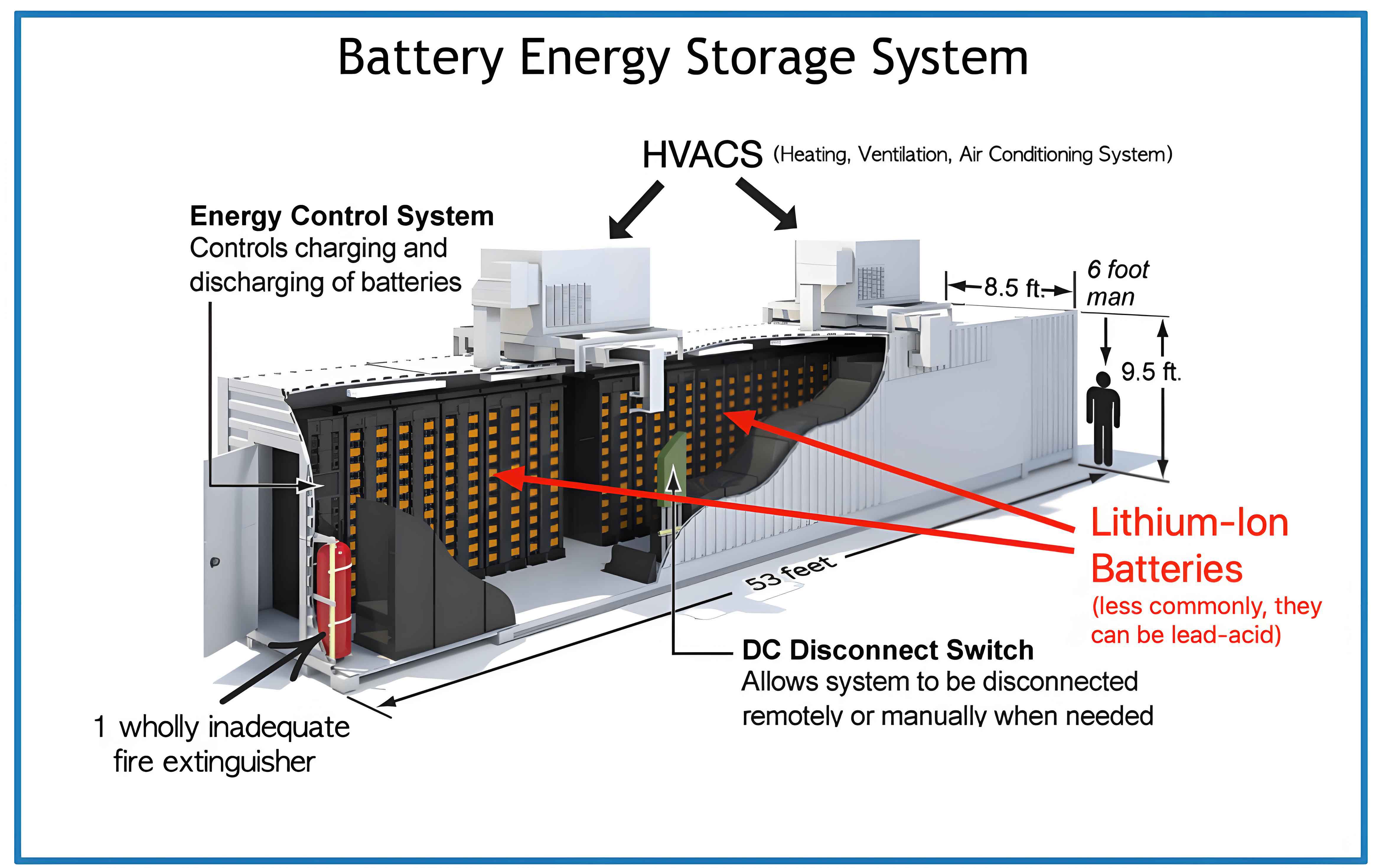
The overarching framework for BESS state estimation involves the BMS continuously collecting operational data like terminal voltage, current, and temperature. This data feeds into estimation algorithms to infer the battery’s internal states. The methodologies can be broadly categorized into three groups: experiment-based, model-based, and data-driven approaches, each with distinct advantages and limitations, as summarized later.
The key state parameters estimated include:
State of Charge (SOC): Represents the available capacity relative to the maximum usable capacity. For a battery with remaining capacity $Q_t$ and initial total capacity $Q_0$, SOC ($k_{SOC}$) is defined as:
$$k_{SOC} = \frac{Q_t}{Q_0}$$
State of Health (SOH): Indicates the battery’s degradation level compared to its fresh state. It can be defined via capacity fade or power fade (increase in internal resistance). A common definition based on capacity is:
$$k_{SOH} = \frac{Q_{m,current}}{Q_{m,initial}}$$
where $Q_{m,current}$ is the current maximum discharge capacity and $Q_{m,initial}$ is the initial capacity. Typically, a battery is considered at its End of Life (EOL) when $k_{SOH}$ reaches 80%.
Remaining Useful Life (RUL): Predicts the number of remaining charge/discharge cycles or operational time before the battery reaches its EOL threshold.
This article provides a comprehensive review of modeling and state estimation techniques for three major types of electrochemical battery energy storage systems: the mainstream Lithium-ion Battery (LIB), the mature Vanadium Redox Flow Battery (VRFB), and the rapidly developing Liquid Metal Battery (LMB).
1. Lithium-Ion Batteries: The Mainstream Workhorse
1.1. Working Principle
Lithium-ion batteries operate on the principle of reversible intercalation/de-intercalation of lithium ions between a cathode (e.g., LiFePO₄, NMC) and a graphite anode, through a liquid or solid electrolyte. During charging, Li⁺ ions de-intercalate from the cathode, travel through the electrolyte, and intercalate into the anode, while electrons flow through the external circuit. The process reverses during discharge. The high energy density, good cycle life, and declining cost have solidified their dominant position in portable electronics, electric vehicles, and grid-scale battery energy storage systems.
1.2. Modeling Approaches
Accurate models are essential for simulating behavior and enabling model-based state estimation in LIBs.
1.2.1. Electrochemical Models (EM)
These physics-based models describe the internal dynamics using coupled partial differential equations (PDEs) for charge and mass conservation.
- Pseudo-Two-Dimensional (P2D) Model: The most comprehensive model, considering spatial variations in both solid and liquid phases across the electrode thickness. It offers high fidelity but is computationally intensive.
$$ \frac{\partial c_s}{\partial t} = \frac{D_s}{r^2} \frac{\partial}{\partial r}\left(r^2 \frac{\partial c_s}{\partial r}\right) $$
$$ i_2 = -\kappa^{eff} \frac{\partial \phi_2}{\partial x} + \frac{2\kappa^{eff} RT}{F}(1-t_+^0)\frac{\partial}{\partial x}(\ln c_e) $$ - Single Particle Model (SPM): A simplified model that assumes each electrode behaves as a single spherical particle, ignoring electrolyte dynamics. It is efficient but less accurate at high currents.
- Enhanced Single Particle Model (ESPM): Extends SPM by incorporating simplified electrolyte dynamics, offering a better balance between accuracy and computational load for BMS applications.
1.2.2. Equivalent Circuit Models (ECM)
These models use electrical components (resistors, capacitors, voltage sources) to mimic the terminal voltage response, favored for real-time BMS due to their simplicity. Common structures include:
| Model | Circuit Schematic (Typical) | Characteristics |
|---|---|---|
| Rint Model | Voltage source + Series Resistor (Ro) | Very simple, ignores dynamics, low accuracy. |
| Thevenin (1st Order RC) | OCV + Ro + (Rp // Cp) | Accounts for polarization dynamics, good balance of simplicity/accuracy. |
| PNGV | Thevenin + Series Capacitor (Cb) | Includes capacity effect due to current integration. |
| n-th Order RC | OCV + Ro + n*(Rp,i // Cp,i) | Higher order dynamics, more accurate but more parameters to identify. |
1.3. State Estimation Techniques
1.3.1. SOC Estimation
- Experiment-Based: Coulomb Counting (ampere-hour integral) and Open-Circuit Voltage (OCV) lookup are simple but suffer from error accumulation and require long rest periods, respectively.
- Model-Based: This is the most prevalent approach. Filters like the Extended Kalman Filter (EKF), Unscented Kalman Filter (UKF), and their adaptive variants (AEKF, AUKF) are widely used to estimate the SOC state within an ECM or simplified EM framework. The core idea is to correct the model prediction with voltage measurement residuals.
$$ \hat{x}_{k|k-1} = f(\hat{x}_{k-1}, u_{k-1}) $$
$$ K_k = P_{k|k-1}H_k^T(H_kP_{k|k-1}H_k^T + R_k)^{-1} $$
$$ \hat{x}_{k} = \hat{x}_{k|k-1} + K_k(z_k – h(\hat{x}_{k|k-1})) $$
where $\hat{x}$ is the state vector (including SOC), $u$ is input current, $z$ is measured voltage, and $K$ is the Kalman gain. - Data-Driven: Machine learning models like Artificial Neural Networks (ANN), Support Vector Regression (SVR), and Gaussian Process Regression (GPR) learn the complex mapping from measured signals (V, I, T) directly to SOC, bypassing explicit physical modeling but requiring extensive training data.
1.3.2. SOH & RUL Estimation/Prediction
SOH is often estimated by tracking the evolution of model parameters (like internal resistance $R_0$ or capacity $Q$) identified online. RUL prediction is more challenging, typically involving projecting the identified degradation trend (e.g., capacity fade curve) to the EOL threshold. Data-driven methods are gaining traction for RUL, using features extracted from operational data (e.g., voltage curves, incremental capacity analysis) as inputs to regression or sequence models like Long Short-Term Memory (LSTM) networks.
2. Vanadium Redox Flow Batteries: The Safe and Scalable Contender
2.1. Working Principle
VRFBs store energy in liquid electrolytes containing different valence states of vanadium ions. Energy is converted electrochemically at inert carbon felt electrodes, while the electrolytes are pumped from external tanks through the cell stack. The key reaction is:
$$ \text{VO}^{2+} + 2\text{H}^+ + e^- \quad \underset{\text{charging}}{\overset{\text{discharging}}{\rightleftharpoons}} \quad \text{VO}_2^+ + \text{H}_2\text{O} \quad (\text{Positive})$$
$$ \text{V}^{3+} + e^- \quad \underset{\text{charging}}{\overset{\text{discharging}}{\rightleftharpoons}} \quad \text{V}^{2+} \quad (\text{Negative})$$
The decoupling of power (stack size) and energy (tank volume) makes VRFBs uniquely scalable and suitable for long-duration battery energy storage system applications, boasting exceptional safety and long cycle life.
2.2. Modeling Approaches
2.2.1. Electrochemical Models
VRFB models must account for electrochemical kinetics, species transport in porous electrodes and electrolytes, pump dynamics, and crossover effects. Models range from complex 2D/3D CFD models for cell design to lumped-parameter (zero-dimensional) models for system simulation and control. A typical governing equation for species conservation in a lumped tank model is:
$$ \frac{dC_{V,i}}{dt} = \frac{\dot{V}}{V_{tank}} (C_{V,i}^{cell,out} – C_{V,i}) + \frac{I}{nFV_{tank}} \nu_i $$
where $C_{V,i}$ is concentration, $\dot{V}$ is flow rate, $I$ is current, and $\nu_i$ is the stoichiometric coefficient.
2.2.2. Equivalent Circuit Models
Given system complexity, ECMs are more practical for BMS. A common VRFB ECM extends the Thevenin model to include losses from pumping power, often modeled as a current-dependent current source $I_p$ in parallel.
2.3. State Estimation Techniques
2.3.1. SOC Estimation
In VRFBs, SOC is directly related to the average oxidation state (or concentration ratio) of vanadium in the electrolytes.
- Experiment-Based: Direct methods include coulometry, OCV measurement, and spectroscopic techniques (UV-Vis) which analyze electrolyte color, offering high accuracy but often requiring additional sensors.
- Model-Based: Similar to LIBs, EKF/UKF are applied to ECMs or reduced-order electrochemical models to estimate electrolyte concentrations, from which SOC is derived. The estimation must often account for capacity decay due to crossover.
- Data-Driven: Neural networks are used to map operational parameters (current, voltage, flow rate) to SOC, especially useful for dealing with the system’s nonlinearities.
2.3.2. SOH Estimation
SOH in VRFBs primarily relates to capacity loss from electrolyte imbalance (crossover) and side reactions. Estimation often involves dual estimation of SOC and a capacity fade factor simultaneously using adaptive filters, or monitoring the long-term drift of model parameters linked to electrolyte volume/concentration.
3. Liquid Metal Batteries: The Emerging High-Power, Long-Life Technology
3.1. Working Principle
LMBs feature fully liquid electrodes (a light metal negative, e.g., Li, Na; a heavy metal/metal alloy positive, e.g., Pb-Sb, Bi) and a molten salt electrolyte, all self-stratified by density at high operating temperatures (300-700°C). During discharge, the negative metal oxidizes, dissolves into the electrolyte, and alloys with the positive electrode. This all-liquid architecture eliminates solid-state diffusion limitations and mechanical degradation, promising ultra-long cycle life (decades), high current capability, and potentially low cost for stationary battery energy storage system.
$$ \text{A (liquid)} \quad \underset{\text{charging}}{\overset{\text{discharging}}{\rightleftharpoons}} \quad \text{A}^{n+} (\text{in electrolyte}) + n e^- \quad (\text{Negative})$$
$$ \text{A}^{n+} + \text{B (liquid)} + n e^- \quad \underset{\text{charging}}{\overset{\text{discharging}}{\rightleftharpoons}} \quad \text{A(in B) alloy} \quad (\text{Positive})$$
3.2. Modeling Approaches
3.2.1. Electrochemical Models
Modeling focuses on liquid-phase diffusion, interfacial charge transfer, and the strong influence of fluid dynamics (convection, Marangoni flow) on mass transport. Multiphysics models coupling electrochemistry, heat transfer, and fluid flow are essential for design but are computationally heavy.
3.2.2. Equivalent Circuit Models
Given the early stage of BMS development for LMBs, classical ECMs like the Thevenin model are initially adopted. However, fractional-order models or models with temperature-dependent parameters are being explored to better capture their unique dynamics, especially the influence of temperature on internal resistance and OCV.
$$ Z_{CPE} = \frac{1}{Q (j\omega)^\alpha} $$
where $Z_{CPE}$ is a constant phase element impedance, often used in fractional-order ECMs for LMBs.
3.3. State Estimation and Management
3.3.1. SOC Estimation
Research is actively adapting model-based Kalman filtering techniques (EKF, UKF) to LMBs. The challenge lies in the high operating temperature and the resulting strong temperature dependence of model parameters, necessitating robust online parameter identification and potentially temperature-adaptive models.
3.3.2. System-Level Management
Beyond cell state estimation, LMB systems require sophisticated multi-scale management:
- Cell/String Balancing: Active balancing circuits are crucial due to the low voltage and high current of individual LMB cells.
- Thermal Management: Precise heating and temperature uniformity control are critical during startup and operation to maintain performance and prevent freezing.
- Safety Modeling: Multi-physics models are used to simulate failure scenarios like external short circuits to understand thermal runaway risks.
4. Comparative Analysis and Future Perspectives
4.1. Technology Comparison for Battery Energy Storage System Applications
The choice of battery technology for a battery energy storage system depends on application-specific requirements. The table below provides a high-level comparison.
| Feature | Lithium-Ion Battery (LIB) | Vanadium Redox Flow Battery (VRFB) | Liquid Metal Battery (LMB) |
|---|---|---|---|
| Energy Density | High | Low | Medium |
| Power Density | High | Medium (scalable) | Very High |
| Cycle Life | 1,000 – 5,000 cycles | > 10,000 cycles | > 20,000 cycles (projected) |
| Safety | Moderate (thermal runaway risk) | Excellent (inherently safe electrolyte) | Good (high temp operation, stable chemistry) |
| Scalability (Energy) | Moderate (cost increases linearly) | Excellent (independent tank scaling) | Good (cell scaling, simple design) |
| Response Time | Very Fast (ms) | Fast (limited by pump) | Very Fast (ms) |
| Cost Trend | Decreasing, but raw material volatility | High capex, decreasing with scale | Potentially very low (abundant materials) |
| Primary BESS Application | Frequency regulation, short-duration storage, EV integration | Long-duration storage (4+ hours), renewable firming | Long-duration storage, high-power grid services |
4.2. Summary of State Estimation Methodologies
| Method Category | Core Principle | Advantages | Disadvantages | Suitability for BESS BMS |
|---|---|---|---|---|
| Experiment-Based | Direct calculation from measured data using empirical relationships (e.g., Ah integral, OCV-SOC curve). | Simple, easy to implement, low computational cost. | Prone to error accumulation, sensitive to measurement noise and initial values, requires calibration. | Low. Useful as a backup or for initial calibration but insufficient for reliable, standalone estimation. |
| Model-Based | Uses a mathematical model (ECM/EM) and recursive filters (EKF, UKF, PF) to fuse predictions with measurements. | High accuracy, good robustness, provides real-time estimation, strong theoretical foundation. | Requires accurate model and parameter identification, computational complexity higher than experiment-based. | High. The dominant approach for robust, high-fidelity state estimation in industrial BMS. |
| Data-Driven | Learns the input-output mapping (e.g., {V,I,T} -> SOC) directly from large datasets using ML/AI models (ANN, GPR, SVM). | No need for explicit physical model, can capture complex nonlinearities, potential for very high accuracy. | Requires massive, high-quality training data covering all conditions, poor interpretability, generalization concerns. | Growing. Promising for SOH/RUL prediction and as a complement to model-based methods, especially with the rise of cloud-based data analytics for battery energy storage systems. |
4.3. Future Outlook
The evolution of battery energy storage system modeling and state estimation is driven by the need for higher safety, longer life, and lower levelized cost of storage. Key future directions include:
- Hybrid Modeling: Combining the interpretability of physics-based models with the flexibility of data-driven techniques (e.g., using neural networks to model uncertain or highly nonlinear parts of an otherwise physical model).
- Multi-State & Multi-Scale Co-Estimation: Developing algorithms that simultaneously and robustly estimate SOC, SOH, RUL, and internal temperature, while accounting for cell-to-cell variations within a large battery energy storage system pack.
- Cloud-Edge Collaborative BMS: Leveraging cloud computing for heavy-duty data analytics, lifetime prediction, and fleet learning, while keeping critical real-time estimation and control on the local BMS edge device.
- Integration with Digital Twins: Creating high-fidelity digital replicas of the physical battery energy storage system that are continuously updated with real-time data, enabling predictive maintenance, performance optimization, and “what-if” scenario analysis.
- Standardization and Benchmarking: Establishing standard testing procedures, aging datasets, and algorithm evaluation frameworks specific to grid-scale battery energy storage system applications to accelerate R&D and ensure reliability.
In conclusion, advanced modeling and state estimation are indispensable for unlocking the full potential of battery energy storage systems in the modern grid. While Lithium-ion batteries continue to benefit from mature and refined management algorithms, the unique characteristics of flow batteries and liquid metal batteries present both challenges and opportunities for innovative estimation strategies. The future lies in intelligent, adaptive, and interconnected BMS platforms that ensure these critical assets operate safely, efficiently, and for their maximum intended lifespan, thereby solidifying their role as a cornerstone of a sustainable energy future.