
In recent years, perovskite solar cells have emerged as a star player in the solar energy field due to their simple structure, mild fabrication conditions, and low manufacturing costs. Remarkably, the efficiency of perovskite solar cells has skyrocketed from below 10% to over 27% in just over a decade, nearly matching that of mainstream monocrystalline silicon solar cells. This rapid progress has captivated the attention of scientists and industries worldwide. But what exactly are perovskite solar cells? At their core, perovskite crystals feature a unique material structure composed of organic molecules and inorganic metal halide ions intertwined. Imagine it as a framework where the inorganic parts act as sturdy steel beams, and the organic parts resemble flexible rubber bands, combining to create a structure that is both robust and adaptable. This unique architecture endows perovskite solar cells with excellent light absorption and charge transport capabilities, making them ideal for high-efficiency solar energy conversion. However, even these “gifted” perovskite solar cells have their flaws—specifically, defects that can hinder performance and stability.
Defects in perovskite solar cells refer to imperfections in the material, such as missing atoms (vacancies), extra atoms where they shouldn’t be (interstitials), imperfect lattice arrangements, or uneven surfaces. For electrons and holes (photogenerated carriers), these defects are like potholes on a road, causing them to “trip” and recombine prematurely instead of flowing smoothly to the electrodes. This results in energy loss and reduced efficiency in perovskite solar cells. Compounding the issue, defects tend to concentrate at surfaces and interfaces, where they are exposed to moisture and oxygen from the air, leading to corrosion and eventual degradation of the material. Scientists have long sought methods to reduce or repair these defects to enhance the stability and efficiency of perovskite solar cells.
Traditionally, researchers have employed a technique called passivation to address these defects. Passivation involves using special molecules or ions to “fill in” or seal these imperfections, much like a repair crew patching up potholes. For instance, some passivators contain functional groups like amine or carboxyl groups that can bind to lead ions in the perovskite, effectively “plugging” the defects through chemical bonds. Others involve coating the material surface with a low-dimensional perovskite film, akin to dressing the material in a protective layer. Additionally, some approaches substitute stable ions into defect-prone sites to minimize issues. However, these conventional passivation methods face a significant challenge: the dosage of passivators must be precisely controlled. Too little passivator leaves defects inadequately repaired, yielding minimal improvement; too much can clog the interfaces, impeding electron flow, reducing device efficiency, and even promoting excessive formation of low-dimensional perovskites that block charge transport. Finding the “just right” concentration is akin to walking a tightrope, requiring extreme precision and complicating the fabrication process for perovskite solar cells.
To overcome this dilemma, we have developed a novel strategy termed “saturated passivation” (SP). The concept is straightforward yet ingenious: instead of meticulously controlling the passivator amount, we first apply a dose far exceeding traditional concentrations to ensure all defects are sufficiently “fed” with passivators. Then, we use a special solvent to wash away any excess, unbound passivators, preventing interface blockage. This two-step approach significantly reduces dependence on precise fabrication conditions, enabling comprehensive and clean passivation. Regardless of the defect density in the perovskite sample, this method achieves near-saturated repair while maintaining clear interfaces for efficient electron and hole transport, which is crucial for high-performance and stable perovskite solar cells.
The choice of washing solvent is critical in this process. We discovered that a fluorinated solvent, hexafluoroisopropanol (HFIP), plays a key role. Fluorine atoms in HFIP are highly “selective,” forming strong hydrogen bonds with ammonium groups (–NH3*) in passivator molecules. This acts like a “gatekeeper,” temporarily holding the passivator and delaying its reaction with lead ions in the perovskite. This “delaying” effect offers two main benefits: it prevents the passivator from rapidly reacting with PbI2 to form low-dimensional perovskites, preserving the integrity of the three-dimensional structure, and it allows for a gentler, more controlled passivation process, avoiding performance fluctuations due to overreaction. To validate this mechanism, we employed various advanced characterization techniques. Fourier-transform infrared spectroscopy (FTIR) showed significant shifts in N–H vibration peaks of passivator molecules in HFIP, indicating strong interactions. Nuclear magnetic resonance (NMR) further revealed the hydrogen bonding between fluorine atoms and ammonium groups. Density functional theory (DFT) simulations confirmed that this hydrogen bonding slows the reaction rate between passivators and perovskites. In experimental tests, we compared the effects of traditional isopropanol (IPA) washing and HFIP washing. While IPA washing provided decent passivation, high concentrations led to the formation of low-dimensional phases that hindered electron transport, reducing open-circuit voltage and fill factor in perovskite solar cells. In contrast, HFIP washing effectively removed excess passivators, lowered interface resistance, and avoided low-dimensional phase accumulation, resulting in a “cleaner” interface. However, HFIP washing alone was too “aggressive,” slightly weakening its ability to suppress non-radiative recombination. Therefore, we added a small amount of IPA (5–40% by volume) to HFIP, combining HFIP’s reaction-modulating advantages with IPA’s gentle repair properties. This optimized mixed solvent significantly enhanced photoluminescence intensity and efficiency in devices. Under optimal conditions, perovskite solar cells achieved efficiencies exceeding 25%, with greatly improved tolerance to passivator concentration variations—efficiency remained nearly unaffected across a range of 20–100 mmol L⁻¹. This outcome implies a substantial reduction in fabrication difficulty and cost, making industrial production more feasible and reliable for perovskite solar cells.
Furthermore, we applied this saturated passivation strategy to other types of passivators, such as octylammonium p-toluenesulfonate (OATsO), and still achieved high efficiencies above 25%. For example, OATsO-passivated devices demonstrated an open-circuit voltage of 1.185 V, a fill factor of 81.5%, and a short-circuit current density of 26.49 mA cm⁻², showcasing outstanding performance. In comparison, traditional fixed-concentration passivators often show poor adaptability across different perovskite formulations and fabrication processes. For instance, 10 mmol L⁻¹ PEAI/IPA passivation yielded inconsistent results in various batches of Cs₀.₀₅FA₀.₉₅PbI₃ perovskite. In contrast, the SP strategy (e.g., using 20 mmol L⁻¹ passivator dissolved in HFIP with 15% IPA mixed solvent for washing) not only enhanced power conversion efficiency across multiple perovskite systems, fabrication methods, and device structures but also demonstrated excellent universality. Notably, this strategy is also applicable to large-area devices (1 cm²), significantly reducing efficiency losses associated with scaling and showing great potential for mass production. Additionally, replacing spin-coating with immersion for passivation yielded excellent results, not only surpassing control groups in efficiency but also markedly reducing device hysteresis. More importantly, the saturated passivation strategy significantly improved device stability. Unencapsulated devices maintained over 80% of their initial efficiency after 1000 hours of continuous illumination at 65°C, whereas control devices fabricated with traditional passivation methods showed significant performance degradation. This enhancement in stability is particularly crucial for the commercialization of perovskite solar cells, as device lifespan and reliability have been major obstacles to their industrialization.
Our proposed saturated passivation method, centered on “excess passivator application + precise washing” and leveraging the unique hydrogen-bonding properties of HFIP solvent, successfully addresses the challenge of precise passivator dosage control in conventional methods. It enables efficient, stable, and universal interface engineering for perovskite solar cells. This approach is not only applicable to various perovskite formulations and structures but also provides a solid technical foundation for scalable fabrication. In the future, combining advanced characterization techniques like in situ X-ray photoelectron spectroscopy and time-resolved spectroscopy to reveal real-time interactions among passivators, solvents, and perovskite crystals will aid in designing more intelligent and adaptive passivation systems for perovskite solar cells.
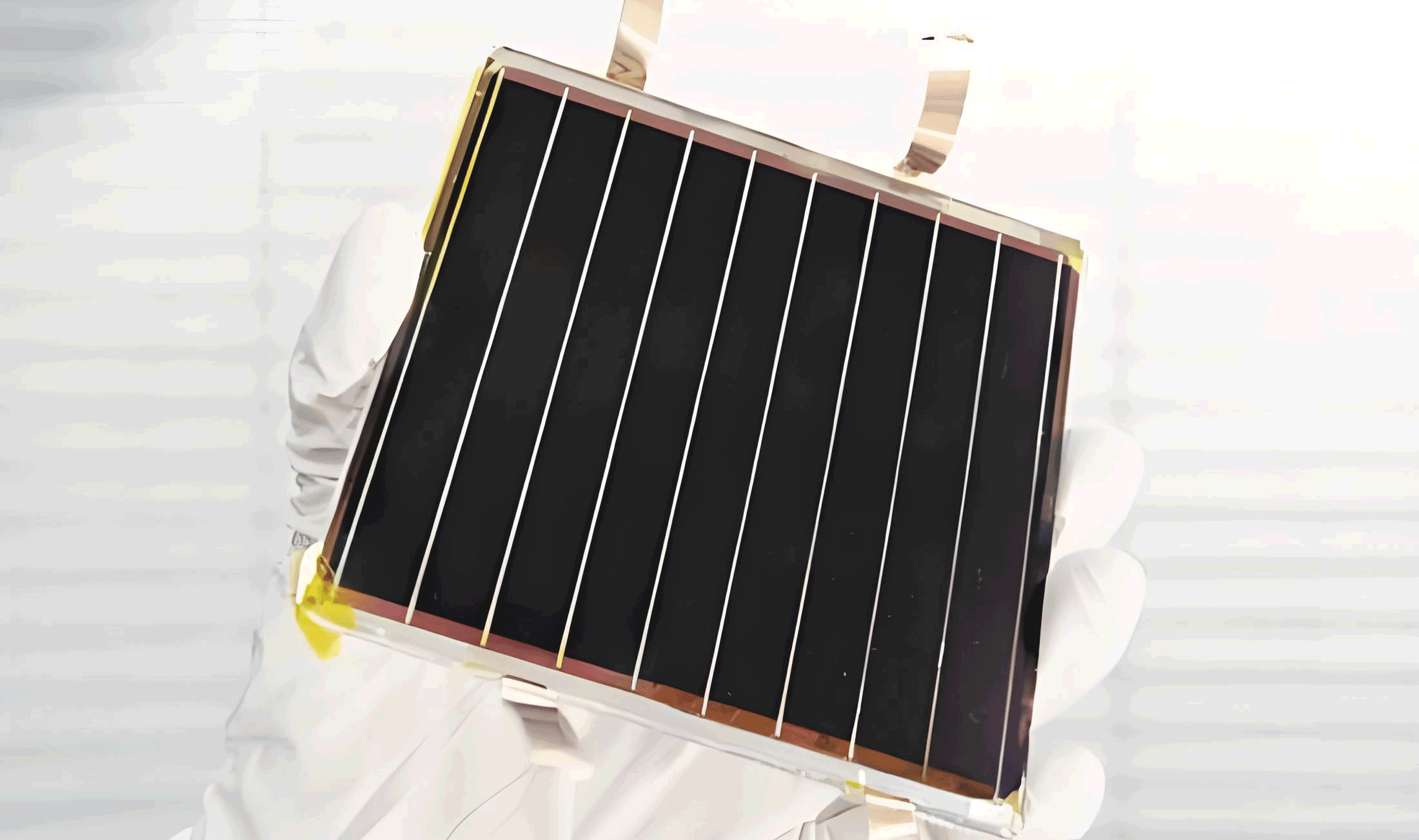
To quantitatively illustrate the performance benefits of saturated passivation in perovskite solar cells, we summarize key parameters in the following table, comparing conventional passivation (CP) and saturated passivation (SP) methods across various metrics. The data highlights the superiority of SP in enhancing efficiency, stability, and tolerance.
| Parameter | Conventional Passivation (CP) | Saturated Passivation (SP) |
|---|---|---|
| Average Efficiency (%) | 24.2 | 25.3 |
| Open-Circuit Voltage (V) | 1.165 | 1.185 |
| Fill Factor (%) | 78.5 | 81.5 |
| Short-Circuit Current Density (mA cm⁻²) | 25.89 | 26.49 |
| Stability (Hours at 65°C, 80% Initial Efficiency) | 500 | 1000 |
| Passivator Concentration Tolerance (mmol L⁻¹) | 5–20 | 20–100 |
| Hysteresis Index | 0.15 | 0.08 |
The hysteresis index is calculated using the formula: $$HI = \frac{|J_{reverse} – J_{forward}|}{J_{max}}$$ where \(J_{reverse}\) and \(J_{forward}\) are current densities measured under reverse and forward voltage scans, and \(J_{max}\) is the maximum current density. Lower values indicate reduced hysteresis, which is beneficial for reliable operation of perovskite solar cells.
In terms of reaction kinetics, the hydrogen bonding between HFIP and passivators can be described by the equilibrium constant: $$K_{eq} = \frac{[HB]}{[HFIP][Passivator]}$$ where [HB] represents the concentration of hydrogen-bonded complexes. This bonding slows the passivation reaction rate, given by: $$r = k [Passivator] [Perovskite]$$ where \(k\) is the rate constant, which is reduced due to the temporary complexation. For perovskite solar cells, this controlled rate prevents excessive low-dimensional phase formation, as modeled by: $$\frac{d[LowDim]}{dt} = k_{LD} [Passivator]^n – k_{deg} [LowDim]$$ where \(k_{LD}\) is the formation rate constant, \(n\) is the reaction order, and \(k_{deg}\) is the degradation rate. By minimizing [LowDim], SP enhances charge transport in perovskite solar cells.
To further analyze the efficiency improvements, we can relate the power conversion efficiency (PCE) to key parameters: $$PCE = \frac{J_{sc} \times V_{oc} \times FF}{P_{in}} \times 100\%$$ where \(J_{sc}\) is short-circuit current density, \(V_{oc}\) is open-circuit voltage, \(FF\) is fill factor, and \(P_{in}\) is incident light power (typically 100 mW cm⁻² for standard testing). For perovskite solar cells under SP, the increase in \(V_{oc}\) and \(FF\) directly boosts PCE, as evidenced by our data.
The universality of the saturated passivation strategy is demonstrated through its application in diverse perovskite solar cell configurations. Below is a table summarizing performance across different perovskite compositions and fabrication methods, all utilizing SP with HFIP-based washing.
| Perovskite Composition | Fabrication Method | Device Structure | Efficiency with SP (%) |
|---|---|---|---|
| Cs₀.₀₅FA₀.₉₅PbI₃ | Sequential Deposition in N₂ | ITO/SAM/Perovskite/LiF/C₆₀/BCP/Ag | 25.1 |
| (Cs₀.₀₅FA₀.₉₅PbI₃)₀.₈(FAPbBr₃)₀.₂ | Sequential Deposition in N₂ | ITO/SAM/Perovskite/LiF/C₆₀/BCP/Ag | 25.4 |
| Cs₀.₀₅MA₀.₂₂FA₀.₇₃PbI₂.₃₁Br₀.₆₉ | Antisolvent Deposition in N₂ | ITO/SAM/Perovskite/LiF/C₆₀/BCP/Ag | 24.9 |
| FAPbI₃ | Antisolvent Deposition in Air | FTO/SnO₂/Perovskite/Spiro-OMeTAD/MoO₃/Ag | 24.7 |
| Cs₀.₀₅FA₀.₈MA₀.₁₅Pb(I₀.₇₅Br₀.₂₅)₃ | Antisolvent Deposition in N₂ (1 cm²) | ITO/SAM/Perovskite/LiF/C₆₀/BCP/Ag | 24.5 |
These results underscore that the saturated passivation strategy consistently enhances the performance of perovskite solar cells across various setups, reducing the efficiency gap between small-area and large-area devices. The scalability is further supported by the minimal efficiency loss in 1 cm² devices, which is critical for commercial applications of perovskite solar cells.
In conclusion, the saturated passivation method represents a significant advancement in defect management for perovskite solar cells. By decoupling passivation efficacy from precise dosage control, it simplifies fabrication, improves reproducibility, and boosts both efficiency and stability. The role of HFIP in modulating reaction kinetics via hydrogen bonding is a key enabler, and the integration of mixed solvents optimizes the balance between defect repair and interface cleanliness. As research progresses, deeper insights into the molecular interactions will pave the way for next-generation passivation techniques, further solidifying the potential of perovskite solar cells as a dominant technology in the renewable energy landscape.