
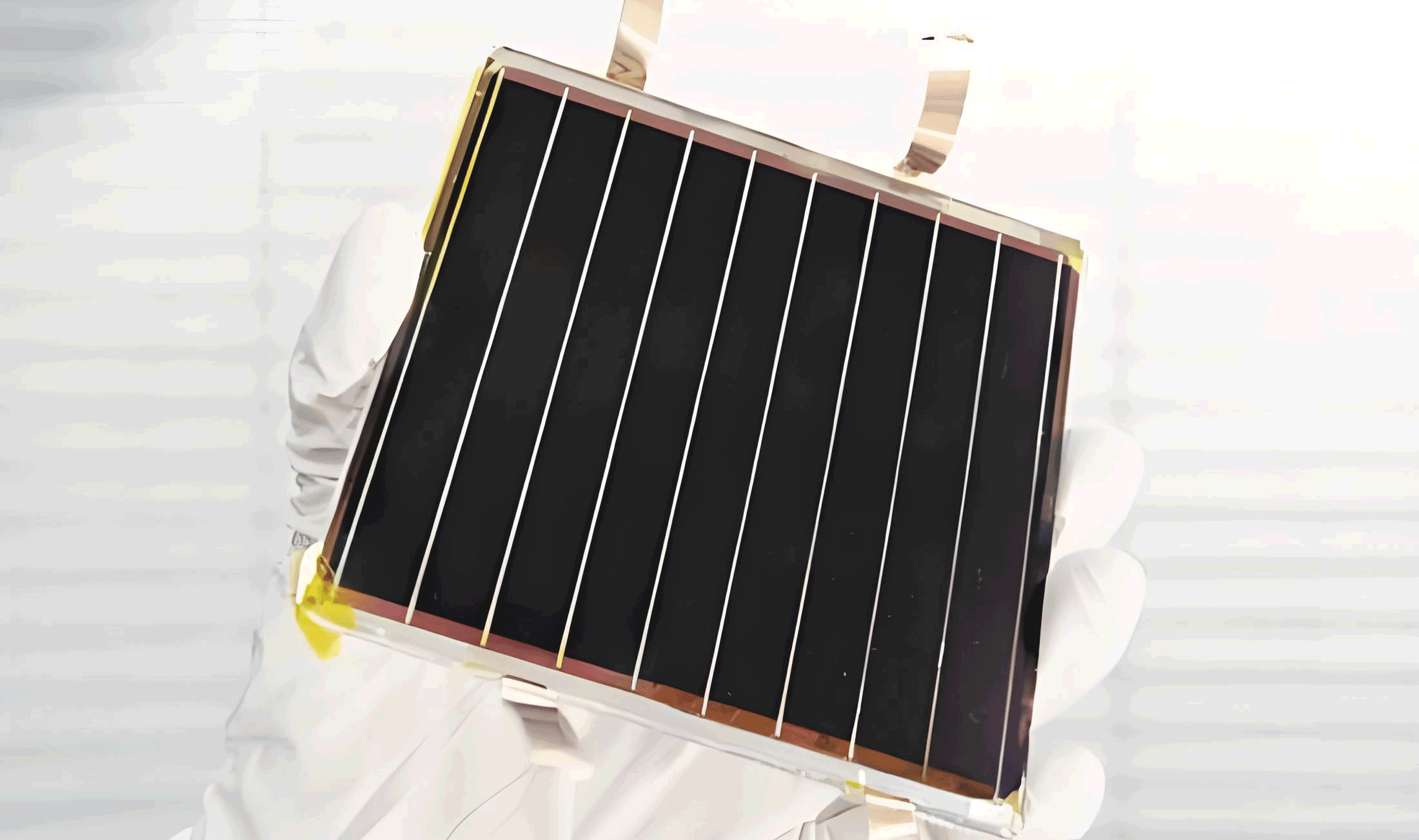
In recent years, the rapid development of photovoltaic technology has positioned perovskite solar cells as a focal point of research due to their exceptional performance. Within just over a decade, the photoelectric conversion efficiency (PCE) of perovskite solar cells has surged from an initial 3.8% to an impressive 26.7%. However, the commercial application of organic-inorganic hybrid perovskite solar cells is hindered by their relatively poor stability. Organic cations are susceptible to degradation under environmental factors such as moisture, temperature, and ultraviolet radiation, leading to irreversible decomposition and reduced device longevity. Replacing organic cations with inorganic alternatives like Cs+ can significantly mitigate these issues, sparking widespread interest in the study of all-inorganic perovskite solar cells known for their moisture and heat resistance.
Among inorganic perovskite materials like CsPbI3, CsPbBr3, and CsPbIBr2, CsPbBr3 stands out due to its wider bandgap (approximately 2.3 eV), which results in high open-circuit voltage (VOC) and excellent stability in ambient air. These properties make CsPbBr3 perovskite solar cells highly promising for practical applications. A key challenge in enhancing the PCE of CsPbBr3-based devices lies in fabricating high-quality CsPbBr3 perovskite films. The significant disparity in solubility between PbBr2 and CsBr in common organic solvents complicates the preparation of uniform films via one-step spin-coating methods. Traditional multi-step spin-coating processes, often employing toxic and volatile solvents like methanol, are tedious and environmentally unfriendly. Moreover, the low solubility of CsBr in methanol necessitates multiple coating and annealing cycles (often seven or more), leading to rapid solvent evaporation, incomplete reaction between PbBr2 and CsBr, and insufficient crystal growth time. This often results in defective films, compromised device performance, and the presence of undesirable phases like CsPb2Br5 and Cs4PbBr6, which adversely affect light absorption and charge carrier transport.
To address these challenges, we explore the use of water as a green solvent for dissolving CsBr. This approach aims to enhance CsBr solubility, simplify the fabrication process of CsPbBr3 perovskite solar cells, and improve film quality. By optimizing parameters such as CsBr aqueous solution mass concentration, residence time, and annealing temperature, we achieve high-performance devices. The optimal conditions involve spin-coating a 250 mg·mL⁻¹ CsBr aqueous solution once, with a residence time of 5 seconds and annealing at 250 °C. Under these conditions, the best-performing perovskite solar cell exhibits a VOC of 1.64 V, a short-circuit current density (JSC) of 7.55 mA·cm⁻², a fill factor (FF) of 85.46%, and a PCE of 10.51%. This method not only streamlines the fabrication process but also reduces environmental impact, representing a significant step forward in the development of efficient and stable all-inorganic perovskite solar cells.
The general formula for perovskite materials is ABX3, where A is a cation, B is a metal ion, and X is a halide. For all-inorganic perovskites like CsPbBr3, the crystal structure and optoelectronic properties are crucial for solar cell applications. The PCE of a perovskite solar cell can be expressed as:
$$PCE = \frac{J_{SC} \times V_{OC} \times FF}{P_{in}}$$
where \(P_{in}\) is the incident light power density. The VOC is influenced by the bandgap and non-radiative recombination, while JSC depends on light absorption and charge collection efficiency. The FF relates to the series and shunt resistances within the device.
In the context of CsPbBr3 perovskite solar cells, the film formation process involves the reaction between PbBr2 and CsBr. The solubility of CsBr in water is significantly higher than in methanol, allowing for more concentrated solutions and fewer processing steps. This reduces the likelihood of incomplete conversion and secondary phase formation. The reaction can be represented as:
$$PbBr_2 + CsBr \rightarrow CsPbBr_3$$
However, uncontrolled conditions can lead to byproducts such as CsPb2Br5 or Cs4PbBr6, which detrimentally affect device performance. Thus, optimizing processing parameters is essential to promote the formation of pure CsPbBr3 phases.
We systematically investigated the effects of CsBr aqueous solution mass concentration, residence time during spin-coating, and annealing temperature on the photovoltaic parameters of CsPbBr3 perovskite solar cells. The device structure used in this study is FTO/TiO2/CsPbBr3/carbon, which is a common architecture for hole-transport-layer-free all-inorganic perovskite solar cells. The fabrication process involves depositing a compact TiO2 electron transport layer, followed by sequential spin-coating of PbBr2 and CsBr solutions, and finally annealing to form the CsPbBr3 perovskite layer. The carbon electrode is then applied via screen printing.
The current density-voltage (J-V) characteristics were measured under standard illumination conditions to evaluate device performance. The key parameters extracted from the J-V curves include VOC, JSC, FF, and PCE. To ensure reproducibility, multiple devices were fabricated and tested for each condition. The tables below summarize the photovoltaic parameters under different experimental conditions.
| Mass Concentration (mg·mL⁻¹) | VOC (V) | JSC (mA·cm⁻²) | FF (%) | PCE (%) |
|---|---|---|---|---|
| 200 | 1.53 | 7.04 | 75.50 | 8.15 |
| 250 | 1.60 | 7.51 | 81.37 | 9.78 |
| 300 | 1.51 | 6.94 | 80.08 | 8.64 |
The data indicate that the mass concentration of the CsBr aqueous solution significantly impacts device performance. At 250 mg·mL⁻¹, the highest PCE of 9.78% is achieved, attributed to optimal film coverage and reduced defect density. Lower concentrations may lead to incomplete conversion of PbBr2 to CsPbBr3, while higher concentrations could result in excessive CsBr, promoting secondary phase formation.
| Residence Time (s) | VOC (V) | JSC (mA·cm⁻²) | FF (%) | PCE (%) |
|---|---|---|---|---|
| 0 | 1.49 | 6.38 | 80.83 | 8.24 |
| 5 | 1.65 | 7.48 | 80.96 | 10.07 |
| 10 | 1.52 | 7.21 | 79.06 | 9.33 |
The residence time, defined as the duration between dispensing the CsBr solution and initiating spin-coating, influences the interaction between CsBr and the underlying PbBr2 layer. A residence time of 5 seconds yields the best performance, with a PCE of 10.07%. This allows sufficient time for the precursors to react without causing excessive dissolution of the perovskite layer by water, which can occur at longer residence times.
| Annealing Temperature (°C) | VOC (V) | JSC (mA·cm⁻²) | FF (%) | PCE (%) |
|---|---|---|---|---|
| 200 | 1.54 | 5.37 | 82.50 | 7.04 |
| 250 | 1.63 | 7.14 | 82.00 | 9.66 |
| 300 | 1.54 | 7.08 | 80.60 | 9.08 |
Annealing temperature plays a critical role in crystallizing the CsPbBr3 perovskite layer. At 250 °C, the highest VOC and JSC are observed, leading to a PCE of 9.66%. Lower temperatures may not fully convert the precursors or remove solvents, while higher temperatures could induce decomposition or increase defect density.
Comparing the use of water versus methanol as the solvent for CsBr, devices fabricated with CsBr aqueous solution outperform those with CsBr methanol solution. The table below highlights the difference:
| Solvent for CsBr | VOC (V) | JSC (mA·cm⁻²) | FF (%) | PCE (%) |
|---|---|---|---|---|
| Methanol | 1.47 | 7.46 | 74.47 | 8.08 |
| Water | 1.64 | 7.55 | 85.46 | 10.51 |
The superior performance with water is attributed to improved film quality, better crystallinity, and reduced defect density. The use of water as a green solvent not only enhances environmental sustainability but also simplifies the fabrication process by reducing the number of required coating steps.
To further understand the enhanced performance, we characterized the morphology and structure of the CsPbBr3 films. Scanning electron microscopy (SEM) reveals that films prepared with CsBr aqueous solution exhibit larger grain sizes and more uniform coverage compared to those with methanol solution. The average grain size increases from approximately 926.70 nm with methanol to 1,234.32 nm with water. Larger grains reduce grain boundary area, minimizing non-radiative recombination sites and improving charge carrier transport. This directly contributes to higher JSC and FF in the perovskite solar cells.
X-ray diffraction (XRD) analysis confirms the formation of the CsPbBr3 perovskite phase with high crystallinity. Films from CsBr aqueous solution show intense peaks corresponding to the (010), (002), and (112) planes of CsPbBr3, while peaks associated with secondary phases like CsPb2Br5 are suppressed. The XRD patterns indicate that water as a solvent promotes the growth of pure CsPbBr3 crystals, enhancing the optoelectronic properties of the film. The crystallite size can be estimated using the Scherrer equation:
$$D = \frac{K \lambda}{\beta \cos \theta}$$
where \(D\) is the crystallite size, \(K\) is the shape factor, \(\lambda\) is the X-ray wavelength, \(\beta\) is the full width at half maximum, and \(\theta\) is the Bragg angle. Larger crystallite sizes correlate with improved charge carrier mobility and reduced recombination.
Electrochemical impedance spectroscopy (EIS) was employed to investigate the charge transport and recombination dynamics in the perovskite solar cells. The Nyquist plots exhibit a single semicircle, which can be modeled with an equivalent circuit consisting of a series resistance (Rs) and a recombination resistance (Rrec) in parallel with a capacitance (Crec). The Rrec values are higher for devices with CsBr aqueous solution (9,317.70 Ω) compared to those with methanol (4,350.38 Ω), indicating suppressed charge carrier recombination at the perovskite/electron transport layer interface. This reduction in non-radiative recombination contributes to the higher VOC and FF observed in these devices.
Transient photocurrent (TPC) and transient photovoltage (TPV) measurements provide insights into the charge carrier extraction and recombination lifetimes. The TPC decay time decreases from 120.27 µs for methanol-based devices to 71.17 µs for water-based devices, suggesting faster charge extraction. This is beneficial for reducing charge accumulation and improving JSC. The TPV decay time increases from 2.40 ms to 3.39 ms with water, indicating longer carrier recombination lifetimes and reduced defect-assisted recombination. These findings align with the enhanced photovoltaic performance of perovskite solar cells fabricated using the aqueous solvent method.
The dependence of JSC and VOC on light intensity (I) was analyzed to elucidate the recombination mechanisms. The relationship between JSC and I can be described by:
$$J_{SC} \propto I^\alpha$$
where \(\alpha\) is a factor related to bimolecular recombination. For devices with CsBr aqueous solution, \(\alpha\) is closer to 1 (0.98) compared to methanol-based devices (0.95), indicating suppressed bimolecular recombination. Similarly, the VOC versus ln(I) plot yields the diode ideality factor (n), which reflects the dominance of trap-assisted recombination. The n value decreases from 2.02 for methanol to 1.96 for water, confirming reduced trap density and non-radiative recombination losses.
To assess reproducibility, we fabricated and characterized 25 devices for each solvent condition. The statistical distribution of photovoltaic parameters is summarized in the table below:
| Solvent | Average VOC (V) | Average JSC (mA·cm⁻²) | Average FF (%) | Average PCE (%) |
|---|---|---|---|---|
| Methanol | 1.44 | 5.44 | 72.20 | 5.81 |
| Water | 1.59 | 7.27 | 82.10 | 9.32 |
The data demonstrate that devices with CsBr aqueous solution exhibit higher average performance and smaller parameter variations, highlighting the reliability of this fabrication approach.
Long-term stability is a critical factor for perovskite solar cells. We monitored the normalized photovoltaic parameters of devices stored in ambient conditions (25 °C, 50% relative humidity) over 7 days. Devices with CsBr aqueous solution retain over 60% of their initial PCE, while methanol-based devices degrade to below 20%. The improved stability is attributed to the higher quality and purity of the CsPbBr3 films, which are less prone to moisture-induced degradation. The use of water as a solvent avoids the introduction of volatile organic compounds, further enhancing device longevity.
In conclusion, the aqueous solvent method for fabricating CsPbBr3 perovskite solar cells offers a green, efficient, and scalable alternative to traditional approaches. By optimizing the CsBr solution mass concentration, residence time, and annealing temperature, we achieve high-performance devices with a champion PCE of 10.51%. The enhanced film quality, reduced defect density, and suppressed recombination contribute to the superior photovoltaic parameters. This work underscores the potential of environmentally friendly solvents in advancing the development of stable and efficient all-inorganic perovskite solar cells. Future research could focus on further optimizing the aqueous processing parameters and exploring its applicability to other perovskite compositions.
The fundamental physics of perovskite solar cells involves light absorption, charge generation, transport, and collection. The absorption coefficient \(\alpha\) of CsPbBr3 is high in the visible region, leading to efficient photon capture. The generated excitons dissociate into free carriers at the interfaces, and the electrons and holes are transported to the respective electrodes. The charge carrier dynamics can be described by the continuity equation and Poisson’s equation. For instance, the electron current density \(J_n\) is given by:
$$J_n = q \mu_n n E + q D_n \frac{dn}{dx}$$
where \(q\) is the elementary charge, \(\mu_n\) is the electron mobility, \(n\) is the electron density, \(E\) is the electric field, and \(D_n\) is the electron diffusion coefficient. Similar equations apply for holes. Minimizing recombination losses is essential for achieving high FF and VOC in perovskite solar cells.
In summary, the aqueous solvent strategy for CsPbBr3 perovskite solar cells not only improves device performance but also aligns with green chemistry principles. The optimized fabrication conditions result in films with large grains, high crystallinity, and minimal secondary phases, leading to efficient charge transport and reduced recombination. This approach paves the way for the mass production of low-cost, high-efficiency, and stable perovskite solar cells, contributing to the advancement of renewable energy technologies.