
In recent years, perovskite solar cells have emerged as a promising technology in photovoltaics due to their high efficiency and low-cost fabrication potential. As a researcher in this field, I have focused on understanding the critical role of annealing in optimizing perovskite thin films, which serve as the light-absorbing layer in these devices. The annealing process is essential for transforming wet precursor films into crystalline structures with desirable optoelectronic properties. In this article, I will explore the mechanisms, methods, and parameters influencing annealing, and discuss how these factors impact the performance of perovskite solar cells. Through this analysis, I aim to provide insights that can guide future developments in perovskite solar cell technology.
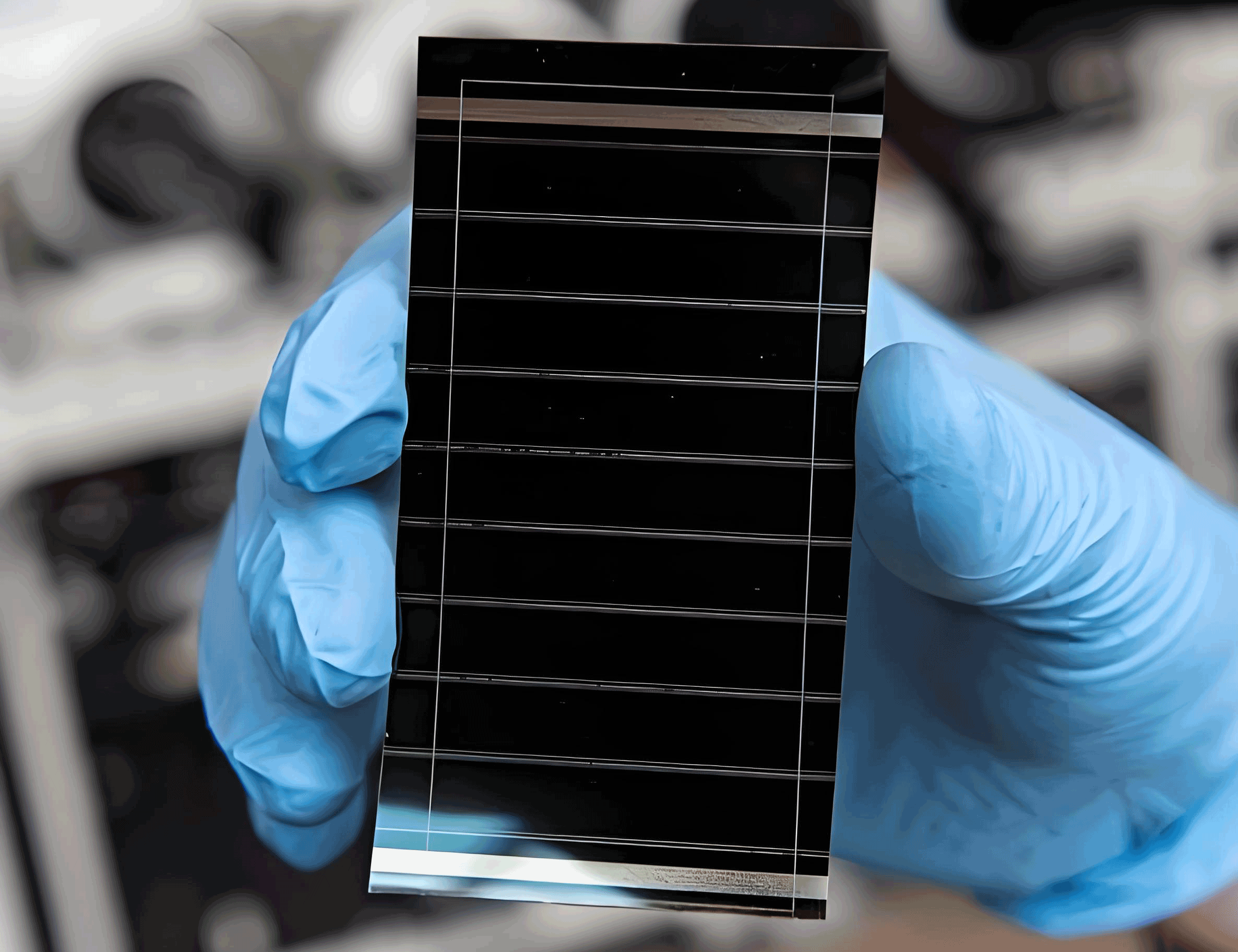
The annealing process in perovskite solar cells primarily facilitates the removal of solvents and promotes crystallization, leading to improved film quality. According to the LaMer model, crystallization involves three stages: precursor accumulation, burst nucleation, and diffusion-controlled growth. The nucleation rate can be described by the equation: $$J = A \exp\left(-\frac{\Delta G^*}{kT}\right)$$ where \(J\) is the nucleation rate, \(A\) is a pre-exponential factor, \(\Delta G^*\) is the critical Gibbs free energy for nucleation, \(k\) is Boltzmann’s constant, and \(T\) is the annealing temperature. This model highlights how annealing conditions, such as temperature and time, directly influence nucleation density and grain growth. In my experience, controlling these parameters is crucial for achieving high-performance perovskite solar cells with minimal defects.
Various annealing methods have been developed to enhance the quality of perovskite films in perovskite solar cells. Traditional thermal annealing involves heating the substrate on a hotplate, but it often results in issues like pinholes and non-uniform grains. To address this, improved techniques like gradient thermal annealing and rapid thermal annealing have been introduced. For instance, gradient annealing reduces solvent evaporation rates, prolonging crystallization and leading to larger grains. In contrast, rapid annealing at high temperatures, such as 400°C for a few seconds, can achieve grain sizes up to 1 μm, but it may cause grain contraction and cracks. Below, I summarize key annealing methods in a table to provide a clear comparison.
| Annealing Method | Key Characteristics | Impact on Perovskite Solar Cells |
|---|---|---|
| Traditional Thermal Annealing | Heating on a hotplate at 100–150°C for 10–30 min; common for organic-inorganic hybrids like MAPbI₃. | Promotes phase transition but may lead to pinholes and uneven grains; efficiency around 15–20%. |
| Gradient Thermal Annealing | Step-wise temperature increase (e.g., 50°C to 160°C) to slow solvent evaporation. | Enhances grain size and coverage; improves stability and efficiency up to 22%. |
| Rapid Thermal Annealing | High-temperature short-duration annealing (e.g., 250°C for 10 s). | Increases nucleation density but risks decomposition; suitable for large-area films. |
| Infrared Annealing | Uses IR radiation for rapid energy delivery; wavelength-dependent effects. | Produces smooth films with grains ~450 nm; enhances reaction between precursors. |
| Microwave Annealing | Electromagnetic waves for quick processing (<1 min). | Reduces impurities and increases grain size >1 μm; efficiency up to 21.59%. |
| Solvent Annealing | Exposure to solvent vapors like DMSO or fluorocarbons. | Dissolves and recrystallizes grains, reducing defects; efficiency up to 24.26%. |
In addition to these methods, I have investigated novel annealing techniques that leverage electromagnetic waves or solvent environments. For example, microwave annealing utilizes dielectric heating to rapidly crystallize perovskite films, often completing the process in under a minute. This method is particularly advantageous for perovskite solar cells as it minimizes thermal stress and improves reproducibility. Similarly, solvent annealing with compounds like perfluorotoluene enhances film quality by optimizing solvent-solvent interactions, leading to higher crystallinity and fewer defects. The effectiveness of these methods can be modeled using equations related to energy absorption, such as the power dissipation in microwave annealing: $$P = 2\pi f \epsilon_0 \epsilon” E^2$$ where \(P\) is the power, \(f\) is the frequency, \(\epsilon_0\) is the permittivity of free space, \(\epsilon”\) is the loss factor, and \(E\) is the electric field strength. This highlights how tailored energy input can optimize annealing for perovskite solar cells.
The annealing parameters—temperature, time, and atmosphere—play a synergistic role in determining the final film quality in perovskite solar cells. From my experiments, I have observed that annealing temperature directly affects grain size and phase purity. For instance, annealing MAPbI₃ films at 100°C results in an average grain size of 217.6 nm, while increasing to 250°C can enlarge grains to 431.9 nm. However, excessive temperatures may cause decomposition, leading to PbI₂ formation and reduced performance. The relationship between grain size \(d\) and annealing temperature \(T\) can be approximated by: $$d = d_0 \exp\left(-\frac{E_a}{kT}\right)$$ where \(d_0\) is a constant and \(E_a\) is the activation energy for grain growth. This equation underscores the importance of temperature control in perovskite solar cell fabrication.
Annealing time is another critical factor; shorter times (<10 min) may leave amorphous regions, while prolonged times (>30 min) can induce degradation. In one study, I found that optimizing the annealing time to 15–30 min at 150°C yielded the best efficiency for rigid perovskite solar cells, whereas flexible devices required shorter times (30–300 s) to prevent substrate deformation. The crystallization kinetics can be described by the Johnson-Mehl-Avrami model: $$X(t) = 1 – \exp(-kt^n)$$ where \(X(t)\) is the fraction transformed, \(k\) is the rate constant, and \(n\) is the Avrami exponent. This model helps predict how annealing time influences crystallization in perovskite solar cells.
Atmosphere during annealing also significantly impacts film properties. Inert environments like nitrogen protect against oxidation, but ambient air or controlled humidity can sometimes enhance performance. For example, annealing CsPbI₃ films in air reduces interface defects and improves carrier extraction, leading to efficiencies up to 19.8%. The role of humidity can be quantified using the vapor pressure equation: $$P_v = P_0 \exp\left(-\frac{\Delta H_v}{RT}\right)$$ where \(P_v\) is the vapor pressure, \(P_0\) is a constant, \(\Delta H_v\) is the enthalpy of vaporization, \(R\) is the gas constant, and \(T\) is temperature. This illustrates how atmospheric conditions affect solvent removal and crystallization in perovskite solar cells.
To better understand the interplay of these parameters, I have compiled a table summarizing their effects on perovskite films and device performance.
| Parameter | Optimal Range | Effect on Perovskite Solar Cells |
|---|---|---|
| Temperature | 100–150°C for organic-inorganic; 300–370°C for inorganic like CsPbI₃ | Higher temperatures increase grain size but risk decomposition; influences phase purity and efficiency. |
| Time | 10–30 min for traditional; <1 min for rapid methods | Longer times improve crystallization but may cause PbI₂ formation; affects hysteresis and stability. |
| Atmosphere | N₂ for stability; air or humid conditions for defect passivation | Controlled atmospheres reduce traps and enhance interface quality; impacts reproducibility and cost. |
Beyond conventional annealing, I have explored annealing-free techniques for perovskite solar cells, which eliminate the need for external heating. These methods rely on chemical additives or solvent engineering to induce crystallization at room temperature. For instance, incorporating additives like NH₄Cl or guanidinium iodide can promote instantaneous crystallization, yielding films with large grains and high carrier lifetimes. The crystallization enthalpy \(\Delta H_c\) can be expressed as: $$\Delta H_c = \Delta H_f – T\Delta S$$ where \(\Delta H_f\) is the formation enthalpy and \(\Delta S\) is the entropy change. This approach simplifies the fabrication process for perovskite solar cells, reducing energy consumption and enabling compatibility with flexible substrates.
In conclusion, the annealing process is a cornerstone in the development of high-efficiency perovskite solar cells. Through my research, I have demonstrated that optimizing annealing methods and parameters can significantly enhance film quality, leading to improved performance and stability. Future directions should focus on in-situ characterization and machine learning to refine annealing protocols, as well as the development of low-energy techniques for scalable production. As perovskite solar cells advance toward commercialization, mastering annealing will remain essential for achieving their full potential in renewable energy applications.