
As a researcher in the field of photovoltaics, I have witnessed the rapid evolution of perovskite solar cells, which have emerged as a promising alternative to traditional silicon-based solar cells due to their high power conversion efficiency (PCE) and low-cost fabrication. However, the commercialization of perovskite solar cells is hindered by their susceptibility to environmental factors such as moisture and oxygen, which lead to degradation. Encapsulation technology plays a critical role in enhancing the stability and longevity of perovskite solar cells. In this article, I will explore the recent advancements in encapsulation techniques, categorizing them into three main types: glass-glass encapsulation, inorganic material encapsulation, and organic composite material encapsulation. I will discuss the methods, advantages, and developments of each approach, incorporating tables and equations to summarize key findings. The keyword ‘perovskite solar cell’ will be frequently emphasized to highlight its importance. Additionally, I will address the challenges and future prospects of these encapsulation strategies, providing insights for the development of stable and efficient perovskite solar cells.
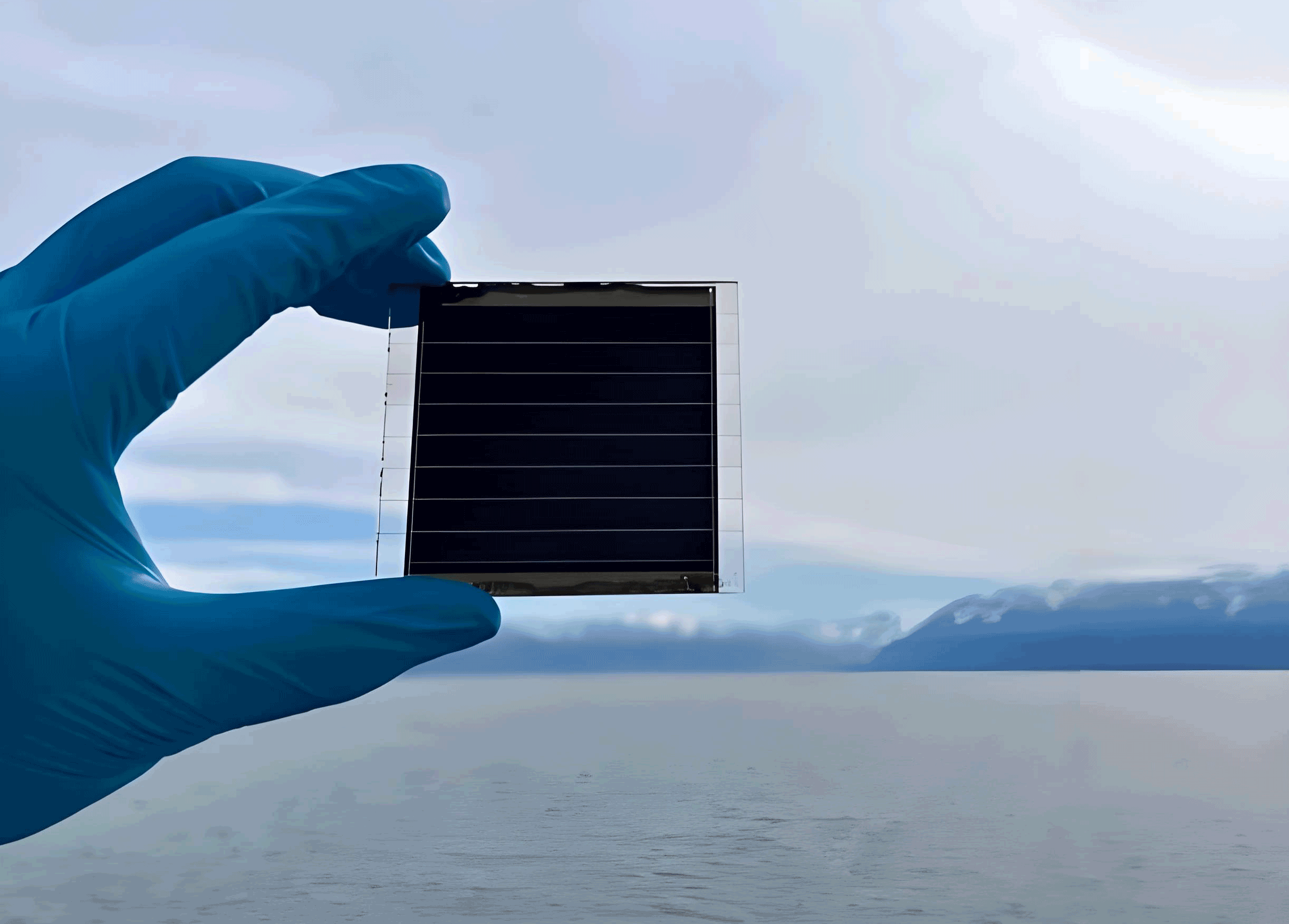
Since the inception of perovskite solar cells in 2009, their PCE has skyrocketed from 3.8% to over 26%, making them competitive with conventional solar technologies. Despite this progress, the instability of perovskite materials under humid and oxidative conditions remains a major obstacle. Encapsulation serves as a protective barrier, preventing the ingress of water vapor and oxygen, thereby mitigating decomposition reactions. For instance, the reversible decomposition of perovskite materials can be represented by the equation: $$ \text{MAPbI}_3 \rightleftharpoons \text{PbI}_2 + \text{CH}_3\text{NH}_2 + \text{HI} $$ where moisture accelerates the forward reaction, leading to irreversible damage. Thus, effective encapsulation is essential to maintain the performance of perovskite solar cells over time. In the following sections, I will delve into the specifics of each encapsulation category, using data from recent studies to illustrate their impact on stability and efficiency.
Glass-Glass Encapsulation
Glass-glass encapsulation is a widely used technique in photovoltaic devices, offering robust protection against environmental stressors. This method can be subdivided into two types: glass-adhesive encapsulation and glass-polymer-glass encapsulation. In glass-adhesive encapsulation, materials such as ultraviolet (UV)-curable epoxy resins, butyl rubber, and silicone gels are applied as sealants to bond glass cover plates to the perovskite solar cell. These adhesives create a hermetic seal that impedes the penetration of moisture and oxygen. For example, UV-curable epoxy resins provide excellent stability, but they can cause photodegradation of the perovskite layer due to high-energy UV radiation and exothermic reactions during curing. Alternatively, butyl rubber, with its low curing temperature and chemical inertness, has demonstrated superior performance in thermal cycling tests, maintaining PCE after 200 cycles between -40°C and 85°C. In glass-polymer-glass encapsulation, thermoplastic polymers like ethylene-vinyl acetate (EVA), epoxy resins, thermoplastic polyurethane (TPU), polyolefins, and polyisobutylene (PIB) are laminated between glass layers using heat and pressure. This approach enhances mechanical strength and flexibility. A study involving multilayer polymer encapsulation, such as polyurethane (PU) hot-melt films combined with EVA, showed that perovskite solar cells retained over 97% of their initial PCE after 2,136 hours of outdoor exposure. However, the high processing temperatures (often above 80°C) and the added weight of glass limit the applicability of this method for large-scale, flexible perovskite solar cells. To quantify the stability, the normalized PCE decay can be modeled using the equation: $$ \text{PCE}(t) = \text{PCE}_0 \cdot e^{-k t} $$ where \( \text{PCE}_0 \) is the initial efficiency, \( k \) is the degradation rate constant, and \( t \) is time. The following table summarizes the key properties of common glass-glass encapsulation materials:
| Material | Curing Temperature (°C) | Water Vapor Transmission Rate (WVTR) (g/m²·day) | Stability Improvement |
|---|---|---|---|
| UV-curable Epoxy | Room Temperature | ~10⁻² | 30% PCE retention after 1,300 hours |
| Butyl Rubber | <80 | ~10⁻³ | Stable after 200 thermal cycles |
| EVA | 100-150 | ~10⁻¹ | 97.52% PCE retention after 2,136 hours |
| TPU | 80-120 | ~10⁻² | Enhanced flexibility and stability |
Despite its advantages, glass-glass encapsulation faces challenges such as incompatibility with roll-to-roll processing and potential thermal damage to perovskite layers. Innovations in low-temperature curing adhesives and lightweight glass alternatives are needed to overcome these limitations. For instance, the use of ultra-high penetration barrier films (UHPBF) has shown promise, with encapsulated perovskite solar cells maintaining stability for over 4,000 hours. The effectiveness of encapsulation can be further analyzed through the water vapor permeability coefficient \( P \), given by: $$ P = D \cdot S $$ where \( D \) is the diffusion coefficient and \( S \) is the solubility coefficient. Lower \( P \) values indicate better barrier properties, which are crucial for long-term stability of perovskite solar cells.
Inorganic Material Encapsulation
Inorganic materials, particularly metal oxides, have gained attention for their excellent barrier properties and chemical stability. Techniques like atomic layer deposition (ALD) and sputtering are employed to deposit thin, dense films of materials such as Al₂O₃, SnOₓ, SiOₓ, MoOₓ, and SiNₓ on perovskite solar cells. ALD, in particular, allows for precise control over film thickness and uniformity, resulting in highly impermeable layers that protect against moisture and oxygen ingress. For example, Al₂O₃ films deposited via ALD at low temperatures (e.g., 60°C) have been shown to prevent the decomposition of perovskite layers, with encapsulated devices retaining nearly 100% of their initial PCE after 40 days in ambient conditions (30°C, 65% relative humidity). Similarly, SiO₂ films with thicknesses ranging from 45 nm to 300 nm can enhance stability by factors of 60 to 600, depending on the perovskite composition. The protective mechanism of inorganic encapsulation involves the formation of a dense barrier that reduces the water vapor transmission rate (WVTR). The WVTR can be expressed as: $$ \text{WVTR} = \frac{\Delta m}{A \cdot t} $$ where \( \Delta m \) is the mass change, \( A \) is the area, and \( t \) is time. Lower WVTR values correlate with improved stability, as demonstrated by SnOₓ/Ag/SnOₓ multilayer structures, which maintained 80% of initial PCE after 4,500 hours in air. The following table compares the performance of various inorganic encapsulation materials:
| Material | Deposition Method | Thickness (nm) | WVTR (g/m²·day) | Stability Outcome |
|---|---|---|---|---|
| Al₂O₃ | ALD | 30-100 | ~10⁻⁵ | No degradation after 40 days |
| SiO₂ | Sputtering | 45-300 | ~10⁻⁴ | 60-600x stability improvement |
| SnOₓ | ALD | 50-150 | ~10⁻⁵ | 80% PCE retention after 4,500 hours |
| SiNₓ | Chemical Vapor Deposition | 100-200 | ~10⁻⁴ | Enhanced moisture resistance |
While inorganic encapsulation offers superior barrier properties, it requires vacuum-based processes that may increase manufacturing costs and complexity. Additionally, the deposition temperature must be optimized to avoid damaging the perovskite layer and organic charge transport materials. For instance, ALD of Al₂O₃ at 60°C minimizes thermal stress, whereas higher temperatures can lead to decomposition. The effectiveness of inorganic barriers can be modeled using Fick’s law of diffusion: $$ J = -D \frac{\partial C}{\partial x} $$ where \( J \) is the flux of water vapor, \( D \) is the diffusion coefficient, and \( \frac{\partial C}{\partial x} \) is the concentration gradient. By reducing \( D \) through dense film formation, inorganic encapsulation significantly extends the lifetime of perovskite solar cells. Future research should focus on developing low-temperature deposition techniques and hybrid inorganic-organic systems to enhance scalability and performance.
Organic Composite Material Encapsulation
Organic composite materials have emerged as a versatile encapsulation option, combining flexibility, low processing temperatures, and tunable barrier properties. These composites often include flexible organic polymers and hydrophobic molecules, such as perfluorodecyltrichlorosilane (FDTS), or multilayer structures like organic-inorganic alternating layers. For example, encapsulation with flexible organic barrier films has enabled perovskite solar cells to maintain nearly initial PCE after 500 hours in laboratory conditions, while also providing mechanical flexibility for wearable applications. Multilayer composites, such as Al₂O₃/FDTS stacks, create a synergistic effect where the inorganic layer (e.g., Al₂O₃) offers high density, and the organic layer (e.g., FDTS) provides hydrophobicity. This combination results in a low WVTR of approximately 10⁻⁵ g/m²·day, allowing encapsulated perovskite solar cells to withstand harsh environments, including 85°C and 85% relative humidity (dual-85 conditions) for over 1,000 hours without significant performance loss. The stability enhancement can be described by the equation for degradation kinetics: $$ \frac{d[\text{Perovskite}]}{dt} = -k [\text{H}_2\text{O}] [\text{O}_2] $$ where \( k \) is the rate constant, and encapsulation reduces the concentrations of water ([H₂O]) and oxygen ([O₂]) at the perovskite interface. Organic-inorganic alternating layers, deposited at temperatures as low as 50°C, achieve WVTR values of 1.3 × 10⁻⁵ g/m²·day, with perovskite solar cells retaining 96% of initial PCE after 2,000 hours at 30°C and 80% relative humidity. The table below highlights the characteristics of organic composite encapsulation materials:
| Material | Processing Temperature (°C) | WVTR (g/m²·day) | Key Advantages |
|---|---|---|---|
| Flexible Organic Films | 25-80 | ~10⁻³ | High flexibility and ease of application |
| Al₂O₃/FDTS Multilayer | 60-100 | ~10⁻⁵ | Stable under dual-85 conditions |
| Organic-Inorganic Alternating Layers | 50 | 1.3 × 10⁻⁵ | 96% PCE retention after 2,000 hours |
| Polymer Matrices (e.g., PDMS) | Room Temperature | ~10⁻² | Improved mechanical robustness |
The development of organic composites addresses the limitations of rigid encapsulation methods, making them suitable for flexible and lightweight perovskite solar cells. However, challenges remain in achieving ultra-low WVTR values comparable to inorganic barriers and ensuring long-term adhesion under thermal cycling. The performance of composite encapsulation can be optimized using the rule of mixtures for permeability: $$ P_c = \phi_i P_i + \phi_o P_o $$ where \( P_c \) is the composite permeability, \( \phi_i \) and \( \phi_o \) are the volume fractions of inorganic and organic phases, and \( P_i \) and \( P_o \) are their respective permeabilities. By balancing these factors, researchers can design encapsulation systems that offer both high barrier properties and flexibility. Future directions include integrating self-healing materials and nanotechnology to further enhance the durability of perovskite solar cells.
Conclusion and Future Perspectives
In summary, encapsulation technology is pivotal for advancing the stability and commercial viability of perovskite solar cells. Glass-glass encapsulation provides robust protection but is limited by weight and high processing temperatures. Inorganic material encapsulation offers excellent barrier properties through dense films, yet it requires cost-effective deposition methods. Organic composite encapsulation combines flexibility and low-temperature processing, but further improvements in WVTR are needed. The ideal approach may involve hybrid systems, such as internal encapsulation with stable inorganic oxides and external sealing with organic materials, to create a multi-barrier defense against environmental degradation. For instance, a combination of Al₂O₃ and parylene layers has demonstrated exceptional stability, with perovskite solar cells retaining 90% of initial PCE after 5,200 hours at 45°C. The overall effectiveness of encapsulation can be evaluated using the lifetime parameter \( \tau \), derived from the equation: $$ \tau = \frac{1}{k} $$ where \( k \) is the degradation rate constant from accelerated aging tests. As research progresses, innovations in materials science and engineering will drive the development of encapsulation techniques that enable perovskite solar cells to achieve lifetimes comparable to silicon-based solar cells. Key areas for future work include exploring novel polymers, enhancing adhesion mechanisms, and scaling up processes for industrial production. Ultimately, the success of perovskite solar cell encapsulation will depend on interdisciplinary collaborations and continuous optimization to meet the demands of real-world applications.
Throughout this article, I have emphasized the importance of encapsulation in addressing the stability challenges of perovskite solar cells. By leveraging advanced materials and methods, we can unlock the full potential of this promising technology, paving the way for a sustainable energy future. The journey toward stable and efficient perovskite solar cells is ongoing, and encapsulation remains at the forefront of this endeavor.