
As we delve into the global landscape of perovskite solar cell development, it becomes evident that this technology represents a pivotal advancement in the transition toward sustainable energy solutions. The remarkable progress in perovskite solar cell efficiency and stability has captured the attention of governments, research institutions, and industries worldwide. In this analysis, we explore the funding patterns, key projects, and strategic initiatives that have shaped the perovskite solar cell ecosystem, drawing from comprehensive data on governmental and organizational support. Our examination reveals critical insights into how global efforts are accelerating the commercialization of perovskite solar cell technologies, with a particular focus on innovation drivers and collaborative frameworks.
The global funding for perovskite solar cell projects has surpassed $2.349 billion, encompassing over 2,335 projects across 26 countries and more than 600 institutions as of December 31, 2023. This substantial investment underscores the strategic importance of perovskite solar cell research in achieving energy independence and reducing carbon emissions. We observe that funding trends have evolved significantly since the initial explorations in 2007, with a notable surge in support following breakthroughs in thin-film growth techniques and efficiency enhancements. For instance, the power conversion efficiency (PCE) of perovskite solar cells has been a key metric driving investment, often evaluated using the formula: $$ \eta = \frac{J_{sc} \times V_{oc} \times FF}{P_{in}} $$ where $\eta$ represents the PCE, $J_{sc}$ is the short-circuit current density, $V_{oc}$ is the open-circuit voltage, $FF$ is the fill factor, and $P_{in}$ is the incident light power. This equation highlights the technical parameters that funders prioritize when supporting perovskite solar cell innovations.
| Year | Number of Projects | Total Funding (Billion USD) |
|---|---|---|
| 2007 | 1 | 0.00 |
| 2011 | 1 | 0.01 |
| 2013 | 96 | 1.89 |
| 2014 | 189 | 2.30 |
| 2015 | 230 | 2.67 |
| 2016 | 267 | 2.52 |
| 2017 | 252 | 3.04 |
| 2018 | 304 | 2.98 |
| 2019 | 298 | 2.63 |
| 2020 | 263 | 2.53 |
| 2021 | 253 | 1.72 |
| 2022 | 172 | 1.19 |
| 2023 | 109 | 0.96 |
From the data, we note that global funding for perovskite solar cell projects has stabilized in recent years, with annual support hovering around $200 million as the technology approaches the pre-industrialization phase. This trend reflects a shift from fundamental research to applied development, where scalability and cost-effectiveness become paramount. The evolution of perovskite solar cell performance can be modeled using the Shockley-Queisser limit approximation for single-junction cells: $$ \eta_{\text{max}} = \frac{1}{P_{in}} \int_{0}^{\lambda_g} \text{EQE}(\lambda) \cdot \text{AM1.5G}(\lambda) \, d\lambda $$ where $\lambda_g$ is the bandgap wavelength, EQE is the external quantum efficiency, and AM1.5G is the solar spectrum. Such theoretical frameworks guide funding allocations toward projects that push the efficiency boundaries of perovskite solar cells.
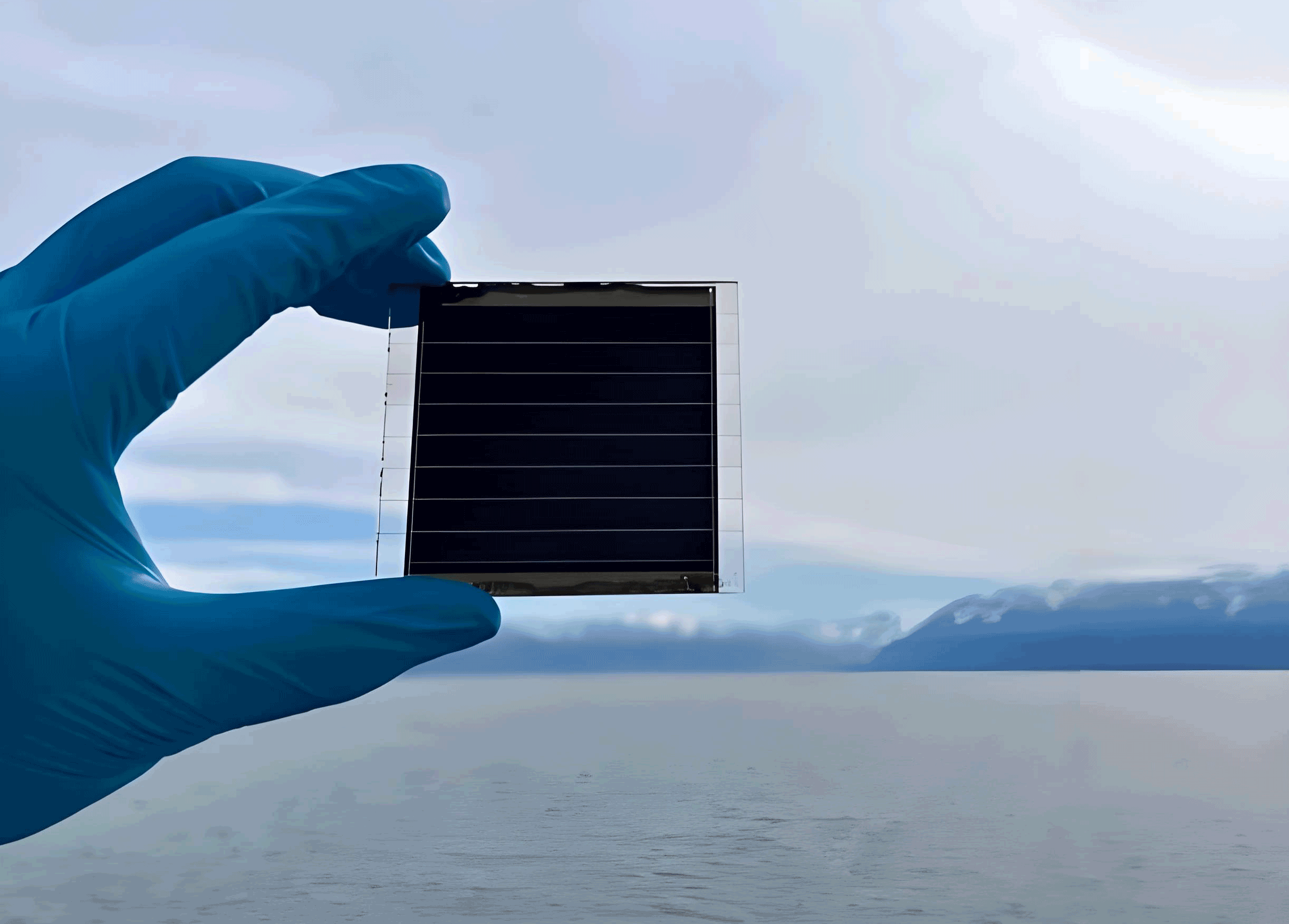
In terms of geographical distribution, our analysis shows that the United Kingdom, Spain, and Switzerland lead in total funding, accounting for 87.5% of global support. This concentration highlights the role of major economies in driving perovskite solar cell innovation. For example, Spain’s average project funding exceeds $70 million, focusing on large-scale initiatives that integrate advanced materials and manufacturing processes. We have compiled a detailed breakdown of national contributions to perovskite solar cell funding, as shown in the table below.
| Country | Total Funding (Billion USD) | Number of Projects | Average Funding per Project (Million USD) |
|---|---|---|---|
| United Kingdom | 0.81 | 28 | 28.93 |
| Spain | 0.645 | 9 | 71.67 |
| Switzerland | 0.60 | 29 | 20.69 |
| China | 0.097 | 1,700+ | 0.01 |
| United States | 0.029 | 58 | 0.50 |
We observe that China has adopted a decentralized approach, with over 1,700 projects receiving an average of $10,000 each, aiming for broad-based breakthroughs in perovskite solar cell technology. In contrast, European nations prioritize fewer, high-budget projects that target specific technical milestones, such as improving the stability and efficiency of perovskite solar cells. The research and development cycle for these projects typically spans 2 to 5 years, with 59% of funds allocated to initiatives lasting 3–4 years. This duration aligns with the time required to achieve measurable progress in perovskite solar cell performance, often quantified by the degradation rate formula: $$ \tau = \frac{1}{k} \ln\left(\frac{\eta_0}{\eta_t}\right) $$ where $\tau$ is the lifetime, $k$ is the degradation constant, $\eta_0$ is the initial efficiency, and $\eta_t$ is the efficiency at time $t$. Such metrics are crucial for evaluating the long-term viability of funded perovskite solar cell projects.
| R&D Cycle (Years) | Number of Projects | Total Funding (Billion USD) |
|---|---|---|
| 6 | 1 | 0.0003 |
| 5–5.9 | 38 | 0.0282 |
| 4–4.9 | 369 | 0.6444 |
| 3–3.9 | 654 | 1.3917 |
| 2–2.9 | 177 | 0.2232 |
| <2 | 579 | 0.0468 |
| Other | 517 | 0.0139 |
Currently, 274 perovskite solar cell projects are ongoing, with China leading with 228 active projects totaling $13.58 million in funding. Germany and the United Kingdom follow with 3 and 23 projects, respectively, emphasizing their focus on high-impact research. The European Commission emerges as the largest funder, providing $2.137 billion, or 91% of global support, which underscores the EU’s commitment to advancing perovskite solar cell technology as part of its green energy agenda. This dominance is reflected in the strategic allocation of funds to consortia that address the entire lifecycle of perovskite solar cells, from material synthesis to end-of-life recycling.
Institutional analysis reveals that universities and research institutes are the primary innovators in perovskite solar cell development, accounting for 99% of total project funding. For instance, 630 academic institutions worldwide have engaged in perovskite solar cell research, with the United Kingdom, Spain, and Switzerland hosting the most well-funded centers. Enterprises play a smaller but growing role, with 30 companies across six countries receiving over $20 million in support. The involvement of industry partners is critical for scaling up perovskite solar cell production, as evidenced by projects that integrate novel deposition techniques, such as slot-die coating, which can be described by the fluid dynamics equation: $$ h = \frac{\mu U}{\sigma} $$ where $h$ is the wet film thickness, $\mu$ is the viscosity, $U$ is the coating speed, and $\sigma$ is the surface tension. Such processes are essential for manufacturing low-cost, high-efficiency perovskite solar cells.
| Organization/Country | Total Funding (Billion USD) | Percentage of Global Funding |
|---|---|---|
| European Commission | 2.137 | 91% |
| China | 0.097 | 4% |
| United States | 0.029 | 1.2% |
| United Kingdom | 0.029 | 1.2% |
| Belgium | 0.019 | 0.8% |
| South Korea | 0.010 | 0.4% |
Turning to China’s perovskite solar cell funding landscape, we find that the National Natural Science Foundation of China (NSFC) is the dominant supporter, with key divisions like Engineering and Materials Sciences, Information Sciences, and Chemical Sciences allocating millions of dollars. Regional disparities exist, with Taiwan Province leading domestic funding at over $18.6 million, followed by Hong Kong at $6.16 million. Mainland provinces such as Guangdong and Anhui have also made significant investments, though at lower levels. This distribution highlights the localized efforts to build a robust perovskite solar cell innovation ecosystem, often leveraging partnerships between academia and industry to overcome technical barriers like ion migration, which can be modeled by the Nernst-Planck equation: $$ J_i = -D_i \nabla c_i – \frac{z_i F}{RT} D_i c_i \nabla \phi $$ where $J_i$ is the flux of species $i$, $D_i$ is the diffusion coefficient, $c_i$ is the concentration, $z_i$ is the charge number, $F$ is Faraday’s constant, $R$ is the gas constant, $T$ is temperature, and $\phi$ is the electrostatic potential. Addressing such challenges is vital for enhancing the stability of perovskite solar cells.
| Region | Total Funding (Million USD) |
|---|---|
| Taiwan | 18.61 |
| Hong Kong | 6.16 |
| Guangdong | 3.18 |
| Anhui | 1.18 |
| Beijing | 0.56 |
| Shanghai | 0.54 |
| Other Provinces | ≤0.43 |
Among the flagship perovskite solar cell projects, the Perovskite Thin-film Photovoltaics (PERTPV) initiative stands out with a budget of $596 million, led by the University of Oxford. This consortium of 22 institutions across eight countries focused on improving laser scribing techniques to achieve geometric fill factors exceeding 95%, thereby boosting module efficiency. The project targeted a tandem perovskite solar cell efficiency of over 30%, leveraging advancements in material interfaces and encapsulation. Similarly, the APOLO project, with $596 million in funding, aimed to develop fully printed, flexible perovskite solar cells with a PCE of 20.7% on small areas and 17% on modules, while reducing costs to €0.48/Wp. Another notable effort, CHEOPS, backed by $557 million, achieved a steady-state efficiency of 13.4% on large-area devices and established standards for stability testing, contributing to the industrialization of perovskite solar cells.
These projects exemplify the collaborative nature of perovskite solar cell research, often involving multidisciplinary teams that address technical, economic, and environmental aspects. For example, the optimization of perovskite solar cell performance frequently involves balancing the trade-off between efficiency and stability, which can be expressed by the figure of merit: $$ \text{FOM} = \eta \times \tau $$ where FOM is the figure of merit, $\eta$ is efficiency, and $\tau$ is lifetime. Funders increasingly prioritize projects that demonstrate high FOM values, ensuring that perovskite solar cells meet commercial requirements for durability and output.
In conclusion, our analysis of global perovskite solar cell funding projects reveals a concerted effort to accelerate the technology from lab to market. The European Union’s overwhelming support has set the pace, while countries like China are fostering a diverse innovation landscape. As perovskite solar cells approach commercialization, future funding should emphasize integrated approaches that cover the entire value chain, from basic research to recycling. We recommend that policymakers and stakeholders adopt strategies that promote public-private partnerships, standardize testing protocols, and invest in scalable manufacturing techniques. By doing so, the global community can unlock the full potential of perovskite solar cells, contributing to a sustainable energy future. The continued evolution of this field will rely on rigorous scientific inquiry, as captured by the ongoing pursuit of higher efficiencies and longer lifetimes in perovskite solar cell devices.