
In recent years, the global energy landscape has been shifting towards sustainable sources due to environmental concerns and the depletion of fossil fuels. As a key player in this transition, China has implemented policies like the “14th Five-Year Plan for Renewable Energy Development” to accelerate the adoption of renewable technologies, particularly wind and solar power. Among emerging photovoltaic technologies, perovskite solar cells have garnered significant attention for their low cost and high efficiency, positioning them as a promising third-generation solar cell option. In this article, I explore the patent landscape of high-efficiency perovskite solar cells in China, analyzing technological trends, key innovators, and strategic implications. Based on patent data retrieved from the China Patent Abstract Database (CNABS), I delve into the evolution of this field, focusing on methods to enhance efficiency, such as interface engineering and tandem structures. The analysis covers patent applications up to March 1, 2025, with a total of 1,168 relevant patents identified after data cleaning. I aim to provide insights that can guide future research and industrial development in this dynamic area.
Perovskite solar cells are a class of photovoltaic devices that utilize perovskite materials as the light-absorbing layer. These materials typically have a chemical formula of $$ ABX_3 $$, where A represents a monovalent cation (e.g., methylammonium or formamidinium), B is a divalent metal ion (e.g., lead or tin), and X is a halide ion (e.g., iodide or bromide). The tunable bandgap of perovskite materials, which can range from 1.2 eV to 3.0 eV, allows for efficient harvesting of visible and near-infrared light, thereby enhancing the power conversion efficiency (PCE) of solar cells. Since the first report in 2009 by a Japanese team, which achieved a PCE of only 3.8%, the efficiency of perovskite solar cells has skyrocketed. For instance, in 2024, Longi Green Energy announced a tandem perovskite-silicon solar cell with a PCE of 34.6%, while Zhejiang University developed a single-junction perovskite solar cell with a PCE of 25.59%. This rapid progress underscores the potential of perovskite solar cells to revolutionize the photovoltaic industry.
The structure of a typical perovskite solar cell consists of multiple functional layers: a conductive glass substrate, an electron transport layer (ETL), a perovskite active layer, a hole transport layer (HTL), and a metal electrode. However, one of the major challenges in achieving high efficiency is the presence of defects at the interfaces between these layers. Surface defects in the perovskite layer, such as uncoordinated ions, and lattice mismatches with adjacent layers can lead to deep-level traps that promote non-radiative recombination of charge carriers. This Shockley-Read-Hall (SRH) recombination significantly reduces the device’s performance. Therefore, interface engineering has become a critical strategy for improving the efficiency of perovskite solar cells. By passivating defects and optimizing layer interfaces, researchers can minimize recombination losses and enhance charge extraction. Another prominent approach involves tandem structures, where perovskite solar cells are combined with other photovoltaic materials, such as crystalline silicon or other perovskites, to broaden the light absorption spectrum. The theoretical efficiency limits for perovskite-silicon tandem cells can reach up to 46%, and all-perovskite tandem cells exceed 43%, making this a highly attractive pathway for surpassing the Shockley-Queisser limit of single-junction cells.
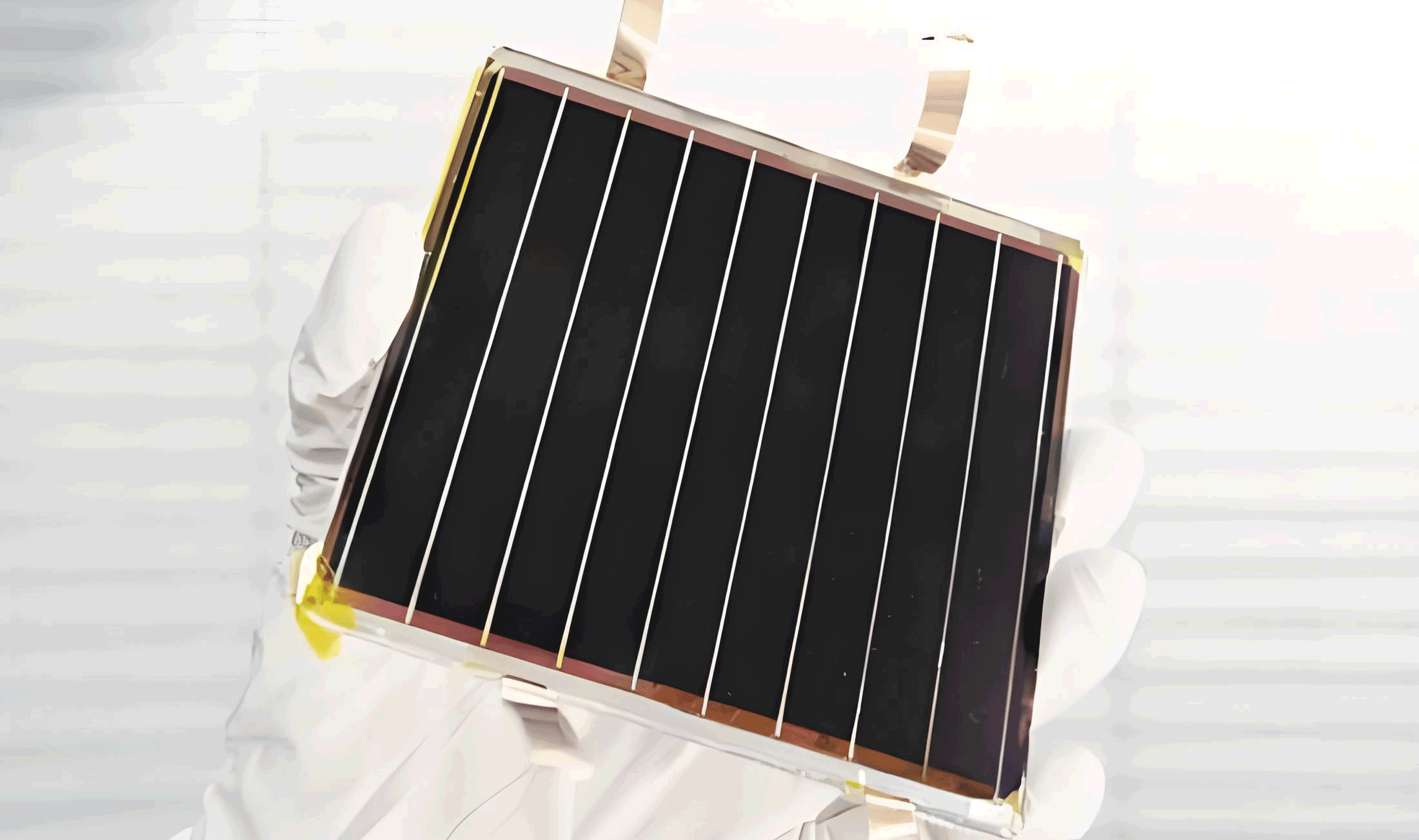
To understand the development of high-efficiency perovskite solar cells, I conducted a comprehensive patent analysis using the CNABS database. The search strategy incorporated keywords like “perovskite,” “solar,” and “photovoltaic,” along with relevant International Patent Classification (IPC) codes, followed by supplementary searches and manual noise reduction. This resulted in a dataset of 1,168 patent applications. It is important to note that due to the 18-month publication delay for patent applications, data from 2023 and 2024 may be incomplete, but the overall trends remain informative. The analysis focuses on patent applications related to efficiency enhancement techniques, primarily interface improvement and tandem structures. In the following sections, I present the patent application trends and key innovators, using tables and formulas to summarize the findings.
The temporal distribution of patent applications reveals the evolutionary stages of high-efficiency perovskite solar cell technology in China. As shown in Table 1, the number of applications has grown significantly over the years, reflecting increased research and commercialization efforts. The data can be divided into three distinct phases: the germination period (2014–2018), the stable development period (2019–2021), and the rapid growth period (2022–2024). During the germination period, annual patent applications were below 20, with universities and research institutions dominating the landscape, accounting for 91% of the filings. This indicates that early innovation was driven by academic curiosity and foundational research. In contrast, photovoltaic enterprises were relatively inactive, likely due to uncertainties in technology maturity and market prospects. However, the slight involvement of companies during this phase suggests recognition of the long-term commercial potential of perovskite solar cells.
| Period | Year | Number of Applications | Dominant Innovators | Key Characteristics |
|---|---|---|---|---|
| Germination Period | 2014 | 5 | Universities/Research Institutions (91%) | Slow growth, academic-driven |
| 2015 | 8 | |||
| 2016 | 12 | |||
| 2017 | 15 | |||
| 2018 | 18 | |||
| Stable Development Period | 2019 | 42 | Universities/Research Institutions (72%), Enterprises (28%) | Steady growth, increased enterprise participation |
| 2020 | 45 | |||
| 2021 | 48 | |||
| Rapid Growth Period | 2022 | 110 | Universities/Research Institutions (~50%), Enterprises (~50%) | Rapid expansion, strong industry-academia collaboration |
| 2023 | 125 (estimated) | |||
| 2024 | 130 (estimated) |
In the stable development period, patent applications stabilized between 40 and 50 per year, with universities and research institutions still leading but their share decreasing to 72%, while enterprises increased to 28%. This shift indicates a growing interest from industry as technologies began to transition from lab-scale to commercialization. The rapid growth period, starting in 2022, saw a surge in applications, exceeding 100 annually, with enterprises nearly matching the application volume of academic institutions. Joint applications between universities and enterprises accounted for approximately 9% of the total, highlighting enhanced collaboration that facilitates technology transfer and industrial advancement. The overall growth trajectory suggests that high-efficiency perovskite solar cell technology is still in a nascent stage with ample room for innovation, and the increasing enterprise involvement signals rising commercial viability.
To delve deeper into the innovation ecosystem, I analyzed the main players in the field. As summarized in Table 2, the top applicants include both photovoltaic companies and academic institutions, with a total of 24% of all patents coming from these key innovators. This distribution indicates a fragmented landscape with low concentration, meaning that no single entity dominates, which fosters healthy competition and diverse technological approaches. Among enterprises, companies like Trina Solar, CATL (Contemporary Amperex Technology Co., Limited), and Huaneng Group are prominent, while universities such as Shaanxi Normal University and Wuhan University lead in academic contributions. The data reveals that most innovators focus on interface improvement strategies, as this area offers relatively lower barriers to entry and faster returns on investment. However, some well-funded companies, like CATL and Aiko Solar, prioritize tandem structures, which require significant capital investment but promise higher efficiency gains.
| Rank | Enterprise | Number of Applications | University/Research Institution | Number of Applications |
|---|---|---|---|---|
| 1 | Trina Solar | 59 | Shaanxi Normal University | 34 |
| 2 | CATL | 39 | Wuhan University | 23 |
| 3 | Huaneng Group | 27 | University of Electronic Science and Technology of China | 20 |
| 4 | GCL Energy | 26 | Nankai University | 15 |
| 5 | Aiko Solar | 17 | Hebei University of Technology | 15 |
The technological focus of these innovators is further illustrated by their preference for specific efficiency-enhancement methods. For instance, interface improvement involves strategies like surface passivation, where materials are added to reduce defects at the perovskite layer interfaces. The effectiveness of such approaches can be modeled using recombination kinetics. The SRH recombination rate, which impacts the open-circuit voltage ($$ V_{oc} $$) of a perovskite solar cell, is given by: $$ R_{SRH} = \frac{n p – n_i^2}{\tau_p (n + n_i) + \tau_n (p + n_i)} $$ where $$ n $$ and $$ p $$ are the electron and hole concentrations, $$ n_i $$ is the intrinsic carrier concentration, and $$ \tau_n $$ and $$ \tau_p $$ are the carrier lifetimes. By minimizing $$ R_{SRH} $$ through interface engineering, the overall efficiency $$ \eta $$ of the perovskite solar cell can be improved, as defined by: $$ \eta = \frac{J_{sc} \times V_{oc} \times FF}{P_{in}} \times 100\% $$ where $$ J_{sc} $$ is the short-circuit current density, $$ V_{oc} $$ is the open-circuit voltage, FF is the fill factor, and $$ P_{in} $$ is the incident light power. In contrast, tandem structures leverage the complementary absorption spectra of different sub-cells. For a two-junction tandem perovskite solar cell, the theoretical efficiency can be approximated by integrating the spectral responses, and optimizing the current matching between layers is crucial for maximizing performance.
Based on the patent analysis, I propose several strategies to advance the development of high-efficiency perovskite solar cells in China. First, strengthening industry-academia collaboration is essential to bridge the gap between research and application. Although China has a strong academic foundation in perovskite solar cell technology, the patent conversion rate remains low. By fostering deeper partnerships, universities can align their research with market needs, while enterprises can leverage cutting-edge innovations to accelerate product development. For example, joint R&D projects could focus on scaling up interface engineering techniques or developing cost-effective tandem cell manufacturing processes. Second, improving patent quality and strategic布局 is critical. With numerous patents filed but few core breakthroughs, companies should conduct in-depth analyses to identify high-value patents and build comprehensive portfolios around them. This could involve cross-licensing agreements to create technological barriers and enhance competitiveness. Finally, capitalizing on existing strengths while addressing weaknesses is vital. China has made significant strides in interface improvement, but more investment is needed in tandem structures to compete globally. Integrating interface enhancement patents with tandem cell designs could yield synergistic benefits, such as higher stability and efficiency, ultimately driving the commercialization of perovskite solar cells.
In conclusion, the patent landscape for high-efficiency perovskite solar cells in China is characterized by rapid growth, diverse innovators, and a focus on interface and tandem technologies. As the field evolves, continuous innovation and strategic partnerships will be key to overcoming challenges like defect management and production scalability. I believe that by implementing these recommendations, China can solidify its position in the global perovskite solar cell market and contribute to a sustainable energy future. The journey of perovskite solar cells from lab curiosities to industrial mainstays is well underway, and with concerted efforts, their full potential can be realized.