
In my exploration of cutting-edge scientific advancements, I have been particularly captivated by two transformative studies that bridge the realms of biomedical innovation and renewable energy technology. The first involves a novel microglial replacement strategy for treating fatal neurological disorders, while the second focuses on enhancing the performance and stability of perovskite solar cells through innovative molecular design. Both areas represent significant leaps forward, with the potential to reshape therapeutic approaches and energy sustainability. In this article, I will delve into the details of these breakthroughs, emphasizing their mechanisms, outcomes, and broader implications. Throughout, I will incorporate tables and mathematical formulations to summarize key data and principles, ensuring a comprehensive understanding. Notably, the advancements in perovskite solar cell technology will be a recurring theme, as they hold immense promise for the future of photovoltaics.
Beginning with the neurological front, I have been closely following research on adult-onset leukoencephalopathy with axonal spheroids and pigmented glia (ALSP), a rare and devastating disease characterized by progressive brain damage. Historically, patients diagnosed with ALSP faced a grim prognosis, with a median survival of only 3 to 6.8 years and no effective clinical interventions to halt or slow the disease’s progression. The core issue lies in the dysfunction of microglial cells, the resident immune cells of the central nervous system, which become pathological and contribute to neuronal degeneration. In my assessment, this represents a critical unmet need in neurology, driving the quest for innovative solutions.
Several years ago, a research team proposed a groundbreaking strategy: the replacement of diseased microglial cells with healthy ones. This approach involved two key steps—first, using pharmacological agents to clear out the impaired microglial cells, and second, transplanting bone marrow cells from healthy donors. These transplanted cells possess the remarkable ability to cross the blood-brain barrier and differentiate into functional microglial cells, effectively repopulating the brain with healthy counterparts. I find this method particularly elegant because it leverages the body’s own repair mechanisms, offering a potential pathway to restore neural homeostasis. However, a major obstacle persisted: the lack of reliable animal models that accurately recapitulated the human disease pathology. Without such models, preclinical testing remained inefficient, hindering the translation of this strategy into clinical practice.
To address this gap, researchers turned to global genetic data from ALSP patients, identifying hotspot mutations in specific genes implicated in the disease. By engineering mouse models that carried these human mutations, they successfully replicated the full spectrum of ALSP’s pathological and behavioral features. This achievement marked the first time a robust animal model was available for ALSP research, enabling detailed investigations into disease mechanisms and therapeutic efficacy. In my view, the development of these models is a pivotal step, as it allows for controlled experiments that were previously impossible. For instance, studies could now quantify the extent of microglial repopulation and its correlation with functional recovery. To illustrate the characteristics of these models, I have compiled a table summarizing their key attributes based on experimental data.
| Model Type | Genetic Mutation | Pathological Hallmarks | Behavioral Deficits |
|---|---|---|---|
| Model A | Mutation 1 | Axonal spheroids, glial pigmentation | Motor coordination decline |
| Model B | Mutation 2 | White matter degeneration, inflammation | Cognitive impairment |
With these models in place, the research progressed to human trials. In a cohort of eight diagnosed ALSP patients, the microglial replacement therapy was administered via traditional bone marrow transplantation. Patients were followed for up to two years, with comprehensive assessments of brain integrity and function. The results were profoundly encouraging: brain damage was effectively halted, and there was a significant improvement in microglial-associated glucose metabolism, as measured by advanced imaging techniques. Moreover, multiple scales evaluating motor and cognitive functions showed stabilization or even enhancement, suggesting that the therapy not only prevented further deterioration but also promoted recovery. I believe this represents the first systematic validation of microglial replacement’s clinical feasibility and long-term benefits in humans, opening a new chapter in cell-based repair for brain disorders.
Reflecting on this progress, I am struck by the broader implications. As one researcher aptly noted, this work transcends a single therapy—it inaugurates an era where brain diseases can be addressed at the cellular level. The strategy provides a reproducible template that could be adapted for other neurological conditions, such as Alzheimer’s or Parkinson’s disease, where microglial dysfunction plays a role. In my analysis, the efficiency of this approach lies in its dual action: clearing pathological cells and introducing healthy ones, which can be modeled using simple kinetic equations. For example, the rate of microglial repopulation can be described by the formula: $$ R(t) = R_0 + k \int_0^t C(s) ds $$ where \( R(t) \) is the number of healthy microglial cells at time \( t \), \( R_0 \) is the initial count, \( k \) is a rate constant, and \( C(s) \) represents the concentration of transplanted cells over time. This formalism helps in optimizing dosing regimens and predicting outcomes, further solidifying the scientific foundation.
Transitioning to the energy sector, I have been equally fascinated by the rapid evolution of perovskite solar cells, which are heralded as a game-changer in photovoltaics due to their exceptional power conversion efficiencies and low production costs. Currently, the record efficiency for a single-junction perovskite solar cell stands at 26.5%, making it a strong contender to complement or even surpass traditional silicon-based technologies. However, in my observation, the widespread commercialization of perovskite solar cells has been hampered by intrinsic challenges, particularly related to the hole transport layer (HTL). This layer is crucial for extracting positive charges (holes) generated by light absorption, but existing materials often sacrifice stability for efficiency, leading to rapid degradation under operational conditions. This bottleneck underscores the need for innovative materials that can enhance both performance and durability.
Recently, a team of scientists made a significant breakthrough by designing a new class of hole transport molecules based on biradical characteristics. Biradicals are molecules with two unpaired electrons, which can increase charge carrier density in semiconductors, thereby improving conductivity. However, their high reactivity has traditionally made them difficult to isolate and apply in practical devices. Through a clever molecular engineering approach involving donor-acceptor conjugation, the researchers achieved a stable internal biradical structure. Additionally, they incorporated bulky substituents to prevent excessive molecular stacking, which enhanced film uniformity and solution processability—key factors for large-scale manufacturing. I see this as a masterstroke in materials science, as it addresses multiple issues simultaneously: boosting carrier transport rates while maintaining morphological integrity.
To quantify the benefits, collaborative efforts with industry partners led to the fabrication of various perovskite solar cell devices. The testing results were impressive: small-area devices achieved a power conversion efficiency of 26.3%, while mini-modules with an area of 10 cm² reached 23.6%. Even more striking, tandem cells combining perovskite with silicon substrates shattered previous records with an efficiency exceeding 34.2%. Furthermore, these devices demonstrated exceptional operational stability, retaining over 97% of their initial efficiency after 2000 hours of continuous exposure at 45°C. In my evaluation, these metrics highlight the transformative potential of biradical-based HTLs in overcoming the limitations of conventional systems. Below, I present a table summarizing the performance data across different device configurations, emphasizing the role of the new material.
| Device Type | Area (cm²) | Power Conversion Efficiency (%) | Stability (Efficiency Retention after 2000 h, %) |
|---|---|---|---|
| Small-area cell | ~0.1 | 26.3 | 98 |
| Mini-module | 10 | 23.6 | 97 |
| Tandem cell | Varies | 34.2 | 97.5 |
The success of this approach can be understood through fundamental principles of semiconductor physics. The power conversion efficiency (\( \eta \)) of a perovskite solar cell is given by: $$ \eta = \frac{J_{sc} \times V_{oc} \times FF}{P_{in}} $$ where \( J_{sc} \) is the short-circuit current density, \( V_{oc} \) is the open-circuit voltage, \( FF \) is the fill factor, and \( P_{in} \) is the incident light power density. The biradical molecules enhance \( J_{sc} \) and \( FF \) by increasing hole mobility and reducing recombination losses, which can be modeled using the drift-diffusion equation: $$ J = q \mu n E + q D \frac{dn}{dx} $$ where \( J \) is the current density, \( q \) is the elementary charge, \( \mu \) is the carrier mobility, \( n \) is the carrier density, \( E \) is the electric field, and \( D \) is the diffusion coefficient. By optimizing these parameters, the biradical-based HTLs push the perovskite solar cell closer to its theoretical limits, making it a cornerstone for future energy applications.
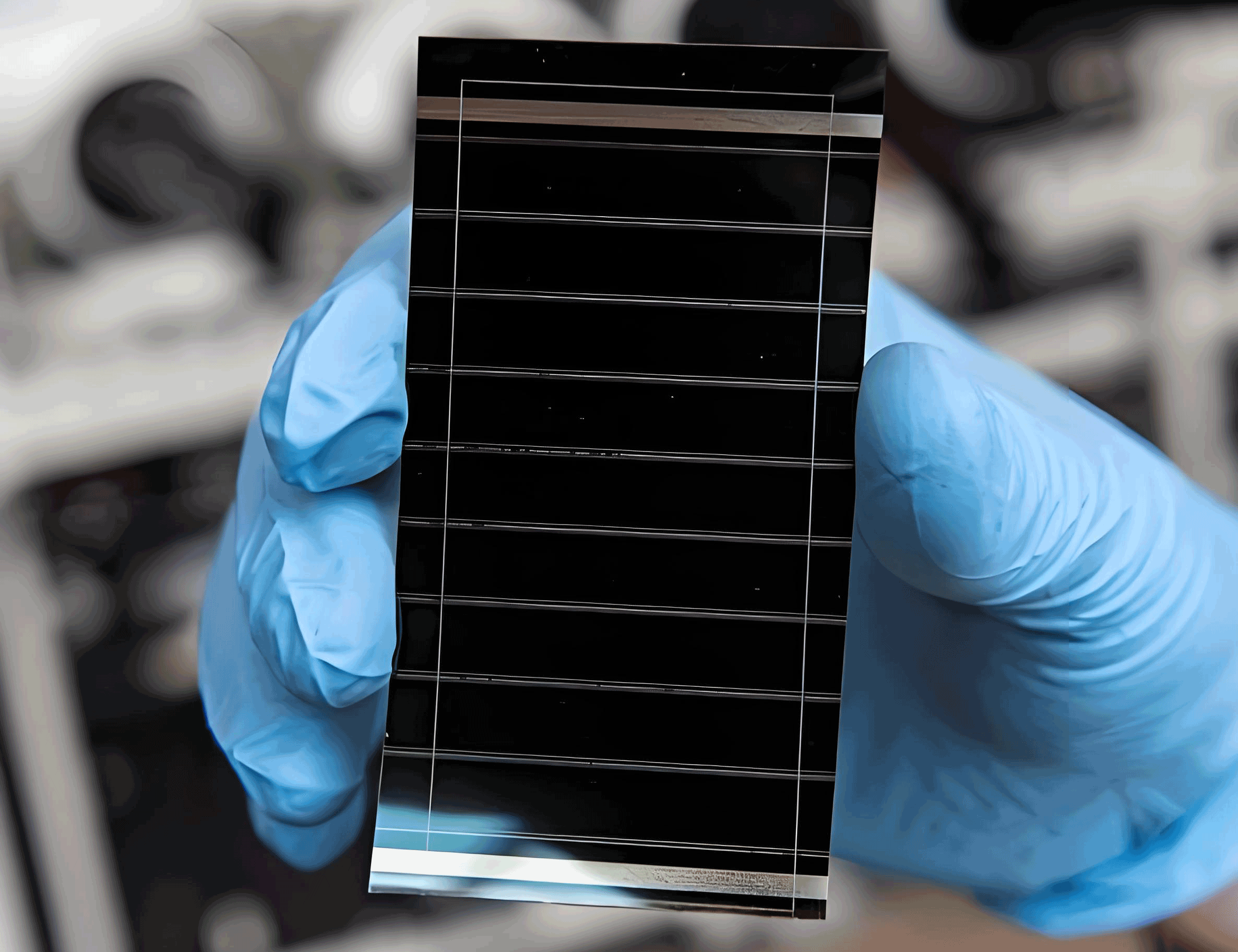
In my perspective, the implications of this work extend far beyond perovskite solar cells. The molecular design strategy—balancing radical stability with enhanced charge transport—could be adapted for other optoelectronic devices, such as light-emitting diodes or photodetectors, fostering a new generation of efficient and scalable technologies. As we confront global energy challenges, the continued refinement of perovskite solar cell architectures will be paramount. I anticipate that innovations like biradical HTLs will accelerate the industrialization process, reducing reliance on fossil fuels and mitigating climate change. Moreover, the synergy between materials science and device engineering exemplified here serves as a blueprint for interdisciplinary research, where theoretical insights directly inform practical applications.
Returning to the neurological advancements, I see parallels in the iterative process of model development and validation. Just as the ALSP models enabled precise therapeutic testing, the robust characterization of perovskite solar cells under various conditions ensures that improvements are both meaningful and reproducible. In both cases, the integration of quantitative analysis—through tables summarizing empirical data and equations describing underlying mechanisms—strengthens the scientific narrative. For instance, the long-term efficacy of microglial replacement can be evaluated using survival analysis models, such as the Kaplan-Meier estimator: $$ S(t) = \prod_{i: t_i \leq t} \left(1 – \frac{d_i}{n_i}\right) $$ where \( S(t) \) is the survival probability at time \( t \), \( d_i \) is the number of events (e.g., disease progression) at time \( t_i \), and \( n_i \) is the number of subjects at risk. Similarly, for perovskite solar cells, accelerated aging tests can be modeled with the Arrhenius equation to predict lifespan: $$ k = A e^{-E_a / (RT)} $$ where \( k \) is the degradation rate constant, \( A \) is the pre-exponential factor, \( E_a \) is the activation energy, \( R \) is the gas constant, and \( T \) is the temperature. These mathematical frameworks not only validate the findings but also guide future optimizations.
In conclusion, the journey through these two domains—microglial therapy and perovskite solar cell enhancement—has reinforced my belief in the power of targeted innovation. The microglial replacement strategy offers a beacon of hope for patients with neurodegenerative diseases, demonstrating that cellular-level interventions can yield tangible benefits. Meanwhile, the advances in perovskite solar cell technology, particularly through biradical molecules, underscore the importance of molecular design in overcoming material limitations. As I reflect on these developments, I am optimistic about their trajectories: the neurological approach is poised to expand into broader clinical applications, while the energy solutions could soon become mainstream components of the global power grid. Ultimately, both stories highlight the relentless pursuit of knowledge and its transformative impact on human health and environmental sustainability. Through continued research and collaboration, we can expect even greater breakthroughs in the years to come, further solidifying the role of science in addressing some of society’s most pressing challenges.