
Perovskite solar cells have garnered significant attention due to their high conversion efficiency, simple fabrication processes, and low cost. The normal (n-i-p) structure is one of the earliest and most studied configurations for perovskite solar cells. In these devices, the electron transport layer (ETL) plays a critical role in charge extraction and transport. Tin dioxide (SnO2) has emerged as an ideal ETL material owing to its excellent photostability, high electron mobility, and feasibility for low-temperature processing. However, interfacial defects between SnO2 and the perovskite layer remain a major factor limiting the efficiency and stability of perovskite solar cells. These defects, such as uncoordinated Sn4+ ions and hydroxyl groups, can induce non-radiative recombination and degradation of the perovskite layer. To address this issue, various strategies, including surface treatment with organic or inorganic materials and the deposition of low-dimensional perovskite layers, have been explored. In this study, we propose a novel buried interface modification approach by incorporating methylammonium bromide (MABr) into the SnO2 ETL. This strategy aims to reduce interfacial defects, enhance electron mobility, and promote the growth of high-quality perovskite films, ultimately leading to improved performance of n-i-p perovskite solar cells.
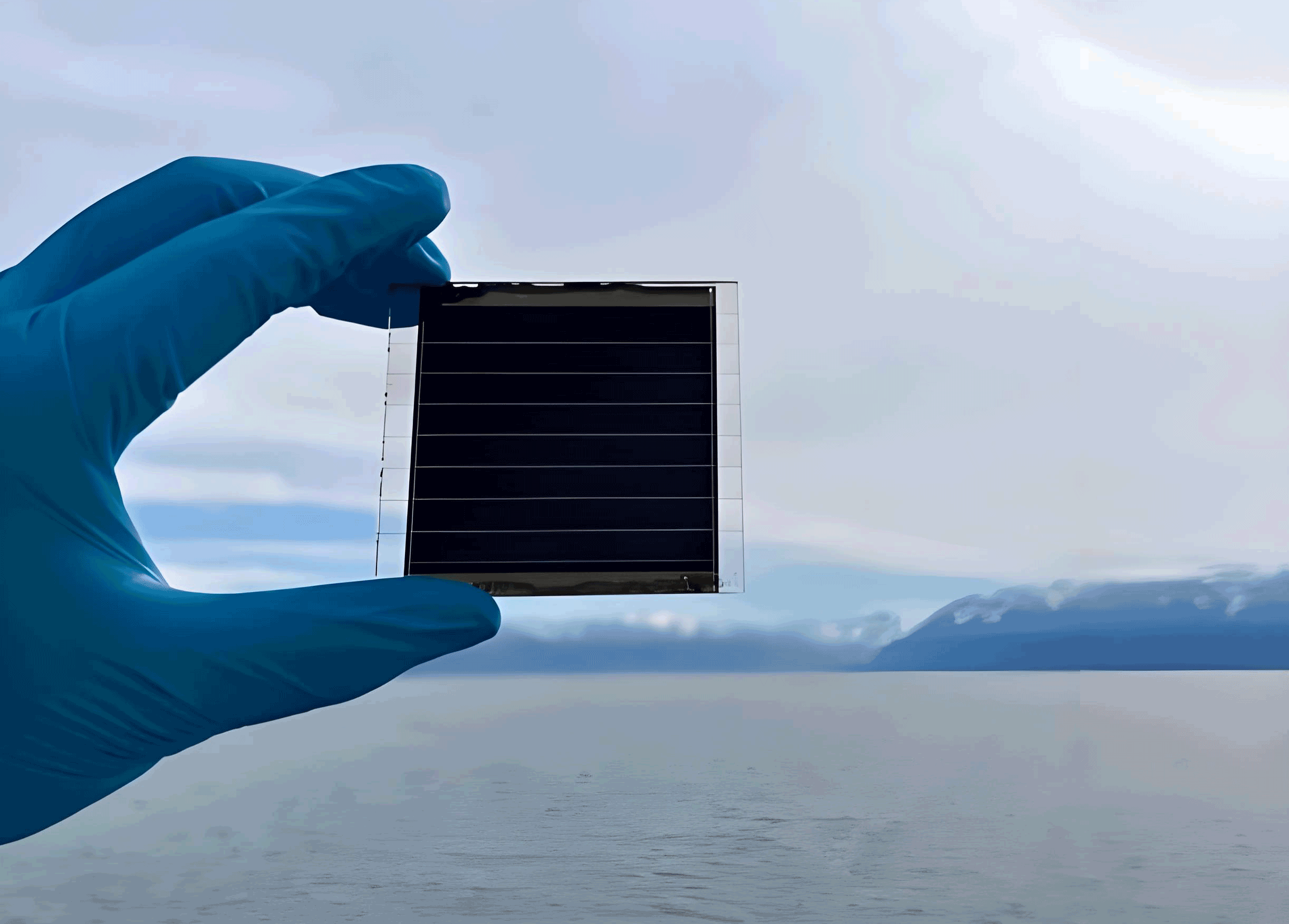
The fabrication of efficient perovskite solar cells requires meticulous control over the interfaces between functional layers. The buried interface between the ETL and the perovskite layer is particularly crucial, as it influences charge extraction, film morphology, and defect formation. In this work, we systematically investigate the effects of MABr doping in SnO2 on the structural, optical, and electronic properties of the ETL and the subsequent perovskite layer. We employ a range of characterization techniques, including X-ray photoelectron spectroscopy (XPS), scanning electron microscopy (SEM), atomic force microscopy (AFM), X-ray diffraction (XRD), photoluminescence (PL), time-resolved photoluminescence (TRPL), and current-voltage (J-V) measurements. Our results demonstrate that the MABr-modified SnO2 ELT reduces defect states, enhances electron transport, and facilitates the formation of larger perovskite grains with fewer grain boundaries. These improvements translate to a significant boost in the power conversion efficiency (PCE) of the perovskite solar cells, achieving a champion PCE of 23.12% compared to 21.57% for unmodified devices. This work provides a comprehensive understanding of the buried interface modification strategy and its potential for advancing perovskite solar cell technology.
The electron transport layer in perovskite solar cells must exhibit high transparency, suitable energy level alignment, and efficient charge extraction. SnO2 fulfills these requirements but suffers from surface defects that can adversely interact with the perovskite layer. The incorporation of ammonium salts, such as MABr, into SnO2 has been shown to passivate these defects and modify the energy band structure. The chemical interactions between MABr and SnO2 were probed using XPS. The Sn 3d and O 1s spectra revealed shifts in binding energy and changes in the relative concentrations of Sn4+/Sn2+ and O2-/OH– species. Specifically, the Sn2+ content increased from 65.46% to 66.31%, while the OH– content decreased from 63.92% to 30.74%. These changes indicate successful passivation of defect sites, which is crucial for enhancing the performance of perovskite solar cells.
The electron mobility of the SnO2 films was evaluated using the space-charge-limited current (SCLC) method. The electron mobility (μe) can be calculated using the following formula:
$$ \mu_e = \frac{8 J L^3}{9 \varepsilon_0 \varepsilon_r (V_{\text{app}} – V_r – V_{\text{bi}})} $$
where \( J \) is the current density, \( L \) is the film thickness, \( \varepsilon_0 \) is the vacuum permittivity, \( \varepsilon_r \) is the relative permittivity, \( V_{\text{app}} \) is the applied voltage, \( V_r \) is the reference voltage, and \( V_{\text{bi}} \) is the built-in potential. The calculated electron mobility increased from \( 0.66 \times 10^{-3} \, \text{cm}^2 \cdot \text{V}^{-1} \cdot \text{s}^{-1} \) for unmodified SnO2 to \( 0.90 \times 10^{-3} \, \text{cm}^2 \cdot \text{V}^{-1} \cdot \text{s}^{-1} \) for MABr-modified SnO2. This enhancement in electron mobility facilitates better charge transport in the perovskite solar cell.
The morphological properties of the SnO2 and perovskite layers were examined using SEM and AFM. The MABr-modified SnO2 films exhibited larger particle sizes and a more compact surface morphology. The root mean square (RMS) roughness decreased from 16.5 nm to 16.1 nm after modification, indicating a smoother surface. Additionally, the water contact angle increased from 7.5° to 15.8°, suggesting improved hydrophobicity, which is beneficial for the growth of high-quality perovskite films. The perovskite films deposited on modified SnO2 showed larger grain sizes, with the majority of grains distributed in the 350–450 nm range, compared to 250–350 nm for films on unmodified SnO2. The reduced grain boundaries and lower surface roughness (decreasing from 17.8 nm to 13.9 nm) contribute to suppressed non-radiative recombination and enhanced charge extraction in the perovskite solar cell.
The structural quality of the perovskite films was further assessed using XRD. The intensity of the (001) diffraction peak increased, and the full width at half maximum (FWHM) decreased from 0.160° to 0.148° for films on modified SnO2, confirming improved crystallinity and larger grain sizes. The optical properties were investigated through PL and TRPL spectroscopy. The PL intensity decreased for films on modified SnO2, indicating more efficient charge transfer at the interface. The TRPL decay curves were fitted using a bi-exponential model:
$$ f(t) = A_1 \exp(-t / \tau_1) + A_2 \exp(-t / \tau_2) + B $$
The average carrier lifetime (\( \tau_{\text{ave}} \)) was calculated as:
$$ \tau_{\text{ave}} = \frac{A_1 \tau_1^2 + A_2 \tau_2^2}{A_1 \tau_1 + A_2 \tau_2} $$
The results showed a reduction in the average carrier lifetime from 27.63 ns to 17.91 ns, signifying reduced non-radiative recombination and improved charge extraction in the perovskite solar cell.
To quantify the defect density in the perovskite films, the SCLC method was employed for electron-only devices. The trap-filled limit voltage (\( V_{\text{TFL}} \)) was used to calculate the defect density (\( N_t \)):
$$ N_t = \frac{2 \varepsilon \varepsilon_0 V_{\text{TFL}}}{e L^2} $$
where \( e \) is the elementary charge. The defect density decreased from \( 6.01 \times 10^{15} \, \text{cm}^{-3} \) to \( 4.98 \times 10^{15} \, \text{cm}^{-3} \) after interface modification, highlighting the effectiveness of MABr in reducing trap states.
The performance of the perovskite solar cells was evaluated through J-V measurements under simulated AM 1.5G illumination. The devices with modified SnO2 exhibited a significant improvement in PCE, with a champion device achieving 23.12% in reverse scan compared to 21.57% for the control device. The hysteresis index (H) was calculated as:
$$ H = \frac{P_{\text{reverse}} – P_{\text{forward}}}{P_{\text{reverse}}} $$
The hysteresis index decreased from 17% to 3%, indicating suppressed hysteresis and better device stability. The enhancement in PCE was primarily attributed to increases in open-circuit voltage (VOC) and fill factor (FF). The VOC as a function of light intensity was analyzed to understand the recombination mechanisms. The slope of VOC versus ln(light intensity) decreased from 1.58 \( k_B T / q \) to 1.26 \( k_B T / q \), suggesting reduced trap-assisted recombination. The built-in potential (Vbi) was determined from Mott-Schottky analysis:
$$ \frac{1}{C^2} = \frac{2}{e \varepsilon \varepsilon_0 N_D} \left( V_{\text{bi}} – V – \frac{k_B T}{e} \right) $$
where \( C \) is the capacitance, \( N_D \) is the donor density, and \( k_B \) is the Boltzmann constant. The Vbi increased from 0.99 V to 1.025 V, promoting better charge separation and higher VOC in the perovskite solar cell.
The external quantum efficiency (EQE) spectra showed comparable short-circuit current density (JSC) values for both modified and unmodified devices, confirming that the MABr doping did not compromise the optical properties of the SnO2 ETL. The integrated JSC from the EQE spectra matched well with the J-V measurements, validating the accuracy of our results.
In conclusion, the buried interface modification strategy using MABr in SnO2 ETL effectively enhances the performance of n-i-p perovskite solar cells. This approach reduces interfacial defects, improves electron mobility, and promotes the growth of high-quality perovskite films with larger grain sizes and fewer grain boundaries. The optimized devices achieve a high PCE of 23.12% with suppressed hysteresis and improved stability. This work underscores the importance of interface engineering in perovskite solar cells and provides a facile and effective method for achieving high-efficiency devices.
| Sample | Sn2+ Content (%) | Sn4+ Content (%) | O2- Content (%) | OH– Content (%) |
|---|---|---|---|---|
| Unmodified SnO2 | 65.46 | 34.54 | 36.08 | 63.92 |
| MABr-modified SnO2 | 66.31 | 33.69 | 69.26 | 30.74 |
| Sample | τ1 (ns) | A1 | τ2 (ns) | A2 | τave (ns) |
|---|---|---|---|---|---|
| Unmodified SnO2/PVK | 20.83 | 430.0 | 229.93 | 1.31 | 27.63 |
| MABr-modified SnO2/PVK | 16.62 | 3165.42 | 243.48 | 1.24 | 17.91 |
| Device | Scan Direction | VOC (V) | JSC (mA/cm2) | FF (%) | PCE (%) |
|---|---|---|---|---|---|
| Unmodified | Forward | 1.09 | 25.67 | 63.88 | 17.70 |
| Reverse | 1.11 | 25.96 | 75.08 | 21.57 | |
| MABr-modified | Forward | 1.12 | 25.84 | 77.78 | 22.56 |
| Reverse | 1.12 | 25.80 | 79.90 | 23.12 |
The development of efficient and stable perovskite solar cells is crucial for the advancement of renewable energy technologies. The buried interface modification strategy presented here offers a promising pathway to overcome the limitations associated with interfacial defects in SnO2-based ETLs. Future work could focus on optimizing the concentration of MABr and exploring other ammonium salts to further enhance the performance and stability of perovskite solar cells. Additionally, the integration of this strategy with large-scale fabrication techniques could accelerate the commercialization of perovskite solar cells.
In summary, we have demonstrated that the incorporation of MABr into the SnO2 ETL significantly improves the efficiency and stability of n-i-p perovskite solar cells. This approach effectively passivates interface defects, enhances charge transport, and promotes the growth of high-quality perovskite films. The champion device achieved a PCE of 23.12%, highlighting the potential of buried interface modification for the development of high-performance perovskite solar cells.