
In the pursuit of sustainable energy solutions, perovskite solar cells have emerged as a transformative technology, rivaling traditional silicon-based photovoltaics in power conversion efficiency. Over the past decade, the certified power conversion efficiency of perovskite solar cells has soared to 27%, matching that of commercial silicon cells. However, the long-term operational stability of perovskite solar cells has remained a critical bottleneck, hindering their widespread adoption in photovoltaic products. In our research, we have delved into the fundamental mechanisms governing the degradation of perovskite solar cells under real-world conditions, leading to groundbreaking insights and innovative solutions. This article explores our findings on the reversible degradation behavior of perovskite solar cells, the development of vapor-assisted surface reconstruction techniques, and the implications for enhancing the durability of large-area modules. Through detailed analyses, including tables and mathematical models, we aim to provide a comprehensive understanding of how perovskite solar cells can achieve unprecedented stability, paving the way for their integration into global energy systems.
The journey toward stable perovskite solar cells began with observations of their performance in outdoor environments. We noticed that perovskite modules exhibited a fascinating “reversible decay” phenomenon during day-night cycles. Specifically, the efficiency of perovskite solar cells declined during daytime operation but partially recovered after nighttime “rest.” This behavior hinted at underlying ionic dynamics within the perovskite structure. To quantify this, we conducted extensive experiments on 30 cm × 30 cm perovskite modules, monitoring key parameters such as short-circuit current density ($J_{sc}$), open-circuit voltage ($V_{oc}$), and fill factor (FF). The power conversion efficiency (PCE) is defined as:
$$ \text{PCE} = \frac{J_{sc} \times V_{oc} \times \text{FF}}{P_{\text{in}}} \times 100\% $$
where $P_{\text{in}}$ is the incident light power. Our data revealed that reversible ion migration, primarily involving iodide ions, was responsible for the temporary efficiency drops. In contrast, irreversible ion migration to charge transport layers or electrodes caused permanent damage. This distinction is crucial for designing mitigation strategies. For instance, the flux of ions can be modeled using Fick’s laws of diffusion, where the ion concentration $C$ changes over time $t$ and position $x$:
$$ \frac{\partial C}{\partial t} = D \frac{\partial^2 C}{\partial x^2} $$
Here, $D$ represents the diffusion coefficient, which varies with temperature and material properties. By analyzing these equations, we identified that reversible migration occurs within the perovskite layer, allowing self-healing during rest periods, while irreversible migration leads to cumulative degradation.
To address the stability challenges, our team developed a vapor-assisted surface reconstruction technique. This method involves depositing multidentate ligands onto the perovskite surface, facilitating in-situ restructuring that isolates defect-rich regions and suppresses irreversible ion migration. The process can be described by a reaction kinetics model, where the surface coverage $\theta$ of ligands evolves as:
$$ \frac{d\theta}{dt} = k_a (1 – \theta) – k_d \theta $$
with $k_a$ and $k_d$ as the adsorption and desorption rate constants, respectively. This approach enabled us to achieve remarkable results: a small-area cell (0.16 cm²) attained a PCE of 25.3%, while a larger module (785 cm²) reached 19.6% efficiency. The stability was evaluated through accelerated light/dark cycling tests, where the T80 lifetime—the time for efficiency to drop to 80% of initial—reached 2478 cycles, equivalent to approximately 6.7 years of outdoor operation. This sets a new benchmark for perovskite solar cell stability, as summarized in Table 1.
| Parameter | Small Cell (0.16 cm²) | Large Module (785 cm²) | Stability (T80 cycles) |
|---|---|---|---|
| PCE (%) | 25.3 | 19.6 | — |
| $J_{sc}$ (mA/cm²) | 24.5 | 22.1 | — |
| $V_{oc}$ (V) | 1.12 | 1.08 | — |
| FF | 0.82 | 0.78 | — |
| Lifetime (cycles) | — | — | 2478 |
The implications of these findings extend beyond laboratory settings. For instance, the vapor-assisted surface reconstruction technique eliminates the need for specialized fluorination reactors in industrial production, reducing costs and enhancing scalability. This is particularly important for perovskite solar cells, as their market adoption hinges on both efficiency and affordability. To illustrate the progress in perovskite solar cell development, Table 2 compares key attributes of perovskite solar cells with other photovoltaic technologies, highlighting the rapid advancements in recent years.
| Technology | Typical PCE (%) | Stability (Years) | Cost (USD/W) | Key Challenges |
|---|---|---|---|---|
| Perovskite Solar Cell | 27 | 6.7* | 0.20-0.50 | Ion migration, hysteresis |
| Silicon Solar Cell | 26-27 | 25+ | 0.30-0.60 | Brittleness, weight |
| Thin-Film (CIGS) | 22-23 | 15-20 | 0.40-0.70 | Rare materials, efficiency |
| Organic PV | 18-20 | 5-10 | 0.50-1.00 | Degradation, scalability |
*Based on accelerated testing extrapolations for perovskite solar cells.
Our research also uncovered the role of environmental factors in the degradation of perovskite solar cells. For example, humidity and temperature fluctuations can accelerate ion migration, leading to faster efficiency loss. We modeled this using an Arrhenius-type equation for the degradation rate $k$:
$$ k = A \exp\left(-\frac{E_a}{RT}\right) $$
where $A$ is the pre-exponential factor, $E_a$ is the activation energy, $R$ is the gas constant, and $T$ is the temperature. By fitting experimental data, we found that the activation energy for irreversible degradation in perovskite solar cells is around 0.7 eV, underscoring the sensitivity to thermal stress. This model helps predict the lifespan of perovskite solar cells under various climatic conditions, aiding in the design of robust modules for diverse applications.
In addition to technological innovations, our work emphasizes the importance of fundamental science in advancing perovskite solar cells. The reversible degradation phenomenon mirrors natural processes, such as the self-healing observed in biological systems. By drawing analogies, we can inspire new approaches to material design. For instance, the concept of “rest periods” for perovskite solar cells could be integrated into energy management systems, optimizing performance through controlled operation cycles. This aligns with broader efforts in renewable energy, where adaptive technologies are key to resilience.
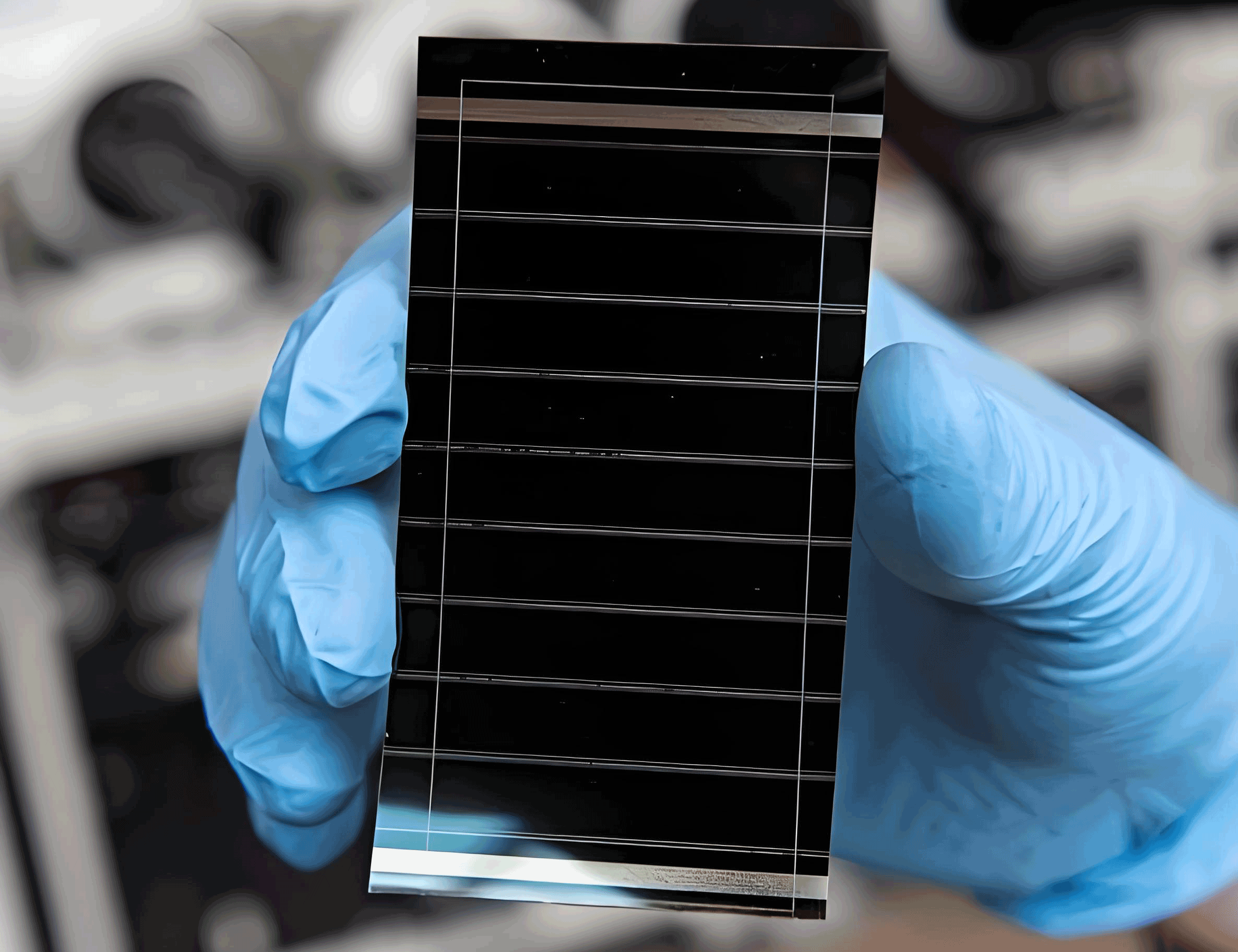
Looking ahead, the future of perovskite solar cells is bright, with potential applications in building-integrated photovoltaics, portable electronics, and large-scale power plants. However, challenges remain, such as scaling up production while maintaining efficiency and stability. Our vapor-assisted surface reconstruction technique represents a significant step forward, but further research is needed to address issues like lead toxicity and hysteresis effects. Collaborative efforts across disciplines—from materials science to electrical engineering—will be essential to unlock the full potential of perovskite solar cells.
To contextualize our findings, it is worth noting parallels in other fields of study. For example, research on supercooled water in polar regions reveals how metastable states can persist under specific conditions, analogous to the reversible states in perovskite solar cells. In supercooled water, the lack of nucleation sites prevents ice formation, allowing liquid water to exist below freezing points. Similarly, in perovskite solar cells, the absence of certain defects can inhibit irreversible degradation, enabling temporary recovery. This cross-disciplinary insight enriches our understanding of non-equilibrium systems and could inform future innovations in energy materials.
Moreover, genetic studies of ancient human migrations, such as those on the Tibetan Plateau, highlight the importance of tracing origins to solve complex puzzles. In a similar vein, unraveling the “ghost ancestry” of degradation mechanisms in perovskite solar cells requires pinpointing the root causes of ion migration. By employing advanced characterization techniques—such as in-situ spectroscopy and computational modeling—we can map the pathways of ion movement and develop targeted interventions. This holistic approach ensures that improvements in perovskite solar cell stability are both effective and sustainable.
In conclusion, our work demonstrates that perovskite solar cells can achieve commercial-level stability through innovative surface engineering and a deep understanding of ionic behavior. The reversible degradation phenomenon offers a natural mechanism for partial recovery, while vapor-assisted reconstruction techniques provide a scalable solution for suppressing permanent damage. As we continue to refine these methods, perovskite solar cells are poised to become a cornerstone of the global energy transition. The journey is far from over, but with each breakthrough, we move closer to a future where clean, efficient, and durable solar power is accessible to all.
To further illustrate the mathematical framework underlying our analysis, consider the general equation for the efficiency decay over time $t$ in perovskite solar cells:
$$ \eta(t) = \eta_0 \exp(-k t) + \eta_r \left[1 – \exp(-k_r t)\right] $$
where $\eta_0$ is the initial efficiency, $k$ is the degradation rate constant for irreversible processes, $\eta_r$ is the recoverable efficiency component, and $k_r$ is the recovery rate constant. This model captures the biphasic nature of degradation and recovery, aligning with our experimental observations. By fitting this equation to data from outdoor tests, we can optimize operating conditions to maximize the lifespan of perovskite solar cells.
Additionally, the economic viability of perovskite solar cells depends on factors like levelized cost of energy (LCOE), which integrates efficiency, stability, and manufacturing costs. The LCOE can be expressed as:
$$ \text{LCOE} = \frac{\sum_{t=1}^{n} \frac{I_t + M_t}{(1 + r)^t}}{\sum_{t=1}^{n} \frac{E_t}{(1 + r)^t}} $$
where $I_t$ is the investment cost in year $t$, $M_t$ is the maintenance cost, $E_t$ is the energy output, $r$ is the discount rate, and $n$ is the lifetime. For perovskite solar cells, improvements in stability directly reduce LCOE by extending $n$ and increasing $E_t$, making them more competitive with incumbent technologies.
In summary, the advancements in perovskite solar cell technology described here underscore the critical role of interdisciplinary research. By combining insights from chemistry, physics, and engineering, we have overcome significant barriers and opened new avenues for innovation. As we push the boundaries of what is possible, perovskite solar cells will continue to evolve, driven by a commitment to sustainability and excellence. The path forward is clear: through relentless experimentation and collaboration, we will harness the full potential of perovskite solar cells to power a brighter future.