
As a professional deeply involved in the photovoltaic (PV) industry, I have observed firsthand the critical role that lean manufacturing plays in cost control for solar panel companies. The global shift toward renewable energy has positioned PV enterprises at the forefront, but intense competition necessitates efficient operations. With numerous players in the market, including many aspiring to be the best solar panel company, it is imperative to integrate lean principles to reduce waste, enhance productivity, and maintain competitiveness. In this article, I will delve into the essentials of lean manufacturing, the necessity of cost control, common challenges, and practical strategies, supported by tables and formulas to illustrate key points. My perspective is rooted in years of experience, aiming to provide actionable insights for businesses striving to excel.
Lean manufacturing, a systematic approach derived from management science, focuses on eliminating non-value-added activities while optimizing resources. For a solar panel company, this means streamlining production processes, improving material utilization, and boosting labor efficiency. The core idea is to respond swiftly to market demands without compromising quality. In the PV sector, where technological advancements and cost pressures coexist, lean manufacturing serves as a foundation for sustainable growth. As I reflect on industry trends, it is clear that companies adopting lean methods can better navigate fluctuations in raw material costs and labor shortages, ultimately positioning themselves as the best solar panel company in their segment.
The necessity of cost control under lean manufacturing cannot be overstated. In an industry characterized by high R&D expenditures and volatile material prices, effective cost management is a lifeline. For instance, consider the following table summarizing key cost drivers in a typical PV enterprise:
| Cost Category | Description | Impact on Lean Manufacturing |
|---|---|---|
| R&D Expenses | Initial design and development costs for new PV technologies | High R&D can lead to over-engineering if not aligned with production realities |
| Material Costs | Prices of silicon, glass, and other components | Fluctuations affect inventory management and production planning |
| Labor Costs | Wages for skilled and unskilled workers | Inefficiencies increase overhead and reduce lean benefits |
| Overhead Expenses | Factory maintenance, utilities, and administrative costs | Poor control negates savings from process improvements |
From my experience, cost control enables a solar panel company to strengthen inventory management. By adopting just-in-time (JIT) principles, firms can minimize stock levels and reduce carrying costs. This aligns with lean objectives, as excess inventory represents waste. Moreover, controlling production costs directly enhances profitability. For example, the relationship between cost reduction and profit can be expressed using a simple formula: $$ \text{Profit} = \text{Revenue} – \text{Total Cost} $$ where Total Cost includes fixed and variable components: $$ \text{Total Cost} = \text{Fixed Cost} + \text{Variable Cost} \times \text{Output} $$. By lowering variable costs through lean practices, a company can achieve higher margins, essential for competing as the best solar panel company.
However, several challenges hinder effective cost control in lean manufacturing environments. One major issue is inadequate management of R&D expenses. In many cases, R&D teams lack integration with production units, leading to designs that are difficult to manufacture. This disconnect increases prototyping costs and delays time-to-market. For a solar panel company aiming to be the best solar panel company, this can be detrimental, as innovation must balance feasibility and cost. Another problem is the risk associated with technology equity investments. When firms accept technology as capital, valuation inaccuracies can inflate intangible assets, distorting financial statements and increasing amortization costs. From my observations, this is prevalent in startups where assessment methods are underdeveloped.
Product manufacturing processes also face cost control deficiencies. Procurement inefficiencies, such as bulk purchasing without strategic sourcing, tie up capital and increase storage costs. Additionally, production line inefficiencies arise from poor layout planning and inadequate workforce training. To quantify this, consider the overall equipment effectiveness (OEE) metric, commonly used in lean systems: $$ \text{OEE} = \text{Availability} \times \text{Performance} \times \text{Quality} $$ where Availability refers to uptime, Performance to speed, and Quality to defect rates. Low OEE indicates wasted resources, directly impacting costs. Furthermore, budget management often suffers from low departmental participation. Financial teams may lack cross-functional insights, resulting in unrealistic budgets that do not reflect operational needs. This siloed approach prevents a holistic cost strategy, which is vital for any best solar panel company.
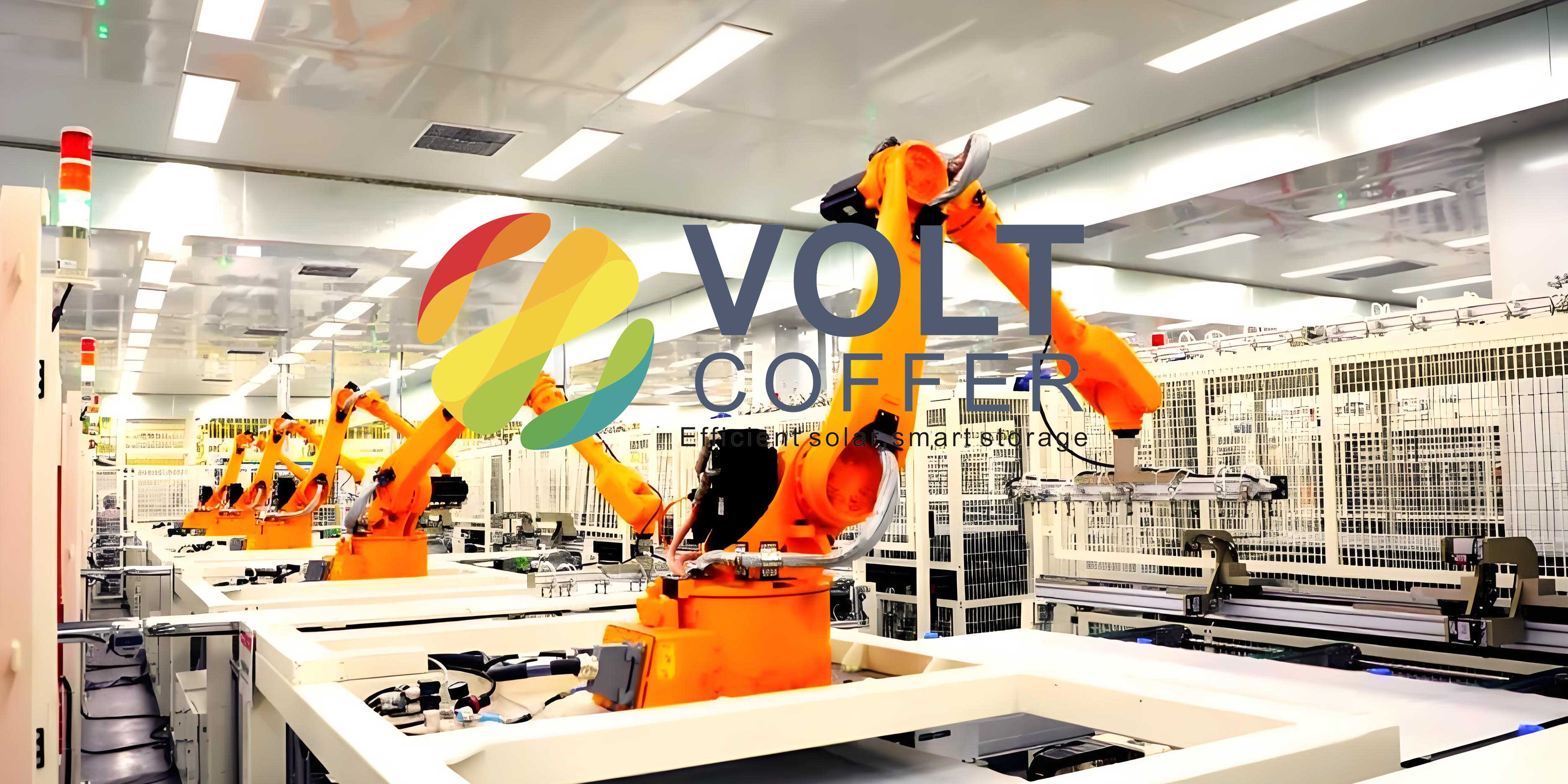
Another challenge is the overemphasis on quality, which can drive costs unnecessarily high. While quality is paramount, exceeding customer specifications without cost-benefit analysis leads to diminishing returns. For instance, using premium materials for standard applications increases direct costs without proportional revenue gains. In accounts receivable management, lax credit policies result in bad debts and increased financing costs. This is particularly critical for a solar panel company dealing with large-scale projects, where delayed payments can strain cash flow. The following table outlines common cost control problems and their implications:
| Problem Area | Specific Issue | Impact on Cost |
|---|---|---|
| R&D Phase | Poor alignment with production capabilities | Increased prototyping and redesign costs |
| Technology Investment | Inaccurate valuation of intellectual property | Higher amortization and potential write-offs |
| Production | Inefficient material usage and labor allocation | Rise in variable costs per unit |
| Budgeting | Limited cross-functional input | Unrealistic targets leading to overspending |
| Quality Management | Over-engineering beyond requirements | Unnecessary material and labor expenses |
| Accounts Receivable | Inadequate credit risk assessment | Increased bad debt provisions and interest costs |
To address these challenges, I propose several strategies grounded in lean principles. First, enhancing R&D phase cost control is essential. This involves cross-functional collaboration, where marketing and production teams provide input during design. For example, value engineering techniques can be applied to optimize product functionality against cost: $$ \text{Value} = \frac{\text{Function}}{\text{Cost}} $$ By maximizing this ratio, a solar panel company can develop products that meet market needs without excessive expenses. Financial oversight should include pre-approval mechanisms for R&D expenditures, ensuring alignment with project budgets. This proactive approach helps prevent cost overruns and fosters innovation that supports the goal of becoming the best solar panel company.
Second, mitigating technology equity risks requires rigorous assessment. Engaging independent experts to evaluate technological contributions can prevent overvaluation. Additionally, legal safeguards, such as warranties from technology providers, protect against defects. In manufacturing, cost control should focus on procurement and production optimization. Strategic sourcing through competitive bidding for key materials like silicon wafers can reduce purchase prices. Implementing ERP systems with bill of materials (BOM) integration ensures accurate material tracking. The cost per unit can be modeled as: $$ \text{Unit Cost} = \frac{\text{Total Material Cost} + \text{Total Labor Cost} + \text{Overhead}}{\text{Units Produced}} $$ By monitoring this metric, managers can identify inefficiencies and take corrective actions, such as automating processes to reduce labor costs.
Third, improving budget management participation is crucial. Top-down commitment from leadership must be coupled with bottom-up input from all departments. For instance, regular budget reviews involving R&D, production, and sales teams can align financial plans with operational realities. This collaborative effort ensures that cost targets are realistic and achievable, a hallmark of the best solar panel company. Moreover, balancing quality and cost involves segmenting customers and products. Not all orders require premium specifications; by tailoring quality levels to application needs, firms can avoid unnecessary expenses. The trade-off can be expressed using a cost-quality function: $$ C(Q) = aQ^2 + bQ + c $$ where C is cost, Q is quality level, and a, b, c are constants. Optimizing this function helps determine the ideal quality point that minimizes cost while satisfying customer requirements.
Fourth, fully embracing lean cost management means integrating it across the organization. Tools like 6S (Sort, Set in order, Shine, Standardize, Sustain, Safety) should be applied not just to production floors but to administrative processes. For example, reducing paperwork delays can cut overhead costs. Performance metrics, such as cycle time and defect rate, should be tracked using statistical process control (SPC). The defect rate formula: $$ \text{Defect Rate} = \frac{\text{Number of Defective Units}}{\text{Total Units Produced}} \times 100\% $$ can guide continuous improvement efforts. By targeting root causes rather than symptoms, a solar panel company can achieve sustainable cost reductions, reinforcing its reputation as the best solar panel company.
Finally, sales process cost control, particularly in accounts receivable, demands attention. Implementing stringent credit policies and linking sales incentives to collection efficiency can accelerate cash flow. The cost of carrying receivables can be calculated as: $$ \text{Carrying Cost} = \text{Average Receivables} \times \text{Cost of Capital} $$ Minimizing this cost through prompt collections reduces financial strain and supports lean operations. In conclusion, by addressing these areas, PV enterprises can harness lean manufacturing to control costs effectively. As the industry evolves, those who master these principles will not only survive but thrive, embodying the qualities of the best solar panel company. The journey requires commitment, but the rewards—enhanced profitability and market leadership—are well worth the effort.
In summary, the integration of lean manufacturing and cost control is indispensable for solar panel companies in today’s competitive landscape. From R&D to sales, every stage offers opportunities for optimization. By fostering a culture of continuous improvement and cross-functional collaboration, firms can overcome challenges and achieve operational excellence. The strategies discussed here, backed by quantitative analysis and real-world applications, provide a roadmap for sustainable growth. As I continue to advocate for these practices, I am confident that any dedicated solar panel company can transform itself into the best solar panel company, driving the renewable energy revolution forward while maintaining financial health.