
As the global energy landscape shifts toward sustainability, solar power enterprises have emerged as pivotal players in the renewable sector. From my perspective, managing finances and accounting processes effectively is crucial for these companies to thrive. The best solar panel company must navigate complex financial challenges, including tax regulations, cash flow management, and technological investments, to maintain competitiveness. In this analysis, I will explore strategies to enhance financial operations, supported by tables and formulas, and discuss their significance in driving growth. By integrating these approaches, a solar power enterprise can optimize resources, mitigate risks, and solidify its position as a leader in the industry.
Overview of the Solar Power Industry
The solar power industry has experienced rapid growth, driven by global commitments to reduce carbon emissions and achieve carbon neutrality. As a key component of the clean energy transition, solar enterprises must adapt to evolving policies and market demands. The best solar panel company often leverages innovation and strategic financial planning to capitalize on these opportunities. For instance, advancements in photovoltaic technology, such as perovskite and silicon heterojunction cells, have improved efficiency, making solar energy more cost-effective. However, financial management remains a cornerstone for sustainability, as it involves balancing investments in research, infrastructure, and operational costs. In this context, I will delve into specific strategies that can fortify financial and accounting frameworks, ensuring long-term viability.
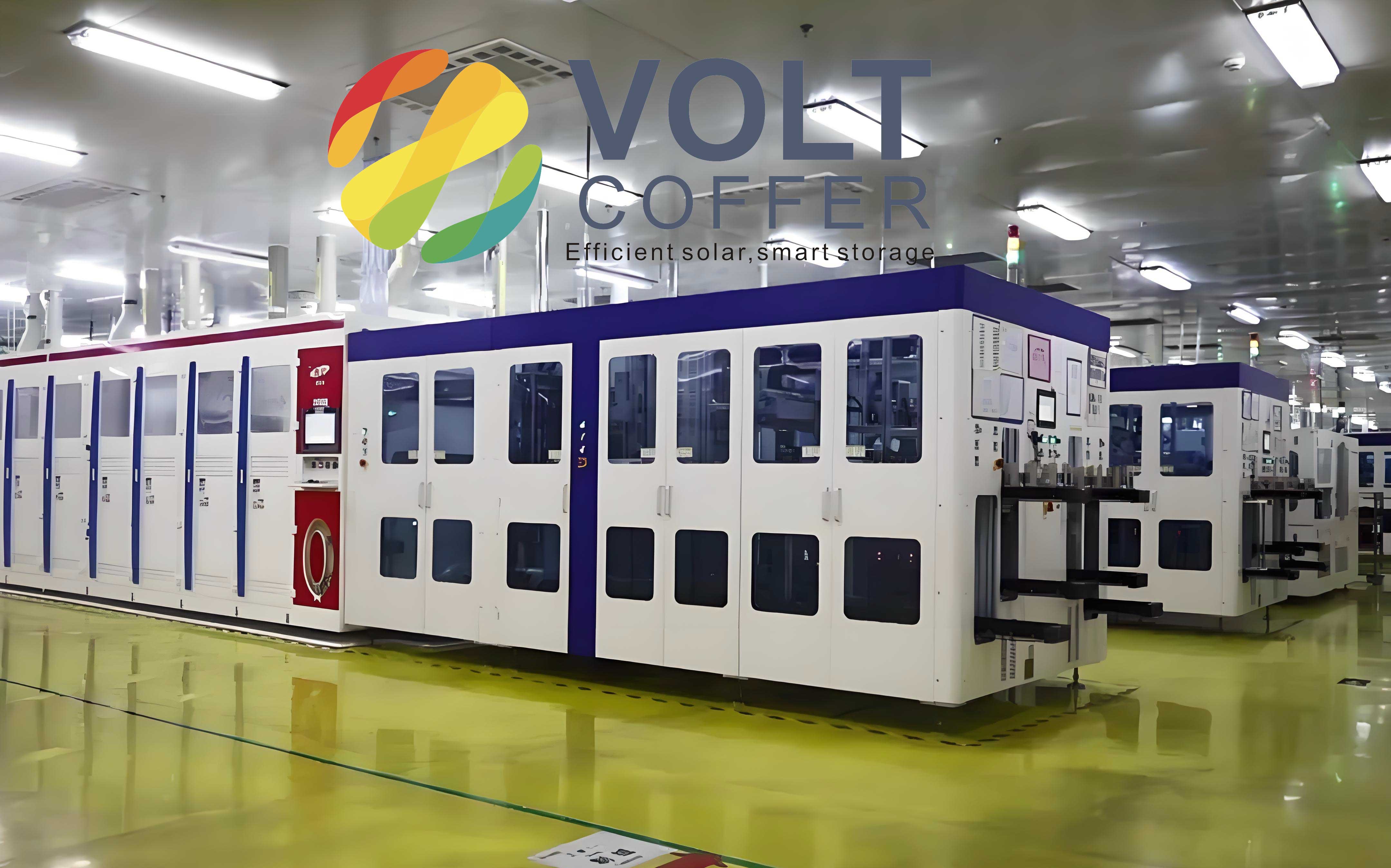
Strategies for Enhancing Financial Management and Accounting
To excel as the best solar panel company, enterprises must implement robust financial strategies. These include strengthening infrastructure, researching tax policies, enhancing indicator预警, improving fund management, advancing informatization, fortifying risk protection, and optimizing work methods. Each of these elements contributes to a holistic financial framework that supports operational efficiency and risk mitigation.
Strengthening Infrastructure
Building a solid infrastructure is fundamental for accurate financial and accounting operations. This involves training accounting personnel to understand the unique aspects of solar power finance, such as project lifecycle costs and revenue streams from electricity sales. For example, a best solar panel company might invest in continuous education programs to keep staff updated on industry trends and regulatory changes. Additionally, establishing financial shared service centers can centralize data processing, reducing errors and improving consistency. A key formula to evaluate infrastructure efficiency is the return on investment (ROI): $$ ROI = \frac{Net\ Profit}{Total\ Investment} \times 100\% $$ This helps assess the effectiveness of infrastructure upgrades. Below is a table summarizing infrastructure components and their impact:
| Component | Description | Impact on Financial Management |
|---|---|---|
| Training Programs | Workshops on solar industry specifics | Enhances accuracy in financial reporting |
| Financial Shared Centers | Centralized data hubs | Reduces processing time and costs |
| Technology Integration | Use of AI for data analysis | Improves decision-making speed |
By focusing on these areas, a solar power enterprise can ensure that its financial operations align with industry standards, positioning itself as the best solar panel company in terms of reliability and efficiency.
Researching Tax Policies
Tax policies play a critical role in the financial health of solar enterprises. As a best solar panel company, it is essential to analyze and leverage tax incentives, such as credits for renewable energy investments or deductions for research and development. For instance, in many regions, solar projects qualify for investment tax credits (ITC), which can significantly reduce upfront costs. The effective tax rate can be calculated using: $$ Effective\ Tax\ Rate = \frac{Total\ Tax}{Taxable\ Income} \times 100\% $$ This formula helps in comparing tax burdens across different jurisdictions. Below is a table outlining common tax considerations:
| Tax Type | Potential Benefits | Strategic Actions |
|---|---|---|
| Value-Added Tax (VAT) | Exemptions for green energy | Align projects with eligible categories |
| Corporate Income Tax | Lower rates for tech firms | Apply for高新技术企业 status |
| Customs Duties | Waivers on imported materials | Optimize supply chain logistics |
By diligently researching tax policies, a solar power enterprise can minimize liabilities and reinvest savings into innovation, reinforcing its reputation as the best solar panel company.
Enhancing Indicator预警
Financial indicators serve as early warning systems for potential risks, such as cash flow shortages or inventory imbalances. For a best solar panel company, monitoring metrics like current ratio or debt-to-equity ratio is vital. The current ratio, for example, is given by: $$ Current\ Ratio = \frac{Current\ Assets}{Current\ Liabilities} $$ A ratio below 1 may indicate liquidity issues. Similarly, inventory turnover can be assessed with: $$ Inventory\ Turnover = \frac{Cost\ of\ Goods\ Sold}{Average\ Inventory} $$ High turnover suggests efficient management. The table below highlights key indicators and their implications:
| Indicator | Formula | 预警 Threshold |
|---|---|---|
| Cash Flow Coverage | $$ \frac{Operating\ Cash\ Flow}{Total\ Debt} $$ | < 1.0 signals risk |
| Net Profit Margin | $$ \frac{Net\ Profit}{Revenue} \times 100\% $$ | Declining trends need action |
| Accounts Receivable Days | $$ \frac{Accounts\ Receivable}{Revenue} \times 365 $$ | > 60 days requires review |
By setting up automated预警 systems, a solar enterprise can proactively address financial imbalances, ensuring stability and growth as the best solar panel company.
Improving Fund Management
Efficient fund management is crucial for maximizing returns and minimizing risks. A best solar panel company should implement centralized platforms, such as financial sharing systems, to monitor and allocate funds across subsidiaries. The time value of money can be evaluated using the net present value (NPV) formula: $$ NPV = \sum_{t=0}^{T} \frac{CF_t}{(1 + r)^t} $$ where \( CF_t \) is cash flow in period \( t \), and \( r \) is the discount rate. Positive NPV indicates viable investments. Additionally, the weighted average cost of capital (WACC) helps in funding decisions: $$ WACC = \frac{E}{V} \times Re + \frac{D}{V} \times Rd \times (1 – Tc) $$ where \( E \) is equity, \( D \) is debt, \( V \) is total value, \( Re \) is cost of equity, \( Rd \) is cost of debt, and \( Tc \) is corporate tax rate. The table below compares fund management techniques:
| Technique | Application | Benefit |
|---|---|---|
| Cash Pooling | Centralizing balances | Reduces idle funds |
| Budget Control | Setting spending limits | Prevents overspending |
| Investment Analysis | Using NPV and IRR | Ensures profitable projects |
Through these methods, a solar power enterprise can enhance liquidity and support strategic initiatives, cementing its status as the best solar panel company.
Advancing Informatization
In the digital age, informatization is key to streamlining financial processes. A best solar panel company should adopt advanced software for real-time data analysis and integration between departments. For example, enterprise resource planning (ERP) systems can automate accounting entries and generate insights using algorithms. A useful formula for measuring system efficiency is the data processing rate: $$ Processing\ Rate = \frac{Transactions\ Processed}{Time} $$ Higher rates indicate better performance. Moreover, machine learning models can predict financial trends, such as revenue fluctuations: $$ Revenue\ Forecast = \alpha \times Historical\ Data + \beta \times Market\ Indicators $$ where \( \alpha \) and \( \beta \) are coefficients. The table below outlines informatization components:
| Component | Function | Impact |
|---|---|---|
| Cloud Computing | Data storage and access | Enhances scalability |
| Blockchain | Secure transaction records | Reduces fraud risk |
| AI Analytics | Predictive modeling | Improves accuracy in planning |
By leveraging these technologies, a solar enterprise can achieve seamless operations and maintain a competitive edge as the best solar panel company.
Fortifying Risk Protection
Risk management is essential for safeguarding assets and ensuring continuity. A best solar panel company must identify potential threats, such as cyberattacks or market volatility, and implement countermeasures. The value at risk (VaR) formula can quantify financial exposure: $$ VaR = Portfolio\ Value \times Z-Score \times Volatility $$ where the Z-Score corresponds to a confidence level. Additionally, the probability of default can be modeled with: $$ PD = \frac{Number\ of\ Defaults}{Total\ Observations} $$ This helps in credit risk assessment. The table below summarizes risk types and mitigation strategies:
| Risk Type | Mitigation Strategy | Tools Used |
|---|---|---|
| Operational Risk | Redundant systems | Backup servers |
| Financial Risk | Hedging instruments | Derivatives |
| Compliance Risk | Regular audits | Regulatory software |
Through proactive risk protection, a solar power enterprise can minimize losses and build resilience, aligning with the standards of the best solar panel company.
Optimizing Work Methods
Refining work methods, such as audit processes and staff training, can significantly improve financial accuracy. For a best solar panel company, adopting standardized procedures ensures consistency and compliance. The efficiency of work methods can be measured with the process cycle efficiency: $$ PCE = \frac{Value-Added\ Time}{Total\ Cycle\ Time} $$ Higher PCE indicates leaner operations. Furthermore, the economic order quantity (EOQ) model optimizes inventory management: $$ EOQ = \sqrt{\frac{2DS}{H}} $$ where \( D \) is demand, \( S \) is ordering cost, and \( H \) is holding cost. The table below compares optimization techniques:
| Technique | Application | Outcome |
|---|---|---|
| Lean Accounting | Eliminating waste | Reduces costs |
| Automated Audits | AI-driven checks | Increases accuracy |
| Cross-Training | Multi-skilled staff | Enhances flexibility |
By continuously improving work methods, a solar enterprise can boost productivity and uphold its reputation as the best solar panel company.
Significance of Improving Financial Management and Accounting
Enhancing financial and accounting practices offers multifaceted benefits for solar power enterprises. It not only reduces operational risks but also elevates corporate strength, improves fund utilization, strengthens internal controls, optimizes cost management, promotes sustainability, and boosts market competitiveness. As the best solar panel company, these advantages translate into long-term growth and industry leadership.
Risk Reduction
Effective financial management mitigates risks by providing clear insights into cash flow and liabilities. For instance, using formulas like the debt service coverage ratio: $$ DSCR = \frac{Net\ Operating\ Income}{Total\ Debt\ Service} $$ helps ensure that the company can meet its obligations. A best solar panel company that maintains a DSCR above 1.2 is generally considered low-risk. This proactive approach prevents financial distress and supports stable operations.
Enhancing Corporate Strength
Strong financial frameworks enable a solar enterprise to invest in innovation and expansion. By analyzing key metrics, such as return on equity (ROE): $$ ROE = \frac{Net\ Income}{Shareholders’\ Equity} \times 100\% $$ the best solar panel company can demonstrate profitability to investors. This attracts capital and fosters trust, positioning the firm for scalable growth in the competitive renewable energy market.
Improving Fund Use Efficiency
Optimizing fund allocation ensures that resources are directed toward high-yield projects. The internal rate of return (IRR) is a critical formula: $$ IRR : such\ that\ NPV = 0 $$ Projects with IRR exceeding the cost of capital are prioritized. For the best solar panel company, this means faster capital turnover and reduced idle assets, leading to improved financial agility and resilience against market fluctuations.
Strengthening Internal Control and Supervision
Robust internal controls, such as segregation of duties and automated monitoring, prevent fraud and errors. The best solar panel company can use compliance scores: $$ Compliance\ Score = \frac{Number\ of\ Met\ Standards}{Total\ Standards} \times 100\% $$ to track adherence. High scores indicate effective supervision, which safeguards assets and enhances operational integrity, contributing to sustainable development.
Optimizing Cost Management and Control
Cost control is vital for maintaining profitability. Formulas like the break-even point: $$ Break-Even\ Point = \frac{Fixed\ Costs}{Price\ per\ Unit – Variable\ Cost\ per\ Unit} $$ help the best solar panel company determine the minimum output required to avoid losses. By implementing cost-saving measures, such as bulk purchasing or energy-efficient technologies, the enterprise can reduce expenses and increase margins.
Promoting Sustainable Development
Financial practices that prioritize sustainability, such as investing in green bonds or carbon credit programs, align with global environmental goals. The best solar panel company can measure its impact using the carbon footprint reduction: $$ Carbon\ Reduction = Baseline\ Emissions – Current\ Emissions $$ Positive results not only benefit the planet but also enhance brand image and stakeholder relations, driving long-term success.
Enhancing Market Competitiveness
Superior financial management allows a solar enterprise to offer competitive pricing and innovate rapidly. The best solar panel company can leverage market share analysis: $$ Market\ Share = \frac{Company\ Sales}{Total\ Market\ Sales} \times 100\% $$ to strategize expansions. By consistently outperforming rivals in financial efficiency, the firm captures more customers and solidifies its industry position.
Conclusion
In summary, the financial management and accounting processes in solar power enterprises are integral to their success. By adopting strategies like infrastructure development, tax policy research, indicator monitoring, and technological integration, a company can overcome challenges and seize opportunities. The best solar panel company will prioritize these areas to reduce risks, enhance efficiency, and promote sustainability. As the industry evolves, continuous improvement in financial practices will be key to achieving long-term growth and leading the transition to clean energy. Through diligent application of these principles, solar enterprises can not only survive but thrive in the dynamic global market.