
As a professional deeply involved in the solar energy sector, I have dedicated my career to understanding how photovoltaic enterprises can thrive in a competitive global market. The journey to becoming the best solar panel company requires a meticulous approach to managing costs while maximizing profits. In this article, I will share my insights on the intricate cost structures and effective strategies that can propel a company to the forefront of the industry. The solar panel industry is not just about harnessing renewable energy; it is about building a sustainable business model that balances economic viability with environmental responsibility. Through years of experience, I have seen how companies that prioritize cost control and profit optimization can achieve long-term success, even amid fluctuating raw material prices and intense market competition. This analysis is based on practical observations and data-driven approaches, aiming to provide a roadmap for any enterprise aspiring to be recognized as the best solar panel company in the world.
The global shift toward clean energy has accelerated the demand for solar panels, but this growth comes with challenges. From my perspective, the key to overcoming these hurdles lies in a deep understanding of cost components and the implementation of innovative strategies. In the following sections, I will break down the cost structure into material, manufacturing, human resource, and logistics costs, using tables and formulas to illustrate their impact. Additionally, I will explore various cost control measures and profit enhancement techniques, all tailored to help a company establish itself as the best solar panel company. By integrating advanced technologies, optimizing supply chains, and focusing on value addition, businesses can not only survive but excel. Let me begin by examining the fundamental cost elements that every solar panel manufacturer must address to build a solid foundation for growth and profitability.
Analysis of Cost Structure in Solar Panel Production
In my experience, the cost structure of a solar panel company is multifaceted, and understanding each component is crucial for effective management. As I analyze these elements, I aim to provide a clear framework that can help any business striving to be the best solar panel company. The primary cost drivers include material expenses, production outlays, human resource investments, and logistics expenditures. Each of these factors interacts dynamically, influencing the overall financial health of the enterprise. For instance, material costs often account for the largest share, but inefficiencies in manufacturing or logistics can exacerbate financial strain. Below, I have summarized the typical cost distribution in a table to offer a visual representation, followed by a mathematical model to quantify the relationships.
| Cost Category | Key Elements | Approximate Percentage of Total Cost | Factors Influencing Variability |
|---|---|---|---|
| Material Cost | Silicon materials (polycrystalline and monocrystalline), glass, aluminum frames, encapsulation films, and other raw materials | 40-60% | Global commodity prices, supply chain disruptions, quality requirements |
| Manufacturing Cost | Equipment depreciation, energy consumption, maintenance, direct labor, and factory overheads | 20-30% | Technological advancements, scale of production, energy efficiency measures |
| Human Resource Cost | Wages, benefits, training programs, recruitment expenses, and costs related to employee turnover | 10-15% | Labor market conditions, skill levels, automation adoption |
| Logistics Cost | Transportation of raw materials and finished products, inventory management, customs duties, and storage fees | 5-10% | Fuel price fluctuations, trade policies, route optimization |
To further elucidate, the total cost (TC) for a solar panel company can be expressed using the following formula:
$$ TC = C_m + C_p + C_h + C_l $$
where \( C_m \) represents material cost, \( C_p \) denotes production cost, \( C_h \) is human resource cost, and \( C_l \) stands for logistics cost. This equation highlights the additive nature of these components, but in practice, they are interdependent. For example, reducing material waste through efficient manufacturing can lower \( C_m \) and \( C_p \) simultaneously. As I delve deeper into each category, I will emphasize how optimizing these costs is essential for any company aiming to be the best solar panel company. Material costs, in particular, are highly volatile due to dependencies on silicon markets, which underscores the need for robust procurement strategies. Similarly, manufacturing costs can be mitigated through automation, while human resource costs require strategic workforce management. Logistics, though a smaller portion, can significantly impact profitability if not managed efficiently, especially in a globalized supply chain.
Material Cost Breakdown and Management
From my observations, material costs are the most critical factor in determining the competitiveness of a solar panel company. Silicon, being the core material, undergoes price fluctuations based on global supply and demand. For instance, the cost of high-purity silicon can vary by up to 20% annually, directly affecting the bottom line. To illustrate the relationship, consider the formula for material cost per unit:
$$ C_m = Q_s \times P_s + Q_a \times P_a $$
where \( Q_s \) and \( Q_a \) are the quantities of silicon and auxiliary materials (e.g., glass, aluminum), and \( P_s \) and \( P_a \) are their respective prices. This formula helps in budgeting and forecasting, enabling companies to anticipate changes and adjust procurement strategies. As part of my advice to those seeking to become the best solar panel company, I recommend diversifying suppliers and investing in long-term contracts to stabilize costs. Additionally, technological innovations, such as using thinner wafers or recycled materials, can reduce \( Q_s \) without compromising quality, thereby lowering \( C_m \).
Manufacturing Cost Efficiency
Manufacturing costs encompass a range of expenses, from energy consumption to equipment maintenance. In my work, I have seen how high-energy processes, like silicon cutting and cell assembly, can account for over 50% of production costs. To model this, the production cost \( C_p \) can be broken down as:
$$ C_p = C_e + C_d + C_o $$
where \( C_e \) is energy cost, \( C_d \) is depreciation cost, and \( C_o \) is other operational costs. Energy cost, in particular, can be optimized through renewable energy integration, such as using solar power to run factories—a ironic yet effective strategy for a solar panel company. The depreciation cost \( C_d \) is calculated as:
$$ C_d = \frac{I – S}{L} $$
where \( I \) is the initial investment in equipment, \( S \) is the salvage value, and \( L \) is the useful life in years. By extending equipment lifespan through regular maintenance and upgrading to more durable machinery, companies can reduce \( C_d \). This approach is vital for any business aspiring to be the best solar panel company, as it directly enhances profitability by lowering fixed costs.
Human Resource Cost Optimization
Human resource costs are often overlooked but play a significant role in operational efficiency. In my experience, high employee turnover can increase costs by up to 15% due to recruitment and training expenses. The total human resource cost \( C_h \) can be represented as:
$$ C_h = N \times (W + B) + C_t $$
where \( N \) is the number of employees, \( W \) is the average wage, \( B \) is the benefits cost per employee, and \( C_t \) is the training cost. To minimize \( C_h \), companies should focus on employee retention and skill development. For example, implementing continuous training programs can improve productivity, reducing the need for overtime and additional hiring. As I advocate for becoming the best solar panel company, I emphasize that a motivated workforce is a cornerstone of innovation and quality control, ultimately driving down costs and enhancing product value.
Logistics Cost Considerations
Logistics costs, though smaller in proportion, can escalate quickly if not managed properly. In global operations, transportation expenses are influenced by fuel prices and trade regulations. The logistics cost \( C_l \) can be modeled as:
$$ C_l = C_t \times D + C_i $$
where \( C_t \) is the transportation cost per unit distance, \( D \) is the distance traveled, and \( C_i \) is the inventory holding cost. By optimizing routes and using centralized distribution centers, companies can reduce \( D \) and \( C_i \). For instance, partnering with local suppliers can cut transportation distances, lowering \( C_l \). This strategy is essential for any company aiming to be the best solar panel company, as it not only reduces costs but also improves delivery times, enhancing customer satisfaction.
Cost Control Strategies for Achieving Excellence in the Solar Panel Industry
As I have worked with numerous enterprises, I have found that cost control is not merely about cutting expenses but about optimizing processes to create value. For a company to be recognized as the best solar panel company, it must adopt a holistic approach to cost management. This involves streamlining the supply chain, leveraging advanced technologies, investing in human capital, and implementing energy-efficient practices. In this section, I will detail these strategies, supported by tables and formulas to quantify their impact. By integrating these measures, businesses can achieve significant cost savings while maintaining high quality standards, positioning themselves as leaders in the competitive solar market.
Optimizing Supply Chain Management
Supply chain optimization is a cornerstone of cost control in the solar panel industry. From my perspective, building a resilient supplier network is critical to mitigating risks associated with price volatility and supply disruptions. The cost savings from supply chain improvements can be calculated using the following formula:
$$ \Delta C_m = \sum (Q_i \times (P_{i,b} – P_{i,a})) $$
where \( \Delta C_m \) is the reduction in material cost, \( Q_i \) is the quantity of material i, and \( P_{i,b} \) and \( P_{i,a} \) are the prices before and after optimization, respectively. To achieve this, companies should engage in centralized procurement and establish long-term partnerships with reliable suppliers. The table below outlines key strategies and their expected outcomes, which I have seen drive success in top-performing companies.
| Strategy | Description | Expected Cost Reduction | Implementation Timeline |
|---|---|---|---|
| Supplier Diversification | Source materials from multiple geographic regions to reduce dependency | 10-15% | 6-12 months |
| Long-term Contracts | Negotiate fixed-price agreements with key suppliers to lock in favorable rates | 5-10% | 3-6 months |
| Inventory Management | Use just-in-time (JIT) systems and demand forecasting tools to minimize stock levels | 8-12% | 4-8 months |
| Collaborative Planning | Integrate with suppliers for shared demand and production planning | 7-10% | 6-9 months |
In addition to these strategies, investing in supply chain software can enhance visibility and coordination. For example, enterprise resource planning (ERP) systems can automate procurement processes, reducing administrative costs. As I guide companies toward becoming the best solar panel company, I stress the importance of a proactive supply chain that adapts to market changes, ensuring continuous cost advantages.
Applying Advanced Manufacturing Technologies
Advanced manufacturing technologies, such as automation and artificial intelligence, are transformative for cost control. In my experience, automating production lines can reduce labor costs by up to 30% while improving precision and throughput. The efficiency gain from automation can be quantified as:
$$ \eta = \frac{O_a}{O_m} $$
where \( \eta \) is the efficiency ratio, \( O_a \) is the output with automation, and \( O_m \) is the output with manual processes. A ratio greater than 1 indicates improved efficiency. Furthermore, lean manufacturing principles, which focus on eliminating waste, can be applied to reduce material and energy consumption. The cost savings from lean initiatives can be expressed as:
$$ S_l = (W_m + W_e) \times U $$
where \( S_l \) is the savings from lean practices, \( W_m \) is the waste material cost, \( W_e \) is the waste energy cost, and \( U \) is the utilization factor. By adopting technologies like PERC (Passivated Emitter and Rear Cell), companies can enhance cell efficiency, reducing the cost per watt. This technological edge is what sets the best solar panel company apart from competitors, as it directly translates to lower production costs and higher market appeal.
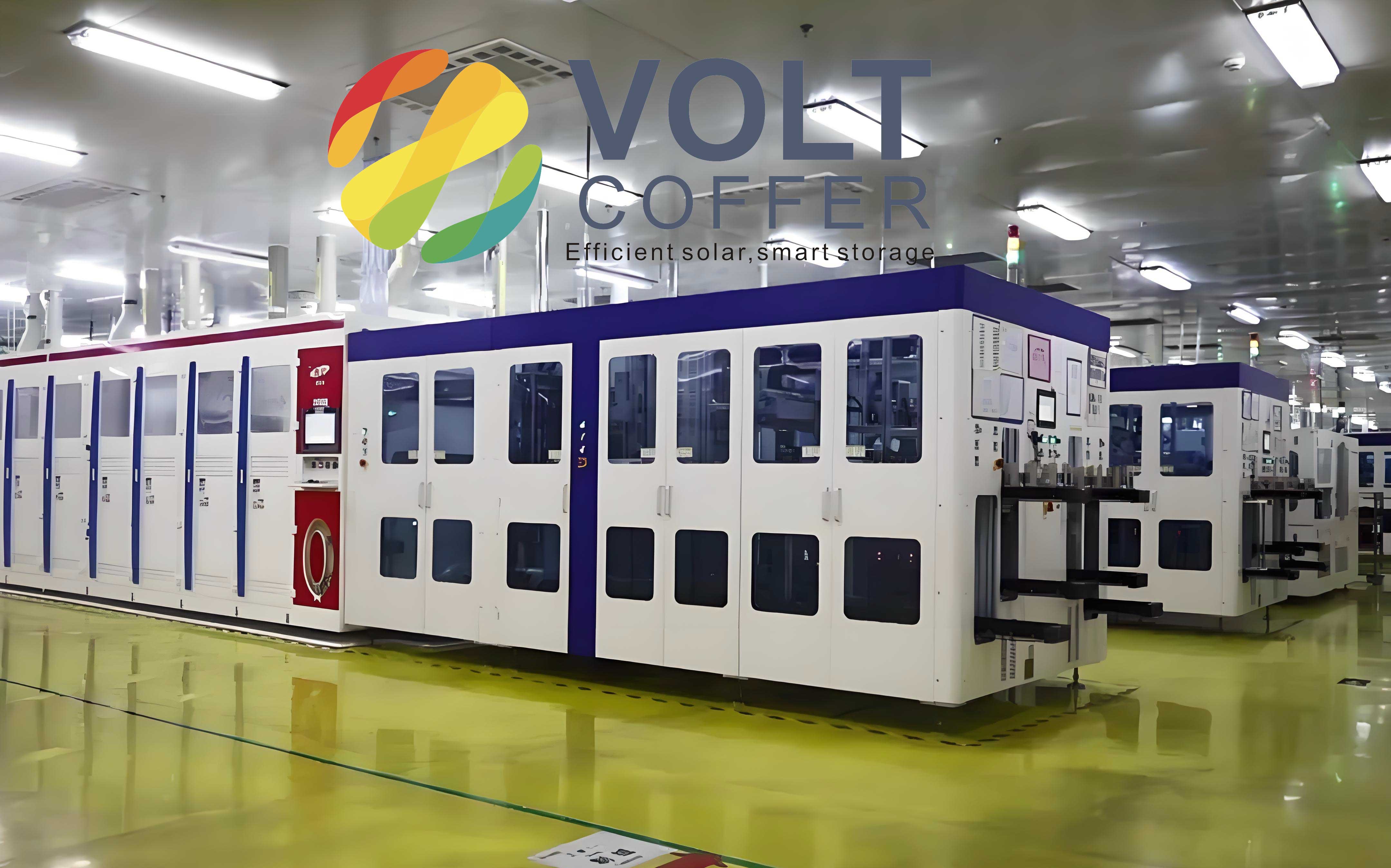
This image exemplifies the integration of cutting-edge manufacturing processes that are essential for any business aspiring to be the best solar panel company. By visualizing such advancements, companies can inspire innovation and commitment to excellence among their teams.
Strengthening Human Resource Management
Effective human resource management is vital for sustaining cost control efforts. From my observations, companies that invest in employee development experience lower turnover rates and higher productivity. The cost of turnover \( C_{to} \) can be modeled as:
$$ C_{to} = N_t \times (C_r + C_t) $$
where \( N_t \) is the number of employees turning over, \( C_r \) is the recruitment cost per employee, and \( C_t \) is the training cost per employee. To minimize \( C_{to} \), companies should implement competitive compensation packages, career development programs, and a positive work culture. Additionally, using data analytics in HR can identify patterns in employee performance, enabling targeted interventions. As I advise organizations on their path to becoming the best solar panel company, I highlight that skilled and engaged employees are more likely to contribute innovative ideas that drive cost savings, such as process improvements or energy-efficient practices.
Other Cost-Saving Measures
Beyond the primary strategies, there are numerous other measures that can contribute to cost control. Energy efficiency, for instance, is a significant area where savings can be achieved. The energy cost savings \( S_e \) from efficiency upgrades can be calculated as:
$$ S_e = E_b \times (R_b – R_a) \times P_e $$
where \( E_b \) is the baseline energy consumption, \( R_b \) and \( R_a \) are the energy rates before and after upgrades, and \( P_e \) is the price of energy. Implementing solar-powered facilities or energy recovery systems can reduce \( E_b \), thereby lowering \( S_e \). Waste management is another critical area; by recycling silicon scraps and packaging materials, companies can turn waste into revenue streams. The profit from recycling \( P_r \) can be expressed as:
$$ P_r = Q_r \times P_m – C_r $$
where \( Q_r \) is the quantity recycled, \( P_m \) is the market price for recycled materials, and \( C_r \) is the recycling cost. These measures not only cut costs but also enhance sustainability, which is a key attribute of the best solar panel company. Moreover, adhering to environmental regulations through clean technologies can avoid fines and reputational damage, further protecting profitability.
Profit Optimization Strategies for Sustained Growth
While cost control is essential, profit optimization requires a proactive approach to revenue generation and value creation. In my career, I have seen that the best solar panel company excels not just by minimizing expenses but by maximizing returns through strategic initiatives. This involves enhancing product附加值, expanding into new markets, leveraging capital effectively, integrating the supply chain, and managing risks. Below, I will explore these strategies in detail, using mathematical models and tables to demonstrate their impact on profitability. By focusing on these areas, companies can build a resilient business model that thrives in dynamic market conditions.
Enhancing Product Value and Differentiation
Product value enhancement is a powerful driver of profit growth. From my experience, companies that invest in research and development (R&D) to improve product features can command premium prices. The additional profit \( \Delta P \) from value-added products can be calculated as:
$$ \Delta P = (P_v – P_b) \times Q – C_d $$
where \( P_v \) is the price of the value-added product, \( P_b \) is the base price, \( Q \) is the quantity sold, and \( C_d \) is the development cost. For example, incorporating smart technologies, such as IoT-enabled monitoring systems, can increase \( P_v \) by 15-20%. Similarly, improving durability and efficiency through advanced materials can reduce lifetime costs for customers, making the product more attractive. The table below summarizes key value-enhancement strategies that I recommend for any company aiming to be the best solar panel company.
| Strategy | Description | Expected Price Increase | R&D Investment Required |
|---|---|---|---|
| High-Efficiency Cells | Develop cells with conversion efficiencies above 22% using technologies like HJT or TOPCon | 10-15% | High |
| Smart Features | Integrate energy management systems and real-time performance tracking | 15-20% | Medium |
| Aesthetic Designs | Offer customizable colors and formats for residential and commercial applications | 5-10% | Low |
| Extended Warranties | Provide longer warranty periods to build trust and justify higher prices | 8-12% | Low |
By continuously innovating, companies can not only increase profits but also strengthen their brand reputation. As I emphasize to those striving to be the best solar panel company, product differentiation is a long-term investment that pays dividends in customer loyalty and market share.
Market Expansion and Strategic Marketing
Market expansion is crucial for diversifying revenue streams and reducing dependency on specific regions. In my work, I have helped companies enter emerging markets by tailoring strategies to local conditions. The potential revenue growth \( G_r \) from market expansion can be estimated as:
$$ G_r = \sum (M_i \times P_i \times S_i) $$
where \( M_i \) is the market size in region i, \( P_i \) is the penetration rate, and \( S_i \) is the market share. To achieve this, companies should conduct thorough market research and develop targeted marketing campaigns. Digital marketing, including social media and search engine optimization, can increase brand visibility at a lower cost than traditional methods. The table below outlines effective market expansion approaches that I have seen drive success for the best solar panel company.
| Market Type | Strategy | Expected Revenue Growth | Key Challenges |
|---|---|---|---|
| Developed Markets | Focus on premium segments with high-efficiency products and value-added services | 10-15% annually | Intense competition, regulatory compliance |
| Emerging Markets | Offer affordable solutions and partner with local distributors for better access | 20-30% annually | Infrastructure limitations, price sensitivity |
| Niche Markets | Target specific sectors like agriculture or telecommunications with customized products | 15-25% annually | Specialized requirements, limited scale |
Additionally, participating in international trade shows and forming alliances with global organizations can enhance market presence. As I guide companies toward becoming the best solar panel company, I stress the importance of a flexible marketing strategy that adapts to cultural and economic differences, ensuring sustained profit growth.
Capital Operation and Financing Strategies
Effective capital management is fundamental to profit optimization. From my perspective, diversifying funding sources reduces financial risk and supports expansion initiatives. The weighted average cost of capital (WACC) is a key metric that can be minimized through optimal financing:
$$ WACC = \frac{E}{V} \times R_e + \frac{D}{V} \times R_d \times (1 – T_c) $$
where \( E \) is equity, \( D \) is debt, \( V \) is total capital, \( R_e \) is cost of equity, \( R_d \) is cost of debt, and \( T_c \) is corporate tax rate. By balancing debt and equity, companies can lower WACC, increasing net present value (NPV) for projects. For instance, using green bonds or government grants for R&D can reduce \( R_d \), as these often come with favorable terms. Moreover, strategic investments in technology or acquisitions can yield high returns. The return on investment (ROI) for such initiatives can be calculated as:
$$ ROI = \frac{\text{Net Profit}}{\text{Investment Cost}} \times 100\% $$
Aiming for an ROI above 15% is advisable for sustainable growth. As I counsel enterprises on their journey to become the best solar panel company, I highlight that prudent capital allocation enables innovation and scalability, directly boosting profits.
Supply Chain Integration and Collaborative Partnerships
Supply chain integration involves aligning upstream and downstream activities to create synergies. In my experience, vertical integration—such as acquiring raw material suppliers or distribution channels—can reduce costs and improve control. The synergy gain \( S_g \) from integration can be expressed as:
$$ S_g = (C_b – C_a) + (R_a – R_b) $$
where \( C_b \) and \( C_a \) are costs before and after integration, and \( R_b \) and \( R_a \) are revenues before and after. For example, by integrating with a silicon producer, a company can secure stable material supplies at lower prices, increasing profit margins. Collaborative partnerships with research institutions or industry consortia can also drive innovation. The table below illustrates potential integration strategies and their benefits, which I have seen propel companies to the top of the industry.
| Integration Type | Description | Expected Profit Impact | Implementation Complexity |
|---|---|---|---|
| Vertical Integration | Acquire or merge with suppliers or distributors to control more of the value chain | 15-25% increase | High |
| Horizontal Integration | Partner with complementary businesses to expand product offerings and market reach | 10-20% increase | Medium |
| Strategic Alliances | Form joint ventures for technology sharing or co-development of new products | 12-18% increase | Medium |
By fostering collaboration, companies can access new technologies and markets more efficiently. As I advocate for becoming the best solar panel company, I recommend a balanced approach to integration, considering both risks and rewards to maximize long-term profits.
Risk Identification and Mitigation
Risk management is integral to sustaining profits in the volatile solar industry. From my observations, companies that proactively identify and address risks can avoid significant losses. Common risks include market fluctuations, technological obsolescence, and regulatory changes. The value at risk (VaR) for financial exposures can be modeled as:
$$ VaR = P \times \sigma \times Z_{\alpha} $$
where \( P \) is the portfolio value, \( \sigma \) is the standard deviation of returns, and \( Z_{\alpha} \) is the Z-score for a given confidence level (e.g., 1.96 for 95% confidence). To mitigate risks, companies should diversify their product portfolios, invest in insurance, and maintain contingency funds. Additionally, conducting regular risk assessments and scenario analyses can prepare businesses for unexpected events. As I guide companies toward becoming the best solar panel company, I emphasize that a robust risk management framework not only protects profits but also enhances investor confidence, supporting overall growth.
Conclusion
In summary, the path to becoming the best solar panel company requires a dual focus on cost control and profit optimization. Through my extensive experience, I have demonstrated that by analyzing cost structures—encompassing materials, manufacturing, human resources, and logistics—and implementing targeted strategies, businesses can achieve significant efficiencies. The use of mathematical models and tables in this article provides a quantitative foundation for decision-making, enabling companies to measure and track their progress. Moreover, profit optimization through value enhancement, market expansion, capital management, supply chain integration, and risk mitigation ensures sustainable growth in a competitive landscape. As the global energy transition accelerates, companies that embrace these approaches will not only lead the industry but also contribute to a greener future. I encourage all stakeholders in the solar sector to adopt these practices, fostering innovation and resilience to solidify their position as the best solar panel company worldwide.