
In today’s rapidly evolving global economy, the solar photovoltaic (PV) industry has emerged as a critical sector for sustainable development. As an expert in this field, I have observed how financial risks can significantly impact the stability and growth of solar enterprises. This article delves into the intricacies of financial risk early warning and prevention, emphasizing the importance for any company aspiring to be the best solar panel company. By integrating theoretical frameworks with practical measures, I aim to provide a comprehensive guide that addresses common challenges and offers viable solutions. Throughout this discussion, I will incorporate tables and mathematical models to enhance clarity and depth, ensuring that readers gain actionable insights into managing financial risks effectively.
The global shift towards renewable energy has positioned solar PV enterprises at the forefront of innovation and economic transformation. However, this promising landscape is fraught with financial uncertainties, from market volatility to regulatory changes. As I explore these aspects, I will highlight how a proactive approach to risk management can not only safeguard a company’s assets but also propel it toward becoming the best solar panel company in a competitive market. Let’s begin by examining the solar PV industry’s current state and its inherent financial dynamics.
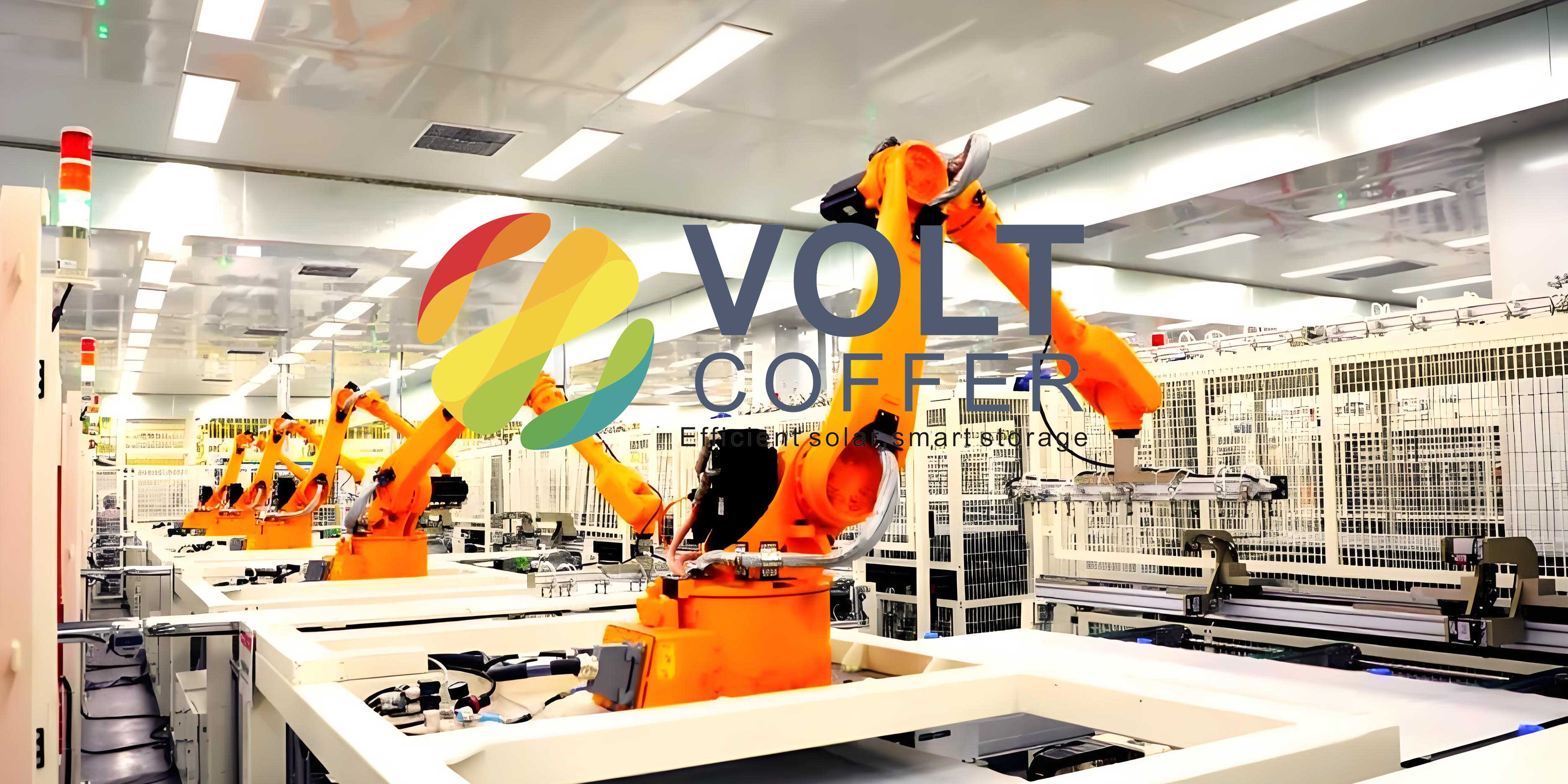
Solar PV Industry Overview
The solar PV industry has experienced exponential growth since the early 21st century, driven by technological advancements and increasing global demand for clean energy. As I analyze this sector, it’s evident that companies striving to be the best solar panel company must navigate a complex interplay of factors, including policy incentives, resource availability, and market competition. In many regions, governments have implemented subsidies and support mechanisms to encourage solar adoption, leading to a surge in enterprise formations. However, this growth is not without challenges; for instance, the reliance on governmental policies can create vulnerabilities when those policies shift. Below, I present a table summarizing key global trends and their implications for financial risk.
| Trend | Description | Financial Risk Impact |
|---|---|---|
| Technological Innovation | Rapid advancements in panel efficiency and storage solutions | High R&D costs may strain cash flow if not managed properly |
| Policy Subsidies | Government incentives for renewable energy adoption | Sudden policy changes can lead to revenue instability |
| Market Expansion | Growing demand in emerging economies | Increased competition may pressure profit margins |
| Resource Availability | Abundant solar resources in regions like Asia and North America | Geographic dependencies can affect supply chain costs |
From a mathematical perspective, the growth of the solar PV industry can be modeled using a logistic function to account for saturation points. For example, the cumulative installed capacity \( C(t) \) at time \( t \) might follow:
$$ C(t) = \frac{L}{1 + e^{-k(t – t_0)}} $$
where \( L \) is the maximum capacity, \( k \) is the growth rate, and \( t_0 \) is the midpoint of growth. This model helps in forecasting demand and assessing financial risks related to overexpansion. As I proceed, I will emphasize how such analytical tools are essential for any best solar panel company aiming to mitigate uncertainties.
Financial Risk Early Warning: An Overview
Financial risk early warning systems are pivotal for preempting crises in solar PV enterprises. In my experience, these systems rely on monitoring key financial indicators to detect potential threats before they escalate. For a company to be recognized as the best solar panel company, it must integrate quantitative and qualitative methods to assess risks such as liquidity shortages, debt overload, and operational inefficiencies. A robust early warning framework typically involves setting thresholds for indicators like debt-to-equity ratio, current ratio, and return on assets. Below, I outline a common set of indicators and their risk thresholds in a table format.
| Indicator | Formula | Low Risk Threshold | High Risk Threshold |
|---|---|---|---|
| Debt-to-Equity Ratio | $$ \text{Debt-to-Equity} = \frac{\text{Total Liabilities}}{\text{Shareholders’ Equity}} $$ | < 0.5 | > 1.0 |
| Current Ratio | $$ \text{Current Ratio} = \frac{\text{Current Assets}}{\text{Current Liabilities}} $$ | > 1.5 | < 1.0 |
| Return on Assets (ROA) | $$ \text{ROA} = \frac{\text{Net Income}}{\text{Total Assets}} $$ | > 5\% | < 2\% |
| Cash Flow to Debt Ratio | $$ \text{Cash Flow to Debt} = \frac{\text{Operating Cash Flow}}{\text{Total Debt}} $$ | > 0.2 | < 0.1 |
To enhance the precision of risk assessment, I often recommend using multivariate models like the Altman Z-score for manufacturing firms, adapted for solar PV contexts. The Z-score formula is:
$$ Z = 1.2X_1 + 1.4X_2 + 3.3X_3 + 0.6X_4 + 1.0X_5 $$
where \( X_1 \) is working capital to total assets, \( X_2 \) is retained earnings to total assets, \( X_3 \) is earnings before interest and taxes to total assets, \( X_4 \) is market value of equity to total liabilities, and \( X_5 \) is sales to total assets. A score below 1.8 indicates high risk, while above 3.0 suggests stability. By regularly computing such scores, a best solar panel company can proactively address financial distress.
Problems in Financial Risk Early Warning and Prevention
Despite the clear benefits, many solar PV enterprises struggle with effective financial risk management. In my analysis, I have identified several recurring issues that hinder progress. First, there is a widespread lack of scientific risk warning methods. Many companies rely on outdated qualitative approaches, neglecting advanced techniques like Monte Carlo simulations or analytic hierarchy process (AHP). For instance, without probabilistic modeling, it’s challenging to account for uncertainties in market demand or policy shifts. Second, the absence of standardized financial risk management信息系统 impedes data integrity and timely decision-making. Incomplete datasets can lead to flawed risk assessments, exacerbating vulnerabilities. Third, a general lack of emphasis on risk management often results from overreliance on government subsidies, causing companies to overlook internal controls. The table below summarizes these problems and their consequences.
| Problem | Description | Potential Impact |
|---|---|---|
| Inadequate Warning Methods | Overuse of traditional qualitative analysis without integrating quantitative models | Delayed response to emerging risks, increased likelihood of financial crises |
| Poor Information Systems | Lack of integrated data platforms leading to unreliable financial data | Ineffective risk monitoring and inaccurate forecasting |
| Neglect of Risk Management | Focus on expansion without considering financial stability | High exposure to market fluctuations and policy changes |
From a mathematical standpoint, the inefficiency in risk assessment can be illustrated using a simple probability model. Suppose the probability of a financial crisis occurring due to poor warning systems is \( P(C) \), and the cost of such a crisis is \( L \). The expected loss \( E(L) \) can be expressed as:
$$ E(L) = P(C) \times L $$
If warning systems are improved, reducing \( P(C) \) by a factor \( \alpha \), the new expected loss becomes \( E(L)’ = \alpha P(C) \times L \), leading to significant savings. For a best solar panel company, investing in advanced methods is not just optional but essential to minimize \( E(L) \) and ensure long-term viability.
Measures for Financial Risk Early Warning and Prevention
To address these challenges, I propose a multi-faceted approach that combines internal controls, technological integration, and strategic awareness. First, strengthening internal control systems is fundamental. This involves establishing a robust internal environment, conducting regular risk assessments, and fostering effective communication channels. For example, implementing anti-fraud mechanisms and training programs can enhance transparency. Second, enhancing information management through precise data analysis and digital platforms is crucial. A best solar panel company should leverage big data and IoT technologies to monitor financial indicators in real-time. Third, increasing the emphasis on risk management requires both external vigilance—such as tracking policy changes—and internal measures like dedicated risk departments. The table below outlines these measures and their expected outcomes.
| Measure | Implementation Steps | Expected Outcome |
|---|---|---|
| Internal Control Enhancement | Set up anti-fraud units, conduct risk assessments, and improve information flow | Reduced operational risks and improved compliance |
| Information Management Upgrade | Develop online platforms for data integration and analysis | Faster decision-making and accurate risk forecasting |
| Risk Management Focus | Monitor external policies and establish internal risk committees | Enhanced adaptability to market changes and crisis resilience |
In terms of quantitative support, I often use optimization models to balance R&D investments, a common source of financial strain. For instance, consider a company aiming to allocate funds between technology development and marketing. Let \( x_1 \) be the investment in R&D and \( x_2 \) in marketing, with a total budget \( B \). The objective might be to maximize return \( R \) while minimizing risk \( \sigma \), formulated as:
$$ \text{Maximize } R = a_1 x_1 + a_2 x_2 – b_1 x_1^2 – b_2 x_2^2 $$
$$ \text{Subject to } x_1 + x_2 \leq B $$
$$ x_1, x_2 \geq 0 $$
where \( a_1, a_2 \) are returns per unit investment, and \( b_1, b_2 \) represent risk coefficients. By solving this, a best solar panel company can optimize resource allocation, reducing financial exposure. Additionally, integrating such models into early warning systems allows for dynamic adjustments based on real-time data.
Conclusion
In conclusion, financial risk early warning and prevention are indispensable for the sustainability of solar PV enterprises. Through my extensive analysis, I have demonstrated that a proactive stance—incorporating scientific methods, robust information systems, and a culture of risk awareness—can transform challenges into opportunities. As the industry evolves, companies that prioritize these aspects will not only survive but thrive, potentially becoming the best solar panel company in their market. The integration of mathematical models and structured frameworks, as illustrated in this article, provides a roadmap for achieving financial resilience. Ultimately, by embracing these strategies, solar PV enterprises can contribute to a greener economy while safeguarding their economic interests, ensuring a harmonious balance between profit and planet.
Looking ahead, I encourage continuous innovation in risk management practices, adapting to emerging trends like digital twins and AI-driven analytics. As I have emphasized, the journey toward financial stability requires diligence and adaptability, but the rewards—both economic and environmental—are well worth the effort. For any enterprise in this sector, the commitment to excellence in risk management is a cornerstone of lasting success.