
With the global energy structure rapidly transitioning towards low-carbon alternatives, renewable energy sources such as wind, solar, hydro, and biomass have become central drivers in modernizing power systems. While these clean energy technologies offer significant environmental benefits and sustainability, their inherent intermittency and distributed nature—such as diurnal fluctuations in solar power and seasonal variations in wind energy—often result in unstable grid power quality. Historically, this instability led to these sources being labeled as “unreliable power.” However, the advent of advanced energy storage technologies has transformed this narrative. By enabling “peak shaving and valley filling” capabilities, energy storage systems facilitate dynamic matching between renewable generation and grid demand, positioning them as critical hubs in next-generation power networks. Among various storage solutions, electrochemical energy storage, particularly lithium-ion-based systems, has emerged as the dominant choice for grid-scale applications due to its modular design, rapid response, and deployment flexibility. Nevertheless, the thermal behavior of energy storage cells during operation presents significant challenges that must be addressed to ensure safety, efficiency, and longevity.
The operation of energy storage cells involves heat generation due to internal resistance and electrochemical reactions. If this heat is not efficiently dissipated, it can lead to elevated temperatures within the cells. Mild temperature increases may merely degrade performance, but severe cases can trigger thermal runaway—a dangerous condition that risks fire or explosion. Additionally, temperature inconsistencies among individual energy storage cells in a pack can cause uneven aging, ultimately reducing the overall capacity, safety, and charge-discharge efficiency of the system. Lithium-ion energy storage cells perform optimally within a temperature range of 293–313 K, with a temperature uniformity of less than 5 K. Exceeding this 5 K differential can accelerate cycle life degradation by over 30%. Moreover, temperatures above 393 K pose a high risk of thermal runaway as lithium embedded in graphite may react with electrolyte components and binders. Thus, effective thermal management systems are paramount for the economic viability and reliability of energy storage systems.
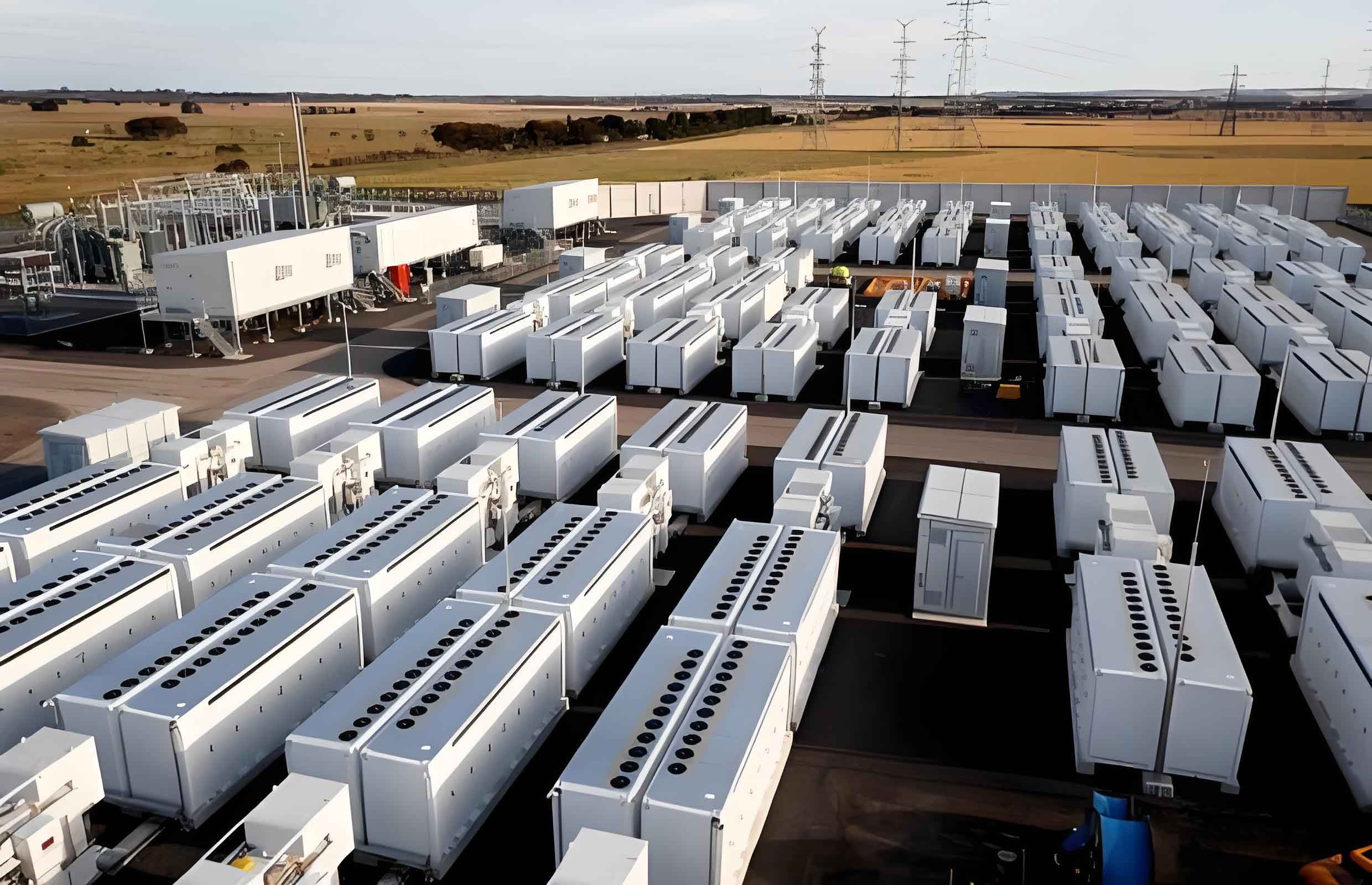
In practical grid operations, energy storage cells must handle high-rate charging and discharging during sudden surges in renewable generation or peak demand periods. Without adequate thermal management, these high-rate operations can cause rapid temperature spikes and significant thermal gradients. To maintain energy storage cells within safe operating limits, advanced cooling strategies are essential. Common techniques include air cooling, liquid cooling, and phase change cooling. Liquid cooling stands out due to its rapid heat transfer, stability, and effectiveness in controlling maximum temperatures and enhancing uniformity across energy storage cells.
This study addresses the thermal challenges of energy storage cells under high-rate conditions by proposing a novel bidirectional counter-flow heat exchange plate. We compare three liquid cooling configurations through numerical simulations: bottom-mounted unidirectional flow plates (Scheme 1), side-mounted unidirectional flow plates (Scheme 2), and side-mounted bidirectional counter-flow plates (Scheme 3). Evaluations are conducted at conventional (1 C), high (3 C), and ultra-high (5 C) charge-discharge rates to assess their efficacy in managing temperature rises and gradients in energy storage cells.
Mathematical Modeling and Simulation Setup
The thermal behavior of energy storage cells is governed by heat generation and transfer mechanisms. We employ the Bernardi model to calculate the heat generation rate in lithium-ion energy storage cells:
$$q = \frac{I}{V_b} \left[ (E_0 – U) – T \frac{dE_0}{dT} \right] = \frac{1}{V_b} \left( I^2 R – I T \frac{dE_0}{dT} \right)$$
Here, \( V_b \) represents the volume of the energy storage cell, \( E_0 \) is the open-circuit voltage, \( U \) is the terminal voltage, \( T \) is the instantaneous temperature, \( I \) is the current, and \( R \) is the internal resistance. This equation accounts for both irreversible (Joule heating) and reversible (entropic) heat effects in energy storage cells.
The three-dimensional heat conduction within the anisotropic energy storage cell is described by:
$$\rho C_p \frac{\partial T}{\partial t} = \lambda_x \frac{\partial^2 T}{\partial x^2} + \lambda_y \frac{\partial^2 T}{\partial y^2} + \lambda_z \frac{\partial^2 T}{\partial z^2} + Q$$
where \( \rho \) is the density, \( C_p \) is the specific heat capacity, \( \lambda_x, \lambda_y, \lambda_z \) are the thermal conductivities along the principal axes, and \( Q \) is the volumetric heat generation rate. For our energy storage cells, the thermal conductivity is anisotropic, with values of 18.3 W/(m·K) in the planar directions and 1.1 W/(m·K) through the thickness, reflecting the layered structure of electrodes and separators.
The cooling fluid dynamics within the heat exchange plates are modeled using the continuity, momentum, and energy equations:
$$\frac{\partial \mathbf{v}}{\partial t} + (\mathbf{v} \cdot \nabla) \mathbf{v} = -\frac{\nabla p}{\rho_w} + \frac{\mu}{\rho_w} \nabla^2 \mathbf{v} + \mathbf{g}$$
$$\frac{\partial \rho_w}{\partial t} + \nabla \cdot (\rho_w \mathbf{v}) = 0$$
$$\frac{\partial}{\partial t} (\rho_w C_{pw} T_w) + \nabla \cdot (-k_w \nabla T_w) + \rho_w C_{pw} \mathbf{v} \nabla T_w = 0$$
The energy conservation for the solid heat exchange plate is given by:
$$\frac{\partial}{\partial t} (\rho_n C_{pn} T_n) + \nabla \cdot (-k_n \nabla T_n) = 0$$
In these equations, \( \mathbf{v} \) denotes velocity, \( p \) is pressure, \( \rho_w \) and \( \rho_n \) are densities of coolant and plate, \( \mu \) is dynamic viscosity, \( \mathbf{g} \) is gravitational acceleration, \( C_{pw} \) and \( C_{pn} \) are specific heats, \( T_w \) and \( T_n \) are temperatures, and \( k_w \) and \( k_n \) are thermal conductivities.
Geometric Configuration and Boundary Conditions
Our battery pack model comprises 10 prismatic energy storage cells connected in series. Each energy storage cell has a capacity of 135 Ah, nominal voltage of 3.2 V, and dimensions of 945 mm × 14 mm × 90 mm. The material properties are consistent with lithium iron phosphate chemistry: density of 1,715 kg/m³, specific heat of 1,100 J/(kg·K), and anisotropic thermal conductivity as mentioned earlier.
Three cooling schemes are evaluated:
Scheme 1: Bottom-mounted unidirectional flow plates feature 8 parallel straight channels with coolant entering at one end and exiting at the opposite end. The plates are positioned beneath the energy storage cells with thermal interface material to enhance heat transfer.
Scheme 2: Side-mounted unidirectional flow plates are placed between the large surfaces of adjacent energy storage cells. Coolant flows in a single direction from inlet to outlet, increasing the contact area compared to bottom mounting.
Scheme 3: Side-mounted bidirectional counter-flow plates incorporate symmetrical flow channels where coolant enters from two inlets at the bottom and exits from two outlets at the top, creating opposing flow paths. An air gap between adjacent plates provides thermal isolation between cooling circuits.
The initial temperature for all energy storage cells and the environment is set to 298 K. Coolant (50% ethylene glycol solution) enters at 293.15 K with a total flow rate of 12 L/min across all schemes. Velocity inlet and pressure outlet boundary conditions are applied. Simulations are performed for steady-state conditions at 1 C, 3 C, and 5 C discharge rates, with heat generation parameters consistent with high-power energy storage cells.
Mesh independence was verified using six different grid densities. The results showed negligible variation in pressure drop beyond 4.23 million elements, which was selected for all simulations to balance accuracy and computational efficiency.
Performance Evaluation at Conventional Charge-Discharge Rates (1 C)
Under conventional 1 C operating conditions, the three cooling schemes demonstrate significantly different thermal management capabilities for energy storage cells.
Scheme 1 (bottom cooling) results in a temperature range of 294.5–301 K across the energy storage cells. While the maximum temperature remains within acceptable limits, the temperature difference of 6.5 K exceeds the 5 K requirement for optimal performance and longevity of energy storage cells. The thermal gradient primarily develops between the bottom (cooler) and top (warmer) regions of the energy storage cells, highlighting the limitation of vertical heat transfer through the poorly conductive battery structure.
Scheme 2 (side unidirectional cooling) shows marked improvement, with a maximum temperature of 294.7 K and temperature difference of only 1.5 K. The lateral positioning of cooling plates reduces the heat conduction path length and leverages the higher in-plane thermal conductivity of energy storage cells. Temperature distribution shows cooler regions at the sides where cooling is applied and warmer areas toward the center of the energy storage cells.
Scheme 3 (side bidirectional counter-flow) achieves the best performance at 1 C, with a maximum temperature of 294 K and temperature difference of approximately 1 K. The counter-flow design promotes excellent temperature uniformity across the energy storage cells, demonstrating its effectiveness even under moderate operating conditions.
| Cooling Scheme | Maximum Temperature (K) | Temperature Difference (K) | Meets Temperature Criteria |
|---|---|---|---|
| Scheme 1: Bottom Unidirectional | 301.0 | 6.5 | No (ΔT > 5 K) |
| Scheme 2: Side Unidirectional | 294.7 | 1.5 | Yes |
| Scheme 3: Side Bidirectional Counter-Flow | 294.0 | 1.0 | Yes |
Performance Under High-Rate Conditions (3 C)
As the demand on energy storage cells increases to 3 C rates, the limitations of conventional cooling approaches become more apparent.
Scheme 1 proves completely inadequate for high-rate operation of energy storage cells, with a maximum temperature reaching 357 K—approaching the thermal runaway threshold—and an excessive temperature difference of 52 K. Such conditions would pose serious safety risks and rapidly degrade the energy storage cells.
Scheme 2 performs better in terms of maximum temperature control (307 K) but still exhibits a substantial temperature difference of 13 K. The thermal gradient develops along the flow direction, with cooler regions near the inlet and warmer areas toward the outlet. While this prevents dangerous overheating, the significant temperature variation would still accelerate uneven aging in energy storage cells.
Scheme 3 maintains excellent thermal control even at 3 C, with a maximum temperature of 299 K and temperature difference of 4.8 K—both within safe operating limits for energy storage cells. The bidirectional flow creates a thermal compensation effect that minimizes longitudinal temperature gradients.
| Cooling Scheme | Maximum Temperature (K) | Temperature Difference (K) | Meets Temperature Criteria |
|---|---|---|---|
| Scheme 1: Bottom Unidirectional | 357.0 | 52.0 | No |
| Scheme 2: Side Unidirectional | 307.0 | 13.0 | No (ΔT > 5 K) |
| Scheme 3: Side Bidirectional Counter-Flow | 299.0 | 4.8 | Yes |
Performance Under Ultra-High-Rate Conditions (5 C)
Under extreme 5 C conditions, representing grid stabilization scenarios during power disturbances, the thermal management challenges for energy storage cells intensify further.
Scheme 1 results in critical conditions with maximum temperatures reaching 470 K—far beyond the thermal runaway threshold of 393 K. The temperature difference of 107 K indicates complete thermal management failure, making this approach unsuitable for high-performance energy storage cells.
Scheme 2 shows a maximum temperature of 332 K, which remains below the immediate danger threshold but significantly exceeds the optimal operating range. The temperature difference of 39 K would cause severe performance heterogeneity among energy storage cells in a pack.
Scheme 3 continues to demonstrate robust performance with a maximum temperature of 308 K and temperature difference of 14 K. While the temperature difference exceeds the ideal 5 K limit, the maximum temperature remains manageable for short-duration extreme events. For energy storage cells subjected to occasional ultra-high-rate demands, this represents a viable compromise between performance and safety.
| Cooling Scheme | Maximum Temperature (K) | Temperature Difference (K) | Meets Temperature Criteria |
|---|---|---|---|
| Scheme 1: Bottom Unidirectional | 470.0 | 107.0 | No |
| Scheme 2: Side Unidirectional | 332.0 | 39.0 | No |
| Scheme 3: Side Bidirectional Counter-Flow | 308.0 | 14.0 | Partially (Tmax acceptable) |
Analysis of Heat Exchange Plate Performance
The superior performance of the bidirectional counter-flow design for thermal management of energy storage cells can be understood by examining the temperature distribution within the cooling plates themselves.
In Scheme 1, the coolant temperature increases by approximately 15 K along the flow direction, with higher temperatures in the central regions of the plate. This pattern results from non-uniform flow distribution and the accumulation of heat in areas farthest from the cooling surfaces of the energy storage cells.
Scheme 2 shows a coolant temperature rise of about 10 K along the flow path. The side-mounted position leverages the better thermal conductivity in the plane of the energy storage cells, resulting in more moderate transverse temperature variations.
Scheme 3 exhibits exceptional temperature uniformity with less than 1 K variation throughout the cooling plate. The counter-flow configuration enables heat exchange between opposing streams, creating a natural thermal compensation mechanism. This maintains more consistent cooling capacity along the entire surface contacting the energy storage cells. The incorporation of air gaps between adjacent plates further prevents cross-heating between cooling circuits serving different energy storage cells.
The thermal behavior can be further analyzed through the efficiency of the heat exchange process. The overall heat transfer coefficient for the bidirectional configuration can be expressed as:
$$U = \frac{1}{\frac{1}{h_i} + \frac{t}{k} + \frac{1}{h_o}}$$
where \( h_i \) and \( h_o \) represent the convective heat transfer coefficients on the inner (coolant-side) and outer (battery-side) surfaces, \( t \) is the plate thickness, and \( k \) is the thermal conductivity of the plate material. The counter-flow arrangement maximizes the log mean temperature difference (LMTD):
$$\Delta T_{lm} = \frac{(\Delta T_1 – \Delta T_2)}{\ln(\Delta T_1 / \Delta T_2)}$$
where \( \Delta T_1 \) and \( \Delta T_2 \) are the temperature differences at each end of the heat exchanger. This configuration ensures more uniform heat removal from the energy storage cells compared to parallel or cross-flow designs.
Implications for Grid-Scale Energy Storage Systems
The development of effective thermal management strategies for energy storage cells has significant implications for grid-scale energy storage applications. As renewable penetration increases, energy storage cells must increasingly handle rapid power fluctuations and high-rate operations. The bidirectional counter-flow cooling approach enables energy storage cells to maintain thermal stability during these demanding conditions, enhancing both safety and cycle life.
For large-scale battery energy storage systems (BESS) comprising thousands of individual energy storage cells, maintaining temperature uniformity is particularly challenging. The proposed cooling method could be scaled to larger modules while preserving its thermal advantages. The symmetrical design facilitates modular construction and simplifies maintenance procedures for grid operators.
From an energy efficiency perspective, the reduced pumping power requirements of the optimized flow distribution in bidirectional plates contribute to higher overall system efficiency. This is particularly important for grid applications where operational costs directly impact economic viability.
Conclusion
This comprehensive simulation study demonstrates the superior thermal management capabilities of bidirectional counter-flow heat exchange plates for energy storage cells operating across a wide range of charge-discharge rates. The traditional bottom-cooling approach (Scheme 1) proves inadequate for high-rate applications due to thermal bottlenecks in the vertical direction of energy storage cells. While side-mounted unidirectional cooling (Scheme 2) improves performance, it still fails to maintain the required temperature uniformity under demanding conditions.
The proposed bidirectional counter-flow configuration (Scheme 3) successfully addresses these limitations through its symmetrical flow channel design, which creates a reverse thermal compensation mechanism. This approach maintains both maximum temperature and temperature difference within safe limits for energy storage cells at conventional and high operating rates (1 C and 3 C), and provides acceptable maximum temperature control even under ultra-high-rate conditions (5 C).
The innovative thermal management strategy presented here offers a technically robust solution for maintaining the safety, efficiency, and longevity of energy storage cells in grid-scale applications. As power systems continue to evolve toward higher renewable penetration, such advanced cooling technologies will play an increasingly critical role in enabling reliable energy storage infrastructure.
Future work should focus on experimental validation of these simulations, optimization of channel geometries for specific energy storage cell formats, and development of control strategies that dynamically adjust cooling parameters based on operational conditions. Additionally, economic analyses comparing the lifetime cost benefits of improved thermal management would further strengthen the case for adopting such technologies in commercial energy storage systems.