
In recent years, energy storage technology has become a critical enabler for constructing modern power systems, achieving high-quality energy development, and meeting carbon neutrality goals. As the field of new energy storage experiences rapid growth, there is a pressing need for lithium-ion battery systems to transition toward higher quality and reliability. A key trend in this evolution is the increase in the DC-side voltage rating of energy storage systems to 1500V, which offers significant cost reductions but also introduces new challenges related to insulation performance. In this study, I focus on analyzing and improving the insulation materials used in the packaging of 1500V lithium-ion energy storage cells, drawing from recent research and practical applications. I will examine the performance characteristics of various insulation materials, propose enhancement measures, and discuss typical cases of insulation failure caused by component damage. Additionally, I will summarize future research directions for insulation materials in energy storage battery systems, emphasizing the importance of material selection, testing standards, and long-term reliability. Throughout this article, the term “energy storage cells” will be frequently referenced to highlight the central role of these components in system safety and efficiency.
The integration of energy storage cells in a 1500V system typically involves a hierarchical structure, starting from individual battery cells and progressing to modules, clusters, and eventually the full battery system. For instance, a 1500V battery cluster may consist of 8 battery modules connected in series, with each module comprising 4 sub-modules in series, and each sub-module containing 13 lithium-ion energy storage cells in series. Assuming an upper voltage limit of 3.6V per cell, the total voltage can be calculated as follows: $$V_{\text{total}} = 13 \times 4 \times 8 \times 3.6 = 1497.6 \, \text{V} \approx 1500 \, \text{V}.$$ This configuration ensures high energy density but necessitates robust insulation to handle the elevated voltage stresses. To maintain temperature consistency across the battery cluster, a single-row layout with liquid cooling is often adopted, as it effectively manages the heat generated by the increased number of energy storage cells. The electric field distribution within these systems must be carefully simulated to identify potential insulation weak points, such as sharp edges or air gaps, which could lead to failure under long-term operation.
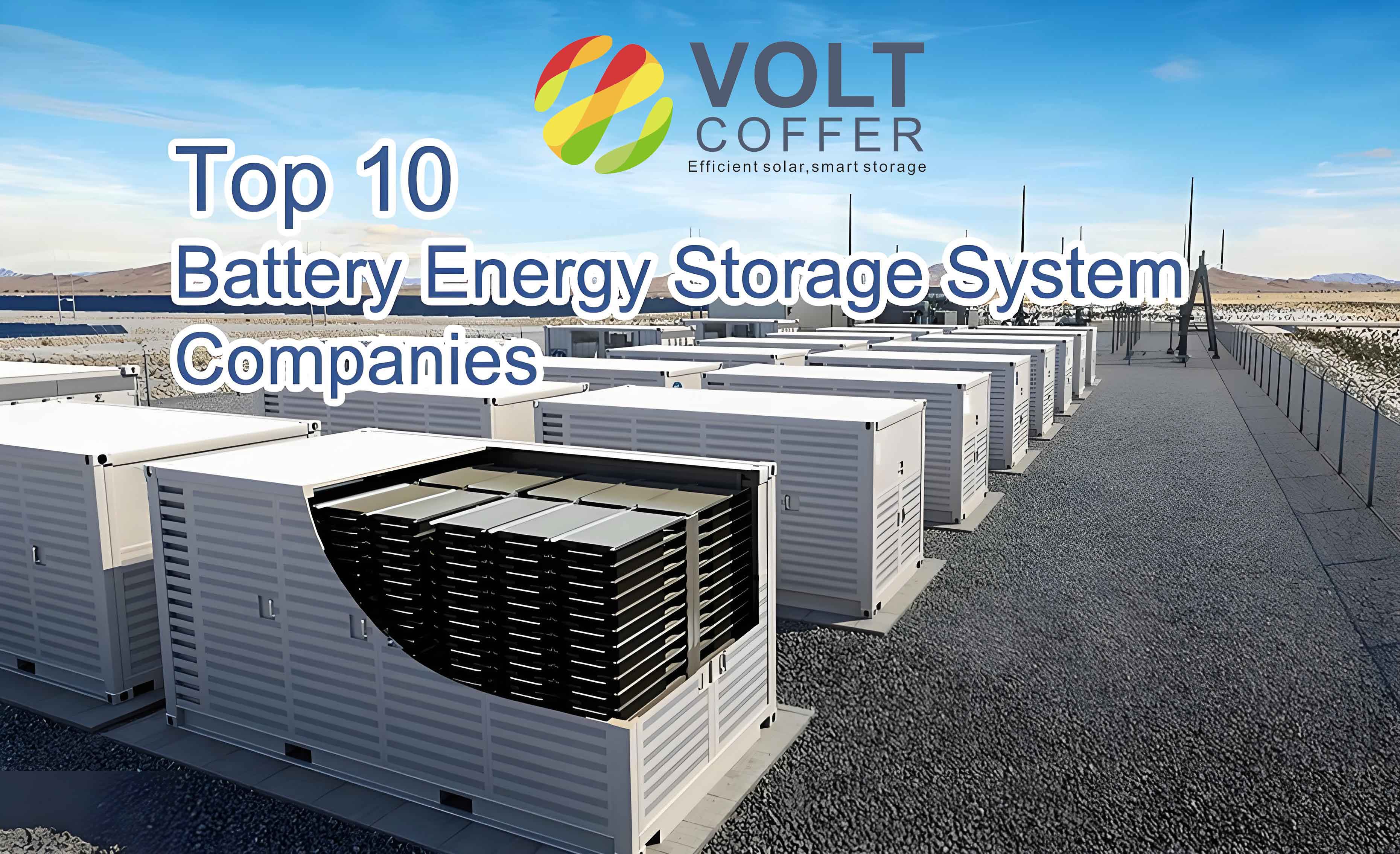
Energy storage cells, as the fundamental units of the battery system, are typically encased in a metal aluminum shell with an external insulating film, such as polyethylene terephthalate (PET). This film serves as a primary barrier against electrical breakdown, but its performance must be evaluated under high-voltage conditions. The electrical parameters of common materials used in energy storage cells are summarized in Table 1. These parameters influence the electric field strength, which can be modeled using electroquasistatic simulations. For example, when the aluminum shell is set to a potential equivalent to the positive terminal (e.g., 5370 V in worst-case scenarios), the electric field intensity at various points on the cell surface can be derived. The maximum electric field strength often occurs at corners or edges, calculated as $$E_{\text{max}} = \frac{V}{d},$$ where \(V\) is the voltage difference and \(d\) is the insulation thickness. Simulation results for a typical energy storage cell indicate that the bottom corners exhibit the highest field strength, making them critical areas for insulation reinforcement.
| Material | Relative Permittivity, \(\epsilon_r\) | Conductivity, \(\gamma\) (S/m) |
|---|---|---|
| Air | 1 | \(1.0 \times 10^{-14}\) |
| PET Film | 3.2 | \(1.0 \times 10^{-16}\) |
| Aluminum Shell | — | \(3.593 \times 10^{7}\) |
| Copper Terminal | — | \(5.998 \times 10^{7}\) |
To enhance the insulation of energy storage cells, several improvements have been proposed for PET protective films. For instance, composite PET films incorporating phase-change materials or halogen-free flame-retardant adhesives can improve thermal stability and adhesion, reducing the risk of delamination over time. Moreover, polyimide (PI) films have emerged as a superior alternative due to their exceptional electrical strength and temperature resistance. The breakdown voltage and operating temperature range of PI and PET films are compared in Table 2. The breakdown voltage for PI can be as high as 300 kV/mm, which is significantly greater than that of PET, providing a higher safety margin for energy storage cells. The relationship between breakdown voltage and material thickness can be expressed as $$V_b = E_b \cdot t,$$ where \(E_b\) is the breakdown strength and \(t\) is the thickness. For a 0.025 mm PI film, \(V_b\) reaches 37 kV, far exceeding the 5.37 kV test voltage for 1500V systems. However, the adoption of PI in energy storage cells is still limited by cost and long-term performance data in real-world conditions.
| Material | Temperature Range (°C) | Breakdown Voltage (kV) |
|---|---|---|
| PI Film (0.025 mm) | -269 to 250 | 37.0 |
| PET Film | -70 to 150 | 6.5 |
In addition to material enhancements, the packaging process for energy storage cells must address insulation weak points. For example, the use of interstitial foam, aerogel sheets, or mica plates between cells can improve overall insulation strength. At the bottom edges and corners, where electric field concentrations are highest, additional insulation layers or specialized coatings can be applied. The electric field intensity distribution for a cell can be modeled using finite element analysis, with results indicating that the maximum field strength at critical points often exceeds 6 kV/mm. To ensure long-term reliability, the insulation materials must also withstand environmental factors such as humidity, thermal cycling, and mechanical stress. The degradation of insulation over time can be described by empirical models, such as the Arrhenius equation for thermal aging: $$L = L_0 \exp\left(-\frac{E_a}{kT}\right),$$ where \(L\) is the lifetime, \(E_a\) is the activation energy, \(k\) is Boltzmann’s constant, and \(T\) is the temperature. This highlights the need for accelerated aging tests in the evaluation of insulation materials for energy storage cells.
Beyond the cells themselves, the battery management unit (BMU) presents another critical area for insulation in 1500V systems. The BMU integrates with energy storage cells to monitor voltage and temperature, but its proximity to high-voltage components introduces insulation risks, particularly in the wiring harnesses. These harnesses connect the BMU to the cells and are susceptible to damage from vibration, abrasion, or environmental exposure. Common issues include insulation wear, exposed connectors, and incompatibility with halogen-free wires. To mitigate these risks, reinforced insulation tapes and potting compounds are used. The performance of these materials can be evaluated based on properties such as dielectric strength, thermal conductivity, and adhesion. For example, the dielectric strength of a typical potting compound might be modeled as $$E_{\text{break}} = \frac{V_{\text{test}}}{t_{\text{insulation}}},$$ where \(V_{\text{test}}\) is the test voltage and \(t_{\text{insulation}}\) is the insulation thickness. In practice, materials with higher tracking resistance and lower volatility are preferred to prevent failures in confined spaces like battery containers.
Case studies of insulation failures in energy storage cells often point to mechanical damage during handling or operation. For instance, abrasion of wire insulation or cracking of protective films can lead to short circuits or electric discharges. The electric field in such scenarios can be approximated using Laplace’s equation: $$\nabla^2 V = 0,$$ with boundary conditions set by the voltage sources and insulation boundaries. Numerical simulations show that even small defects can cause localized field enhancements, increasing the risk of breakdown. To address this, quality control measures during manufacturing and installation are essential. Additionally, the development of standardized testing protocols for insulation materials in energy storage cells can help ensure consistency and safety. These tests might include partial discharge measurements, hipot tests, and thermal cycling assessments, all aimed at verifying the long-term integrity of the insulation system.
Looking ahead, the research and development of insulation materials for energy storage cells should focus on several key areas. First, the establishment of industry standards for material selection and evaluation is crucial to maintain safety and performance across different manufacturers. Second, integrated manufacturing approaches that combine material synthesis with cell assembly can improve cost-effectiveness and quality control. Third, long-term aging studies under realistic conditions are needed to validate the durability of new materials like PI composites. For example, the incorporation of nanoparticles into PI matrices has shown promise in enhancing dielectric properties, as described by the Maxwell-Garnett effective medium theory: $$\epsilon_{\text{eff}} = \epsilon_m \frac{1 + 2f \frac{\epsilon_p – \epsilon_m}{\epsilon_p + 2\epsilon_m}}{1 – f \frac{\epsilon_p – \epsilon_m}{\epsilon_p + 2\epsilon_m}},$$ where \(\epsilon_{\text{eff}}\) is the effective permittivity, \(\epsilon_m\) and \(\epsilon_p\) are the permittivities of the matrix and particles, respectively, and \(f\) is the volume fraction of particles. This could lead to materials with tailored properties for specific applications in energy storage cells.
In conclusion, the insulation of 1500V energy storage systems is a multifaceted challenge that requires careful material selection, design optimization, and rigorous testing. Energy storage cells, as the core components, demand insulation materials with high electrical strength, thermal stability, and mechanical robustness. Innovations in PET and PI films, along with improvements in BMU insulation, are essential to mitigate risks and enhance system reliability. As the energy storage industry continues to grow, a collaborative effort among researchers, manufacturers, and regulators will be key to advancing insulation technologies and ensuring the safe deployment of high-voltage energy storage cells. Future work should prioritize the development of comprehensive standards, cost-effective solutions, and accelerated life testing methods to support the sustainable evolution of energy storage systems.