
We explore the emerging field of immersion cooling for energy storage cells, focusing on the unique thermal management requirements that distinguish these systems from those used in electric vehicle batteries. Energy storage systems, particularly those utilizing lithium-ion chemistry, are critical for modern energy infrastructure, enabling renewable integration and grid stability. However, their large-scale deployment introduces significant thermal challenges, as excessive heat accumulation can lead to reduced efficiency, accelerated aging, and catastrophic thermal runaway events. Immersion cooling, where dielectric fluids directly contact cell surfaces, offers a promising solution by enhancing heat transfer efficiency and providing intrinsic safety benefits. In this review, we analyze key aspects of immersion cooling technology, including single-phase and phase-change systems, dielectric fluid selection, system design considerations, and thermal runaway suppression mechanisms. We emphasize the importance of dielectric fluids with high specific heat capacity, thermal conductivity, dielectric strength, and material compatibility, and we evaluate four practical fluid categories: electronic fluorinated liquids, hydrocarbon-based fluids, silicone oils, and nanofluids. Through detailed tables and mathematical models, we provide a foundation for designing effective immersion cooling systems tailored to energy storage applications. Furthermore, we discuss advancements in system encapsulation and insulating coatings, which are essential for practical implementation. By synthesizing current research, we aim to guide future developments in thermal management strategies for energy storage cells, highlighting immersion cooling’s potential to improve safety and performance in large-scale energy storage installations.
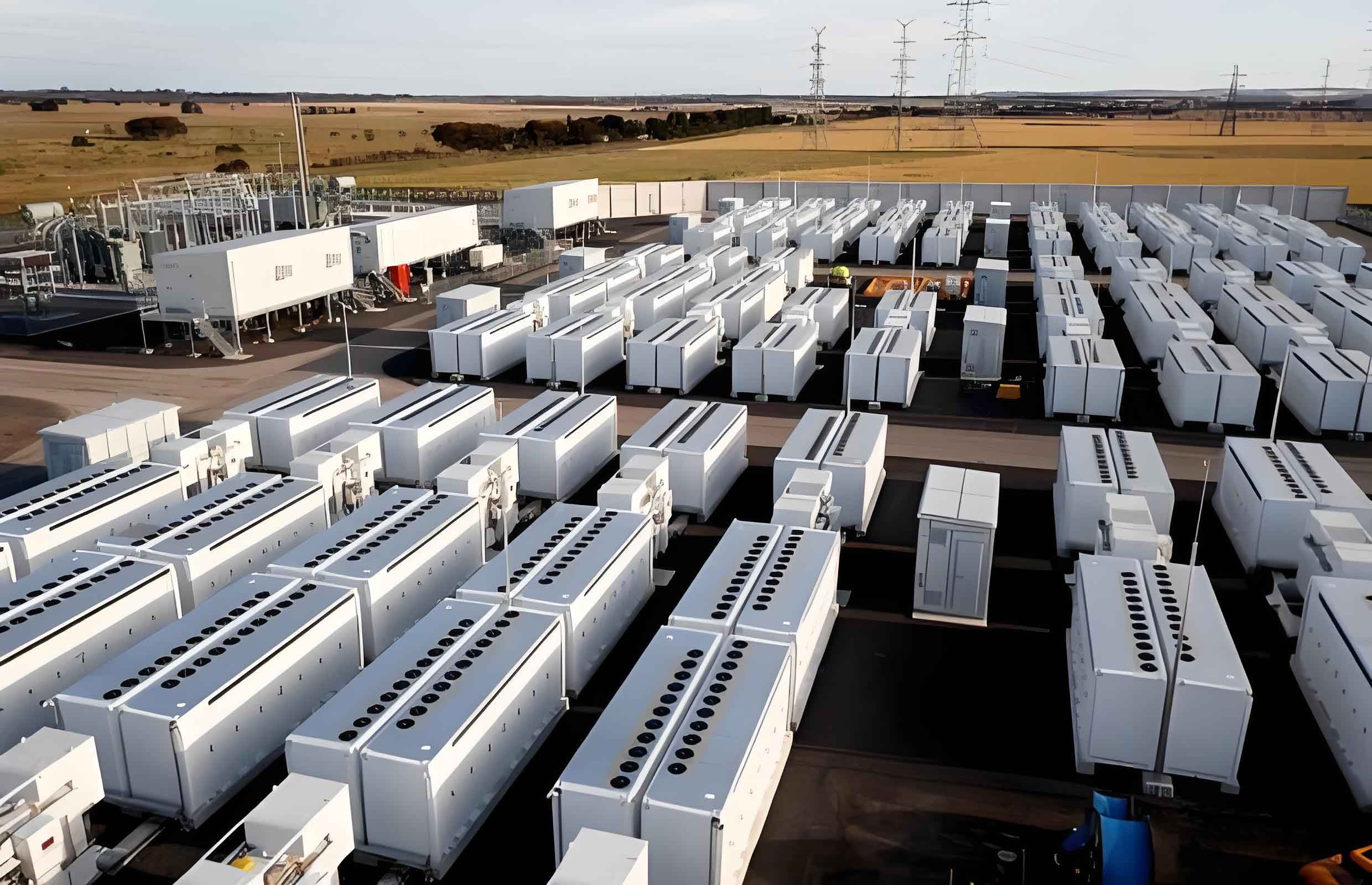
Energy storage cells, particularly lithium-ion based systems, have become indispensable in the global shift toward sustainable energy, supporting applications from grid-scale storage to electric mobility. The thermal behavior of these energy storage cells is a critical factor influencing their efficiency, lifespan, and safety. Unlike power batteries in electric vehicles, energy storage cells often operate at lower charge-discharge rates but over extended periods, necessitating thermal management systems that prioritize long-term stability and safety over peak performance. We begin by examining the fundamental differences in thermal management between energy storage cells and power batteries. Energy storage systems typically involve larger volumes, allowing for more flexible cooling designs, such as hybrid approaches. Moreover, the prevention of thermal runaway propagation is paramount in energy storage cells due to the potential for cascading failures in large installations. In contrast, power batteries demand higher cooling efficiency for rapid cycling but may tolerate greater temperature fluctuations. This distinction underscores the need for tailored immersion cooling solutions for energy storage cells.
Immersion cooling for energy storage cells can be broadly classified into single-phase and phase-change systems. In single-phase immersion cooling, dielectric fluids remain in a liquid state throughout the heat exchange process, relying on sensible heat transfer. This method simplifies system design by avoiding the complexities of vapor management. For instance, studies on single-phase immersion cooling of energy storage cells have demonstrated superior temperature uniformity compared to forced air cooling. The heat transfer in such systems can be described by the convection equation:
$$ q = h A (T_{\text{cell}} – T_{\text{fluid}}) $$
where \( q \) is the heat flux, \( h \) is the convective heat transfer coefficient, \( A \) is the surface area, \( T_{\text{cell}} \) is the cell temperature, and \( T_{\text{fluid}} \) is the fluid temperature. Research involving energy storage cells immersed in transformer oil or synthetic dielectric fluids has shown that full submersion and optimized flow rates can maintain temperatures within the ideal 25–40°C range, with temperature differences below 5°C. Numerical simulations further support these findings, enabling parametric studies on flow configurations and fluid properties for energy storage cells. For example, models of large battery packs with hundreds of energy storage cells have predicted temperature reductions of up to 8.9°C under immersion cooling compared to indirect methods, highlighting its efficacy for energy storage applications.
Phase-change immersion cooling, on the other hand, utilizes the latent heat of vaporization of dielectric fluids to absorb heat, leading to boiling and vapor formation. This approach offers higher heat removal capacities per unit volume, making it suitable for high-density energy storage cells. The heat transfer during boiling can be modeled using the Rohsenow correlation:
$$ q = \mu_l h_{fg} \left( \frac{g(\rho_l – \rho_v)}{\sigma} \right)^{1/2} \left( \frac{c_{p,l} \Delta T}{C_{sf} h_{fg} Pr_l^n} \right)^3 $$
where \( \mu_l \) is the liquid viscosity, \( h_{fg} \) is the latent heat, \( g \) is gravity, \( \rho_l \) and \( \rho_v \) are liquid and vapor densities, \( \sigma \) is surface tension, \( c_{p,l} \) is specific heat, \( \Delta T \) is superheat, \( C_{sf} \) is an empirical constant, and \( Pr_l \) is the Prandtl number. Experimental studies with energy storage cells using fluids like Novec 7000 have shown that boiling cooling can maintain temperatures near the fluid’s boiling point, even under high discharge rates. However, challenges such as vapor recovery and pressure control must be addressed for practical implementation in energy storage systems. We note that phase-change cooling is less common for energy storage cells due to their typically moderate heat generation, but it holds promise for future high-power applications.
The selection of dielectric fluids is crucial for the performance and safety of immersion cooling systems in energy storage cells. We identify four key parameters for fluid evaluation: specific heat capacity, thermal conductivity, dielectric strength, and material compatibility. Specific heat capacity determines the fluid’s ability to store heat, while thermal conductivity influences the rate of heat transfer. Dielectric strength ensures electrical insulation, preventing short circuits in energy storage cells. Material compatibility assesses the fluid’s interaction with cell components, such as electrodes and casings, to avoid degradation over time. Additional factors include viscosity, flash point, environmental impact (e.g., ozone depletion potential and global warming potential), and cost. Based on technical assessments, we categorize four types of dielectric fluids with practical potential for energy storage cells: electronic fluorinated liquids, hydrocarbon-based fluids, silicone oils, and nanofluids. The following table summarizes representative fluids and their properties relevant to energy storage cells.
| Fluid Type | Representative Product | Density (g/cm³ at 25°C) | Thermal Conductivity (W/m·K) | Specific Heat Capacity (kJ/kg·K) | Dielectric Constant | Viscosity (mPa·s) | Flash Point (°C) |
|---|---|---|---|---|---|---|---|
| Electronic Fluorinated Liquids | Opteon™ MZ | 1.360 | 0.077 | 1.20 | 32 | 0.38 | — |
| Hydrocarbon-Based Fluids | AmpCool AC-110 | 0.82 | 0.1359 | 2.2121 | 2.080 | 8.11 | 193 |
| Silicone Oils | DMS-T05 | 0.918 | 0.1172 | — | 2.60 | 5 | 135 |
| Nanofluids | Al₂O₃ in Transformer Oil | ~0.895 | 0.15–0.20 | ~2.0 | ~2.2 | Varies | >140 |
Electronic fluorinated liquids, such as hydrofluoroethers (HFEs) and hydrofluoroolefins (HFOs), are characterized by low global warming potential and non-ozone-depleting properties, making them environmentally friendly options for energy storage cells. These fluids exhibit high dielectric strength and thermal stability, but their relatively low thermal conductivity can be a limitation. For instance, Opteon™ MZ has a thermal conductivity of 0.077 W/m·K, which may require enhanced flow rates or system designs to achieve optimal cooling for energy storage cells. Hydrocarbon-based fluids, including mineral oils and synthetic compounds like AmpCool AC series, offer higher thermal conductivities and specific heat capacities, as shown in Table 1. They are cost-effective and biodegradable, but issues such as oxidation and sulfur corrosion necessitate careful maintenance in energy storage systems. Silicone oils, particularly polydimethylsiloxane (PDMS), provide excellent electrical insulation and a wide viscosity range. Their thermal conductivity can be improved through chemical modification, such as phenyl group incorporation, which enhances heat transfer for energy storage cells. Nanofluids, which consist of base fluids with suspended nanoparticles (e.g., Al₂O₃, graphene), aim to boost thermal performance. For example, adding graphene to silicone oil can triple its thermal conductivity, but challenges like particle sedimentation and reduced dielectric strength must be managed for energy storage cell applications.
In addition to fluid properties, system design plays a vital role in immersion cooling for energy storage cells. Encapsulation techniques, such as U-channel structures or jet impingement systems, minimize fluid usage and reduce pumping power, improving economic feasibility. These designs enhance heat transfer by increasing the wetted surface area of energy storage cells. Insulating coatings, such as Parylene C or boron nitride composites, allow the use of non-dielectric fluids like water by providing electrical isolation. For instance, coatings as thin as 1 μm have been shown to protect energy storage cells from short circuits, enabling efficient cooling with high-thermal-conductivity fluids. The thermal resistance in such systems can be expressed as:
$$ R_{\text{total}} = R_{\text{coating}} + R_{\text{fluid}} $$
where \( R_{\text{coating}} \) is the resistance of the insulating layer and \( R_{\text{fluid}} \) is the convective resistance. Optimizing these parameters is essential for maximizing the performance of immersion cooling in energy storage cells.
Thermal runaway suppression is a critical advantage of immersion cooling for energy storage cells. Thermal runaway in lithium-ion energy storage cells is often triggered by internal short circuits, leading to exothermic reactions and gas generation. Immersion cooling mitigates this by rapidly dissipating heat during the early stages of thermal accumulation. The heat generation during thermal runaway can be modeled using Arrhenius-based equations:
$$ \frac{dQ}{dt} = A \exp\left(-\frac{E_a}{RT}\right) $$
where \( \frac{dQ}{dt} \) is the heat generation rate, \( A \) is the pre-exponential factor, \( E_a \) is the activation energy, \( R \) is the gas constant, and \( T \) is temperature. Experimental studies have demonstrated that immersion in dielectric fluids like Novec 649 can limit temperature rises to below 184°C in abused energy storage cells, preventing propagation to adjacent cells. Moreover, some fluids dissolve flammable gases, reducing explosion risks. This inherent safety feature makes immersion cooling particularly valuable for large-scale energy storage systems, where thermal events can have severe consequences.
To quantify the cooling performance, we can use the effectiveness-NTU method for heat exchangers in immersion systems:
$$ \epsilon = 1 – \exp\left(-\frac{UA}{C_{\min}}\right) $$
where \( \epsilon \) is effectiveness, \( U \) is the overall heat transfer coefficient, \( A \) is area, and \( C_{\min} \) is the minimum heat capacity rate. This approach helps in designing efficient cooling loops for energy storage cells. Furthermore, cost-benefit analyses should consider fluid lifetime, pumping power, and environmental impact. For example, silicone oils and transformer oils are economical choices for energy storage cells, while fluorinated liquids may be justified in high-safety applications.
In conclusion, immersion cooling represents a transformative approach for thermal management in energy storage cells, offering enhanced heat transfer, temperature uniformity, and safety. We have reviewed the technical aspects of single-phase and phase-change systems, dielectric fluid selection, and system integration, emphasizing the unique needs of energy storage cells compared to power batteries. Future research should focus on multi-physics modeling that couples electrochemical reactions with thermal effects in energy storage cells, as well as the development of advanced fluids with improved sustainability. By addressing these challenges, immersion cooling can accelerate the adoption of reliable and safe energy storage solutions, contributing to a resilient energy infrastructure. As the demand for energy storage cells grows, continued innovation in thermal management will be essential to unlock their full potential.