
With the increasing penetration of clean energy generation, the development and deployment of energy storage technologies have become critical for addressing the intermittency of renewable sources and ensuring grid stability. In recent years, electrochemical energy storage has emerged as a primary direction for the future of the energy storage industry, with significant growth in installed capacity. However, existing energy storage control systems often suffer from limited functionality, unknown stability, and insufficient coordination with original thermal power units. This study focuses on optimizing the frequency control strategy of thermal power units by leveraging the state of charge (SOC) of energy storage cells. The proposed strategy dynamically adjusts the control approach of thermal units based on SOC levels, ensuring that the entire joint operation system does not rely solely on energy storage actions. By maintaining SOC within an intermediate range (45%–55%), the system capitalizes on the fast response speed of battery energy storage for frequency regulation, guarantees sufficient response to each automatic generation control (AGC) command, reduces battery degradation, extends battery lifespan, and enhances the economic benefits of power plants.
The integration of energy storage systems with thermal power units involves both components responding jointly to grid AGC commands. The plant remote terminal unit (RTU) combines the output signals of the thermal unit and the energy storage system, which are then connected to the grid as the basis for frequency regulation assessment. Energy storage cells, due to their rapid active power response capability, provide immediate power compensation during frequency fluctuations, minimizing frequency deviations in the shortest time. Under AGC mode, the unit RTU sends commands simultaneously to the thermal unit and the energy storage system controller. The energy storage system adjusts its output based on the difference between the target load and the real-time load, feeding back to the unit RTU until the unit output matches the command.
Regardless of the control strategy, when the battery SOC is too low, if the AGC command increases, the battery must abandon the response, leaving the thermal unit to respond independently until the AGC command decreases, allowing the unit to charge the battery. Conversely, when SOC is too high, if the AGC command decreases, the battery must skip the response, and the thermal unit responds alone until the AGC command increases, permitting the battery to discharge. This frequently leads to situations where the energy storage system fails to participate in AGC responses, undermining the value of energy storage for frequency regulation and resulting in economic losses.
To address this, we propose a control strategy that maintains the SOC of energy storage cells within the intermediate range. The strategy involves proportional allocation of charge and discharge power for each power conversion system (PCS) based on the available power of the energy storage cells, or equal margin allocation based on the ratio of charge/discharge power to rated power. When these methods prove insufficient, an energy consumption impact factor is introduced to optimize the power distribution strategy for AGC commands. The core objective is to ensure that SOC remains between 45% and 55%, enabling active participation in AGC regulation.
The control process is as follows: After the energy storage system is activated, the thermal unit receives the AGC command and first determines whether it is an increase or decrease. If the AGC command increases, the energy storage system discharges to the grid. The battery SOC is checked; if it is below a lower limit X (typically 10% of the rated capacity, configurable), the battery cannot participate in frequency regulation, and the discharge power is zero. The unit’s current actual load P is then evaluated. If P is below 90% of the unit’s rated capacity Pe, indicating that the unit has spare capacity to charge the battery after responding to the AGC command, an AGC command bias (positive in this case) is applied based on main steam pressure, unit load, and the AGC command. If P exceeds 90% Pe, the unit must continue to increase load to meet the AGC command, leaving no capacity for battery charging, and no bias is applied.
If the unit meets the bias application conditions and the bias is added, once the unit load reaches the AGC command value without bias, the bias causes the unit to continue increasing load. The energy storage control strategy remains unchanged, placing the battery in charging mode with the maximum charging power equal to the bias value. The combined grid load of the unit and energy storage still meets requirements. When SOC reaches the intermediate value Y (45%–55%), the unit adjusts its control strategy again, gradually reducing the AGC command bias to the original value, allowing the unit load to slowly decrease to the initial AGC command value, achieving a second steady state and completing one response cycle.
Similarly, if the AGC command decreases, the battery should charge. The SOC is checked; if it exceeds an upper limit (1-X), the battery cannot participate, and charging power is zero. The unit’s actual load P is assessed; if P is below a set value Z (above the minimum stable combustion load), the likelihood of further AGC decreases is low, and no bias is applied. If P > Z, indicating room for further load reduction after the AGC command decrease, a negative AGC command bias is added based on main steam pressure, unit load, and the AGC command, resulting in a target load command lower than the original AGC command.
If the bias is applied, when the unit load reaches the AGC command value without bias, the bias causes further load reduction. The energy storage strategy remains unchanged, and the battery discharges until SOC reaches the intermediate value (1-Y). The unit then adjusts the control strategy, gradually reducing the bias to zero, allowing the load to rise to the initial AGC command value, achieving steady state and completing the cycle. If the initial steady state is not reached after one cycle and the AGC command changes again in the same direction, the original control strategy continues; if the direction changes, the energy storage system directly charges or discharges the battery.
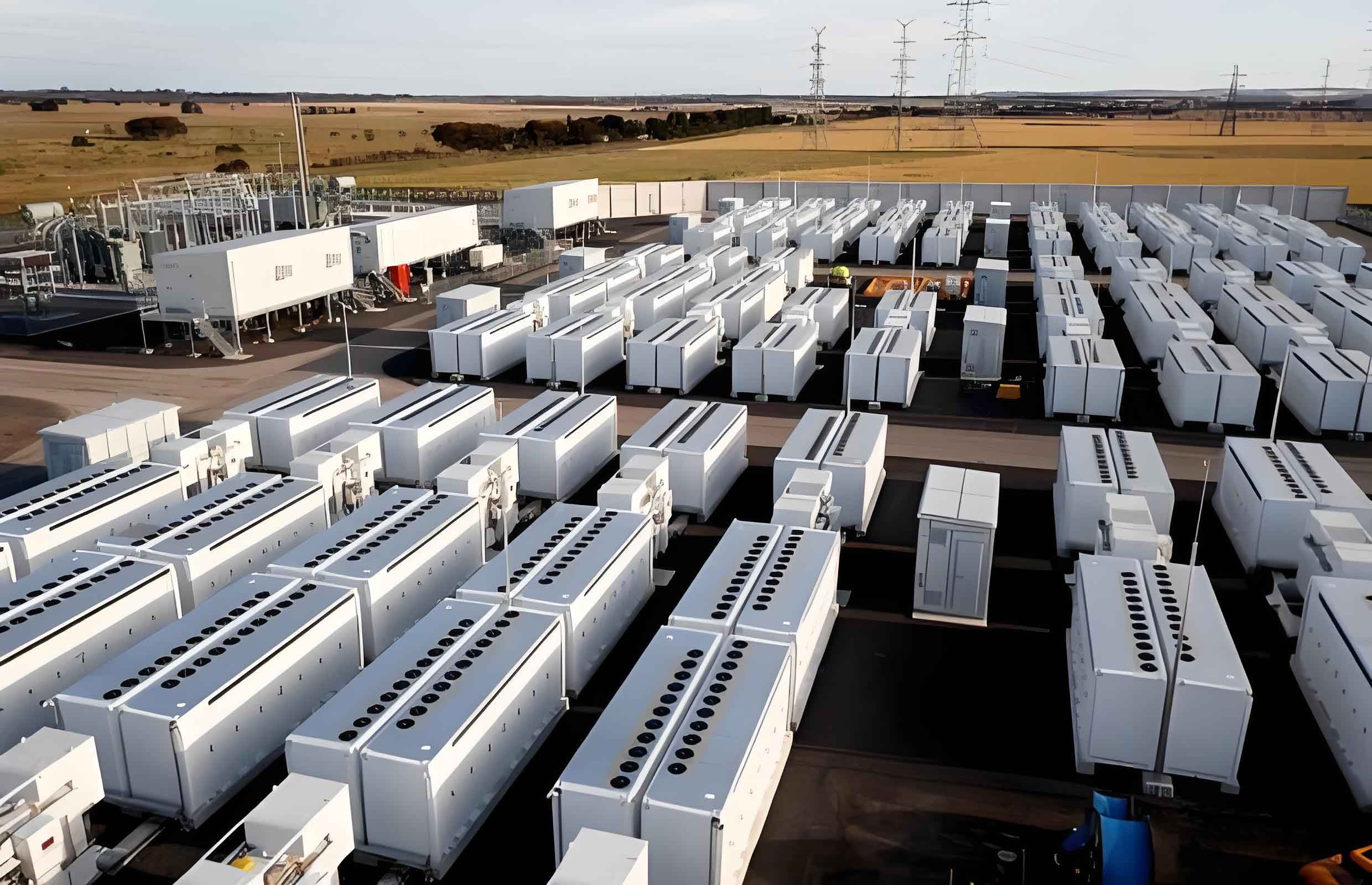
The effectiveness of this strategy was validated through implementation at a power plant in the Southern Grid, equipped with two 300 MW units and a 10 MW/5.6 MWh energy storage battery system. Prior to the strategy, the plant’s frequency regulation performance was poor, with a comprehensive performance indicator k around 1.0, leading to difficulties in bidding and low economic benefits. After applying the proposed control strategy, the performance indicators improved significantly. The key metrics include regulation rate k1, response time k2, and regulation accuracy k3, with the comprehensive indicator calculated as:
$$k = 0.25 \times (2k_1 + k_2 + k_3)$$
where k1 reflects the speed of response to AGC commands, k2 the time delay, and k3 the accuracy. The results over a 12-hour period are summarized in Table 1.
| Time | k | k1 | k2 | k3 |
|---|---|---|---|---|
| 00:00 | 1.73 | 2.52 | 0.96 | 0.90 |
| 01:00 | 1.77 | 2.62 | 0.95 | 0.89 |
| 02:00 | 1.80 | 2.71 | 0.95 | 0.83 |
| 03:00 | 1.74 | 2.56 | 0.94 | 0.90 |
| 04:00 | 1.88 | 2.89 | 0.96 | 0.79 |
| 05:00 | 1.88 | 2.84 | 0.96 | 0.87 |
| 06:00 | 1.89 | 2.96 | 0.96 | 0.68 |
| 07:00 | 1.75 | 2.65 | 0.96 | 0.72 |
| 08:00 | 1.89 | 2.87 | 0.94 | 0.89 |
| 09:00 | 1.79 | 2.68 | 0.95 | 0.83 |
| 10:00 | 1.81 | 2.71 | 0.96 | 0.87 |
| 11:00 | 1.83 | 2.75 | 0.96 | 0.87 |
| 12:00 | 1.65 | 2.41 | 0.94 | 0.83 |
As shown in Table 1, the average values of k1, k2, and k3 over 12 hours improved substantially. Specifically, the regulation rate indicator k1 averaged 2.71, close to the full score of 3 in the Southern Grid, and the comprehensive indicator k averaged 1.8, with a peak of 1.88 (full score 2). This enhancement translated into daily revenues averaging over 180,000 yuan, peaking at 240,000 yuan, in the Southern Regional Frequency Regulation Auxiliary Service Market. Moreover, the strategy effectively controlled the depth of charge and discharge for energy storage cells, reducing the risk of overheating and extending battery life. The number of high-temperature alarms decreased significantly, mitigating fire hazards associated with overcharging or over-discharging of energy storage cells.
To further analyze the control strategy, we model the SOC dynamics of energy storage cells. The SOC at time t can be expressed as:
$$SOC(t) = SOC_0 + \frac{1}{E_{\text{max}}} \int_0^t P_b(\tau) \, d\tau$$
where SOC0 is the initial SOC, Emax is the maximum energy capacity of the battery, and Pb(τ) is the battery power (positive for discharging, negative for charging). The control strategy aims to keep SOC(t) within [0.45, 0.55]. The AGC command bias ΔP is determined based on SOC and unit load conditions:
$$\Delta P =
\begin{cases}
f(P, SOC, \text{AGC}) & \text{if } SOC < X \text{ and } P < 0.9P_e \\
0 & \text{otherwise}
\end{cases}$$
where f is a function of unit load P, SOC, and AGC command. For discharge scenarios, a similar logic applies. The optimization of power distribution among multiple PCS units can be formulated using an energy consumption factor α, which weights the allocation based on SOC levels. The power for each PCS i is given by:
$$P_i = \frac{\alpha_i SOC_i}{\sum_j \alpha_j SOC_j} P_{\text{total}}$$
where Ptotal is the total power required, and αi is the factor for PCS i. This ensures that energy storage cells with higher SOC contribute more to discharge, and vice versa for charging, maintaining balance across the system.
In practice, the implementation of this strategy requires real-time monitoring of SOC and unit parameters. The use of energy storage cells in frequency regulation not only improves grid stability but also enhances the economic viability of thermal power plants. By reducing the reliance on energy storage alone and integrating thermal unit flexibility, the strategy maximizes the utilization of energy storage cells while minimizing degradation. The intermediate SOC range of 45%–55% is optimal for prolonging battery life, as it avoids deep cycles that accelerate aging. Experimental data from the field application confirmed a reduction in battery temperature fluctuations and alarm incidents, contributing to safer operation.
In conclusion, the proposed control strategy based on the state of charge of energy storage cells effectively enhances the frequency regulation performance of thermal power units. By dynamically adjusting the AGC command bias and maintaining SOC within an intermediate range, the system ensures consistent participation of energy storage in AGC responses, reduces battery wear, and increases economic returns. The strategy has been validated through real-world application, demonstrating significant improvements in key performance indicators and operational safety. Future work could focus on adapting this approach to other grid configurations and exploring advanced algorithms for SOC management.