
With the global energy transition and carbon neutrality goals driving innovation, the development of efficient and sustainable clean energy storage technologies has become paramount. Solar, wind, and hydropower are rapidly expanding renewable sources, but their intermittent nature limits widespread adoption. Redox flow batteries (RFBs) have emerged as promising candidates for large-scale energy storage due to their decoupled power and energy capacities. However, conventional RFBs rely on expensive ion-exchange membranes, which shorten lifespan and cause environmental concerns. Electrode material instability further hinders commercialization. In contrast, self-layered energy storage cells eliminate membranes through spontaneous liquid-liquid phase separation, leveraging density and polarity differences to form stable interfaces. This design reduces costs, simplifies architecture, and avoids issues like dendrite growth in solid electrodes, significantly enhancing cycle life and safety. This article comprehensively reviews the working principles, classifications, and recent progress in self-layered energy storage cells, providing insights for future development.
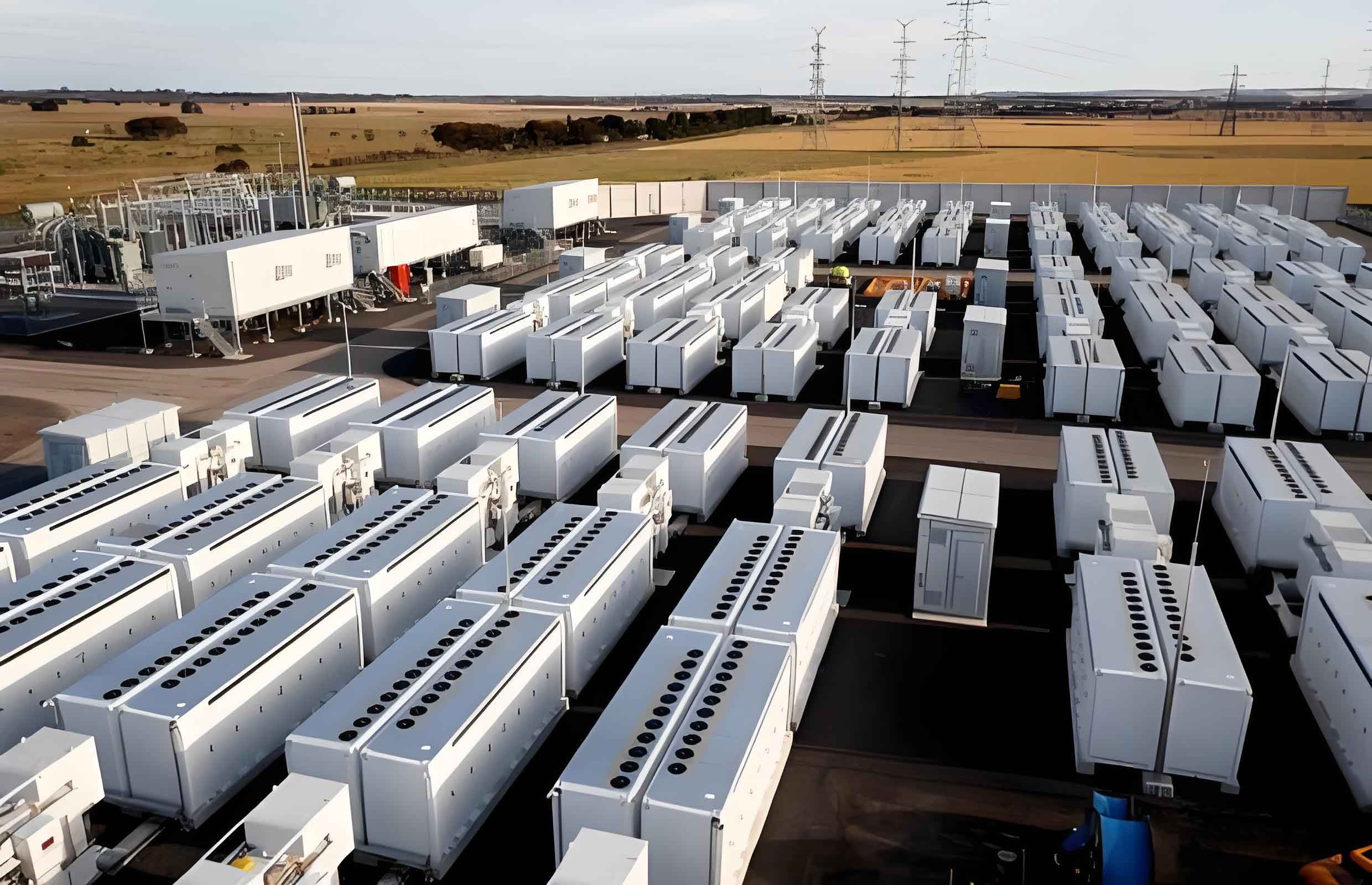
Working Principles and Classification of Self-Layered Energy Storage Cells
Self-layered energy storage cells operate based on spontaneous liquid-liquid phase separation, which creates stable interfaces without membranes. The core mechanism involves thermodynamic and kinetic factors that drive phase stratification. Key principles include:
- Density and Polarity Differences: Components with distinct densities and polarities separate under gravity, forming immiscible layers. The interfacial tension, γ, can be described by the Young-Laplace equation for curved interfaces: $$ \Delta P = \gamma \left( \frac{1}{R_1} + \frac{1}{R_2} \right) $$ where ΔP is the pressure difference and R₁, R₂ are principal radii of curvature. This stabilizes the interface against perturbations.
- Thermodynamic Phase Separation: The Gibbs free energy of mixing, ΔGmix, determines phase behavior: $$ \Delta G_{\text{mix}} = \Delta H_{\text{mix}} – T \Delta S_{\text{mix}} $$ If ΔGmix > 0, phase separation occurs spontaneously. For electrolyte systems, the activity coefficients of ions influence solubility and distribution between phases.
- Kinetic Ion Transport: Charge carriers (e.g., Li⁺, Na⁺) migrate across the liquid-liquid interface, maintaining current flow. The Nernst-Planck equation describes ion flux: $$ J_i = -D_i \nabla c_i – \frac{z_i F}{RT} D_i c_i \nabla \phi $$ where Ji is flux, Di is diffusion coefficient, ci is concentration, zi is charge number, F is Faraday’s constant, R is gas constant, T is temperature, and φ is electric potential.
- Redox Reaction Isolation: Active species partition into specific phases based on solubility, minimizing crossover. The partition coefficient, K, is defined as: $$ K = \frac{[A]_{\text{org}}}{[A]_{\text{aq}}} $$ where [A] is concentration in organic and aqueous phases, respectively.
Self-layered energy storage cells are classified into two main categories based on electrolyte composition and operating mechanisms, as summarized in Table 1.
| Category | Subtype | Key Components | Operating Temperature | Advantages | Challenges |
|---|---|---|---|---|---|
| Liquid Metal Batteries (LMBs) | High-Temperature (HT-LMBs) | Molten metals (e.g., Na, Zn), molten salts | 350–700°C | High power density, long cycle life | High temperature, material corrosion |
| Liquid Metal Batteries (LMBs) | Medium-Temperature (MT-LMBs) | Na-K alloys, Ga-based alloys | 100–350°C | Reduced cost, improved safety | Limited electrode materials |
| Liquid Metal Batteries (LMBs) | Room-Temperature (RT-LMBs) | Liquid alloys, organic electrolytes | ~25°C | Environmental friendliness | Short lifespan, high cost |
| Biphasic Self-Stratifying Batteries (BSSBs) | Aqueous Biphasic (ABSBs) | Water, salts, ionic liquids | Ambient | Low cost, sustainability | Narrow voltage window |
| Biphasic Self-Stratifying Batteries (BSSBs) | Aqueous-Organic Biphasic (AOBSBs) | Water, organic solvents (e.g., TEGDME, CH₂Cl₂) | Ambient | High energy density | Interface instability |
| Biphasic Self-Stratifying Batteries (BSSBs) | Non-Aqueous Biphasic (NABSBs) | Organic solvents (e.g., TMS, DBE) | Ambient | Wide voltage window | Solvent compatibility |
The performance of self-layered energy storage cells can be evaluated using key parameters such as energy density (Evol), calculated as: $$ E_{\text{vol}} = \frac{1}{V} \int V_{\text{cell}} I dt $$ where V is volume, Vcell is cell voltage, and I is current. Coulombic efficiency (CE) is given by: $$ \text{CE} = \frac{Q_{\text{discharge}}}{Q_{\text{charge}}} \times 100\% $$ These metrics highlight the potential of self-layered systems for grid-scale applications.
Research Progress in Self-Layered Energy Storage Cells
Liquid Metal Self-Layered Energy Storage Cells
Liquid metal batteries utilize molten metal electrodes and molten salt electrolytes, forming a three-layer structure through density-driven stratification. Recent advances focus on reducing operating temperatures and enhancing efficiency. For instance, a sodium-zinc LMB demonstrated 90% round-trip efficiency at current densities below 40 mA/cm², using NaCl-CaCl₂ electrolyte. The cell reaction can be represented as: $$ \text{Na} + \text{ZnCl}_2 \rightleftharpoons \text{NaCl} + \text{Zn} $$ Medium-temperature LMBs with iron anodes and sulfur additives achieved 100% capacity retention over 100 cycles, with energy efficiency of 92%. Room-temperature LMBs employing Na-K alloys and gallium-based cathodes in glyme-based electrolytes showed near-100% Coulombic efficiency, though cycle life remains limited. Table 2 compares key LMB systems.
| System | Anode | Cathode | Electrolyte | Temperature (°C) | Energy Density (Wh/L) | Cycle Life |
|---|---|---|---|---|---|---|
| Na-Zn LMB | Liquid Na | Liquid Zn | NaCl-CaCl₂ | 300–400 | ~150 | >500 cycles |
| Na-Fe LMB | Liquid Na | Fe-S composite | Molten salt | <200 | ~120 | 100 cycles |
| RT Na-K/Ga LMB | Na-K alloy | Ga alloy | Organic solvent | 25 | ~50 | ~100 cycles |
Future directions for LMBs include exploring lithium-based anodes and bismuth-based cathodes to enhance performance. The ionic conductivity of electrolytes, σ, is critical and can be modeled as: $$ \sigma = \sum n_i q_i \mu_i $$ where ni is ion concentration, qi is charge, and μi is mobility. Optimizing this parameter is essential for low-temperature operation.
Aqueous Biphasic Self-Layered Energy Storage Cells
Aqueous biphasic systems leverage water-based electrolytes with salts or polymers to induce phase separation. For example, a PEG1000/ammonium sulfate system with methyl viologen and ferrocene derivatives achieved 96% Coulombic efficiency and 21.7 Wh/L energy density. The redox reactions are: $$ \text{MV}^{2+} + 2e^- \rightleftharpoons \text{MV}^0 \quad \text{(anode)} $$ $$ \text{Fc}^+ + e^- \rightleftharpoons \text{Fc} \quad \text{(cathode)} $$ In flow mode, power density doubled, and 250 cycles showed no capacity decay. Another zinc-bromine system with ionic liquids exhibited over 90% Coulombic efficiency and 80% energy efficiency at 5 mA/cm², leveraging spontaneous phase separation to suppress bromine crossover. The general performance of ABSBs is summarized in Table 3.
| Electrolyte System | Active Materials | Energy Density (Wh/L) | Coulombic Efficiency (%) | Cycle Stability |
|---|---|---|---|---|
| PEG1000/(NH₄)₂SO₄ | MV/Fc derivatives | 21.7 | 96 | 250 cycles |
| ZnBr₂/KCl/MEP/H₂O | Zn/Br₂ | ~30 | >90 | 200 cycles |
| Ionic liquid/H₂O | Organic redox pairs | 15–25 | 85–95 | 100–300 cycles |
Challenges for ABSBs include limited voltage windows and solubility constraints. The open-circuit voltage, VOC, relates to the Gibbs free energy change: $$ V_{\text{OC}} = -\frac{\Delta G}{nF} $$ where n is the number of electrons. Enhancing ion selectivity through optimized salt combinations is key to improving these energy storage cells.
Aqueous-Organic Biphasic Self-Layered Energy Storage Cells
These systems combine aqueous and organic solvents to achieve higher energy densities. A stirred “organic-water-metal” battery with TEMPO in TEGDME and aqueous MgSO₄/ZnSO₄ exhibited 94% discharge capacity and 92% energy efficiency at 0.2C. The stirring enhances mass transfer, described by the Sherwood number: $$ \text{Sh} = k \frac{L}{D} $$ where k is mass transfer coefficient, L is characteristic length, and D is diffusion coefficient. Another zinc-phenothiazine system with C8-PTZ in CH₂Cl₂ and aqueous ZnSO₄/KPF₆ showed 79.1% capacity retention after 200 cycles and 9.7 Ah/L volumetric energy density. The redox potential for PTZ derivatives follows: $$ E = E^0 – \frac{RT}{F} \ln \frac{[\text{PTZ}]}{[\text{PTZ}^+]} $$ A quinone-based system with DHBQ and TFSI⁻ additives reduced polarization, achieving 99.9% Coulombic efficiency and 54 Ah/L capacity over 280 cycles. Table 4 provides a comparison.
| System | Organic Phase | Aqueous Phase | Energy Density (Wh/L) | Cycle Life | Key Feature |
|---|---|---|---|---|---|
| TEMPO-Zn | TEGDME/TEMPO | MgSO₄/ZnSO₄ | 20 | 150 cycles | Stirred design |
| Zn-C8-PTZ | CH₂Cl₂/C8-PTZ | ZnSO₄/KPF₆ | ~10 | 200 cycles | High hydrophobicity |
| Quinone-Cd | Organic solvent/DHBQ | MgSO₄/CdSO₄ | ~25 | 280 cycles | Low polarization |
These energy storage cells benefit from the wide electrochemical window of organic solvents, but interface stability remains a concern. The interfacial energy, γif, can be minimized by selecting solvents with matched Hansen solubility parameters: $$ \delta_{\text{total}}^2 = \delta_d^2 + \delta_p^2 + \delta_h^2 $$ where δd, δp, and δh are dispersion, polar, and hydrogen bonding components.
Non-Aqueous Biphasic Self-Layered Energy Storage Cells
Non-aqueous systems use immiscible organic solvents to enable high-voltage operation and compatibility with reactive metals. A lithium-metal battery with NFTOS/TEGDME biphasic electrolyte and 2-EAQ cathode achieved 100% Coulombic efficiency and 21.4 Wh/L energy density, cycling stably for 1300 hours. The SEI formation energy, ΔGSEI, influences stability: $$ \Delta G_{\text{SEI}} = -RT \ln K_{\text{SEI}} $$ where KSEI is the equilibrium constant for SEI formation. Another system with TMS-DBE electrolyte for lithium-sulfur batteries showed 72% capacity retention after 120 cycles under lean electrolyte conditions. The ionic conductivity, σ, was measured at 1.7 Ω·cm² interfacial resistivity. A DMA-DEE based Li-S battery delivered 1158 mAh/g initial capacity at 0.2C, with the reaction: $$ S_8 + 16Li^+ + 16e^- \rightleftharpoons 8Li_2S $$ The performance metrics are summarized in Table 5.
| System | Solvents | Active Materials | Capacity (mAh/g or Ah/L) | Coulombic Efficiency (%) | Stability |
|---|---|---|---|---|---|
| Li-2-EAQ | NFTOS/TEGDME | 2-EAQ, Li metal | 21.4 Wh/L | 100 | 1300 h |
| Li-S with TMS-DBE | TMS/DBE | S, Li metal | >1000 mAh/g | >99 | 120 cycles |
| Li-S with DMA-DEE | DMA/DEE | S, Li metal | 1158 mAh/g | >90 | 30 cycles |
These energy storage cells exploit the high dielectric constant of solvents like DMA (ε ≈ 38) to enhance ion dissociation: $$ \varepsilon = \frac{C d}{\varepsilon_0 A} $$ where C is capacitance, d is distance, ε₀ is vacuum permittivity, and A is area. Future work aims to optimize solvent pairs for better kinetics and lower cost.
Conclusion
Self-layered energy storage cells represent a transformative approach to large-scale energy storage, offering membrane-free designs and high adaptability to renewable sources. Advances in liquid metal, aqueous, aqueous-organic, and non-aqueous systems have demonstrated improved energy densities, efficiencies, and cycle lives. However, challenges such as self-discharge, interface instability, and limited material compatibility persist. Future research should focus on developing unified thermodynamic-kinetic models, optimizing electrode-solvent pairs, and enhancing active material solubility. Gel-based strategies could stabilize interfaces, while molecular dynamics simulations provide insights into reaction mechanisms. With continued innovation, self-layered energy storage cells are poised to play a critical role in achieving sustainable energy grids, enabling a wide range of applications from stationary storage to flexible power systems. The integration of these energy storage cells into real-world scenarios will require collaborative efforts in materials science and engineering to overcome existing barriers and unlock their full potential.