
In modern society, technological advancements worldwide have led to an increasing reliance on electrical energy for social construction and economic development. With growing concerns over environmental pollution and energy shortages, there is a heightened focus on renewable energy-based power generation technologies. The application of inverters in power systems offers advantages such as controllability and high efficiency, significantly enhancing the operational performance of these systems. Among various performance indicators, the total harmonic distortion (THD) is a critical parameter for evaluating inverter performance. Harmonics can adversely affect power quality, leading to inefficiencies in energy production and transmission, reduced lifespan of electrical equipment, and even catastrophic failures like device burnout.
Three-phase inverters are essential components in power conversion, and their unstable output voltages can severely impact grid systems. Unstable currents may cause mechanical vibrations and noise in motor devices, substantially reducing output power and triggering overcurrent faults or frequent activation of protection mechanisms under heavy loads. If unaddressed, these issues can result in elevated temperatures and potential motor burnout, compromising safety. Moreover, unstable voltages may initiate unintended operations in non-starting states of power systems, leading to abnormal equipment behavior and overall system instability.
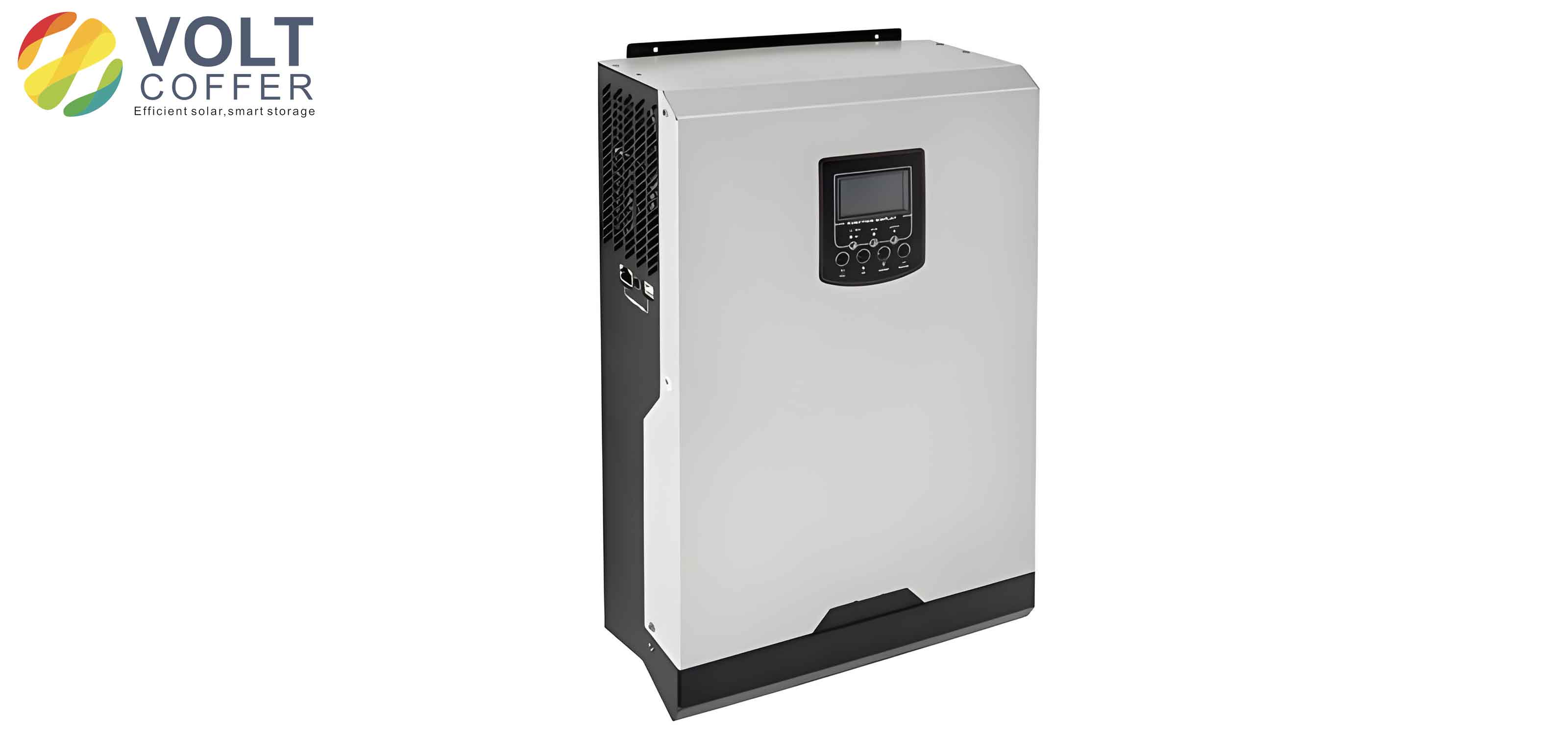
In AC power systems, uncertain parameters and nonlinear loads are primary factors affecting the quality of periodic tracking. When a three-phase inverter is connected to nonlinear loads, its output voltage predominantly contains harmonics such as the 5th, 7th, and 11th orders, with the 5th and 7th harmonics being the most significant. Effective voltage quality control requires targeted management of these dominant harmonics to ensure stability. To maintain sinusoidal load voltage, the controller of a three-phase inverter must uniformly handle different harmonic signals, employing methods like resonant control, selective compensation, and instantaneous power theory.
The voltage control system of a three-phase inverter can be modeled as shown in conceptual diagrams, where key variables include the inductor current in the αβ coordinate system (denoted as \( i_{L\alpha\beta} \)), reference voltage (\( u^*_{o\alpha\beta} \)), and inverter output voltage (\( u_{o\alpha\beta} \)). The error signal between the reference and output voltages is processed by a voltage controller, generating a reference current signal (\( i^*_{L\alpha\beta} \)). This reference current, after subtracting the actual inductor current, passes through a current controller to produce a PWM drive signal that regulates the switching of power transistors. This dual-loop control structure comprises an outer voltage loop and an inner current loop. The voltage loop compares the output voltage with the reference to derive an error, which is processed by a voltage controller \( G_v(s) \) to generate the reference current input for the inner loop. The current loop then compares the inductor current with this reference, processes it through a proportional controller \( G_i(s) \), and outputs the modulation signal. Theoretically, if a phase-compensated resonant controller achieves infinite gain at resonant points, it can track the reference voltage without error, ensuring stable output voltage independent of load current disturbances.
The reduced-order resonant controller is derived from traditional second-order resonant controllers, which are based on the internal model principle. This principle involves embedding a dynamic model into the feedback system to match AC quantities. A second-order resonant controller features two symmetric poles capable of tracking both positive and negative sequence components at specific frequencies but cannot achieve true sequence separation. By reducing the order to a single-pole structure, the reduced-order resonant controller enables independent and accurate tracking of positive and negative sequence components at different frequencies.
The transfer function of a reduced-order resonant controller in the s-domain, \( R_h(s) \), can be decomposed into two first-order parts: \( R_h^-(s) \) and \( R_h^+(s) \). These represent the negative and positive sequence controllers, respectively, and are defined as follows:
$$ R_h^-(s) = \frac{K_h}{2} \cdot \frac{1}{s + j\omega_h + \omega_c(h) e^{j\phi_h}} $$
$$ R_h^+(s) = \frac{K_h}{2} \cdot \frac{1}{s – j\omega_h + \omega_c(h) e^{-j\phi_h}} $$
Here, \( K_h \) is the integral gain, \( h \) is the harmonic order, \( \omega_h = h \omega_1 \) with \( \omega_1 \) as the fundamental angular frequency, and \( \phi_h \) is the average compensation phase at resonant frequency \( h\omega_1 \). For instance, when \( h = 1 \), \( \phi_h = \pi/4 \), and \( K_h = 2 \), the controllers \( R_h^-(s) \) and \( R_h^+(s) \) achieve maximum gain at -314 rad/s and 314 rad/s, respectively, with zero gain elsewhere. This ensures infinite gain at targeted frequencies, reducing computational burden by minimizing variables.
In practical applications, power system frequencies often deviate by approximately 0.5 Hz, posing stability risks. To address this, a damping term can be added to the reduced-order resonant controller to broaden the gain bandwidth. The gain at resonant frequencies is independently adjusted by \( K_h \), where a smaller \( K_h \) results in lower gain. The phase characteristics and bandwidth near resonance are governed by the damping term. For voltage control in three-phase inverters, the reduced-order resonant controller compensates for system delays and selectively suppresses specific harmonics, such as the 5th and 7th orders, by tuning parameters like \( K_h \), \( \phi_h \), and \( \omega_c(h) \).
To validate the effectiveness of the reduced-order resonant controller in three-phase inverter voltage control, a simulation model was developed. The circuit and controller parameters are summarized in Tables 1 and 2.
| Parameter | Value |
|---|---|
| DC Source Voltage \( U_{DC} \) (V) | 400 |
| Filter Inductance \( L \) (mH) | 3 |
| Filter Capacitance \( C \) (μF) | 100 |
| Reference Voltage Amplitude (V) | 155 |
| Reference Voltage Frequency (Hz) | 50 |
| Sampling and Switching Frequency (kHz) | 10 |
| Rectifier Load Inductance \( L_1 \) (mH) | 3 |
| Rectifier Load Capacitance \( C_1 \) (μF) | 1100 |
| Rectifier Load Resistance \( R \) (Ω) | 24 |
| Current Loop Proportional Gain \( k_{ip} \) | 50 |
| Harmonic Order \( h \) | Integral Gain \( K_h \) | Phase \( \phi_h \) (rad) | Bandwidth \( \omega_c(h) \) (rad/s) |
|---|---|---|---|
| -5 | 40 | 1.3 | 5 |
| 1 | 400 | 1.6 | 1 |
| 7 | 20 | 1.9 | 15 |
Simulation results demonstrated that without a resonant controller, the Phase A output voltage of the three-phase inverter failed to track the reference voltage accurately. The fundamental amplitude was 138.5 V with a THD of 3.2%, dominated by 5th and 7th harmonics. The error between output and reference voltages reached 40 V. After incorporating reduced-order resonant controllers for the fundamental, -5th, and 7th harmonics, the tracking performance improved significantly, reducing the error to approximately 10 V. The THD decreased sequentially as controllers were added, as shown in Table 3.
| Added Reduced-Order Resonant Controllers | THD Before Improvement (%) | THD After Improvement (%) |
|---|---|---|
| Fundamental | 3.27 | 3.12 |
| Fundamental and -5th | 3.27 | 2.28 |
| Fundamental, -5th, and 7th | 3.27 | 2.01 |
The mathematical representation of the output voltage quality can be expressed using the THD formula:
$$ \text{THD} = \frac{\sqrt{\sum_{h=2}^{\infty} V_h^2}}{V_1} \times 100\% $$
where \( V_h \) is the RMS voltage of the \( h \)-th harmonic and \( V_1 \) is the fundamental voltage. The enhanced performance with reduced-order resonant controllers aligns with the control law derived from the system dynamics. The closed-loop transfer function for the voltage control system with a reduced-order resonant controller can be modeled as:
$$ T(s) = \frac{G_v(s) G_i(s) G_p(s)}{1 + G_v(s) G_i(s) G_p(s) H(s)} $$
where \( G_p(s) \) represents the plant transfer function of the three-phase inverter, and \( H(s) \) is the feedback gain. The reduced-order resonant controller introduces additional poles at targeted frequencies, improving disturbance rejection.
In summary, the reduced-order resonant controller offers a robust solution for voltage control in three-phase inverters under nonlinear loads. Its ability to independently track sequence components with low computational overhead enhances system stability and power quality. Future work could explore adaptive tuning of controller parameters for varying operational conditions to further optimize the performance of three-phase inverters in renewable energy applications.
We have thoroughly investigated the implementation of reduced-order resonant controllers in three-phase inverter systems, highlighting their efficacy through theoretical analysis and simulation. The iterative improvement in THD with the addition of harmonic-specific controllers underscores the importance of selective harmonic compensation. This approach not only addresses voltage instability but also contributes to the overall reliability of power systems, making it a valuable tool for advancing grid integration of renewable sources. The continuous development of control strategies for three-phase inverters will play a pivotal role in meeting global energy demands sustainably.