
In recent years, the integration of renewable energy sources and distributed generation into power systems has significantly increased, leading to a pronounced trend of power electronics in grid infrastructure. This shift brings challenges, particularly when grid voltages become unbalanced, causing degraded performance in grid-connected inverters and potential disconnection, which threatens system stability. Therefore, controlling three-phase inverters under unbalanced grid conditions is critical. Key performance metrics include output power quality and current fidelity during voltage imbalances. This article focuses on a three-phase three-wire LCL-type grid-connected inverter, analyzing phase detection inaccuracies and power fluctuations. I propose an improved phase-locked loop (PLL) and a power-current cooperative control strategy that unifies reference current formulations with a coordination coefficient, enabling smooth transitions between grid current, active power, and reactive power objectives. Validation through MATLAB/Simulink simulations and RT-LAB experiments confirms the strategy’s feasibility and effectiveness.
Introduction
The global push for carbon neutrality and modern energy systems has accelerated the adoption of renewable energy, resulting in a higher penetration of distributed generation and power electronic converters in grids. A three-phase inverter is central to this integration, converting DC power from sources like solar or wind into AC power for grid injection. However, grid voltage imbalances—often caused by uneven loads, faults, or line asymmetries—can lead to issues such as power oscillations, current distortion, and instability in three-phase inverters. Traditional control methods struggle to maintain performance under these conditions, necessitating advanced strategies that address both power and current quality. In this work, I explore a cooperative control approach that dynamically balances multiple objectives, leveraging mathematical models and real-time adjustments to enhance the resilience of three-phase inverters in unbalanced grids.
Mathematical Model
Topology of Three-Phase Grid-Connected Inverter
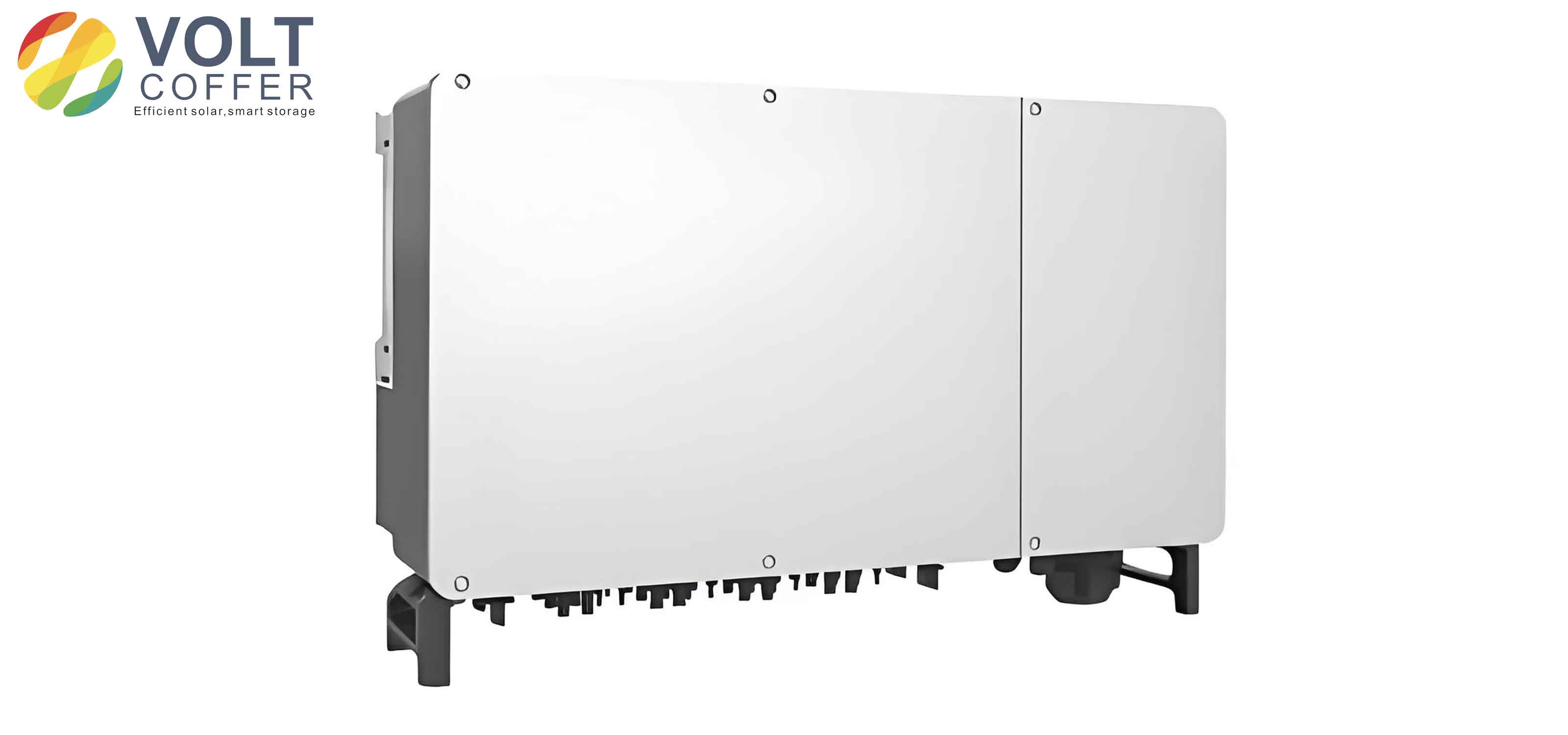
The topology of a three-phase grid-connected inverter typically includes a DC source, an inverter bridge, an LCL filter, and the grid interface. The LCL filter, comprising inductors and a capacitor, mitigates high-frequency harmonics, ensuring compliance with grid standards. In a three-phase three-wire system, the absence of a neutral connection simplifies analysis but requires careful handling of unbalanced conditions. The system can be modeled in the stationary reference frame (αβ-axis) to avoid coupling issues present in the synchronous reference frame (dq-axis), which involves trigonometric computations that slow response times during imbalances. The αβ-axis model offers independent control channels, facilitating faster dynamics. For instance, the α-axis control loop includes current regulators and feedback mechanisms to minimize steady-state error, reduce harmonics, and improve response speed.
The state-space representation in the αβ-frame for a three-phase inverter involves equations describing voltage and current dynamics. For example, the inverter output voltage \( u_i \) relates to the grid voltage \( u_g \) through the filter impedances. The mathematical model forms the basis for deriving control laws that ensure stable operation under unbalanced grids.
Positive and Negative Sequence Separation
Under unbalanced grid voltages, the voltage vector contains positive and negative sequence components. Using symmetrical component theory, the three-phase voltages can be decomposed as:
$$ \mathbf{u}_{abc} = \mathbf{u}_{abc}^+ + \mathbf{u}_{abc}^- $$
where \( \mathbf{u}_{abc}^+ \) and \( \mathbf{u}_{abc}^- \) are the positive and negative sequence components, respectively. Transformation to the αβ-frame using Clarke transformation yields:
$$ \mathbf{u}_{\alpha\beta}^+ = \frac{1}{2} \begin{bmatrix} 1 & -q \\ q & 1 \end{bmatrix} \mathbf{u}_{\alpha\beta} $$
$$ \mathbf{u}_{\alpha\beta}^- = \frac{1}{2} \begin{bmatrix} 1 & q \\ -q & 1 \end{bmatrix} \mathbf{u}_{\alpha\beta} $$
Here, \( q = e^{-j\pi/2} \) is a phase-shift operator. Accurate separation of these sequences is crucial for control. I employ an improved second-order generalized integrator (SOGI) based PLL, which enhances robustness against DC offsets and harmonics. The transfer functions for the improved SOGI are:
$$ D_2(s) = \frac{k\omega_0 s}{s^2 + k\omega_0 s + \omega_0^2} $$
$$ Q_2(s) = \frac{k(\tau \omega_0^2 s – s^2)}{(s^2 + k\omega_0 s + \omega_0^2)(1 + \tau s)} $$
where \( k \) is a gain, \( \omega_0 \) is the fundamental frequency, and \( \tau \) is a time constant for DC suppression. This improved DSOGI-PLL provides precise phase estimation and sequence separation, feeding data to the current reference calculator.
Power Transfer Characteristics
Under unbalanced conditions, instantaneous power in a three-phase inverter exhibits oscillatory components. Expressing voltages and currents in the dq-frame:
$$ \mathbf{U} = e^{j\omega t} \mathbf{U}_{dq}^+ + e^{-j\omega t} \mathbf{U}_{dq}^- $$
$$ \mathbf{I} = e^{j\omega t} \mathbf{I}_{dq}^+ + e^{-j\omega t} \mathbf{I}_{dq}^- $$
The instantaneous active and reactive power are:
$$ p = P_0 + P_1 \cos(2\omega t) + P_2 \sin(2\omega t) $$
$$ q = Q_0 + Q_1 \cos(2\omega t) + Q_2 \sin(2\omega t) $$
where \( P_0 \) and \( Q_0 \) are average power components, and \( P_1, P_2, Q_1, Q_2 \) are amplitudes of double-frequency oscillations. Transforming to the αβ-frame:
$$ \begin{bmatrix} P_0 \\ \lambda_1 \\ \lambda_2 \\ Q_0 \\ \lambda_3 \\ \lambda_4 \end{bmatrix} = 1.5 \begin{bmatrix} u_\alpha^+ & u_\beta^+ & u_\alpha^- & u_\beta^- \\ u_\alpha^- & u_\beta^- & u_\alpha^+ & u_\beta^+ \\ u_\beta^- & -u_\alpha^- & -u_\beta^+ & u_\alpha^+ \\ u_\beta^+ & -u_\alpha^+ & u_\beta^- & -u_\alpha^- \\ u_\beta^- & -u_\alpha^- & u_\beta^+ & -u_\alpha^+ \\ -u_\alpha^- & -u_\beta^- & u_\alpha^+ & u_\beta^+ \end{bmatrix} \begin{bmatrix} i_\alpha^+ \\ i_\beta^+ \\ i_\alpha^- \\ i_\beta^- \end{bmatrix} $$
with \( \lambda_1, \lambda_2 \) related to active power ripples and \( \lambda_3, \lambda_4 \) to reactive power ripples. These equations highlight the coupling between sequences and power, guiding the design of reference currents for ripple suppression.
Reference Current Calculation
The reference current formulation targets specific objectives: negative sequence current suppression, active power ripple elimination, or reactive power ripple mitigation. For each case, the reference currents in the αβ-frame are derived as follows.
Negative Sequence Suppression: To achieve balanced grid currents, set negative sequence currents to zero. Solving the power equations yields:
$$ \begin{bmatrix} i_\alpha^{+*} \\ i_\beta^{+*} \end{bmatrix} = \frac{2}{3} \frac{1}{(u_\alpha^+)^2 + (u_\beta^+)^2} \begin{bmatrix} u_\alpha^+ & u_\beta^+ \\ u_\beta^+ & -u_\alpha^+ \end{bmatrix} \begin{bmatrix} P^* \\ Q^* \end{bmatrix} $$
$$ i_\alpha^{-*} = 0, \quad i_\beta^{-*} = 0 $$
This ensures sinusoidal currents but allows power oscillations.
Active Power Ripple Suppression: To nullify active power ripples, set \( \lambda_1 = \lambda_2 = 0 \). The reference currents become:
$$ \begin{bmatrix} i_\alpha^{*} \\ i_\beta^{*} \\ i_\alpha^{-*} \\ i_\beta^{-*} \end{bmatrix} = \frac{2P^*}{3D_1} \begin{bmatrix} u_\alpha^+ \\ u_\beta^+ \\ -u_\alpha^- \\ -u_\beta^- \end{bmatrix} + \frac{2Q^*}{3D_2} \begin{bmatrix} u_\beta^+ \\ -u_\alpha^+ \\ u_\beta^- \\ -u_\alpha^- \end{bmatrix} $$
where \( D_1 = (u_\alpha^+)^2 + (u_\beta^+)^2 – (u_\alpha^-)^2 – (u_\beta^-)^2 \) and \( D_2 = (u_\alpha^+)^2 + (u_\beta^+)^2 + (u_\alpha^-)^2 + (u_\beta^-)^2 \). This maintains constant active power but introduces current unbalance and reactive power oscillations.
Reactive Power Ripple Suppression: Similarly, for constant reactive power, set \( \lambda_3 = \lambda_4 = 0 \):
$$ \begin{bmatrix} i_\alpha^{*} \\ i_\beta^{*} \\ i_\alpha^{-*} \\ i_\beta^{-*} \end{bmatrix} = \frac{2P^*}{3D_2} \begin{bmatrix} u_\alpha^+ \\ u_\beta^+ \\ u_\alpha^- \\ u_\beta^- \end{bmatrix} + \frac{2Q^*}{3D_1} \begin{bmatrix} u_\beta^+ \\ -u_\alpha^+ \\ -u_\beta^- \\ u_\alpha^- \end{bmatrix} $$
This stabilizes reactive power at the expense of active power ripples and current asymmetry.
Power-Current Cooperative Control Strategy
Control Objectives
The three control objectives—current balancing, active power constancy, and reactive power constancy—are mutually exclusive. However, a unified approach allows flexible trade-offs. I introduce a coordination coefficient \( k \) that spans from -1 to 1, enabling smooth transitions between objectives. This strategy enhances the adaptability of the three-phase inverter to varying grid conditions.
Unified Reference Current Formulation
Combining the previous equations, the unified reference current in the αβ-frame is:
$$ i_\alpha^* = \frac{2P^*}{3} \frac{u_\alpha^+ + k u_\alpha^-}{M_1^2 + k M_2^2} + \frac{2Q^*}{3} \frac{u_\beta^+ – k u_\beta^-}{M_1^2 – k M_2^2} $$
$$ i_\beta^* = \frac{2P^*}{3} \frac{u_\beta^+ + k u_\beta^-}{M_1^2 + k M_2^2} – \frac{2Q^*}{3} \frac{u_\alpha^+ – k u_\alpha^-}{M_1^2 – k M_2^2} $$
where \( M_1^2 = (u_\alpha^+)^2 + (u_\beta^+)^2 \) and \( M_2^2 = (u_\alpha^-)^2 + (u_\beta^-)^2 \). The coefficient \( k \) modulates the influence of negative sequence components:
- \( k = 0 \): Suppresses negative sequence currents, ensuring balanced grid currents.
- \( k = -1 \): Eliminates active power ripples, stabilizing DC-link voltage.
- \( k = 1 \): Suppresses reactive power ripples, maintaining grid voltage support.
Intermediate values of \( k \) allow blended control, such as partial current balancing with reduced power oscillations. A current limiter is incorporated to prevent overcurrent conditions during transitions.
Coordination Coefficient
The coordination coefficient \( k \) provides a mechanism for real-time optimization. For instance, in grids prone to voltage sags, setting \( k = -1 \) prioritizes active power stability, while in systems requiring reactive support, \( k = 1 \) is preferable. The control system dynamically adjusts \( k \) based on grid measurements, ensuring robust performance of the three-phase inverter under imbalances. The overall control structure integrates the improved DSOGI-PLL for sequence detection and the unified current reference calculator, forming a closed-loop system that responds swiftly to disturbances.
Simulation and Experimental Results
Simulation Setup
I implemented the proposed strategy in MATLAB/Simulink for a three-phase inverter with parameters summarized in Table 1.
| Parameter | Value | Parameter | Value |
|---|---|---|---|
| DC-link voltage \( U_{dc} \) | 1000 V | Filter capacitor \( C_F \) | 5 μF |
| Grid voltage \( u_g \) | 220 V | Capacitor feedback \( H_{ic} \) | 0.3 |
| Active power \( P \) | 10 kW | QPR controller \( K_p \) | 0.15 |
| Switching frequency \( f_s \) | 20 kHz | QPR controller \( K_r \) | 20 |
| Inverter-side inductance \( L_1 \) | 5 mH | QPR controller \( \omega_c \) | 5 rad/s |
| Grid-side inductance \( L_2 \) | 1.5 mH | QPR controller \( \omega_0 \) | 100 rad/s |
Simulations involved step changes in grid voltage to create imbalances, such as phase A dropping to 150 V and phase B to 120 V, while monitoring current and power responses.
Performance Analysis
Improved DSOGI-PLL Evaluation: Compared to conventional PLLs, the improved DSOGI-PLL demonstrated superior phase tracking under unbalanced and distorted grids. With injected DC components, it maintained frequency stability at 50 Hz, whereas standard PLLs exhibited oscillations, validating its DC suppression capability.
Control with \( k = 0 \): During voltage imbalances, this setting produced balanced three-phase currents but introduced active and reactive power ripples at twice the grid frequency, consistent with theoretical predictions.
Control with \( k = -1 \): Active power ripples were eliminated, ensuring constant power flow. However, grid currents became unbalanced, and reactive power oscillations increased, highlighting the trade-off.
Control with \( k = 1 \): Reactive power ripples were suppressed, but active power oscillations and current unbalance persisted, underscoring the conflict between objectives.
Dynamic Transitions: Varying \( k \) from -1 to 1 enabled smooth interpolation between control goals. For example, as \( k \) increased, active power ripples grew while reactive power ripples diminished, and current balance improved. This flexibility allows the three-phase inverter to adapt to real-time grid demands without hardware modifications.
Experimental validation on an RT-LAB platform confirmed these findings. The improved DSOGI-PLL handled DC offsets effectively, and the cooperative control strategy achieved seamless transitions between operating modes, ensuring reliable performance of the three-phase inverter under tested imbalances.
Conclusion
This article addresses the challenges of operating three-phase inverters in unbalanced grids by developing a power-current cooperative control strategy. The improved DSOGI-PLL enhances phase detection accuracy by suppressing DC components and harmonics. A unified reference current formulation with a coordination coefficient \( k \) enables dynamic trade-offs between current balancing, active power constancy, and reactive power constancy. Simulations and experiments validate that adjusting \( k \) facilitates smooth transitions, allowing the three-phase inverter to maintain stability and power quality under various imbalance scenarios. This approach offers practical insights for enhancing grid resilience in renewable-rich systems, providing a scalable solution for future energy networks.