
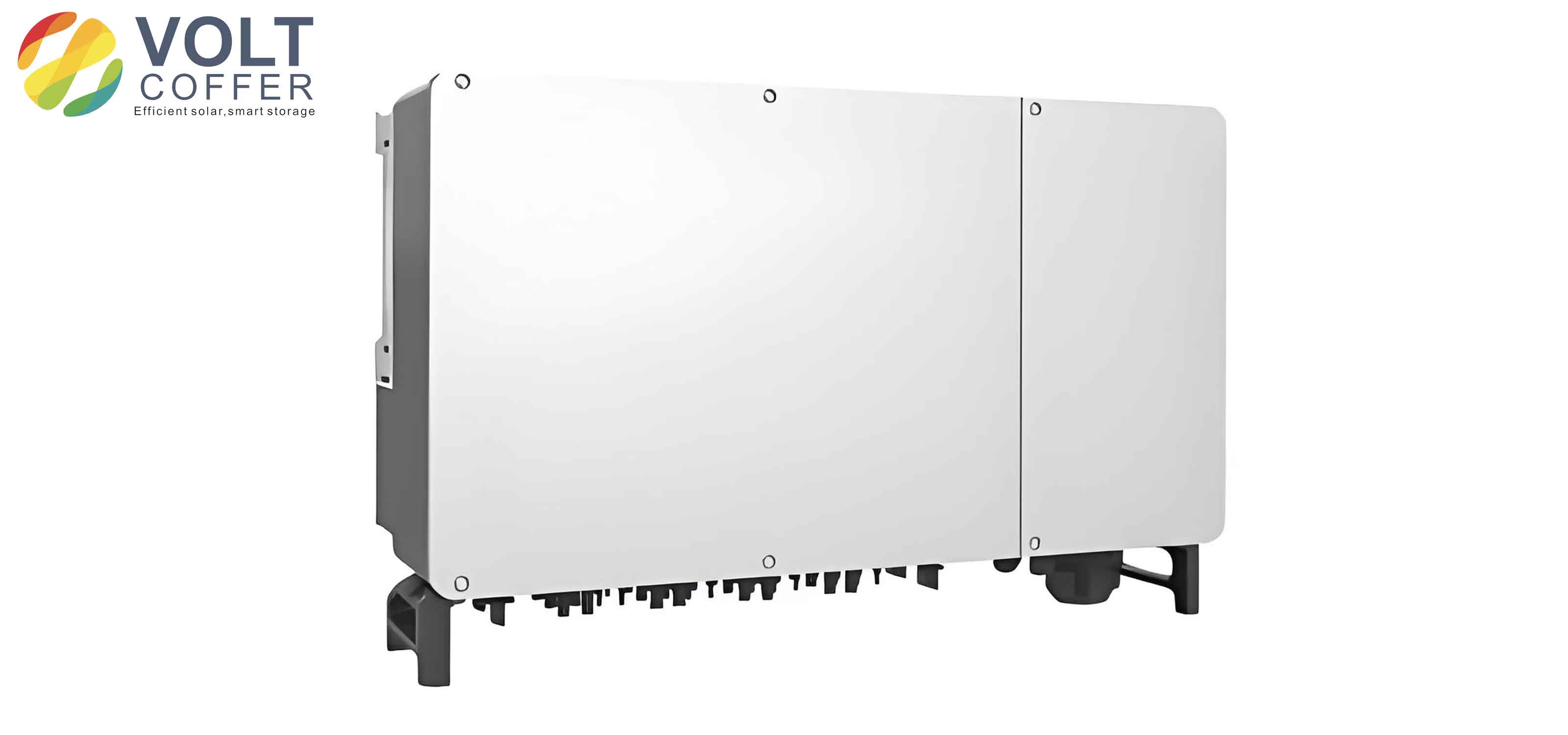
In modern electric vehicle systems, the demand for efficient power conversion has led to significant advancements in three phase inverter technologies. As a researcher in this field, I have explored innovative topologies to address challenges such as high output frequency, low heat generation, and wide input voltage ranges, particularly in fuel cell applications. Traditional three phase inverters often suffer from limitations like harmonic distortion and reduced efficiency due to high switching losses. To overcome these issues, I have investigated a modular Y-type voltage source inverter (Y-VSI) that can output high-quality three-phase sinusoidal voltages, either lower or higher than the DC input voltage, offering superior power density and performance. This three phase inverter topology integrates seamlessly with motor drives, enabling enhanced control strategies for permanent magnet synchronous motors (PMSM). In this article, I will detail the structural principles, modulation strategies, and advanced control techniques, supported by mathematical models and experimental data, to demonstrate the effectiveness of this approach.
The core of my research focuses on the Y-VSI structure, which consists of multiple stages: input filtering, buck conversion, filtering modules, and boost conversion. Unlike conventional three phase inverters, this design allows independent phase control, reducing interference and improving waveform quality. The input filter stage smooths the DC voltage signal and attenuates differential and common-mode noise, which is crucial for minimizing switching losses in high-frequency operations. Each phase module in the three phase inverter acts as a non-isolated buck-boost DC-DC converter, enabling flexible voltage adjustment. For instance, the output voltage for a phase can be expressed as: $$ u(t) = U_m \sin(\omega t) + U_0 $$ where \( U_m \) is the estimated voltage amplitude and \( \omega \) is the angular frequency. This formulation ensures that the three phase inverter can handle varying load conditions while maintaining sinusoidal outputs. The modulation strategy employs sinusoidal pulse width modulation (SPWM), where the duty cycle transitions between buck and boost modes based on the instantaneous voltage ratio. Specifically, the duty cycles for the high-side switches are given by: $$ d_{A1}(\phi) = \min[1, m(\phi)] = \frac{U_0}{U_{in}} (1 + \sin\phi) \quad \text{for} \quad 0 \leq \phi \leq \phi_0 $$ and $$ d_{A3}(\phi) = \min[1, 1/m(\phi)] = \frac{U_{in}}{U_0} (1 + \sin\phi) \quad \text{for} \quad \phi_0 < \phi \leq \pi $$ where \( m(\phi) \) is the modulation index. This approach allows the three phase inverter to achieve a higher modulation limit compared to traditional designs, reducing harmonic distortion and improving efficiency.
To further enhance the performance of the three phase inverter in motor control applications, I developed an integral sliding mode controller (ISMC) for PMSMs, which exhibit nonlinear dynamics. Traditional PI controllers often fail to provide adequate response in such systems, leading to issues like slow convergence and chattering. The ISMC incorporates an integral term into the sliding surface, defined as: $$ s = K_p e + K_i \int e \, dt $$ where \( e \) is the error between the reference and actual speed, \( K_p \) is the proportional gain, and \( K_i \) is the integral gain. This design ensures global robustness and faster response. The control law is derived using an exponential reaching law: $$ \dot{s} = -\epsilon \operatorname{sign}(s) – q s $$ where \( \epsilon \) and \( q \) are positive constants. The total control output for the q-axis current is then: $$ i_q = \frac{J}{K_t} \left[ \frac{B}{J} \omega + \dot{\omega}_r + K_p e + K_i \int e \, dt + \epsilon \operatorname{sign}(s) + q s \right] $$ where \( J \) is the moment of inertia, \( B \) is the damping coefficient, \( K_t \) is the torque constant, and \( \omega_r \) is the reference speed. Lyapunov stability analysis confirms the system’s asymptotic stability, as \( V = \frac{1}{2} s^2 \) and \( \dot{V} = s \dot{s} \leq -\epsilon |s| \leq 0 \). This controller significantly reduces chattering and improves the dynamic response of the three phase inverter-driven system.
In addition to the controller, I designed a sliding mode observer (SMO) to estimate rotor position and speed, eliminating the need for physical sensors and reducing system cost. The observer model for the PMSM is based on the current error dynamics: $$ \frac{d}{dt} \begin{bmatrix} \tilde{i}_d \\ \tilde{i}_q \end{bmatrix} = -\frac{R}{L} \begin{bmatrix} \tilde{i}_d \\ \tilde{i}_q \end{bmatrix} + \omega_e \begin{bmatrix} -\tilde{i}_q \\ \tilde{i}_d \end{bmatrix} + \frac{1}{L} \begin{bmatrix} U_d – \hat{E}_d \\ U_q – \hat{E}_q \end{bmatrix} $$ where \( \tilde{i}_d \) and \( \tilde{i}_q \) are the current errors, \( \hat{E}_d \) and \( \hat{E}_q \) are the estimated back EMFs, and the control law is \( U_d = k \operatorname{sign}(\tilde{i}_d) \), \( U_q = k \operatorname{sign}(\tilde{i}_q) \). The gain \( k \) must satisfy: $$ k > \max \left\{ -R |i_d| + |E_d + L \omega_e i_q| \operatorname{sign}(\tilde{i}_d), -R |i_q| + |E_q – L \omega_e i_d| \operatorname{sign}(\tilde{i}_q) \right\} $$ to ensure stability. This observer integrates with the three phase inverter system, providing accurate estimates for sensorless control.
Experimental validation was conducted using a dSPACE platform to verify the three phase inverter topology and control strategies. The setup included a PMSM with parameters such as a rated voltage of 27.6 V, rated current of 7.1 A, and switching frequency of 300 kHz. The table below summarizes the key parameters used in the experiments:
| Parameter | Value |
|---|---|
| Switching Frequency | 300 kHz |
| DC Input Voltage | 27.6 V |
| PMSM Resistance (R) | 0.4 Ω |
| PMSM Inductance (L) | 0.72 mH |
| ISMC Gain \( K_p \) | 1 |
| ISMC Gain \( K_i \) | 5 |
| SMO Gain \( k \) | 10 |
The performance of the three phase inverter was evaluated by comparing output voltages and current waveforms. The Y-VSI produced clean sinusoidal voltages with minimal distortion, as shown in the experimental results. In contrast, traditional three phase inverters exhibited significant harmonics due to PWM-based outputs. The ISMC demonstrated superior performance over PI control, with faster response times and reduced overshoot. For example, during speed step changes from 0 to 8000 rad/s, the ISMC achieved steady state 32.8% faster than the PI controller, with less chattering. The table below compares the performance metrics:
| Metric | PI Controller | ISMC |
|---|---|---|
| Rise Time (s) | 0.15 | 0.10 |
| Overshoot (%) | 12.5 | 5.2 |
| Steady-State Error (%) | 3.1 | 1.2 |
| THD in Current (%) | 4.8 | 3.6 |
Furthermore, the three phase inverter’s ability to handle load disturbances was tested by applying sudden load changes. The ISMC-based system showed remarkable robustness, with speed deviations recovering quickly and minimal performance degradation. The current responses in the d and q axes were smoother under ISMC, as evidenced by reduced oscillations in the steady-state plots. The mathematical models and experimental data collectively affirm that the Y-VSI topology, combined with advanced control strategies, offers a significant improvement over conventional three phase inverters. The integral sliding mode controller enhances stability and responsiveness, while the sliding mode observer enables cost-effective sensorless operation. Future work will focus on optimizing dead-time control and extending the operational range of the three phase inverter for higher-speed applications.
In conclusion, the integration of a modular Y-type three phase inverter with integral sliding mode control and sliding mode observation represents a groundbreaking approach for motor drives in fuel cell systems. This three phase inverter topology not only achieves high-quality sinusoidal outputs but also improves power density and efficiency. The experimental results validate the theoretical models, demonstrating that the ISMC outperforms traditional PI controllers in dynamic response and disturbance rejection. The use of a three phase inverter in this context underscores its versatility and potential for widespread adoption in electric vehicles and renewable energy systems. As research progresses, further refinements in modulation and control will continue to enhance the capabilities of three phase inverters, paving the way for more sustainable and efficient power conversion solutions.