
In modern power electronics, the three phase inverter plays a critical role in applications such as uninterruptible power supplies, motor drives, and renewable energy systems. The demand for high-quality output voltage with fast dynamic response and stability under varying load conditions has driven the development of advanced control strategies. Traditional linear control methods, including proportional-integral and proportional-resonant controls, often suffer from complex parameter design and limited dynamic performance. Nonlinear approaches like hysteresis and sliding mode control offer improved robustness but face challenges with variable switching frequencies. Pulse train (PT) control emerges as a discrete nonlinear technique that simplifies implementation and enhances transient response; however, it exhibits low-frequency oscillations in output voltage under light loads. To address this, we propose a power reference mode pulse train (PRM-PT) control method for three phase inverters, which dynamically adjusts high and low power pulses based on output power, effectively suppressing oscillations and improving performance across wide load ranges.
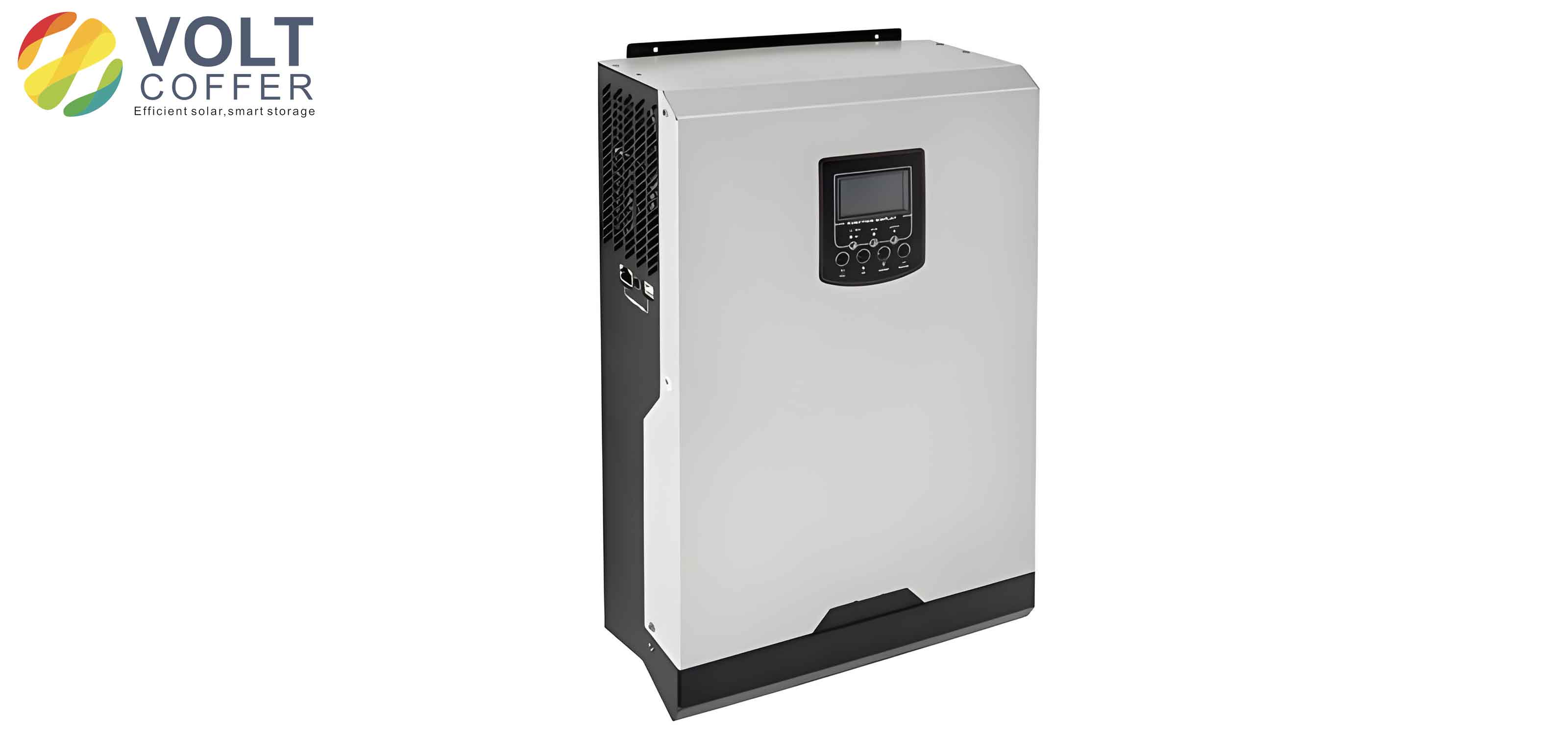
The three phase inverter topology, as illustrated below, consists of a three-phase bridge with LC filters to smooth the output voltage. Each phase includes inductors and capacitors that mitigate harmonics, ensuring sinusoidal outputs. The PRM-PT control strategy focuses on independently regulating each phase by selecting appropriate pulse widths, eliminating the need for error amplifiers or compensation networks. This approach not only reduces computational overhead but also enhances reliability in practical deployments.
In this analysis, we delve into the operational principles of PRM-PT control, starting with the derivation of duty cycle functions for the three phase inverter. Using space vector equivalence, the relationship between input voltage and output parameters is modeled to facilitate discrete pulse selection. The duty cycle for each phase can be expressed as a combination of constant and variable components, influenced by circuit parameters and load conditions. For instance, the duty cycle $d_i(\omega t)$ for phase $i$ (where $i = a, b, c$) is given by:
$$ d_i(\omega t) = \frac{1}{2} + D_{\text{unit}}(\omega t) $$
Here, $D_{\text{unit}}(\omega t)$ comprises two parts: $D_I(\omega t)$, which depends on angular frequency and circuit components, and $D_{II}(\omega t)$, which varies with load power. This decomposition allows for precise control by adjusting high and low power pulses. The high power pulse duty cycle $D_H$ and low power pulse duty cycle $D_L$ are defined using coefficients $K_H$ and $K_L$, respectively:
$$ D_H = K_H \left( \frac{1}{2} + |D_I(\omega t)| \right) $$
$$ D_L = K_L \left( \frac{1}{2} + |D_I(\omega t)| \right) $$
These coefficients are selected based on output power references to minimize the difference between $D_H$ and $D_L$ under light loads, thereby curbing low-frequency oscillations. For example, with a power reference of 1 kW, $K_H$ and $K_L$ might be set to 1.025 and 0.975, ensuring that $D_H$ always exceeds the ideal duty cycle and $D_L$ remains below it across the input voltage range of 370 V to 410 V. This discrete approximation of the duty cycle function enables the three phase inverter to maintain stability without complex calculations.
The implementation of PRM-PT control involves sampling output voltages and currents, comparing them with references, and generating pulse signals via a digital controller. A four-level power reference system, as summarized in Table 1, allows the three phase inverter to adapt to varying loads by switching between predefined $K_H$ and $K_L$ values. This flexibility is crucial for applications where load changes are frequent, such as in industrial drives or grid-connected systems.
| Power Reference (W) | $K_H$ | $K_L$ |
|---|---|---|
| 1000 | 1.025 | 0.975 |
| 750 | 1.020 | 0.980 |
| 500 | 1.012 | 0.988 |
| 250 | 1.006 | 0.994 |
Stability analysis of the PRM-PT controlled three phase inverter is conducted using state-space averaging modeling. The equivalent circuit for a single-phase half-bridge representation simplifies the derivation of small-signal models. The input energy for high and low pulses during steady state is calculated as:
$$ E_{H,\text{in},i} = \frac{\bar{V}_{\text{in}} (\bar{V}_{\text{in}} – \bar{v}_o)}{2L} (D_H T_s)^2 $$
$$ E_{L,\text{in},i} = \frac{\bar{V}_{\text{in}} (\bar{V}_{\text{in}} – \bar{v}_o)}{2L} (D_L T_s)^2 $$
where $\bar{V}_{\text{in}}$ is the average input voltage, $\bar{v}_o$ is the average output voltage, $L$ is the inductance, and $T_s$ is the switching period. For a cycle with $\mu_H$ high pulses and $\mu_L$ low pulses, the power balance equation is:
$$ S (\mu_H + \mu_L) T_s = \eta (\mu_H E_{H,\text{in},i} + \mu_L E_{L,\text{in},i}) $$
Here, $S$ is the output power per phase, and $\eta$ is the efficiency. The inductor current perturbation $\hat{i}_L$ is derived from partial derivatives, leading to the stability condition:
$$ S < \frac{\bar{V}_{\text{in}} T_s (\mu_H D_H^2 + \mu_L D_L^2)}{2L (\mu_H + \mu_L)} $$
This inequality ensures no right-half-plane poles, confirming that the three phase inverter remains stable under PRM-PT control. The avoidance of low-frequency oscillations is further validated through simulations and experiments, comparing PRM-PT with conventional PT control.
Simulation results for the three phase inverter under PRM-PT control demonstrate excellent performance during load transitions. For instance, with an input voltage of 390 V and a switch from no-load to full-load (1 kW), the output voltage recovers within 2 ms, and the pulse selection shows consistent use of high power pulses during transients. In contrast, PT control exhibits significant low-frequency oscillations under light loads, with total harmonic distortion (THD) reaching 4.1% at 100 W output, compared to 1.3% for PRM-PT. The dynamic response of PRM-PT is faster due to reduced pulse duty cycle differences, as illustrated in Table 2, which summarizes key performance metrics.
| Parameter | PRM-PT Control | PT Control |
|---|---|---|
| Low-Frequency Oscillation | Suppressed | Pronounced under light loads |
| Dynamic Response Time | < 2 ms for 0-1000 W step | Slower under light loads |
| THD at 100 W Output | ~1.3% | ~4.1% |
| Control Complexity | Low, no compensation needed | Moderate, requires tuning |
Experimental validation on a 1 kW three phase inverter prototype confirms the simulation findings. The output voltages and currents maintain sinusoidal waveforms under resistive-inductive and nonlinear loads, with pulse trains adapting seamlessly to power changes. The PRM-PT control’s ability to handle nonlinear loads, though with some distortion, highlights its robustness. For further improvement, integrating a current inner loop could enhance performance under harsh load conditions.
In conclusion, the PRM-PT control method for three phase inverters offers a significant advancement over traditional techniques by eliminating low-frequency oscillations and accelerating dynamic response. Through discrete pulse adjustment based on power references, it ensures stability across wide operating ranges while minimizing control complexity. This makes the three phase inverter more reliable for real-world applications, from industrial motor drives to renewable energy integration. Future work could explore multi-level implementations or hybrid controls to extend these benefits to higher power systems.
The mathematical foundation of PRM-PT control relies on accurately modeling the three phase inverter dynamics. The output voltage change per switching period for phase A, considering symmetric modulation, is derived as:
$$ \Delta v_{oa}(kT_s) = \frac{T_s}{C} \left( i_{La}(kT_s) – i_{oa}(kT_s) \right) + \frac{T_s^2}{2LC} (2V_{\text{in}} D_a – V_{\text{in}} D_a^2 – v_{oa}) $$
Under the assumption that $T_s^2 \ll LC$, this simplifies to:
$$ \Delta v_{oa}[(k+1)T_s] = \frac{T_s}{C} \left( i_{La}(kT_s) + \Delta i_{La} – i_{oa}[(k+1)T_s] \right) $$
By reducing the duty cycle difference between $D_H$ and $D_L$ at low powers, PRM-PT control minimizes $\Delta i_{La}$, thus suppressing oscillations. The space vector model further refines this approach. In $\alpha\beta$ coordinates, the input-output voltage relationship is:
$$ \begin{bmatrix} V_\alpha \\ V_\beta \end{bmatrix} = \begin{bmatrix} 1 – \omega^2 LC & -\frac{\omega L}{Z} \\ \frac{\omega L}{Z} & 1 – \omega^2 LC \end{bmatrix} \begin{bmatrix} v_{o\alpha} \\ v_{o\beta} \end{bmatrix} $$
where $Z = R + j\omega L_{\text{Load}}$. Transforming to abc coordinates yields the duty cycles for each phase, incorporating the power-dependent term $D_{II}(\omega t)$:
$$ D_{II}(\omega t) = \frac{6 S_o \omega L}{9 U V_{\text{in}}} \begin{bmatrix} \sqrt{3} \cos \omega t \\ \frac{\sqrt{3}}{2} \sin \omega t – \frac{3}{2} \cos \omega t \\ -\frac{\sqrt{3}}{2} \sin \omega t – \frac{3}{2} \cos \omega t \end{bmatrix} $$
Here, $S_o$ is the output power, and $U$ is the phase voltage RMS. The ratio $K = (0.5 + |D_{\text{unit}}(\omega t)|) / (0.5 + |D_I(\omega t)|)$ varies with output power and input voltage, guiding the selection of $K_H$ and $K_L$ to ensure $D_H > D_{\text{unit}} > D_L$ across all conditions. For a three phase inverter with parameters like $L = 3$ mH, $C = 4.7$ μF, and $f = 50$ Hz, this approach maintains fidelity to the ideal duty cycle, as shown in simulations.
Overall, the PRM-PT control strategy represents a scalable solution for three phase inverters, balancing performance and simplicity. Its discrete nature aligns well with digital implementation, making it suitable for modern smart grid and electric vehicle applications. As power electronics evolve, such innovations will continue to enhance the efficiency and reliability of three phase systems worldwide.