
With the rapid advancement of distributed energy resources, the integration of single phase inverter systems into AC microgrids has become increasingly critical for efficient power management. This paper presents a novel intelligent power allocation strategy for single phase inverter units operating in parallel and grid-connected modes, addressing key challenges such as circulating currents and communication delays. The proposed methodology leverages potential difference equalization and advanced phase-locking techniques to enable seamless operation without inter-inverter communication, ensuring stable power distribution under varying load conditions.
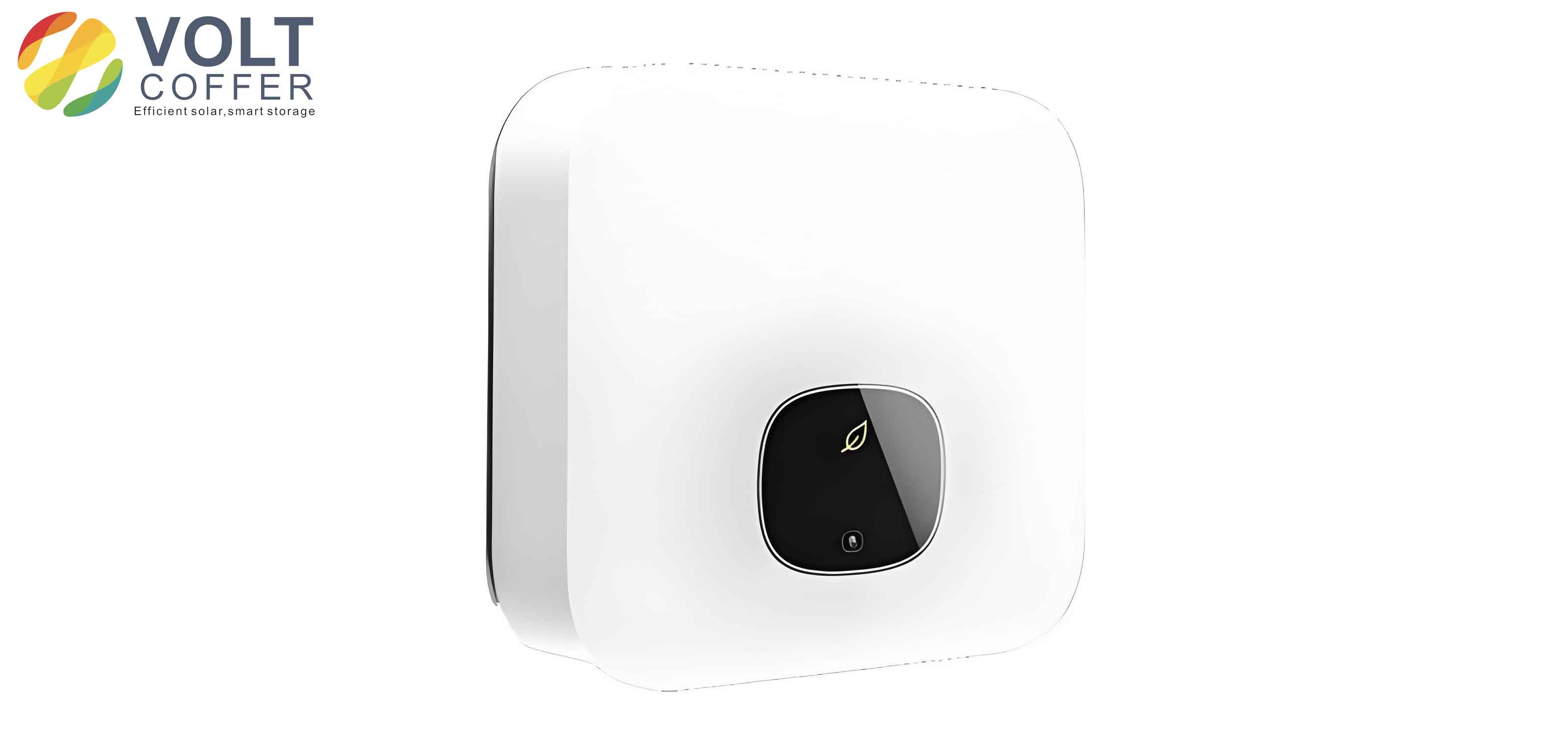
The mathematical modeling of the single phase inverter system begins with the fundamental equations governing the LC filter dynamics. For a single phase inverter unit, the output voltage and current relationships can be expressed through Kirchhoff’s laws:
$$L\frac{dI_L}{dt} = U_Q – U_{o1} – I_L r$$
$$C\frac{dU_{o1}}{dt} = I_L – I_{o1}$$
Through Laplace transformation, the transfer function of the single phase inverter filter circuit is derived as:
$$G(s) = \frac{U_{o1}(s)}{U_Q(s)} = \frac{r_1}{LCr_1s^2 + (L + rr_1C)s + (r + r_1)}$$
This transfer function forms the basis for analyzing the stability and performance of the single phase inverter system. The parameters of the single phase inverter components are summarized in Table 1, which provides key design specifications for implementing the proposed control strategy.
| Parameter | Value | Unit |
|---|---|---|
| DC Input Voltage | 50 | V |
| AC Output Voltage | 24 | V |
| Grid Frequency | 50 | Hz |
| Filter Inductance | 470 | μH |
| Filter Capacitance | 1 | μF |
| Switching Frequency | 20 | kHz |
In parallel operation of multiple single phase inverter units, circulating currents pose significant challenges to system stability. The circulating current between two single phase inverter units can be expressed as:
$$I_h = \frac{1}{2}(I_{o1} – I_{o2}) = \frac{U_{o1} – U_{o2}}{2jX}$$
This equation demonstrates that the circulating current is directly proportional to the voltage difference between the single phase inverter outputs and inversely proportional to the system impedance. To mitigate this issue, the potential difference equalization method is implemented, ensuring minimal voltage discrepancies between parallel single phase inverter units.
The core of the intelligent power allocation strategy lies in the implementation of SOGI-PLL for grid synchronization. The orthogonal signal generator within the SOGI structure creates virtual quadrature components from the single-phase grid voltage, enabling accurate phase detection. The transfer functions for the orthogonal signal generation are given by:
$$D(s) = \frac{U_\alpha(s)}{U(s)} = \frac{k\omega s}{s^2 + k\omega s + \omega^2}$$
$$Q(s) = \frac{U_\beta(s)}{U(s)} = \frac{k\omega^2}{s^2 + k\omega s + \omega^2}$$
These transfer functions allow the single phase inverter system to accurately track grid voltage phase and frequency, essential for seamless grid connection. The parameter k controls the bandwidth and filtering characteristics of the SOGI, with optimal performance achieved at k=1 based on extensive simulation analysis.
The power allocation control strategy employs a sophisticated alternating open-closed loop approach for current distribution. The fundamental equations governing the current distribution between two single phase inverter units are:
$$I_{o1} = \frac{U_o}{2R} + \frac{U_{o1} – U_{o2}}{2Z}$$
$$I_{o2} = \frac{U_o}{2R} – \frac{U_{o1} – U_{o2}}{2Z}$$
These equations form the basis for implementing arbitrary current ratio distribution between parallel single phase inverter units. Through precise voltage and current PI control loops, the system can maintain the desired current distribution ratio while ensuring stable operation.
| Performance Indicator | Value | Unit |
|---|---|---|
| Output Voltage THD | < 2 | % |
| Maximum Efficiency | 93.3 | % |
| Load Regulation | ≤ 0.2 | % |
| Phase Locking Accuracy | < 0.5 | ° |
| Dynamic Response Time | < 20 | ms |
Simulation results validate the effectiveness of the proposed control strategy for single phase inverter systems. The SOGI-PLL demonstrates excellent phase tracking capability, with the orthogonal components maintaining precise π/2 phase difference. The voltage and current waveforms show minimal distortion, confirming the stability of the single phase inverter system under various operating conditions.
The experimental implementation of the single phase inverter system confirms the simulation results. The hardware platform, built around STM32F407 microcontrollers, successfully implements the proposed control strategy. Measurement data from the experimental single phase inverter system shows excellent performance metrics, as summarized in Table 2.
The intelligent power allocation capability of the single phase inverter system is demonstrated through various current distribution scenarios. For instance, when configured for a 2:1 current distribution ratio, the system maintains precise current sharing with less than 2% error. The mathematical representation of this distribution is given by:
$$K_{ref} = \frac{I_{o1}}{I_{o2}} = 2$$
$$I_{o1} = \frac{2}{3}I_o$$
$$I_{o2} = \frac{1}{3}I_o$$
These equations illustrate how the single phase inverter system achieves precise power allocation through coordinated control of individual inverter outputs. The alternating open-closed loop control strategy effectively minimizes system oscillations and reduces harmonic distortion.
The efficiency analysis of the single phase inverter system reveals outstanding performance characteristics. The power conversion efficiency as a function of output power can be modeled using the following empirical equation:
$$\eta(P_{out}) = \frac{P_{out}}{P_{in}} = \frac{P_{out}}{P_{out} + P_{loss}}$$
Where the power loss components in the single phase inverter include switching losses, conduction losses, and magnetic losses. The experimental results show that the single phase inverter system maintains efficiency above 88% across the entire operating range, with peak efficiency reaching 93.3%.
| Distribution Ratio | Set Value (A) | Actual Value (A) | Error (%) |
|---|---|---|---|
| 1:1 | 2.35/2.35 | 2.36/2.34 | 0.85 |
| 2:1 | 3.14/1.57 | 3.12/1.59 | 1.27 |
| 3:2 | 2.82/1.88 | 2.79/1.91 | 1.60 |
| 1:1.5 | 1.08/1.62 | 1.06/1.64 | 1.85 |
The harmonic performance of the single phase inverter system is analyzed through Fourier decomposition of the output voltage waveform. The total harmonic distortion is calculated using the standard formula:
$$THD = \frac{\sqrt{\sum_{n=2}^{\infty} V_n^2}}{V_1} \times 100\%$$
where Vn represents the RMS value of the n-th harmonic component and V1 is the fundamental component. The experimental results confirm that the single phase inverter system maintains THD below 2% under all operating conditions, meeting stringent power quality standards.
The dynamic response of the single phase inverter system to load changes is characterized by the load regulation parameter, defined as:
$$S_I = \frac{V_{nl} – V_{fl}}{V_{fl}} \times 100\%$$
where Vnl represents the no-load voltage and Vfl represents the full-load voltage. The measured load regulation of the single phase inverter system remains below 0.2%, demonstrating excellent voltage stability.
In conclusion, the proposed intelligent power allocation strategy for single phase inverter systems in AC microgrid applications demonstrates superior performance in both parallel and grid-connected operations. The integration of SOGI-PLL for precise phase synchronization, combined with the potential difference equalization method for circulating current suppression, enables reliable operation of multiple single phase inverter units without communication links. The experimental validation confirms the theoretical analysis and simulation results, showing that the single phase inverter system achieves high efficiency, low harmonic distortion, and precise power allocation capability. This approach provides a robust solution for distributed energy integration into AC microgrids using advanced single phase inverter technology.
The future development of single phase inverter systems will focus on enhancing the intelligent power allocation algorithms and expanding the application scope to larger microgrid configurations. The fundamental principles established in this work provide a solid foundation for further optimization of single phase inverter performance in various distributed energy scenarios.