
With the rapid expansion of energy storage lithium battery power stations globally, safety concerns have become increasingly prominent due to frequent thermal runaway and fire incidents. These events highlight the critical need for robust safety evaluation frameworks to prevent accidents and ensure reliable operation. This article explores comprehensive safety evaluation methodologies for energy storage lithium battery systems, focusing on key aspects such as evaluation processes, indicator systems, weight assignment methods, and evaluation techniques. By integrating recent research findings, I aim to provide a detailed analysis that enhances the understanding and application of safety assessments in real-world scenarios. The discussion emphasizes the importance of multi-dimensional indicators and advanced evaluation methods to address the complexities of energy storage lithium battery safety.
The safety evaluation of energy storage lithium battery power stations involves a systematic process that includes constructing an indicator system, assigning weights to indicators, selecting appropriate evaluation methods, and deriving results. This process ensures a holistic assessment of safety risks, accounting for various factors like battery operation, equipment performance, and environmental conditions. For instance, indicators such as voltage, temperature, state of charge (SOC), and state of health (SOH) are crucial for monitoring battery behavior. Additionally, external factors like fire protection systems and maintenance practices play a vital role. The integration of these elements into a cohesive framework allows for accurate risk quantification and mitigation strategies. Below, I outline the fundamental steps in this evaluation process, supported by tables and formulas to illustrate key concepts.
First, the indicator system must be comprehensive and scientifically sound. It should cover multiple levels, including battery operation, key equipment, efficiency, power metrics, maintenance, and environmental influences. For example, battery operation indicators can include parameters like temperature extremes and voltage deviations, which are measurable and directly related to safety. A well-structured indicator system helps in identifying potential risks early, thereby preventing catastrophic failures in energy storage lithium battery setups. To quantify the relationships between indicators, mathematical models are often employed. For instance, the consistency of battery performance can be assessed using standard deviation calculations:
$$ \sigma = \sqrt{\frac{1}{N} \sum_{i=1}^{N} (x_i – \mu)^2} $$
where \( \sigma \) represents the standard deviation, \( N \) is the number of samples, \( x_i \) denotes individual measurements, and \( \mu \) is the mean value. This formula helps in evaluating the dispersion of battery parameters, which is critical for safety assessments.
Next, assigning weights to indicators is essential for prioritizing risks. Methods like the Analytic Hierarchy Process (AHP) combine expert opinions with mathematical rigor to determine weights. For example, in AHP, pairwise comparisons are used to construct a judgment matrix, and the weights are derived from the eigenvector corresponding to the largest eigenvalue. The consistency of the matrix is checked using the consistency ratio (CR):
$$ CR = \frac{CI}{RI} $$
where \( CI \) is the consistency index and \( RI \) is the random index. If \( CR < 0.1 \), the matrix is considered consistent. This approach ensures that subjective inputs are logically integrated into the evaluation of energy storage lithium battery safety.
To provide a clear overview, Table 1 summarizes common indicator categories and their descriptions for energy storage lithium battery power stations. This table highlights the multi-level structure of a typical indicator system, which is vital for comprehensive safety evaluations.
| Category | Description | Examples |
|---|---|---|
| Battery Operation | Parameters related to battery performance and conditions | Temperature, voltage, SOC, SOH |
| Key Equipment | Components critical to system functionality | BMS, PCS, EMS, fire protection |
| Efficiency Metrics | Measures of energy utilization and losses | Comprehensive efficiency, station power consumption rate |
| Power and Energy | Metrics reflecting electrical performance | Operation coefficient, utilization coefficient |
| Maintenance | Aspects of operational upkeep and repairs | Equipment inspection schedules, failure records |
| Environmental Factors | External conditions affecting safety | Ambient temperature, humidity, dust levels |
In weight assignment, combination methods are often preferred to balance subjectivity and objectivity. For instance, the entropy weight method can be combined with AHP to derive more reliable weights. The entropy weight is calculated based on the information entropy of indicators:
$$ E_j = -\frac{1}{\ln m} \sum_{i=1}^{m} p_{ij} \ln p_{ij} $$
where \( E_j \) is the entropy for indicator \( j \), \( m \) is the number of evaluation objects, and \( p_{ij} \) is the normalized value. The weight \( w_j \) is then given by:
$$ w_j = \frac{1 – E_j}{\sum_{k=1}^{n} (1 – E_k)} $$
This formula ensures that indicators with higher variability receive greater weight, enhancing the objectivity of safety evaluations for energy storage lithium battery systems.
When it comes to evaluation methods, a variety of techniques are available, each with unique strengths. Subjective methods like fuzzy comprehensive evaluation rely on expert judgments to handle uncertainties, while objective methods like TOPSIS (Technique for Order Preference by Similarity to Ideal Solution) use mathematical models to rank alternatives. For energy storage lithium battery applications, TOPSIS calculates the relative closeness to ideal solutions based on distance measures:
$$ C_i = \frac{d_i^-}{d_i^+ + d_i^-} $$
where \( C_i \) is the closeness coefficient for alternative \( i \), \( d_i^+ \) is the distance to the positive ideal solution, and \( d_i^- \) is the distance to the negative ideal solution. This approach helps in identifying the safest operational scenarios by comparing multiple options.
Other advanced methods, such as cloud models, integrate fuzzy logic and probability theory to handle randomness and ambiguity in safety data. For example, cloud models use numerical characteristics like expectation (Ex), entropy (En), and hyper-entropy (He) to represent qualitative concepts:
$$ Ex = \frac{1}{n} \sum_{i=1}^{n} x_i $$
$$ En = \sqrt{\frac{\pi}{2}} \cdot \frac{1}{n} \sum_{i=1}^{n} |x_i – Ex| $$
$$ He = \sqrt{\frac{1}{n-1} \sum_{i=1}^{n} (x_i – Ex)^2 – En^2} $$
These parameters enable a visual representation of risk levels, making it easier to interpret results for energy storage lithium battery safety management.
To compare different evaluation methods, Table 2 provides a summary of their characteristics, applicability, and limitations. This table aids in selecting the most suitable method based on specific requirements of energy storage lithium battery power stations.
| Method | Type | Advantages | Limitations | Applicability |
|---|---|---|---|---|
| Fuzzy Comprehensive Evaluation | Subjective | Handles qualitative data well | High dependency on expert opinion | Suitable for uncertain environments |
| TOPSIS | Objective | Clear ranking of alternatives | Sensitive to normalization methods | Ideal for multi-criteria decision-making |
| Grey Relational Analysis | Objective | Effective with small datasets | May not capture negative correlations | Useful for incomplete data scenarios |
| Cloud Model | Other | Integrates randomness and fuzziness | Computationally intensive | Good for visual risk assessment |
| DS Evidence Theory | Other | Manages conflicting evidence | Complex with high data volume | Applicable in fault diagnosis |
In practice, the evaluation of energy storage lithium battery safety often requires a combination of methods to address diverse challenges. For instance, integrating AHP with TOPSIS can leverage both expert insights and data-driven analysis. This hybrid approach enhances the accuracy of risk assessments by considering multiple perspectives. Moreover, the use of real-time data from sensors and monitoring systems allows for dynamic evaluations, which are crucial for preventing incidents in energy storage lithium battery installations. As technology advances, machine learning algorithms could further improve these evaluations by predicting potential failures based on historical data.
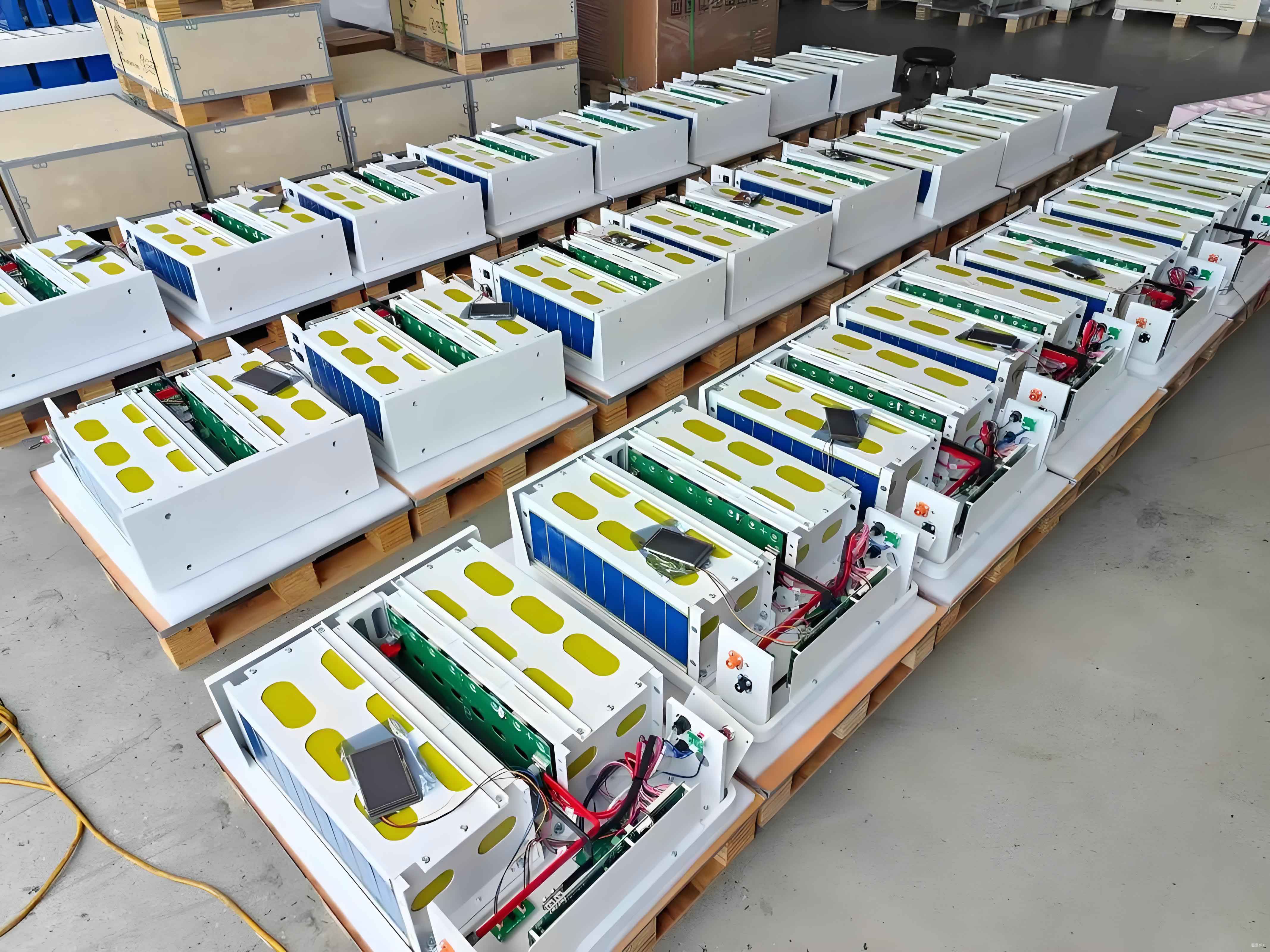
Looking ahead, future research should focus on standardizing indicator systems and evaluation protocols for energy storage lithium battery power stations. Currently, the lack of uniform standards leads to inconsistencies in safety assessments. Developing international guidelines that incorporate multi-level indicators and advanced evaluation methods will be essential. Additionally, addressing emerging risks, such as those related to grid integration and cyber-security, will require continuous updates to evaluation frameworks. By fostering collaboration among researchers, industry stakeholders, and regulators, we can enhance the safety and reliability of energy storage lithium battery systems, supporting the global transition to sustainable energy.
In conclusion, the safety evaluation of energy storage lithium battery power stations is a multi-faceted process that demands careful consideration of indicators, weights, and methods. Through the integration of comprehensive indicator systems, balanced weight assignment techniques, and robust evaluation methods, it is possible to mitigate risks and ensure safe operation. The ongoing development of standardized approaches and technological innovations will play a pivotal role in advancing the safety of energy storage lithium battery applications, contributing to a more resilient energy infrastructure.