
As the global push for carbon neutrality and energy transformation accelerates, the integration of renewable energy generation with large-scale energy storage has become a dominant model for constructing modern power systems. Among various energy storage technologies, electrochemical energy storage, particularly those based on energy storage lithium battery systems, has seen the largest installed capacity and widest application range due to its excellent cycle performance, flexibility, high energy density, and relatively low construction costs. However, with the rapid expansion of energy storage lithium battery installations, safety concerns have emerged as a critical bottleneck limiting their further large-scale deployment. Incidents of thermal runaway, fires, and explosions in energy storage systems have raised public awareness and underscored the need for comprehensive safety prevention and control technologies. This article, from a first-person research perspective, examines recent progress in safety technologies for energy storage lithium battery systems, covering intrinsic battery safety, thermal runaway propagation suppression, early detection and warning systems, thermal management strategies, and multi-level safety frameworks. The focus is on enhancing the reliability and safety of energy storage lithium battery systems to support their sustainable integration into power grids.
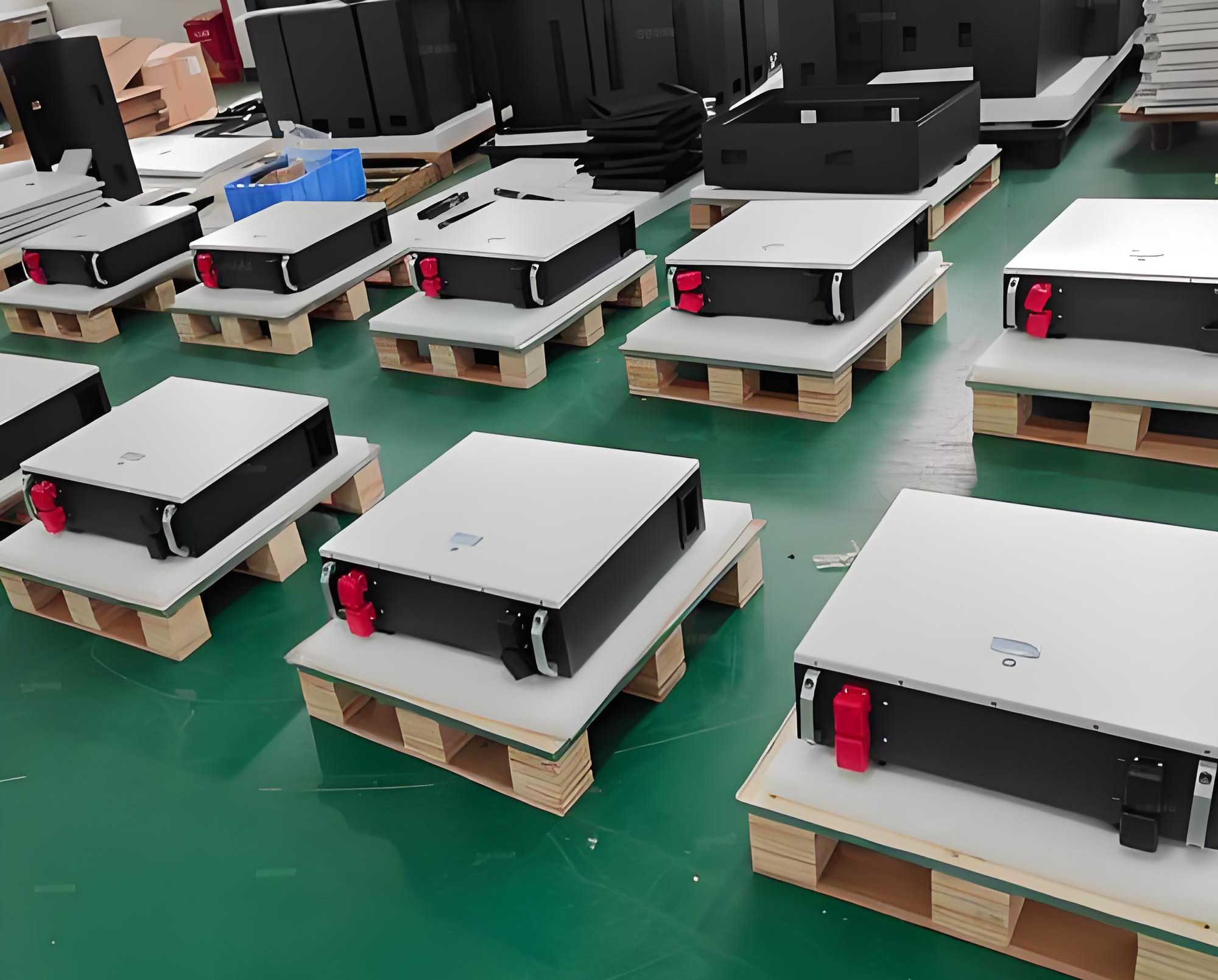
The safety of energy storage lithium battery systems is paramount, as these systems often comprise thousands of battery cells densely packed in confined spaces, such as containerized energy storage units. A single cell failure can trigger chain reactions, leading to catastrophic events. My analysis begins with intrinsic safety improvements for energy storage lithium battery components, including electrolytes, separators, and electrode materials. For instance, in electrolytes, the addition of flame-retardant agents like dimethyl methylphosphonate (DMMP) or fluorinated compounds has been shown to reduce flammability. The combustion heat release can be modeled using the equation: $$ Q_{ ext{comb}} = \sum m_i \cdot \Delta H_c $$ where \( m_i \) is the mass of combustible components and \( \Delta H_c \) is the heat of combustion. Table 1 summarizes the effects of various electrolyte additives on the safety performance of energy storage lithium battery systems.
| Additive Type | Example Compounds | Flammability Reduction | Impact on Ionic Conductivity |
|---|---|---|---|
| Phosphorus-based | DMMP, TCPP | Significant | Moderate decrease |
| Fluorinated solvents | PFMP, TMMP | High (non-flammable at >50% vol.) | Low to no impact |
| Ionic liquids | PFPN, VTEs | Excellent | Enhanced stability |
In separators for energy storage lithium battery systems, advancements include the development of high-temperature resistant materials like polyimide (PI) nanofibers and ceramic-coated membranes. These separators exhibit minimal thermal shrinkage, with PI membranes maintaining stability up to 500°C, compared to conventional polyolefin separators that melt around 140°C. The thermal stability can be expressed by the Arrhenius equation for degradation: $$ k = A \exp\left(-\frac{E_a}{RT}\right) $$ where \( k \) is the rate constant, \( E_a \) is the activation energy, and \( T \) is temperature. For electrode materials, doping and coating strategies, such as yttrium gradient doping or TiO₂ coating on cathodes, improve structural and thermal stability. The enhanced thermal decomposition temperature \( T_d \) for modified electrodes can be calculated as: $$ T_d = T_0 + \Delta T_{ ext{enhance}} $$ where \( T_0 \) is the baseline temperature. These intrinsic safety measures are crucial for mitigating risks in energy storage lithium battery systems, but they must be complemented by external controls.
Thermal runaway propagation and suppression in energy storage lithium battery systems involve the use of various extinguishing agents to control fires and prevent chain reactions. My research evaluates agents like water mist, perfluorohexanone, and heptafluoropropane, focusing on their cooling efficiency and reignition prevention. The heat absorption capacity of an agent can be modeled as: $$ Q_{ ext{abs}} = \dot{m} \cdot c_p \cdot \Delta T $$ where \( \dot{m} \) is the mass flow rate, \( c_p \) is the specific heat, and \( \Delta T \) is the temperature change. Experimental data show that water mist achieves the highest cooling rates (e.g., 0.24°C/min for module-level fires), while gaseous agents like perfluorohexanone offer rapid flame suppression but may allow reignition. Table 2 compares the performance of different fire suppression agents for energy storage lithium battery systems, highlighting their effectiveness in real-world scenarios.
| Extinguishing Agent | Cooling Rate (°C/min) | Reignition Risk | Application Scenario |
|---|---|---|---|
| Water Mist | 0.24 | Low | Module and cluster levels |
| Perfluorohexanone | 0.15 | Moderate | Early stage fires |
| Heptafluoropropane | 0.05 | High | Limited to small scales |
| Nitrogen | 0.07 | Very High | Inerting atmospheres |
Early detection and warning technologies for energy storage lithium battery systems are vital to prevent accidents before they escalate. My work explores methods based on electrical signals, data-model fusion, and gas analysis. For instance, electrochemical impedance spectroscopy (EIS) enables real-time monitoring of internal battery parameters, with the impedance \( Z \) given by: $$ Z = R_s + \frac{1}{j\omega C_{dl}} + Z_w $$ where \( R_s \) is the series resistance, \( C_{dl} \) is the double-layer capacitance, and \( Z_w \) is the Warburg impedance. By tracking changes in \( Z \), early warnings can be issued minutes before thermal runaway. Data-driven approaches, such as convolutional neural networks (CNN) combined with bidirectional gated recurrent units (Bi-GRU), achieve high accuracy (e.g., 97.73% for internal short-circuit detection) by analyzing voltage, current, and temperature data. Gas detection systems monitor hydrogen (H₂), carbon monoxide (CO), and other volatiles; for example, H₂ concentration spikes can provide warnings up to 13 minutes before ignition. The relationship between gas emission and thermal runaway onset can be described by: $$ C_{ ext{gas}} = k \int_0^t R_{ ext{rxn}} \, dt $$ where \( C_{ ext{gas}} \) is the gas concentration and \( R_{ ext{rxn}} \) is the reaction rate. Integrating these methods into a multi-level预警 framework enhances the safety of energy storage lithium battery systems.
Thermal management safety in energy storage lithium battery systems is essential to maintain uniform temperature distributions and prevent hotspots. My analysis covers air cooling, liquid cooling, phase change materials (PCMs), and heat pipes. Air cooling, though widely used due to its simplicity, may struggle with high-density packs, whereas liquid cooling with optimized channels can achieve better heat dissipation. The heat transfer in a liquid-cooled system can be modeled using Fourier’s law: $$ q = -k \frac{dT}{dx} $$ where \( q \) is the heat flux and \( k \) is the thermal conductivity. PCMs, such as fatty acid composites, absorb latent heat during phase transitions, described by: $$ Q_{ ext{PCM}} = m \cdot L $$ where \( L \) is the latent heat of fusion. Experimental results show that PCM-based systems can limit temperature rises to under 5°C in 0.5 C charging scenarios. Immersion cooling with dielectric fluids like transformer oil offers high heat transfer coefficients, reducing maximum cell temperatures by up to 20°C at 2 C discharge rates. Table 3 summarizes the comparative advantages of thermal management techniques for energy storage lithium battery systems, emphasizing their impact on safety and efficiency.
| Technique | Cooling Efficiency | Temperature Uniformity | Complexity and Cost |
|---|---|---|---|
| Air Cooling | Moderate | Low | Low |
| Liquid Cooling | High | High | Moderate |
| Phase Change Materials | High (latent heat) | Moderate | High |
| Heat Pipes | Very High | High | High |
| Immersion Cooling | Very High | Very High | Very High |
Multi-level safety防控 technologies for energy storage lithium battery systems integrate various layers of protection, from cell-level monitoring to cluster and container-level responses. My research proposes frameworks that combine gas detection, BMS data, and fire suppression systems. For example, a two-tier alarm system might trigger preliminary warnings based on gas concentrations (e.g., H₂ > 100 ppm) and escalate to full fire suppression if temperatures exceed thresholds. The overall safety performance can be quantified by a risk index \( R \): $$ R = \sum_{i=1}^n w_i \cdot P_i $$ where \( w_i \) is the weight for each risk factor and \( P_i \) is its probability. In practice, systems using “immersion-style” fire suppression with agents like fine water mist and gaseous compounds have shown up to 99.7% accuracy in early warning, reducing incident response times by 5–10 minutes. By harmonizing these approaches, energy storage lithium battery systems can achieve robust safety management, essential for large-scale deployments.
In conclusion, the safety of energy storage lithium battery systems hinges on a multi-faceted approach that includes intrinsic material enhancements, advanced monitoring, efficient thermal management, and integrated防控 strategies. While intrinsic safety improvements, such as flame-retardant electrolytes and stable electrodes, reduce inherent risks, they must be supported by real-time detection systems like EIS and AI-driven models. Thermal management, particularly with emerging technologies like immersion cooling, plays a critical role in maintaining system integrity. Moreover, multi-level frameworks that coordinate cell, module, and container-level responses offer comprehensive protection. Future research should focus on standardizing these technologies and incorporating artificial intelligence for predictive safety in energy storage lithium battery systems. As the adoption of energy storage lithium battery systems grows, continuous innovation in safety measures will be vital to ensuring their reliability and sustainability in the global energy landscape.