
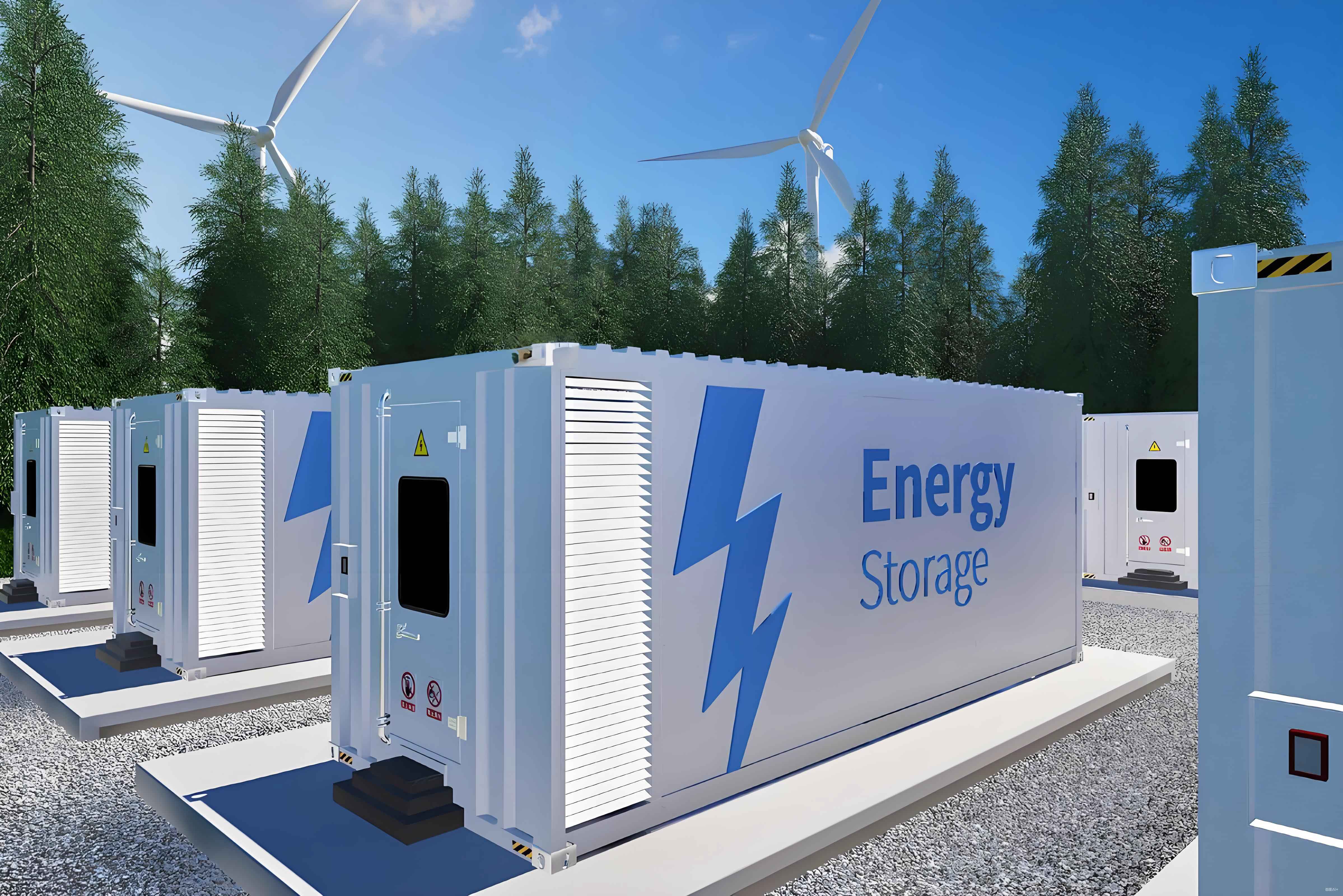
With the rapid development of renewable energy, the application of energy storage lithium battery systems in power grids has become increasingly widespread. However, safety issues associated with lithium battery energy storage power stations (LBESPS) have drawn significant attention due to incidents of fire and explosion globally. These accidents not only cause substantial economic losses but also pose serious threats to human life and the environment. Statistics indicate a rising trend in such occurrences, underscoring the urgent need for effective safety risk management. Traditional firefighting approaches often prove inadequate in controlling lithium battery fires, as high temperatures can trigger uncontrollable internal chemical reactions, leading to re-ignition even after initial suppression. Consequently, there is a critical shift towards proactive safety risk early warning technologies that monitor potential hazards during operation, enabling timely intervention before accidents escalate.
The safety of energy storage lithium battery systems involves multiple layers, including intrinsic safety, active safety, and passive safety. Intrinsic safety focuses on battery design and manufacturing quality to prevent inherent defects. Active safety involves real-time monitoring and early warning systems to detect anomalies, while passive safety encompasses emergency measures like fire suppression. Risk sources in LBESPS can be categorized into four main types: battery本体 defects, external剧烈 impacts, operational environment deterioration, and management system failures. Battery本体 defects, such as internal short circuits caused by metallic impurities or separator damage, are primary contributors to safety incidents. External impacts include electrical shocks from insulation failures, mechanical shocks damaging battery structures, and thermal shocks from surrounding equipment. Environmental factors like high temperature, humidity, or dust can accelerate battery aging or induce failures. Management system failures, involving battery management systems (BMS), energy management systems (EMS), or power conversion systems (PCS), can lead to overcharging, over-discharging, or inadequate monitoring, exacerbating risks.
The development of safety accidents in energy storage lithium battery systems follows a progressive图谱, starting from latent hazards and advancing to thermal runaway. This图谱 can be divided into several stages: the latent risk stage, early fault stage, pre-thermal runaway stage, and thermal runaway stage. In the latent risk stage, defects or management issues exist without significant external signals, lasting from months to years. The early fault stage involves initial abnormalities like gas production, expansion, or micro-short circuits, detectable over days to weeks. The pre-thermal runaway stage is characterized by rapid gas release, valve opening, and temperature rise, occurring within minutes to hours. Finally, the thermal runaway stage involves uncontrollable temperature increase, combustion, and explosion, happening in seconds to minutes. Characteristic signals at each stage include voltage anomalies, gas emissions, particle release, acoustic signals, and temperature fluctuations, which can be monitored for early warning.
Early warning technologies for energy storage lithium battery safety risks are broadly classified into three categories based on signal sources: cabin signal sensing, battery signal sensing, and operational data analysis. Cabin signal sensing technologies detect external signals like particles and gases released into the battery cabin. For instance, particle signal warning uses light scattering or resistive detection to monitor sub-micron particles emitted during thermal runaway, but it is prone to environmental interference and only provides alarm-level functionality. Gas signal warning, particularly for hydrogen (H₂) detection, employs electrochemical or semiconductor sensors to identify gas release before thermal runaway, offering warnings tens to hundreds of seconds in advance. However, diffusion delays and sensor limitations affect its reliability. Battery signal sensing technologies involve sensors attached to batteries to monitor internal signals. Thermal signal warning uses thermocouples, RTDs, or thermistors to track temperature and rate of change, but it often triggers only during thermal runaway. Acoustic signal warning detects valve opening sounds or uses ultrasonic sensors to identify internal changes like bubbles or cracks, providing early warnings but with high cost and installation complexity. Force signal warning measures mechanical changes due to expansion or impact using piezoelectric or strain sensors, yet it is sensitive to environmental factors and expensive. Operational data analysis technologies leverage voltage, current, and temperature data from BMS for risk prediction. Model-based algorithms, such as equivalent circuit models (ECM), simulate battery states to detect anomalies like internal short circuits. The ECM can be represented as:
$$V = OCV + I \cdot R_{int} + \sum_{i=1}^{n} I \cdot R_i \cdot (1 – e^{-t/\tau_i})$$
where \(V\) is terminal voltage, \(OCV\) is open-circuit voltage, \(I\) is current, \(R_{int}\) is internal resistance, and \(R_i\) and \(\tau_i\) are resistance and time constant of RC loops. Statistical analysis algorithms, including correlation coefficients, empirical mode decomposition (EMD), and local outlier factor (LOF), identify faults without complex models. For example, EMD decomposes data into intrinsic mode functions to detect frequency changes associated with risks. Machine learning algorithms, such as artificial neural networks (ANN) and long short-term memory (LSTM), learn from historical data to predict risks. A common LSTM update equation is:
$$f_t = \sigma(W_f \cdot [h_{t-1}, x_t] + b_f)$$
$$i_t = \sigma(W_i \cdot [h_{t-1}, x_t] + b_i)$$
$$\tilde{C}_t = \tanh(W_C \cdot [h_{t-1}, x_t] + b_C)$$
$$C_t = f_t \cdot C_{t-1} + i_t \cdot \tilde{C}_t$$
$$o_t = \sigma(W_o \cdot [h_{t-1}, x_t] + b_o)$$
$$h_t = o_t \cdot \tanh(C_t)$$
where \(f_t\), \(i_t\), and \(o_t\) are forget, input, and output gates; \(C_t\) is cell state; \(h_t\) is hidden state; and \(\sigma\) is sigmoid function. These methods enable full-stage risk warning, from latent hazards to thermal runaway, outperforming sensor-based techniques.
A comparison of early warning technologies for energy storage lithium battery systems is summarized in the table below, evaluating their lifespan, cost, ease of installation, warning effectiveness, and technical complexity. Operational data analysis stands out due to its comprehensive coverage and adaptability, though it requires advanced algorithms and data quality.
| Technology Type | Principle | Applicable Stage | Advantages | Disadvantages | Lifespan | Cost | Ease of Installation |
|---|---|---|---|---|---|---|---|
| Particle Signal | Detects micro-particles via scattering | Pre-thermal runaway | Fast response | High false alarms, environment-sensitive | Medium | Low | Easy |
| Gas Signal | Monitors H₂ or other gases | Pre-thermal runaway | Early detection | Diffusion delays, sensor aging | Short | Medium | Moderate |
| Thermal Signal | Measures temperature changes | Thermal runaway | Direct indicator | Late warning, sensor drift | Short | Low | Easy |
| Acoustic Signal | Uses ultrasound or sound waves | Early fault to pre-thermal runaway | Early detection | Noise interference, high cost | Long | High | Difficult |
| Force Signal | Senses mechanical changes | Early fault | High sensitivity | Environment-sensitive, expensive | Medium | High | Difficult |
| Operational Data Analysis | Analyzes voltage, current, temperature | Full stages | Comprehensive, adaptive | High technical barrier, data needs | Long | Medium | Moderate |
In engineering applications, standards and regulations play a crucial role in ensuring the effectiveness of early warning technologies for energy storage lithium battery systems. International standards like UL 1973, UL 9540, IEC 62619, and IEC 62933-5-2 provide guidelines for battery and system safety. In China, national standards such as GB/T 36276, GB/T 42288, and GB/T 44767 emphasize risk monitoring and early warning. Statistical analysis of real-world projects shows that thermal and gas signal technologies are universally adopted due to their direct relevance to thermal runaway. However, operational data analysis is gaining traction for its ability to provide early warnings across all accident stages. For instance, in a project involving over 4 GWh of energy storage lithium battery capacity, operational data analysis identified 1,178 safety risk events, with BMS failures being the most prevalent. This technology enabled warnings at the source, preventing progression to battery abnormalities. Case studies from Shandong Province demonstrated successful detection of voltage anomalies and temperature fluctuations, leading to timely maintenance and risk mitigation.
The implementation of early warning technologies in energy storage lithium battery systems must address market challenges, such as the confusion between “early warning” and “alarm.” Early warning refers to detecting risks in the latent or early fault stages, allowing proactive measures, while alarm triggers after thermal runaway begins. Misleading claims about “big data” or “machine learning” can undermine trust, highlighting the need for standardization and transparency. Functional specifications for algorithms should include data source quality, warning targets, and third-party validation. Moreover, integrating multiple technologies can enhance robustness, but cost and complexity must be balanced. Future directions include improving sensor durability, advancing machine learning models, and promoting international collaboration on standards.
In conclusion, energy storage lithium battery safety risk early warning is essential for preventing accidents and ensuring reliable operation. Operational data analysis technologies, particularly those leveraging machine learning, offer the most comprehensive solution by covering all risk stages. Engineering practices should prioritize these methods while adhering to standards and addressing data quality issues. The proposed risk图谱, signal identification, and graded alert framework provide a foundation for effective warning systems. As the industry evolves, continued research and standardization will be key to enhancing the safety and sustainability of energy storage lithium battery applications.