
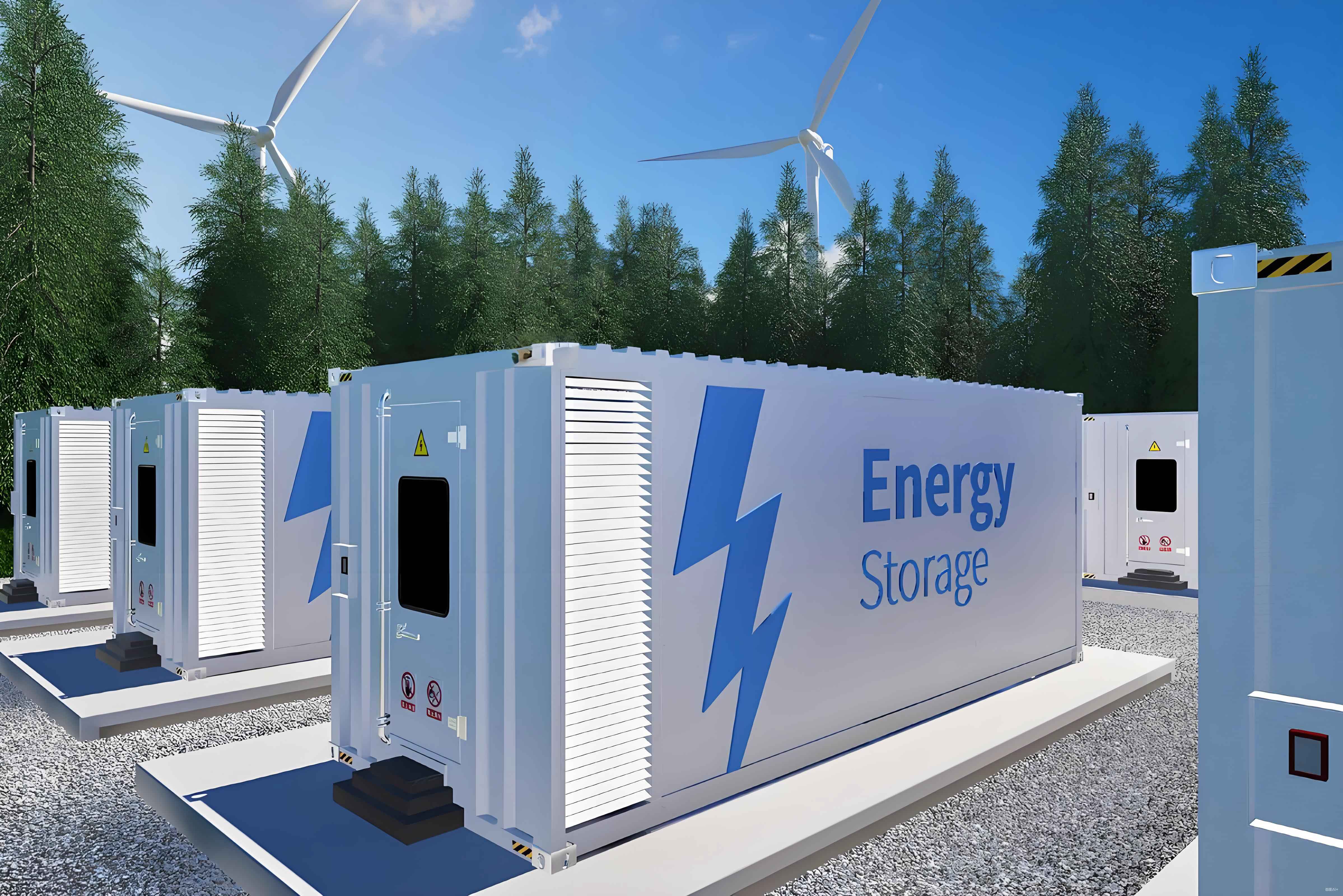
The rapid development of renewable energy sources, particularly solar power, has highlighted the critical role of energy storage systems in addressing intermittency and enhancing grid stability. Among various energy storage technologies, the energy storage lithium battery stands out due to its high energy density, long cycle life, and efficiency. However, the thermal management of energy storage lithium batteries remains a significant challenge, as excessive temperatures and uneven thermal distribution can lead to performance degradation, reduced lifespan, and safety hazards such as thermal runaway. Effective thermal management is essential to maintain the energy storage lithium battery within its optimal operating temperature range (298.15 K to 323.15 K) and minimize temperature differences among cells.
Traditional cooling methods, such as air cooling and liquid cooling, have limitations in handling the high heat generation rates of energy storage lithium batteries, especially under high discharge rates or elevated ambient temperatures. Phase change materials (PCMs) offer a passive cooling solution by absorbing heat through latent heat storage, but their low thermal conductivity and leakage issues restrict their application. To overcome these drawbacks, composite phase change materials (CPCMs), which incorporate high-conductivity additives like expanded graphite, have been developed. Furthermore, coupling CPCM with active cooling methods, such as air cooling, can enhance the overall thermal management performance of energy storage lithium battery systems. This study proposes an H-type composite battery thermal management system (CBTMS) that integrates CPCM and air cooling, aiming to optimize the thermal performance of energy storage lithium batteries under various operating conditions.
The physical model of the CBTMS consists of four lithium iron phosphate (LiFePO4) batteries arranged in an H-type configuration, with CPCM layers surrounding each battery and air channels designed for forced convection. The CPCM, composed of paraffin and expanded graphite, provides latent heat absorption, while the air cooling system dissipates heat through convective heat transfer. The numerical model is based on the energy conservation equation for the battery, the enthalpy-porosity model for CPCM phase change, and the Navier-Stokes equations for air flow. The battery heat generation is modeled using the Bernardi equation, which accounts for the dynamic internal resistance influenced by state of charge (SOC) and temperature. The governing equations are as follows:
For the energy storage lithium battery, the energy conservation equation is:
$$ \rho_b c_b \frac{\partial T}{\partial t} = \frac{\partial}{\partial x} \left( k_{b,x} \frac{\partial T}{\partial x} \right) + \frac{\partial}{\partial y} \left( k_{b,y} \frac{\partial T}{\partial y} \right) + \frac{\partial}{\partial z} \left( k_{b,z} \frac{\partial T}{\partial z} \right) + q_b $$
where \( q_b \) is the heat generation rate per unit volume, calculated as:
$$ q_b = \frac{I}{V_b} \left[ E – U – T \frac{dE}{dT} \right] + \frac{I^2 R_b}{V_b} $$
The internal resistance \( R_b \) of the energy storage lithium battery is a function of SOC and temperature, obtained experimentally using the hybrid pulse power characterization (HPPC) method. The SOC is defined as:
$$ \text{SOC} = \text{SOC}_0 – \frac{\int_0^t I \, dt}{C} $$
For the CPCM, the energy equation during phase change is expressed using the enthalpy method:
$$ \rho_{\text{CPCM}} \frac{\partial H}{\partial t} = \nabla \cdot (k_{\text{CPCM}} \nabla T) $$
where \( H = h + \Delta H \), with \( h = \int_{T_0}^{T} c_{\text{CPCM}} \, dT \) and \( \Delta H = \beta \gamma \). The liquid fraction \( \beta \) is given by:
$$ \beta = \begin{cases}
0 & T < T_s \\
\frac{T – T_s}{T_l – T_s} & T_s \leq T \leq T_l \\
1 & T > T_l
\end{cases} $$
For the air cooling system, the continuity, momentum, and energy equations are:
$$ \frac{\partial \rho_c}{\partial t} + \nabla \cdot (\rho_c \vec{v}_c) = 0 $$
$$ \frac{\partial (\rho_c \vec{v}_c)}{\partial t} + \nabla \cdot (\rho_c \vec{v}_c \vec{v}_c) = -\nabla p + \nabla \cdot (\mu_c \nabla \vec{v}_c) $$
$$ \frac{\partial (\rho_c c_{p,c} T)}{\partial t} + \nabla \cdot (\rho_c c_{p,c} \vec{v}_c T) = \nabla \cdot (k_c \nabla T) $$
The thermal physical properties used in the simulations are summarized in Table 1.
| Component | Property | Value |
|---|---|---|
| Energy Storage Lithium Battery | Density (\(\rho_b\)) | 3000 kg/m³ |
| Specific Heat Capacity (\(c_b\)) | 1100 J/kg·K | |
| Thermal Conductivity (\(k_{b,x}, k_{b,y}, k_{b,z}\)) | 2.7, 2.7, 0.9 W/m·K | |
| Dimensions | 70 mm × 27 mm × 132 mm | |
| Nominal Capacity | 20 Ah | |
| CPCM | Density (\(\rho_{\text{CPCM}}\)) | 800 kg/m³ |
| Specific Heat Capacity (\(c_{\text{CPCM}}\)) | 2142 J/kg·K | |
| Thermal Conductivity (\(k_{\text{CPCM}}\)) | 8.85 W/m·K | |
| Latent Heat (\(\gamma\)) | 156000 J/kg | |
| Phase Change Temperature (\(T_s, T_l\)) | 314 K, 317 K | |
| Air | Density (\(\rho_c\)) | 1.225 kg/m³ |
| Specific Heat Capacity (\(c_{p,c}\)) | 1005 J/kg·K | |
| Thermal Conductivity (\(k_c\)) | 0.0242 W/m·K |
An experimental setup was established to measure the dynamic internal resistance of a single energy storage lithium battery under various conditions, including ambient temperatures of 298.15 K and 308.15 K, and discharge rates of 1 C, 2 C, and 3 C. The HPPC method was employed to characterize the internal resistance as a function of SOC. The results showed that the internal resistance decreases with increasing discharge rate or ambient temperature, and it exhibits higher values at the beginning and end of discharge due to polarization effects. The relationship between internal resistance and SOC was fitted to a sixth-order polynomial, for example, at 298.15 K and 3 C discharge rate:
$$ R_b = -0.35511 \text{SOC}^6 + 1.0667 \text{SOC}^5 – 1.254 \text{SOC}^4 + 0.73568 \text{SOC}^3 – 0.2294 \text{SOC}^2 + 0.0379 \text{SOC} + 0.00645 $$
The numerical model was validated by comparing simulated temperature profiles with experimental data from single-cell tests. The maximum deviation between simulation and experiment was approximately 2.1 K, confirming the accuracy of the model for analyzing the thermal behavior of energy storage lithium batteries.
Four different air inlet and outlet configurations (Scheme I-H, II-H, III-H, and IV-H) were investigated to assess their impact on the thermal performance of the CBTMS. The schemes vary in the placement of inlets and outlets, such as top-inlet-bottom-outlet or symmetric arrangements. The maximum temperature (\(T_{\text{max}}\)) and maximum temperature difference (\(\Delta T_{\text{max}}\)) of the battery pack were evaluated under different operating conditions. The results indicate that at high ambient temperatures or high discharge rates, the influence of inlet/outlet configuration on \(T_{\text{max}}\) is minimal, but it significantly affects \(\Delta T_{\text{max}}\). Scheme II-H achieved the lowest \(\Delta T_{\text{max}}\), while Scheme IV-H resulted in the highest. The power consumption (\(W_p\)) of the air cooling system was calculated as:
$$ W_p = \Delta P \cdot v \cdot S $$
where \(\Delta P\) is the pressure drop, \(v\) is the inlet velocity, and \(S\) is the inlet area. Schemes I-H and II-H exhibited higher power consumption and CPCM liquid fraction compared to Schemes III-H and IV-H. Scheme III-H demonstrated the best overall performance with the lowest power consumption and moderate liquid fraction, making it the preferred configuration for further optimization.
To optimize the Scheme III-H CBTMS, an orthogonal experimental design with six factors and five levels was employed. The factors included inlet length (A), inlet height (B), inlet angle (C), spacing between CPCM and air channel (D), CPCM thickness (E), and inlet velocity (F). The L25(5^6) orthogonal array was used, and the responses were \(T_{\text{max}}\), \(\Delta T_{\text{max}}\), and \(W_p\). The range analysis revealed the order of influence of each factor:
- For \(T_{\text{max}}\): E > D > B > C = F > A
- For \(\Delta T_{\text{max}}\): B > D > E > C > A > F
- For \(W_p\): F > B > A > E > D > C
The optimal factor levels were determined as A4B1C3D4E5F1, corresponding to inlet length of 80 mm, inlet height of 4 mm, inlet angle of 4.79°, spacing of 14 mm, CPCM thickness of 11 mm, and inlet velocity of 1 m/s. This configuration reduced \(\Delta T_{\text{max}}\) by approximately 21.7% and \(W_p\) by 94.3% compared to the initial design, while maintaining similar cooling performance.
| Experiment | A (mm) | B (mm) | C (mm) | D (mm) | E (mm) | F (m/s) | \(T_{\text{max}}\) (K) | \(\Delta T_{\text{max}}\) (K) | \(W_p\) (W) |
|---|---|---|---|---|---|---|---|---|---|
| 1 | 20 | 4 | 4 | 2 | 3 | 1 | 317.95 | 14.38 | 0.0491 |
| 2 | 20 | 8 | 8 | 6 | 5 | 2 | 315.97 | 10.42 | 0.3192 |
| 3 | 20 | 12 | 12 | 10 | 7 | 3 | 315.32 | 11.62 | 0.8308 |
| 4 | 20 | 16 | 16 | 14 | 9 | 4 | 317.46 | 11.59 | 0.8758 |
| 5 | 20 | 20 | 20 | 18 | 11 | 5 | 317.48 | 13.40 | 1.2801 |
| 6 | 40 | 4 | 12 | 14 | 9 | 5 | 317.54 | 10.35 | 0.3281 |
| 7 | 40 | 8 | 16 | 10 | 7 | 1 | 318.28 | 13.22 | 0.1122 |
| 8 | 40 | 12 | 20 | 6 | 5 | 2 | 319.46 | 11.73 | 0.1524 |
| 9 | 40 | 16 | 4 | 2 | 3 | 3 | 315.07 | 11.70 | 0.7975 |
| 10 | 40 | 20 | 8 | 18 | 11 | 4 | 314.59 | 12.33 | 0.7116 |
| 11 | 60 | 4 | 20 | 10 | 11 | 4 | 315.49 | 9.84 | 0.3618 |
| 12 | 60 | 8 | 4 | 6 | 9 | 5 | 316.60 | 10.67 | 0.6449 |
| 13 | 60 | 12 | 8 | 2 | 7 | 1 | 317.42 | 12.06 | 0.1765 |
| 14 | 60 | 16 | 12 | 18 | 5 | 2 | 316.32 | 13.56 | 0.1794 |
| 15 | 60 | 20 | 16 | 14 | 3 | 3 | 319.07 | 13.61 | 0.3586 |
| 16 | 80 | 4 | 8 | 6 | 5 | 3 | 318.64 | 8.05 | 0.1143 |
| 17 | 80 | 8 | 12 | 2 | 3 | 4 | 318.97 | 11.43 | 0.2619 |
| 18 | 80 | 12 | 16 | 18 | 11 | 5 | 314.05 | 11.48 | 0.7903 |
| 19 | 80 | 16 | 20 | 14 | 9 | 1 | 316.40 | 11.14 | 0.2375 |
| 20 | 80 | 20 | 4 | 10 | 7 | 2 | 316.26 | 13.69 | 0.2734 |
| 21 | 100 | 4 | 16 | 2 | 9 | 2 | 316.85 | 9.10 | 0.1125 |
| 22 | 100 | 8 | 20 | 18 | 7 | 3 | 315.65 | 12.29 | 0.3033 |
| 23 | 100 | 12 | 4 | 14 | 5 | 4 | 318.19 | 12.47 | 0.4370 |
| 24 | 100 | 16 | 8 | 10 | 3 | 5 | 318.30 | 14.09 | 0.5267 |
| 25 | 100 | 20 | 12 | 6 | 11 | 1 | 315.63 | 10.71 | 0.3015 |
To further enhance the thermal management performance, aluminum metal inner shells were integrated into the CPCM layers. Three configurations were tested: rectangular, single-arc, and double-arc structures. The aluminum shells improve heat conduction due to their high thermal conductivity (202.4 W/m·K). The double-arc structure showed the best performance, reducing \(T_{\text{max}}\) by up to 4.87 K and the maximum liquid fraction of CPCM to 0.256, while decreasing power consumption by 20.5%. This design enhances the thermal uniformity and reliability of the energy storage lithium battery system.
The results demonstrate that the proposed CPCM-coupled air-cooled CBTMS effectively manages the thermal behavior of energy storage lithium batteries. The optimization of air inlet/outlet configurations and structural parameters significantly improves temperature uniformity and reduces energy consumption. The integration of aluminum metal inner shells further strengthens the system’s performance, ensuring safe and efficient operation under various conditions. This study provides valuable insights for the design and application of thermal management systems in energy storage lithium battery packs, contributing to the advancement of renewable energy storage technologies.
In conclusion, the H-type composite thermal management system, combining CPCM and air cooling, offers a robust solution for controlling the temperature of energy storage lithium batteries. The orthogonal optimization and structural enhancements lead to significant improvements in thermal performance, making it suitable for large-scale energy storage applications. Future work could focus on real-world validation and scalability for industrial implementation.