
As global energy structures rapidly transition toward decarbonization, renewable energy sources such as wind, solar, hydro, and biomass have become central drivers in power system innovation. While these clean energy technologies offer significant environmental benefits and renewable characteristics, their inherent distributed nature and intermittency—such as diurnal fluctuations in solar power and seasonal variations in wind energy—lead to unstable grid power quality. Historically, without effective regulation, such energy was often deemed “junk power.” The breakthrough development of energy storage technologies has transformed this landscape by enabling “peak shaving and valley filling” capabilities, dynamically matching renewable generation with grid load demands, and establishing energy storage as a critical hub in modern power systems. Among diverse energy storage routes, electrochemical storage, particularly energy storage lithium battery systems, has emerged as a mainstream choice for grid-scale energy storage stations due to modular design, rapid response, and flexible deployment. However, energy storage lithium batteries generate heat during charging and discharging due to internal resistance and chemical reactions. If not dissipated efficiently, this heat accumulation can cause temperature rise, impairing performance and potentially triggering thermal runaway. Moreover, temperature inconsistencies among individual cells in a battery pack accelerate uneven aging, leading to reduced capacity, safety risks, and decreased efficiency over time. The optimal operating temperature range for energy storage lithium batteries is 293–313 K, with a temperature uniformity within 5 K. Exceeding a 5 K internal温差 can degrade cycle life by over 30%. Notably, lithium embedded in graphite reacts with electrolyte components and binders above 393 K, posing a high risk of thermal runaway. Thus, thermal management systems are crucial for the economy and reliability of energy storage lithium battery systems.
In practical grid operations, sudden increases in renewable generation may require energy storage lithium batteries to handle high-rate charging to store excess power swiftly and prevent grid overvoltage. Similarly, during peak demand, high-rate discharging is needed to supplement grid power and maintain stability. Without effective thermal management, these high-rate operations cause rapid temperature spikes and significant temperature differentials in energy storage lithium batteries. To ensure safe operation within the optimal range, efficient cooling is essential. Common cooling techniques for energy storage lithium batteries include air cooling, liquid cooling, and phase change cooling. Liquid cooling stands out for its rapid heat transfer, stability, and effectiveness in controlling maximum temperature and enhancing uniformity, making it widely adopted.
Previous studies have explored liquid cooling for energy storage lithium batteries under conventional charge-discharge rates, but research on high-rate and ultra-high-rate conditions remains limited. This study addresses this gap by proposing a bidirectional counter-flow heat exchange plate for energy storage lithium batteries, designed to manage temperature rise and differentials under extreme operational scenarios. Through numerical simulations, we compare three cooling configurations: bottom-mounted unidirectional flow plates (Scheme 1), side-mounted unidirectional flow plates (Scheme 2), and side-mounted bidirectional counter-flow plates (Scheme 3). Evaluations under conventional (1 C), high (3 C), and ultra-high (5 C) charge-discharge rates demonstrate the superior performance of the bidirectional counter-flow design in maintaining temperature control and uniformity.
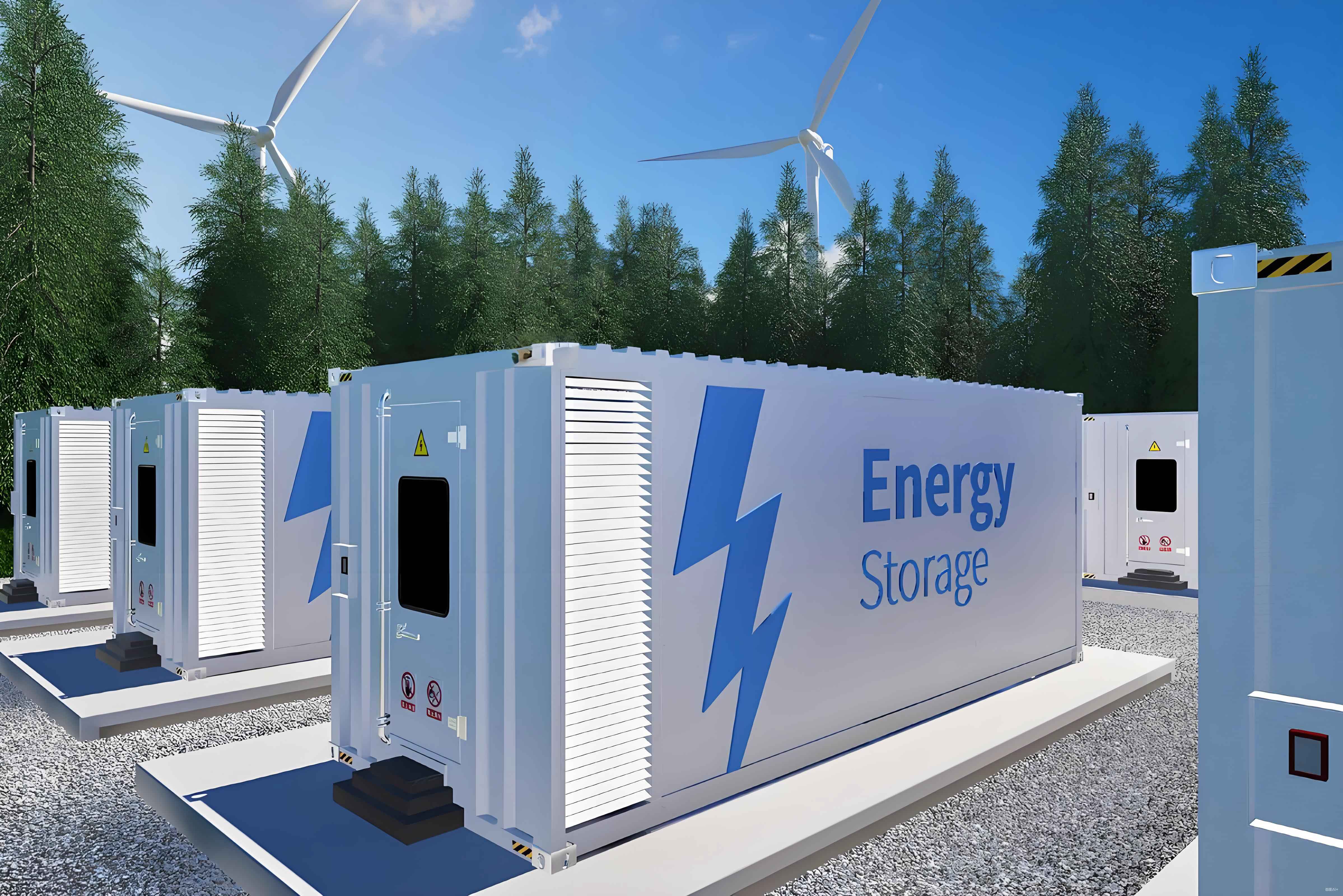
The energy storage lithium battery pack model consists of 10 series-connected blade cells, with properties and geometric parameters as follows: cell material is lithium iron phosphate; capacity is 135 Ah; rated voltage is 3.2 V; thermal conductivity is anisotropic with values of 18.3 W/(m·K) in the tangential direction and 1.1 W/(m·K) in the normal direction; specific heat capacity is 1,100 J/(kg·K); density is 1,715 kg/m³; and cell dimensions are 945 mm × 14 mm × 90 mm. The anisotropic thermal conductivity arises from the internal electrolyte-separator structure, which impedes heat transfer. To ensure thermal contact, all cooling plates are coated with a layer of thermal silicone grease between the plate and cells.
In Scheme 1, the unidirectional flow plate features an 8-channel straight flow design positioned at the bottom of the battery pack, with coolant entering from Inlet1 and exiting from Outlet2. This represents a classic bottom-cooling approach. Scheme 2 places unidirectional flow plates between the sides of individual cells, with coolant flowing from Inlet1 to Outlet2. Scheme 3 introduces the bidirectional counter-flow plate with dual inlet channels at the bottom and dual outlet channels at the top, allowing cross-flow counter-current heat exchange. An air gap between plates provides thermal isolation, enhancing efficiency.
The heat generation in energy storage lithium batteries is modeled using the Bernardi equation, which calculates the heat production rate based on electrochemical principles. The equation is given by:
$$ q = \frac{I}{V_b} \left[ (E_0 – U) – T \frac{dE_0}{dT} \right] = \frac{1}{V_b} \left( I^2 R – I T \frac{dE_0}{dT} \right) $$
where \( q \) is the heat generation rate per unit volume (W/m³), \( I \) is the current (A), \( V_b \) is the battery volume (m³), \( E_0 \) is the open-circuit voltage (V), \( U \) is the terminal voltage (V), \( T \) is the temperature (K), and \( R \) is the internal resistance (Ω). For the three-dimensional heat conduction in the anisotropic cell, the governing equation is:
$$ \rho C_p \frac{\partial T}{\partial t} = \lambda_x \frac{\partial^2 T}{\partial x^2} + \lambda_y \frac{\partial^2 T}{\partial y^2} + \lambda_z \frac{\partial^2 T}{\partial z^2} + Q $$
where \( \rho \) is density (kg/m³), \( C_p \) is specific heat capacity (J/(kg·K)), \( \lambda_x, \lambda_y, \lambda_z \) are thermal conductivities in the orthogonal directions (W/(m·K)), and \( Q \) is the volumetric heat source (W/m³). The cooling fluid flow in the plates is described by the continuity, momentum, and energy equations:
$$ \frac{\partial \mathbf{v}}{\partial t} + (\mathbf{v} \cdot \nabla) \mathbf{v} = -\frac{\nabla p}{\rho_w} + \frac{\mu}{\rho_w} \nabla^2 \mathbf{v} + \mathbf{g} $$
$$ \frac{\partial \rho_w}{\partial t} + \nabla \cdot (\rho_w \mathbf{v}) = 0 $$
$$ \frac{\partial}{\partial t} (\rho_w C_{pw} T_w) + \nabla \cdot (-k_w \nabla T_w) + \rho_w C_{pw} \mathbf{v} \nabla T_w = 0 $$
For the heat exchange plate, the energy conservation equation is:
$$ \frac{\partial}{\partial t} (\rho_n C_{pn} T_n) + \nabla \cdot (-k_n \nabla T_n) = 0 $$
where \( \mathbf{v} \) is velocity (m/s), \( p \) is pressure (Pa), \( \rho_w \) and \( \rho_n \) are densities of coolant and plate (kg/m³), \( \mu \) is dynamic viscosity (Pa·s), \( \mathbf{g} \) is gravity (m/s²), \( C_{pw} \) and \( C_{pn} \) are specific heat capacities (J/(kg·K)), \( T_w \) and \( T_n \) are temperatures (K), and \( k_w \) and \( k_n \) are thermal conductivities (W/(m·K)).
Initial cell and ambient temperatures are set to 298 K. Coolant inlet uses a velocity boundary condition, and outlet is a pressure outlet. Heat generation rates correspond to 1 C, 3 C, and 5 C discharge rates, with a total flow rate of 12 L/min and inlet temperature of 293.15 K. The coolant is a 50% ethylene glycol solution by mass. Steady-state simulations are performed, with heat generation parameters referenced from literature. Mesh independence is verified using six grid refinement levels, as summarized in Table 1.
| Number of Grid Cells (×10⁴) | Pressure Drop (kPa) |
|---|---|
| 133 | 13.60 |
| 236 | 13.90 |
| 289 | 14.20 |
| 316 | 14.80 |
| 423 | 14.90 |
| 513 | 14.93 |
The results confirm grid independence, and a mesh size of 4.23 million cells is selected for computational efficiency. Under conventional 1 C conditions, Scheme 1 shows a temperature range of 294.5–301 K but a maximum differential of 6.5 K, failing the 5 K uniformity requirement for energy storage lithium batteries. Scheme 2 improves uniformity with a maximum temperature of 294.7 K and differential of 1.5 K, while Scheme 3 achieves 294 K and 1 K differential, both meeting criteria. However, at high 3 C rates, Scheme 1 reaches 357 K and 52 K differential, posing thermal runaway risks. Scheme 2 controls maximum temperature at 307 K but has a 13 K differential, whereas Scheme 3 maintains 299 K and 4.8 K differential, satisfying both limits. Under ultra-high 5 C rates, Scheme 1 exhibits critical temperatures up to 470 K, Scheme 2 reaches 332 K with 39 K differential, and Scheme 3 performs best at 308 K and 14 K differential, remaining within safe bounds for short-term operation.
The thermal performance of the cooling plates is further analyzed through temperature distributions in the coolant. For Scheme 1, coolant temperature rises by 15 K along the flow direction, with higher central regions due to uneven flow distribution and heat accumulation. Scheme 2 shows a 10 K rise, while Scheme 3 maintains minimal differential of about 1 K, attributed to counter-flow heat exchange that equalizes temperatures. The bidirectional design enhances adaptability across rate variations, crucial for energy storage lithium battery systems in grid applications.
In summary, the bidirectional counter-flow heat exchange plate demonstrates exceptional thermal management for energy storage lithium batteries, effectively controlling both maximum temperature and differentials under varying operational intensities. This design leverages counter-current flow and symmetrical channels to mitigate thermal bottlenecks, offering a reliable solution for high-demand scenarios in energy storage lithium battery systems. Future work could explore optimization of flow parameters and integration with real-time control strategies for enhanced performance.
| Cooling Scheme | Charge-Discharge Rate | Maximum Temperature (K) | Temperature Differential (K) |
|---|---|---|---|
| Scheme 1 (Bottom Unidirectional) | 1 C | 301 | 6.5 |
| Scheme 1 (Bottom Unidirectional) | 3 C | 357 | 52 |
| Scheme 1 (Bottom Unidirectional) | 5 C | 470 | 107 |
| Scheme 2 (Side Unidirectional) | 1 C | 294.7 | 1.5 |
| Scheme 2 (Side Unidirectional) | 3 C | 307 | 13 |
| Scheme 2 (Side Unidirectional) | 5 C | 332 | 39 |
| Scheme 3 (Side Bidirectional Counter-Flow) | 1 C | 294 | 1 |
| Scheme 3 (Side Bidirectional Counter-Flow) | 3 C | 299 | 4.8 |
| Scheme 3 (Side Bidirectional Counter-Flow) | 5 C | 308 | 14 |
The superiority of the bidirectional counter-flow plate stems from its ability to facilitate reverse thermal compensation, reducing lateral heat accumulation and improving vertical heat transfer in energy storage lithium batteries. This design ensures consistent cooling performance, making it ideal for grid-scale energy storage lithium battery systems that encounter fluctuating power demands. As renewable integration expands, such advanced thermal management will be pivotal in safeguarding the longevity and safety of energy storage lithium battery installations.