
In recent years, the rapid expansion of renewable energy sources, such as solar and wind power, has underscored the critical role of energy storage systems in grid stabilization and energy management. As a key component, large-capacity energy storage lithium battery cabinets are widely deployed to store and dispatch electricity efficiently. However, the charging and discharging processes of these energy storage lithium batteries generate significant heat, which, if not properly managed, can lead to thermal runaway, fires, or even explosions. This article, from my perspective as an engineer specializing in battery safety, provides an in-depth analysis of fire protection systems for large-capacity energy storage battery cabinets. I explore design requirements, functional implementation, and performance evaluation, with a focus on enhancing safety through integrated approaches. The term “energy storage lithium battery” is central to this discussion, as it represents the most common and high-risk battery type in such applications.
Energy storage lithium batteries, including variants like lithium iron phosphate (LiFePO4), are favored for their high energy density and long cycle life. A typical energy storage battery system consists of multiple modules connected in series or parallel to achieve the desired voltage and capacity. The fundamental operation involves electrochemical reactions during charging and discharging. For instance, during charging, electrical energy is converted into chemical energy, stored in the battery, and released as electrical energy during discharging. This process is governed by equations such as the general discharge reaction for a lithium-ion cell: $$ \text{Li}_x\text{C}_6 + \text{Li}_{1-x}\text{CoO}_2 \rightarrow \text{C}_6 + \text{LiCoO}_2 $$ where lithium ions move between the anode and cathode. Accompanying this, heat generation occurs due to internal resistance and reaction inefficiencies, which can be modeled using Joule’s law: $$ Q = I^2 R t $$ where \( Q \) is the heat generated, \( I \) is the current, \( R \) is the internal resistance, and \( t \) is time. In large-capacity setups, this heat accumulation poses substantial risks, necessitating robust thermal management.
| Battery Type | Energy Density (Wh/kg) | Cycle Life (Cycles) | Typical Applications | Key Safety Concerns |
|---|---|---|---|---|
| Energy Storage Lithium Battery (e.g., LiFePO4) | 150-200 | 2000-5000 | Large-scale energy storage, EVs | Thermal runaway, overcharging |
| Sodium-Sulfur Battery | 150-240 | 2500-4500 | Small-scale storage | High operating temperature, leakage |
| Lead-Acid Battery | 30-50 | 500-1000 | Backup power, short-term storage | Sulfation, acid spillage |
The safety hazards associated with energy storage lithium batteries are multifaceted. Overcharging, for example, can cause voltage to exceed safe limits, leading to electrolyte decomposition and gas release. This can be described by the equation for electrolyte breakdown: $$ \text{LiPF}_6 \rightarrow \text{LiF} + \text{PF}_5 $$ where toxic and flammable gases are produced. Over-discharging may result in structural changes, increasing internal resistance and heat generation. Short circuits, often due to manufacturing defects or physical damage, can cause rapid current spikes, modeled by \( I_{\text{short}} = V / R_{\text{internal}} \), leading to instantaneous temperature rises. External impacts, such as crushing or penetration, can compromise battery integrity, triggering internal short circuits and thermal runaway. These risks highlight the imperative for advanced fire protection systems in energy storage lithium battery cabinets.
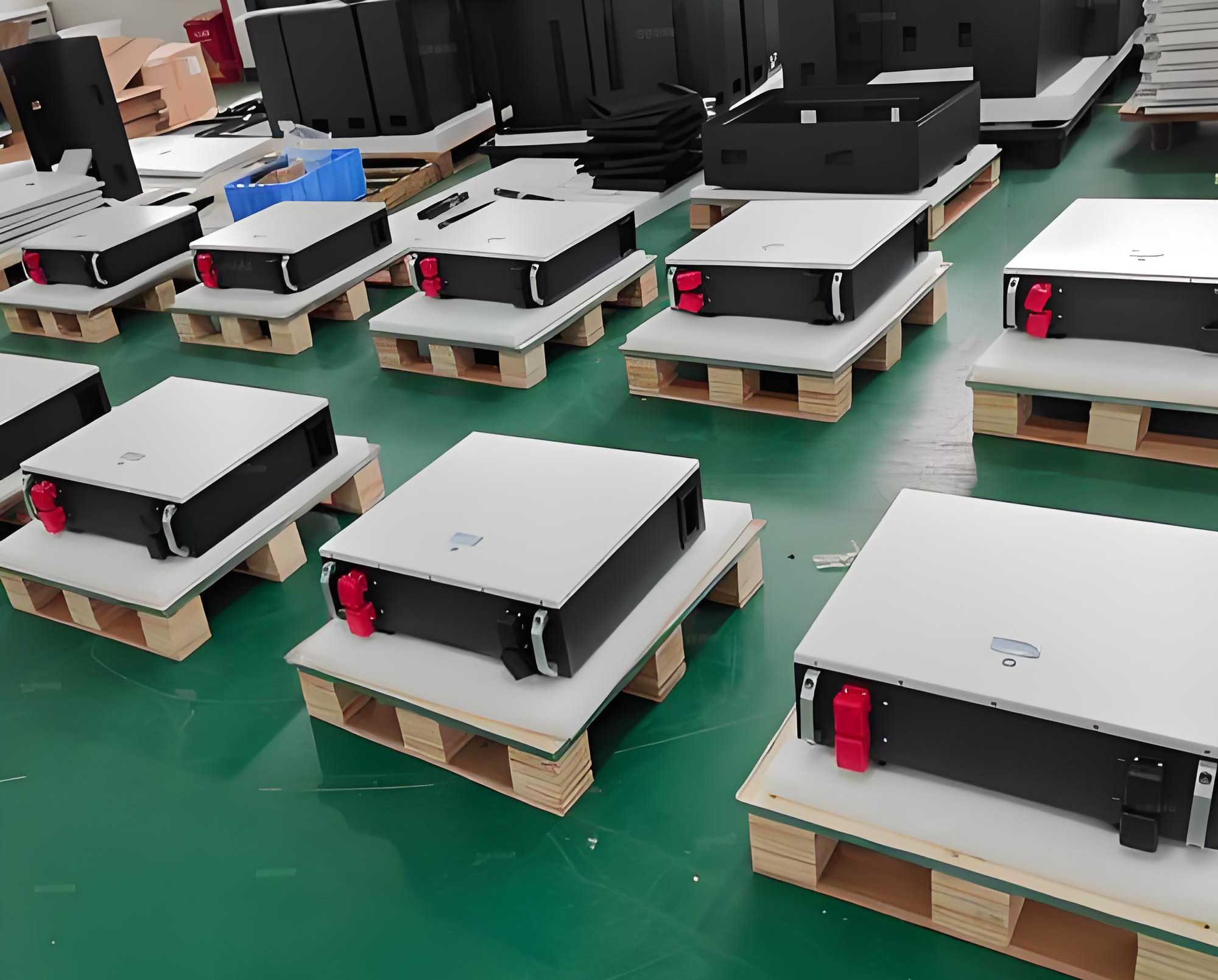
Designing an effective fire protection system for large-capacity energy storage lithium battery cabinets requires a holistic approach that addresses both thermal management and fire suppression. The primary objectives include maintaining temperature within safe bounds, typically below 60°C, and preventing fire propagation. Temperature control is achieved through real-time monitoring using high-precision sensors, with data processed by a battery management system (BMS). The BMS integrates with cooling mechanisms, such as liquid cooling systems, where heat transfer can be calculated using: $$ \dot{Q} = h A \Delta T $$ where \( \dot{Q} \) is the heat flux, \( h \) is the heat transfer coefficient, \( A \) is the surface area, and \( \Delta T \) is the temperature difference. For fire suppression, automatic systems are essential, employing agents like FM-200, IG-541, or 1230 fluid, which act by reducing oxygen concentration or absorbing heat. For instance, the evaporation of 1230 fluid can be expressed as: $$ \Delta H_{\text{vap}} = m c_p \Delta T $$ where \( \Delta H_{\text{vap}} \) is the enthalpy of vaporization, \( m \) is mass, and \( c_p \) is specific heat capacity.
| Suppression Agent | Reaction Time (Seconds) | Mechanism | Environmental Impact | Typical Cost per m² (USD) |
|---|---|---|---|---|
| FM-200 (HFC-227ea) | 10-30 | Oxygen reduction, cooling | Low ozone depletion | 200-250 |
| IG-541 (Inert Gas) | 30-60 | Oxygen dilution | Minimal residue | 180-220 |
| 1230 Fluid (FK-5-1-12) | ≤10 | Heat absorption, chemical inhibition | Eco-friendly, no residue | 150-200 |
| Water Mist Sprinklers | 5-15 | Cooling, steam expansion | Water usage concerns | 50-100 |
The integration of fire detection and early warning systems is crucial for preemptive action. Smoke detectors and infrared sensors are deployed to identify incipient fire stages. For example, infrared sensors monitor temperature gradients, with algorithms analyzing data to predict thermal runaway. The response time \( t_{\text{response}} \) can be optimized using statistical models, such as: $$ P(\text{fire}) = \frac{1}{1 + e^{-(a \Delta T + b \Delta S)}} $$ where \( P(\text{fire}) \) is the probability of fire, \( \Delta T \) is temperature change, \( \Delta S \) is smoke density, and \( a \), \( b \) are coefficients. This data is fused with BMS inputs to trigger alarms or activate suppression systems within seconds. Moreover, the design segregates cooling and firefighting zones to avoid interference. Liquid cooling systems, for instance, use coolant flow rates adjusted via PID controllers: $$ u(t) = K_p e(t) + K_i \int e(t) dt + K_d \frac{de}{dt} $$ where \( u(t) \) is the control output, and \( e(t) \) is the error signal from temperature sensors.
Evaluating the safety and performance of fire protection systems involves assessing key indicators like灭火反应时间 (fire response time) and temperature control accuracy. For energy storage lithium battery cabinets, the fire response time for agents like 1230 fluid is typically under 10 seconds, ensuring rapid containment. Temperature precision, with sensors achieving ±1°C accuracy, is vital to prevent thermal escalation. The heat dissipation efficiency can be quantified using the coefficient of performance (COP) for cooling systems: $$ \text{COP} = \frac{\dot{Q}_{\text{cooling}}}{W_{\text{input}}} $$ where \( \dot{Q}_{\text{cooling}} \) is the cooling capacity and \( W_{\text{input}} \) is the power input. Higher COP values indicate better energy efficiency, which is essential for sustainable operation of energy storage lithium battery systems.
Cost-benefit analysis reveals that investing in advanced fire protection for energy storage lithium battery cabinets is economically justified. Initial costs include procurement, installation, and maintenance. For example, a 1230 fluid system may cost $150-200 per square meter, with installation accounting for 30-40% of the total. Annual maintenance, including gas replenishment and sensor calibration, ranges from 5% to 10% of the initial investment. In contrast, the potential losses from a fire—such as equipment damage, downtime, and environmental cleanup—can exceed millions of dollars. By mitigating these risks, the system not only enhances safety but also prolongs the lifespan of energy storage lithium batteries, supporting long-term reliability. The net present value (NPV) of such investments can be calculated as: $$ \text{NPV} = \sum_{t=1}^{n} \frac{C_t}{(1 + r)^t} – C_0 $$ where \( C_t \) is the cash inflow in period \( t \), \( r \) is the discount rate, and \( C_0 \) is the initial cost. Positive NPV values underscore the financial viability.
| Cost Component | Estimated Range (USD) | Percentage of Total Cost | Key Benefits |
|---|---|---|---|
| Procurement (e.g., 1230 system) | 150-200 per m² | 50-60% | Rapid fire suppression, minimal damage |
| Installation (piping, sensors) | 30-40% of total | 30-40% | Integrated design, reduced downtime |
| Annual Maintenance | 5-10% of initial cost | 5-10% | Sustained performance, early fault detection |
| Potential Loss Avoidance (fire) | Up to $1,000,000+ | N/A | Asset protection, operational continuity |
In conclusion, the development of fire protection systems for large-capacity energy storage lithium battery cabinets is paramount to ensuring safe and efficient energy storage. As an engineer, I emphasize that integrating temperature monitoring, automatic suppression, and early warning mechanisms can significantly reduce risks associated with thermal runaway and fires. The recurring focus on energy storage lithium battery technology underscores its dominance in modern applications. Future advancements should prioritize智能化 (intelligence) and automation, such as AI-driven predictive maintenance and deeper BMS integration, to further enhance safety and performance. By addressing these aspects, we can foster the sustainable growth of renewable energy infrastructure, leveraging the full potential of energy storage lithium battery systems.