
In the rapidly evolving field of energy storage technology, lithium-ion batteries have emerged as a cornerstone for various applications due to their high energy density and long cycle life. However, the thermal management of these energy storage lithium batteries remains a critical challenge, as excessive heat generation during operation can lead to performance degradation and safety hazards like thermal runaway. To address this, we have developed a novel composite inorganic phase change material (CIPCM) designed to enhance the thermal management of energy storage lithium battery systems. This study focuses on simulating the thermal performance of CIPCM-integrated battery modules using COMSOL Multiphysics, with an emphasis on optimizing parameters such as discharge rates, material thickness, and ambient temperatures. By leveraging numerical models, we aim to provide comprehensive insights into the effectiveness of CIPCM in real-world energy storage lithium battery applications, overcoming the limitations of traditional experimental approaches.
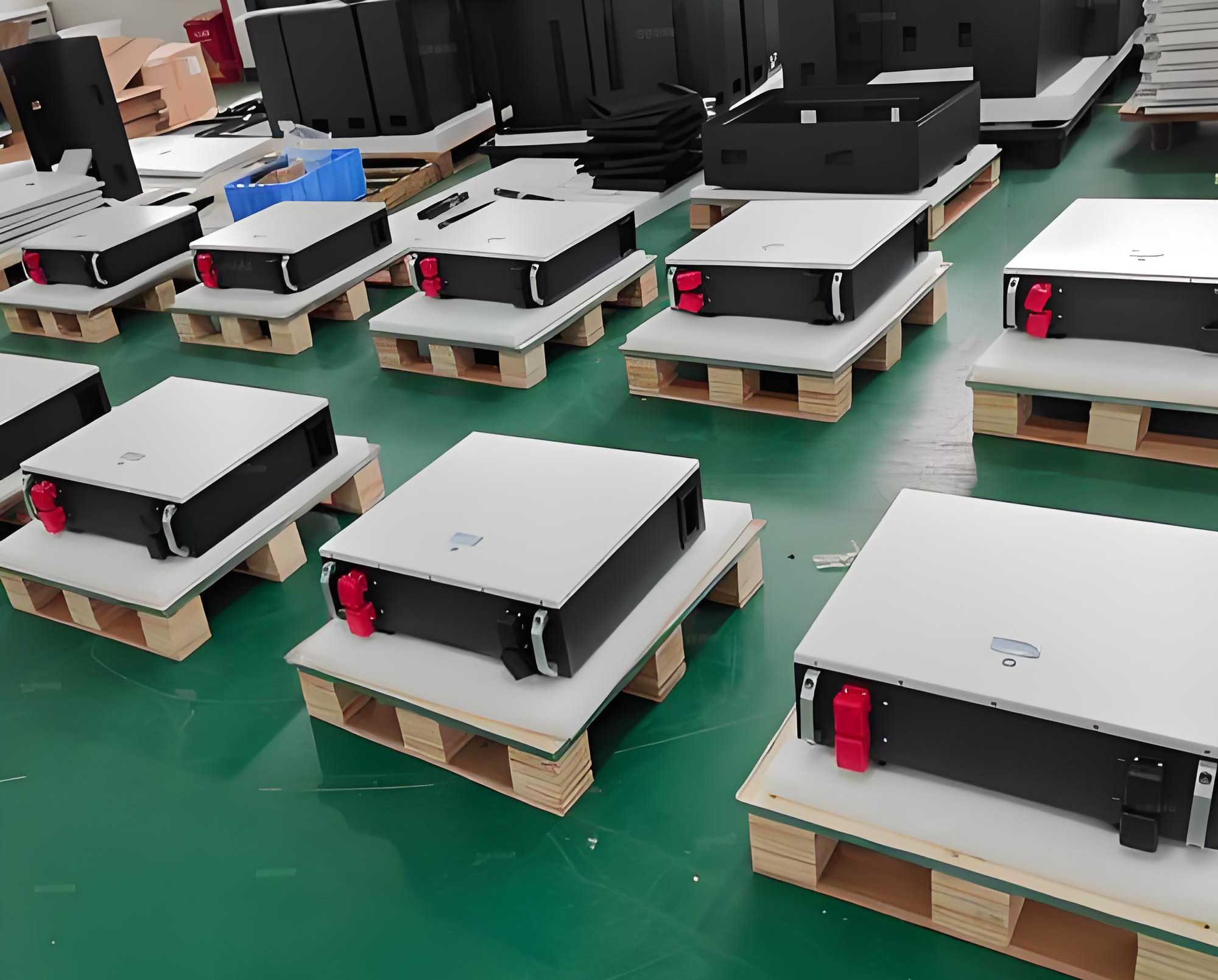
The increasing demand for efficient energy storage solutions has propelled the adoption of lithium-ion batteries in sectors ranging from electric vehicles to grid storage. As energy storage lithium batteries operate under high discharge rates, they generate significant heat, which, if not properly managed, can compromise safety and longevity. Traditional cooling methods, such as air or liquid convection, often fall short in providing uniform temperature control, especially in compact energy storage lithium battery modules. Phase change materials (PCMs) offer a passive cooling alternative by absorbing latent heat during phase transitions, thereby stabilizing temperature fluctuations. While organic PCMs have been widely studied, their flammability poses risks in energy storage lithium battery systems. In contrast, inorganic PCMs (IPCMs), such as hydrated salts, provide non-flammability and high thermal storage capacity, making them suitable for enhancing the safety of energy storage lithium batteries. However, IPCMs suffer from issues like leakage and poor thermal stability, which we have mitigated through a composite design involving microencapsulation and flexible polymer matrices.
In our previous work, we synthesized CIPCM by encapsulating disodium hydrogen phosphate dodecahydrate (DSP) within a SiO2 shell to prevent leakage and improve thermal stability. This microencapsulation was achieved via a reverse emulsion interfacial polymerization process, followed by integration with a copolymer flexible骨架 (e.g., ethylene-vinyl acetate, EVA) to maintain structural integrity. The resulting CIPCM exhibits enhanced shape stability and thermal properties, as summarized in Table 1. For instance, the latent heat of CIPCM is approximately 88.87 kJ/kg, with a phase change temperature of 48.5°C, ideal for managing the operating temperatures of energy storage lithium batteries. Additionally, we incorporated carbon nanotubes (CNTs) to boost thermal conductivity, addressing the inherent low conductivity of hydrated salts. The thermal performance of CIPCM can be described by the heat transfer equation during phase change:
$$ \rho C_p \frac{\partial T}{\partial t} = \nabla \cdot (k \nabla T) + Q – L \frac{\partial f}{\partial t} $$
where \( \rho \) is density, \( C_p \) is specific heat capacity, \( k \) is thermal conductivity, \( Q \) is the heat generation rate from the energy storage lithium battery, \( L \) is latent heat, and \( f \) is the phase change fraction. This equation forms the basis of our COMSOL simulations, allowing us to model the transient thermal behavior of CIPCM-integrated battery modules.
| Parameter | Value |
|---|---|
| Density (g/cm³) | 0.951 ± 0.42 |
| Phase Change Temperature (°C) | 48.5 ± 1.3 |
| Latent Heat (kJ/kg) | 88.87 ± 2.2 |
| Thermal Conductivity (W/m·K) | 0.216 ± 0.004 |
| Specific Heat (kJ/kg·K) | 3.152 ± 0.21 |
To evaluate the thermal management performance of CIPCM, we constructed a three-dimensional model in COMSOL Multiphysics, representing a module of cylindrical energy storage lithium batteries (e.g., Panasonic NCR18650) encapsulated with CIPCM. The batteries were arranged in a compact array, and the model incorporated heat generation profiles based on discharge rates. The governing equations for battery heat generation include the energy balance and joule heating effects, which can be expressed as:
$$ Q_{\text{battery}} = I^2 R + I \left( T \frac{\partial E}{\partial T} \right) $$
where \( I \) is the current, \( R \) is the internal resistance, \( E \) is the open-circuit voltage, and \( T \) is temperature. For the energy storage lithium battery module, the total heat dissipation involves conduction through CIPCM, convection to the ambient air, and radiation. The boundary conditions accounted for natural convection with a heat transfer coefficient of 5–10 W/m²·K, typical for passive cooling scenarios. We validated the model by comparing simulation results with experimental data from single-cell discharge tests at 2C and 3C rates, showing errors within 5%, thus ensuring reliability for further parametric studies.
Our simulations first compared the thermal management efficacy of CIPCM against natural air convection across various discharge rates relevant to energy storage lithium battery systems. As shown in Table 2, CIPCM significantly reduced the maximum surface temperature of the battery module. For instance, at a 1C discharge rate, the peak temperature with CIPCM was 50.2°C, compared to 55.1°C with air cooling—a reduction of 4.9°C. Similarly, at 2C and 3C rates, temperature reductions of 12°C and 20.6°C were observed, respectively. This demonstrates the superior heat absorption capability of CIPCM, which delays temperature rise and mitigates thermal risks in energy storage lithium batteries. The phase change fraction of CIPCM over time, \( f(t) \), followed a sigmoidal trend described by:
$$ f(t) = \frac{1}{1 + e^{-k(t – t_0)}} $$
where \( k \) is a rate constant and \( t_0 \) is the time at which phase change initiates. At higher discharge rates, CIPCM underwent phase change earlier and more completely, utilizing its latent heat efficiently to cool the energy storage lithium battery module.
| Discharge Rate | Air Cooling | CIPCM Cooling | Temperature Reduction |
|---|---|---|---|
| 1C | 55.1 | 50.2 | 4.9 |
| 2C | 70.1 | 58.1 | 12.0 |
| 3C | 83.4 | 62.8 | 20.6 |
We further investigated the impact of CIPCM thickness (δ) on thermal management performance, as this parameter directly influences the heat storage capacity and spatial requirements in energy storage lithium battery modules. Simulations were conducted for thicknesses ranging from 2 mm to 11 mm, with results indicating a non-linear relationship between thickness and cooling effectiveness. As δ increased from 2 mm to 5 mm, the phase change platform extended significantly, reducing the peak temperature by up to 36.1°C at 3C discharge. However, beyond 5 mm, additional thickness yielded diminishing returns; for example, increasing δ from 5 mm to 11 mm only lowered temperatures by 5–8°C. This can be attributed to the limited thermal diffusion within thicker CIPCM layers, where outer regions remain underutilized due to slow heat transfer. The optimal thickness of 5 mm represents a balance between cooling performance and volume constraints, crucial for maintaining high energy density in energy storage lithium battery systems. The temperature evolution during discharge can be modeled using a piecewise function:
$$ T(t) = \begin{cases}
T_{\text{init}} + \alpha t & \text{for } t < t_{\text{phase}} \\
T_{\text{phase}} & \text{for } t_{\text{phase}} \leq t \leq t_{\text{end}} \\
T_{\text{phase}} + \beta (t – t_{\text{end}}) & \text{for } t > t_{\text{end}}
\end{cases} $$
where \( T_{\text{init}} \) is the initial temperature, \( \alpha \) and \( \beta \) are heating rates, \( t_{\text{phase}} \) is the start of phase change, and \( t_{\text{end}} \) is the end of phase change. This model highlights how CIPCM thickness affects the duration of the phase change plateau, directly impacting the thermal stability of energy storage lithium batteries.
Ambient temperature also plays a critical role in the effectiveness of CIPCM for energy storage lithium battery thermal management. We simulated scenarios with ambient temperatures of 15°C, 25°C, 35°C, and 45°C, combined with discharge rates of 1C to 3C. At lower discharge rates (e.g., 1C), CIPCM maintained temperatures below 55°C across all ambient conditions, demonstrating robust performance. However, at higher rates and elevated ambient temperatures (e.g., 3C and 35°C), the phase change platform shortened, leading to faster temperature rise. For instance, at 3C discharge and 45°C ambient, a CIPCM thickness of 9 mm was required to keep the battery temperature within safe limits, compared to 5 mm at 25°C. This underscores the need for adaptive CIPCM design based on operational environments for energy storage lithium batteries. The heat dissipation rate under varying ambient conditions can be approximated by:
$$ \dot{Q}_{\text{diss}} = h A (T_{\text{battery}} – T_{\text{ambient}}) + \sigma \epsilon A (T_{\text{battery}}^4 – T_{\text{ambient}}^4) $$
where \( h \) is the convection coefficient, \( A \) is surface area, \( \sigma \) is the Stefan-Boltzmann constant, and \( \epsilon \) is emissivity. As ambient temperature increases, the temperature gradient decreases, reducing the cooling efficiency of CIPCM and necessitating thicker applications for energy storage lithium battery safety.
In practical applications, integrating CIPCM into energy storage lithium battery modules presents challenges such as assembly complexity, cost, and energy density trade-offs. The flexible nature of CIPCM allows conformal attachment to battery surfaces, but large-scale deployment requires precise engineering to accommodate electrical connections and module geometries. Moreover, the synthesis of CIPCM involves multiple steps and materials, which may increase production costs compared to conventional coolants. To address this, we are exploring scalable manufacturing techniques and alternative thermal conductivity enhancers. Despite these challenges, CIPCM offers a passive, lightweight solution that eliminates external energy consumption, making it advantageous for compact energy storage lithium battery systems. Future work will focus on optimizing CIPCM compositions with gradient phase change temperatures or hierarchical structures to further improve heat distribution and utilization.
In conclusion, our simulation-based study demonstrates that CIPCM significantly enhances the thermal management of energy storage lithium batteries by reducing peak temperatures and extending safe operation periods. Key findings include the identification of an optimal CIPCM thickness of 5 mm for typical conditions, with adjustments needed for high discharge rates or elevated ambient temperatures. The integration of numerical modeling has provided valuable insights into parameter optimization, facilitating the development of efficient thermal management strategies for energy storage lithium batteries. As the demand for reliable energy storage grows, CIPCM-based solutions hold promise for improving the safety and performance of lithium-ion battery systems across various applications.