
With the escalating global demand for clean energy and the urgent need for environmental protection, solar energy, as a clean and renewable source, has garnered significant attention. Silicon tandem photovoltaic modules, known for their high photoelectric conversion efficiency, represent a crucial technological direction in solar energy utilization. Meanwhile, energy storage lithium battery systems, with advantages such as high energy density and long cycle life, play a key role in the field of electrical energy storage. The synergistic integration of these two technologies into an energy system can effectively address the intermittency and volatility issues of photovoltaic power generation, enabling stable energy supply and efficient utilization. However, current research on the synergistic operational characteristics of silicon tandem photovoltaic modules and energy storage lithium battery systems remains insufficient, with challenges such as system configuration optimization and stable operation under complex conditions requiring urgent resolution. Therefore, conducting experimental studies on the synergistic operation of these systems is of great theoretical and practical significance for enhancing system performance and advancing new energy technologies.
In this study, we focus on the synergistic operation of silicon tandem photovoltaic modules and energy storage lithium battery systems. We establish power and energy balance models, design four different configuration schemes for photovoltaic module bandgaps and lithium battery packs, and conduct experiments under combined conditions of stepwise changes in light intensity and load power, as well as simulated full-day sunlight environments (from 6:00 to 18:00). Our findings indicate that the optimal performance is achieved with a photovoltaic module featuring an upper bandgap of 2.0 eV and a lower bandgap of 1.0 eV, paired with a series-connected lithium battery pack consisting of 25 cells, each with a capacity of 25 Ah and a voltage of 3.8 V. Under complex conditions, the power balance deviation rate is controlled within 1.3%, providing data support and a theoretical basis for system optimization.
Fundamentals of Synergistic Operation
The core of synergistic operation lies in the dynamic balance between photovoltaic power generation, energy storage lithium battery systems, and load power consumption. Silicon tandem photovoltaic modules are composed of multiple crystalline silicon sub-cells with different bandgaps connected in series. Their operation is based on the semiconductor photoelectric effect. When sunlight irradiates the module, photons of different energies are absorbed by the corresponding bandgap sub-cells: high-energy photons by the wide-bandgap sub-cells and low-energy photons by the narrow-bandgap sub-cells. The photon energy enables electrons in the semiconductor material to gain sufficient kinetic energy for transition, generating electron-hole pairs. Under the influence of the built-in electric field formed by the p-n junction, electrons and holes move in opposite directions and are effectively separated, with electrons flowing to the negative electrode and holes to the positive electrode, creating a current externally. This layered utilization of the solar spectrum reduces thermal losses from high-energy photons, significantly improving photoelectric conversion efficiency compared to traditional monocrystalline photovoltaic modules.
On the other hand, the energy storage lithium battery system primarily consists of a lithium battery pack, a battery management system (BMS), and power conversion equipment. Lithium batteries use lithium metal oxide as the positive electrode and graphite as the negative electrode, separated by an electrolyte and a diaphragm. During charging, an external power source causes lithium atoms to lose outer electrons, which flow through external wires to the negative electrode, while lithium ions migrate through the electrolyte and embed into the layered structure of the negative graphite. During discharge, lithium ions de-embed from the negative electrode, return to the positive electrode through the electrolyte, and electrons are attracted by the positive charge of the positive electrode, forming a current through the external circuit to power the load. The BMS monitors parameters such as battery voltage, current, and temperature in real-time, precisely controlling the charging and discharging processes to prevent overcharging, over-discharging, and other abnormalities. Through balanced management of the battery pack, the BMS ensures consistent performance of each battery unit, effectively extending battery life and ensuring the safe and stable operation of the energy storage lithium battery system, thereby achieving efficient reversible conversion between electrical and chemical energy.
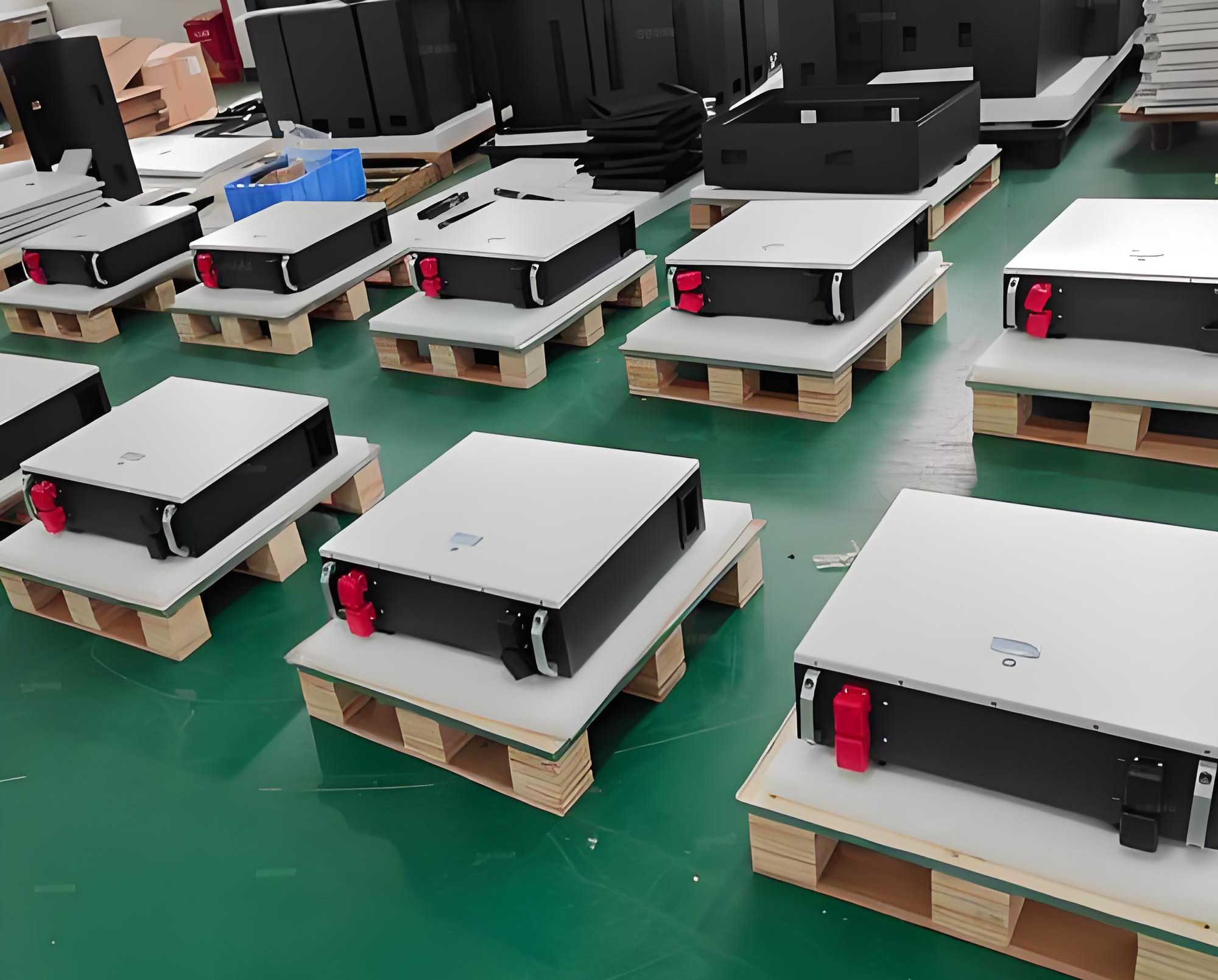
The synergistic operation model is established based on power and energy balance principles. In practical engineering applications, the selection of silicon tandem photovoltaic modules and energy storage lithium battery systems must consider factors such as cost, efficiency, and installation space. In this study, we adopt typical double-junction silicon tandem photovoltaic modules with upper wide-bandgap sub-cells (bandgaps Eg1 = 1.8 eV, 2.0 eV) to absorb high-energy photons in the solar spectrum and lower narrow-bandgap sub-cells (bandgaps Eg2 = 1.0 eV, 1.1 eV) to capture low-energy photons, achieving layered utilization of the spectrum. The module dimensions are set to 1.6 m × 0.9 m, balancing installation space and power generation efficiency for various distributed energy scenarios. The energy storage lithium battery pack is composed of 30 series-connected single lithium battery cells with rated capacities Crated of 20 Ah or 25 Ah and rated voltages Urated of 3.7 V or 3.8 V, suitable for distributed energy storage scenarios to meet small- to medium-scale load power demands and facilitate modular expansion. The BMS sets the voltage monitoring range from 2.5 V to 4.2 V, covering the safe charging and discharging voltage thresholds of the energy storage lithium battery to prevent overcharging and over-discharging.
In the synergistic operation system, the output power of the photovoltaic modules, the charging and discharging power of the energy storage lithium battery, and the load power must satisfy the power balance relationship, expressed by the formula:
$$ P_{pv} = P_{load} + P_{battery} $$
where \( P_{pv} \) is the output power of the silicon tandem photovoltaic module in watts (W), \( P_{load} \) is the power consumed by the load in watts (W), and \( P_{battery} \) is the charging and discharging power of the energy storage lithium battery in watts (W), with positive values during charging and negative values during discharging. By monitoring the data of \( P_{pv} \) and \( P_{load} \) in real-time and calculating the target value of \( P_{battery} \) based on the power balance formula, the system can dynamically adjust the charging and discharging state of the energy storage lithium battery. When \( P_{pv} > P_{load} \), excess electrical energy is stored through positive \( P_{battery} \) charging; when \( P_{pv} < P_{load} \), the energy storage lithium battery supplements the power deficit through negative \( P_{battery} \) discharging, ensuring stable system operation under varying conditions such as light fluctuations and load changes, and achieving efficient synergistic conversion of light energy, electrical energy, and chemical energy.
The core of synergistic operation is to achieve dynamic balance among photovoltaic power generation, energy storage lithium battery storage, and load power consumption. When photovoltaic power is abundant, excess energy must be stored through the energy storage link. The energy balance formula is:
$$ \int (P’_{pv} \cdot \eta_{dc} \cdot \eta_{inv} – P’_{load}) dt = E_{in} $$
where \( P’_{pv} \) is the output power of the photovoltaic module in watts (W), \( \eta_{dc} \) is the efficiency of the bidirectional DC-DC converter (dimensionless), \( \eta_{inv} \) is the inverter efficiency (dimensionless), \( P’_{load} \) is the load power consumption in watts (W), \( E_{in} \) is the charging energy of the energy storage lithium battery in watt-hours (Wh), and \( t \) is time in hours (h). After the dual efficiency losses of the converter and inverter, part of the photovoltaic output power directly supplies the load, and the remaining portion is stored in the energy storage lithium battery as charging energy.
Experimental Methodology
This experiment aims to investigate the synergistic operational characteristics of silicon tandem photovoltaic modules and energy storage lithium battery systems. We employ the control variable method to design multiple comparative schemes. By adjusting the photovoltaic module bandgap combinations (upper 1.8 eV/2.0 eV, lower 1.0 eV/1.1 eV) and energy storage lithium battery pack parameters (capacity 20 Ah/25 Ah, voltage 3.7 V/3.8 V, number of series-connected cells 25/30), we systematically analyze the impact of different configurations on power balance and energy conversion efficiency. The experimental schemes are designed as shown in Table 1.
| Scheme | Photovoltaic Module Bandgap (eV) | Energy Storage Lithium Battery Pack Configuration |
|---|---|---|
| Control Group | Upper 1.8, Lower 1.1 | 30 series-connected 20 Ah, 3.7 V cells |
| Scheme One | Upper 2.0, Lower 1.0 | 30 series-connected 20 Ah, 3.7 V cells |
| Scheme Two | Upper 1.8, Lower 1.1 | 25 series-connected 25 Ah, 3.8 V cells |
| Scheme Three | Upper 1.8, Lower 1.1 | 30 series-connected 20 Ah, 3.7 V cells |
| Scheme Four | Upper 2.0, Lower 1.0 | 25 series-connected 25 Ah, 3.8 V cells |
We establish a professional testing platform, utilizing an AAA-grade solar simulator to simulate gradient light intensities from 1000 W/m² to 600 W/m², with irradiation uniformity error < 2% and spectral matching reaching Grade A standards. A programmable electronic load is used to simulate step load changes from 50 W to 110 W, with power adjustment accuracy of 0.1 W. High-precision Hall current sensors (accuracy ±0.5%) and voltage acquisition modules (resolution 0.01 V) are employed to monitor system parameters in real-time, with a data acquisition frequency of 10 Hz. Before the experiment, the equipment is calibrated, each scheme is tested three times with averages taken, and environmental temperature is stabilized at 25 ± 1°C using a temperature and humidity control chamber to minimize external interference. Experimental data are filtered using Matlab, and trend curves are plotted with Origin to ensure reliability and accuracy of the results.
Results and Discussion
Power Balance Analysis Under Different Schemes
To deeply investigate the power balance characteristics of each scheme under complex conditions, we design combined tests with stepwise changes in light intensity (1000 W/m² → 800 W/m² → 600 W/m²) and step changes in load power (50 W → 80 W → 110 W). The power balance rates of the control group, Scheme One, Scheme Two, Scheme Three, and Scheme Four are recorded, as shown in Table 2.
| Test Condition | Control Group | Scheme One | Scheme Two | Scheme Three | Scheme Four |
|---|---|---|---|---|---|
| Light 1000 W/m², Load 50 W | 0% | 0% | 0% | 0% | 0% |
| Light 800 W/m², Load 80 W | 1.20% | 0.80% | 1.00% | 0.90% | 0.70% |
| Light 600 W/m², Load 110 W | 2.10% | 1.50% | 1.80% | 1.70% | 1.30% |
Under the condition of light intensity at 1000 W/m² and load at 50 W, the power balance deviation rates for all schemes are 0%. This is because the photovoltaic module output power far exceeds the load power, with sufficient excess electrical energy, and the energy storage lithium battery has ample capacity for storage, allowing the system to easily maintain power balance. When the light intensity decreases to 800 W/m² and the load increases to 80 W, the deviation rate of the control group reaches 1.20%, higher than those of Scheme One, Two, and Three. Scheme One, using a photovoltaic module with an upper bandgap of 2.0 eV and lower bandgap of 1.0 eV, achieves better layered utilization of the spectrum and more stable output power; Scheme Two and Three, through adjustments in capacity and voltage of the energy storage lithium battery pack, optimize energy storage capability, resulting in better power balance. When the light intensity further decreases to 600 W/m² and the load increases to 110 W, the deviation rates of all schemes increase, with the control group reaching 2.10%. At this point, the photovoltaic module output power significantly decreases, requiring higher discharge compensation capability from the energy storage lithium battery. Scheme Four, with its optimized photovoltaic module bandgaps and energy storage lithium battery pack configuration, maintains the lowest deviation rate within 1.3%. Its wide-bandgap photovoltaic module fully absorbs high-energy photons, and the matched energy storage lithium battery pack precisely discharges when power is insufficient, ensuring system power balance.
Overall, Scheme Four demonstrates the best power balance performance under different conditions, validating that reasonable optimization of photovoltaic module bandgaps and energy storage lithium battery pack configuration is crucial for enhancing system power balance capability under complex conditions. The energy storage lithium battery system plays a vital role in maintaining stability, and the synergy with high-efficiency photovoltaic modules significantly improves overall performance.
System Overall Efficiency Analysis
We further simulate a full-day sunlight environment (from 6:00 to 18:00), collecting data hourly and calculating the system overall energy conversion efficiency (η) for the control group, Scheme One, Scheme Two, Scheme Three, and Scheme Four, as shown in Table 3.
| Time (h) | Control Group (%) | Scheme One (%) | Scheme Two (%) | Scheme Three (%) | Scheme Four (%) |
|---|---|---|---|---|---|
| 6:00—7:00 | 18 | 20 | 19 | 19 | 21 |
| 11:00—12:00 | 22 | 25 | 23 | 24 | 26 |
| 17:00—18:00 | 16 | 19 | 18 | 18 | 20 |
| Full-Day Average | 20 | 23 | 21 | 22 | 24 |
As shown in Table 3, during the early morning hours with weak light (6:00—7:00), the energy conversion efficiency of Scheme Four reaches 21%, which is 3% higher than the control group and 1%, 2%, and 2% higher than Scheme One, Two, and Three, respectively, demonstrating its stronger capability in capturing low-energy photons. During the midday period with the strongest light (11:00—12:00), the efficiency advantage of Scheme Four further expands, reaching 26%, which is 4% higher than the control group and 1%, 3%, and 2% higher than Scheme One, Two, and Three, respectively, fully leveraging the efficacy of spectral layered utilization. During the evening hours with declining light (17:00—18:00), Scheme Four still maintains a high efficiency of 20%. In terms of the full-day average, Scheme Four achieves the highest overall efficiency of 24%, which is 4% higher than the control group and 1%, 3%, and 2% higher than Scheme One, Two, and Three, respectively. Scheme One, Two, and Three show good efficiency performance in some periods but are less stable overall compared to Scheme Four. This indicates that the optimized configuration of Scheme Four can maintain efficient and stable operation under different light conditions throughout the day, achieving better conversion of light energy to electrical energy to chemical energy, and providing a superior reference for the selection and configuration of silicon tandem photovoltaic module-based energy storage lithium battery systems.
The energy storage lithium battery system is integral to this efficiency, as it ensures that excess energy generated during peak sunlight is stored and utilized during periods of low generation, thus optimizing the overall system performance. The synergy between the photovoltaic modules and the energy storage lithium battery is critical for achieving high energy conversion rates and stability.
Conclusion
This experimental study demonstrates that the synergistic operational performance of silicon tandem photovoltaic modules and energy storage lithium battery systems is significantly influenced by the photovoltaic module bandgaps and the energy storage lithium battery pack configuration. By comparing different experimental schemes, we find that reasonable optimization of system configuration can effectively enhance power balance capability under complex conditions and overall energy conversion efficiency. Among them, Scheme Four (photovoltaic module with upper bandgap of 2.0 eV and lower bandgap of 1.0 eV, paired with a series-connected energy storage lithium battery pack of 25 cells, each with a capacity of 25 Ah and voltage of 3.8 V) performs optimally, controlling the power balance deviation rate within 1.3% under changes in light intensity and load, and achieving a full-day average energy conversion efficiency of 24%.
The findings provide valuable data support and a theoretical basis for the optimization of energy storage lithium battery systems in conjunction with advanced photovoltaic technologies. Future work could focus on scaling these configurations for larger applications and exploring the impact of additional factors such as temperature variations and aging on the long-term performance of the energy storage lithium battery. The continuous improvement of energy storage lithium battery technology will further enhance the feasibility and efficiency of renewable energy systems, contributing to a sustainable energy future.