
In recent years, the rapid advancement of energy storage technologies has become a cornerstone for achieving global energy transition and decarbonization goals. Among these, energy storage lithium battery systems, particularly lithium iron phosphate (LiFePO4) batteries, have gained prominence due to their high safety profile, cost-effectiveness, and long cycle life. However, the inherent risks associated with thermal runaway in these energy storage lithium battery units pose significant challenges to their widespread deployment. Thermal runaway, characterized by uncontrolled temperature rise, gas emission, and potential fire, can lead to catastrophic failures in large-scale energy storage systems, such as containerized battery modules. This study aims to investigate the thermal runaway behavior and gas diffusion patterns in energy storage lithium battery systems through a combined experimental and numerical simulation approach. We focus on 25 Ah and 50 Ah LiFePO4 cells at 100% state of charge (SOC) to analyze their reaction stability and the subsequent smoke spread in a prefabricated container environment. By integrating experimental data with refined heat release rate models and large eddy simulation (LES) techniques, we seek to provide insights into the safety dynamics of energy storage lithium battery configurations, ultimately contributing to enhanced fire prevention and mitigation strategies.
The importance of energy storage lithium battery technology lies in its ability to address the intermittency of renewable energy sources, such as solar and wind, by enabling peak shaving and load leveling. According to market data, the global demand for energy storage lithium battery systems is projected to reach nearly 1 TWh by 2030, underscoring their critical role in the energy sector. Despite their advantages, energy storage lithium battery systems are susceptible to thermal runaway, a phenomenon triggered by internal short circuits, overcharging, or external heating. This process involves exothermic reactions, gas generation, and, in severe cases, combustion. Understanding the gas diffusion and heat release during thermal runaway is essential for designing safer energy storage lithium battery enclosures. In this work, we employ a methodology that couples laboratory experiments with computational fluid dynamics (CFD) simulations to model the behavior of energy storage lithium battery modules under thermal stress. The experimental phase involves heating individual cells to induce thermal runaway, while the numerical phase simulates the combustion and smoke propagation in a container setup. Our findings highlight the differences in reaction uniformity between battery capacities and the rapid smoke dispersion in confined spaces, offering valuable data for risk assessment in energy storage lithium battery applications.
To begin, we conducted thermal runaway experiments on 25 Ah and 50 Ah LiFePO4 cells, which are commonly used in energy storage lithium battery systems due to their stability. The cells were preconditioned to 100% SOC using a standardized cycling procedure, ensuring consistent initial conditions. The experimental setup included a high-temperature metal cabinet, heating plates, thermocouples, and ignition sources, as illustrated in the following schematic. The batteries were clamped between heating plates, and thermocouples were positioned at key locations to monitor temperature changes during thermal runaway. For instance, thermocouples were placed on the large surface centers and sides of the cells to capture spatial temperature variations. The heating plate was activated to raise the temperature until thermal runaway occurred, characterized by venting and gas release. The emitted gases were ignited to simulate fire scenarios, and the entire process was recorded for analysis.
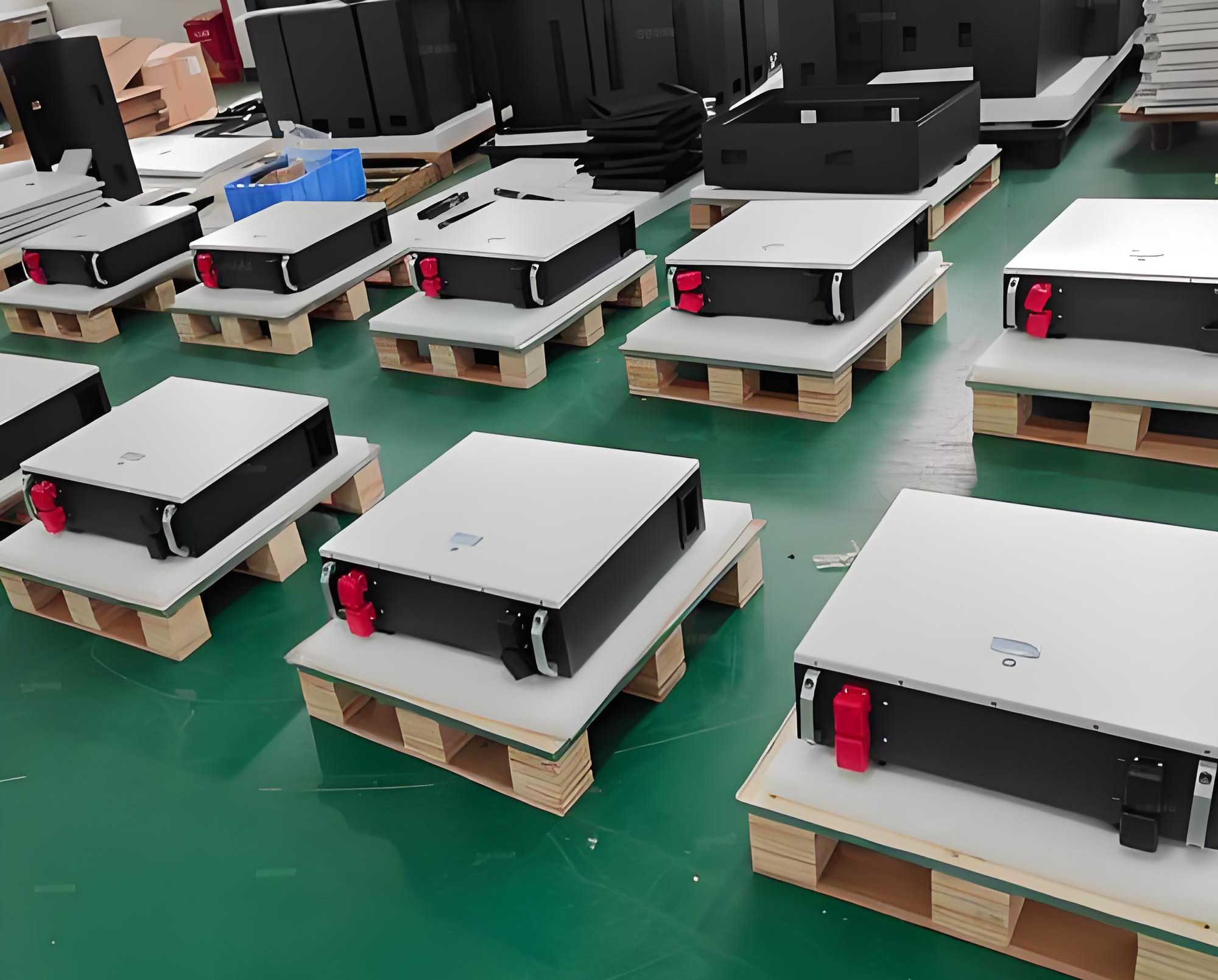
The experimental results revealed distinct thermal runaway behaviors between the 25 Ah and 50 Ah energy storage lithium battery cells. The 50 Ah cells exhibited more uniform internal reactions, as evidenced by consistent temperature trends across multiple surfaces, whereas the 25 Ah cells showed irregular temperature distributions. This suggests that larger capacity energy storage lithium battery cells may have better thermal stability under runaway conditions. Key parameters, such as the time to first thermal runaway and peak temperatures, were recorded and summarized in Table 1. For example, the 50 Ah cells reached first thermal runaway in approximately 428 seconds, compared to 810 seconds for the 25 Ah cells, indicating faster reaction kinetics in larger cells. The peak temperature for the 50 Ah cells was around 347.7°C, higher than the 329.6°C for the 25 Ah cells, but with greater uniformity. The heat release rate (HRR) during combustion was derived from these experiments, and we used a modified bisection method to refine the HRR curve for numerical simulations. The HRR is a critical parameter in fire dynamics, as it influences temperature distribution and gas diffusion. The general form of HRR can be expressed as:
$$ \dot{Q} = \chi \cdot \dot{m} \cdot \Delta H_c $$
where $\dot{Q}$ is the heat release rate, $\chi$ is the combustion efficiency, $\dot{m}$ is the mass loss rate, and $\Delta H_c$ is the heat of combustion. For energy storage lithium battery materials, $\Delta H_c$ varies based on the electrolyte composition, typically around 30 MJ/kg for carbonate-based electrolytes. In our experiments, the mass loss rate was measured, and the HRR was calculated to peak at 65 kW for a single cell after correction. This value was scaled up for module-level simulations, as discussed later.
| Capacity (Ah) | First Thermal Runaway Time (s) | Second Thermal Runaway Time (s) | Stable Flame Duration (s) | Peak Large Surface Temperature (°C) | Flame Height (cm) |
|---|---|---|---|---|---|
| 25 | 810.0 | 1676.0 | 368.2 | 329.6 | 26.4 |
| 50 | 428.0 | 765.7 | 319.6 | 347.7 | 29.3 |
Furthermore, the temperature profiles during thermal runaway were analyzed using differential equations to model the heat transfer. The temperature change over time can be described by:
$$ \frac{dT}{dt} = \frac{\dot{Q} – hA(T – T_{\infty})}{mc_p} $$
where $T$ is the temperature, $t$ is time, $h$ is the heat transfer coefficient, $A$ is the surface area, $T_{\infty}$ is the ambient temperature, $m$ is the mass, and $c_p$ is the specific heat capacity. For energy storage lithium battery cells, the values of $c_p$ and $h$ depend on the material properties, such as the aluminum casing and internal components. Our experiments showed that the 50 Ah cells had a more gradual temperature rise, indicating better heat dissipation, which aligns with their larger size and mass. This underscores the importance of capacity in the safety design of energy storage lithium battery systems.
Moving to the numerical simulation phase, we developed a CFD model to study the thermal runaway combustion and gas diffusion in a prefabricated container representative of typical energy storage lithium battery installations. The container dimensions were based on a standard 40-foot unit, with internal measurements of 12.024 m × 2.352 m × 2.390 m. The model incorporated multiple battery racks, each containing modules equivalent to 3000 Ah in capacity, to simulate a realistic energy storage lithium battery setup. The grid resolution was set to 96 × 20 × 20, totaling 38,400 cells, to balance computational accuracy and efficiency. The boundaries were sealed to ignore ventilation effects, focusing solely on smoke spread and temperature distribution. The material properties for the battery components, including the casing and electrolyte, were defined based on experimental data. The electrolyte was modeled as a mixture of carbonates with a specific combustion reaction, and the HRR curve from the corrected single-cell experiments was scaled linearly for the module. The peak HRR for the module was set to 4200 kW, derived from multiplying the single-cell peak by the number of cells in a module. This approach simplifies the fire model but effectively captures the overall dynamics for energy storage lithium battery applications.
The simulation utilized the large eddy simulation (LES) method to resolve turbulent flows and combustion processes. The governing equations for LES include the filtered Navier-Stokes equations for momentum and the energy equation for temperature. The filtered continuity and momentum equations are:
$$ \frac{\partial \bar{\rho}}{\partial t} + \frac{\partial (\bar{\rho} \tilde{u}_i)}{\partial x_i} = 0 $$
$$ \frac{\partial (\bar{\rho} \tilde{u}_i)}{\partial t} + \frac{\partial (\bar{\rho} \tilde{u}_i \tilde{u}_j)}{\partial x_j} = -\frac{\partial \bar{p}}{\partial x_i} + \frac{\partial}{\partial x_j} \left( \mu \frac{\partial \tilde{u}_i}{\partial x_j} – \bar{\rho} \tau_{ij} \right) + \bar{\rho} g_i $$
where $\bar{\rho}$ is the filtered density, $\tilde{u}_i$ is the filtered velocity, $\bar{p}$ is the filtered pressure, $\mu$ is the dynamic viscosity, $\tau_{ij}$ is the subgrid-scale stress tensor, and $g_i$ is the gravitational acceleration. For combustion, the mixture fraction-based model was employed, with the heat release rate tied to the reaction progress. The temperature and visibility outputs were monitored at specific planes and points within the container. For instance, slices at Y=1.564 m and Z=1.6 m (eye level) were used to visualize temperature and smoke distribution over time. The visibility was calculated based on smoke concentration using the equation:
$$ V = \frac{K}{\sigma} $$
where $V$ is visibility, $K$ is a constant (typically 3 for light obscuration), and $\sigma$ is the smoke extinction coefficient. This is critical for assessing逃生 conditions in energy storage lithium battery facilities.
The simulation results demonstrated severe fire hazards in the energy storage lithium battery container. When the module HRR peaked, temperatures soared rapidly, with nearby thermocouples recording values exceeding 300°C. For example, at a probe close to the fire source (THCP1), the temperature reached 324.06°C, while points farther away, such as the container center (THCP2), peaked at 149.29°C. The temperature distribution followed a predictable pattern, with heat accumulating near the ceiling before spreading horizontally and descending. The flame spread analysis showed that fires could engulf entire battery racks within 150 seconds, emphasizing the rapid escalation risk in energy storage lithium battery enclosures. Table 2 summarizes the temperature data from various probes, highlighting the spatial variations.
| Probe | Location Description | Peak Temperature (°C) | Time to Peak (s) |
|---|---|---|---|
| THCP1 | Near fire source | 324.06 | 40 |
| THCP2 | Container center | 149.29 | 80 |
| THCP3 | Far from fire, behind partition | 153.84 | 75 |
| THCP4 | Equipment compartment | 138.77 | 100 |
Regarding smoke diffusion, the simulations revealed that smoke filled the container quickly due to the high HRR of the energy storage lithium battery module. Within 20 seconds, smoke layers formed at the top and spread to adjacent sections, such as the equipment compartment. By 50 seconds, the smoke descended to ground level, drastically reducing visibility. The visibility probes at eye height showed a sharp decline within the first 20 seconds, dropping to near zero as smoke density increased. This poses significant risks for personnel and emergency response in energy storage lithium battery installations. The smoke movement adhered to classic fire dynamics, where buoyancy-driven plumes rise, form ceiling jets, and then sink as they cool. The visibility change over time at probe Visibility1 (near the fire) is given by:
$$ V(t) = V_0 e^{-k \cdot C_s(t) \cdot t} $$
where $V_0$ is initial visibility, $k$ is a decay constant, and $C_s(t)$ is the smoke concentration as a function of time. Our data indicated that visibility recovered briefly in some areas due to initial vertical smoke accumulation before horizontal spread, but it eventually deteriorated completely. This pattern underscores the need for early detection and ventilation systems in energy storage lithium battery containers to mitigate smoke hazards.
In conclusion, this study provides a comprehensive analysis of thermal runaway gas diffusion in energy storage lithium battery systems through integrated experiments and simulations. We found that larger capacity cells, such as 50 Ah LiFePO4 batteries, exhibit more uniform and stable reactions during thermal runaway, which could inform the design of safer energy storage lithium battery modules. The numerical simulations highlighted the rapid temperature rise and smoke spread in containerized setups, with flames covering entire racks in minutes and smoke impairing visibility within seconds. These insights are crucial for developing fire safety protocols and structural designs for energy storage lithium battery facilities. Future work should involve larger-scale experiments and real-world validation to enhance model accuracy. Overall, advancing the understanding of thermal runaway in energy storage lithium battery systems is vital for sustaining the growth of renewable energy and achieving global sustainability targets.
To further elaborate, the experimental methodology involved precise control of environmental factors, such as ambient temperature and humidity, to ensure reproducibility. The energy storage lithium battery cells were subjected to cyclic charging and discharging to stabilize their internal chemistry before testing. The heat induction phase used calibrated heating plates with temperature feedback to mimic external thermal abuse scenarios common in energy storage lithium battery applications. Data acquisition systems recorded temperature at 1-second intervals, allowing for high-resolution analysis of thermal runaway initiation and propagation. The gas composition during venting was not directly measured in this study, but prior research indicates that gases like CO, H2, and CO2 are prevalent, contributing to the flammability and toxicity risks in energy storage lithium battery fires.
In the numerical model, the material properties for the energy storage lithium battery components were defined based on literature values. For example, the specific heat capacity of LiFePO4 cells is approximately 1000 J/kg·K, and the thermal conductivity ranges from 0.2 to 0.5 W/m·K, depending on the direction and state of charge. These parameters were incorporated into the CFD solver to simulate heat transfer accurately. The combustion model assumed complete oxidation of the electrolyte, represented by the reaction:
$$ \text{C}_6.3\text{H}_7.1\text{O}_2.1\text{N} + \text{O}_2 \rightarrow \text{CO}_2 + \text{H}_2\text{O} + \text{N}_2 $$
with an estimated heat of combustion of 25 MJ/kg. This simplification allowed for efficient computation while capturing the essential physics of energy storage lithium battery fires. The LES approach resolved large-scale turbulent eddies, which are critical for predicting smoke movement and temperature gradients in the container. Subgrid-scale models accounted for smaller turbulent structures, ensuring realistic flow patterns.
The results from this study have implications for the safety standards and regulations governing energy storage lithium battery systems. For instance, the rapid smoke diffusion suggests that passive fire protection measures, such as smoke detectors and sprinklers, may need to be complemented with active ventilation to control smoke spread. Additionally, the differences in thermal behavior between cell capacities highlight the importance of cell selection and module design in mitigating thermal runaway risks. Energy storage lithium battery manufacturers can use these findings to optimize thermal management systems and enclosure layouts. Overall, this research contributes to the broader goal of enhancing the reliability and safety of energy storage lithium battery technologies, supporting their integration into smart grids and renewable energy systems.
In summary, the combination of experimental and numerical approaches provides a robust framework for studying thermal runaway in energy storage lithium battery systems. The key equations and tables presented here offer a quantitative basis for risk assessment and design improvements. As the demand for energy storage lithium battery solutions continues to grow, such studies will play a pivotal role in ensuring their safe and sustainable deployment. Future directions include incorporating more complex chemistry models, exploring different battery chemistries, and conducting full-scale fire tests to validate simulation predictions. Through continued research, we can address the safety challenges and unlock the full potential of energy storage lithium battery technologies in the global energy landscape.