
In modern energy storage systems, lithium-ion batteries play a critical role due to their high energy density and long cycle life. However, internal short-circuit (ISC) faults in energy storage lithium battery packs can lead to significant performance degradation, safety hazards, and even catastrophic failures. As the demand for reliable energy storage solutions grows, developing efficient fault diagnosis methods becomes imperative. Traditional approaches for ISC detection often rely on complex battery models or extensive computational resources, which limit their practical application in real-world scenarios. In this study, we propose a novel fault diagnosis method based on the Mean Normalization (MN) value to address these challenges. This method leverages voltage data from battery packs to compute MN values, enabling the identification of faulty cells without requiring intricate battery modeling. By integrating Kalman filtering for data smoothing, our approach enhances detection accuracy and robustness. We validate the method through experiments involving single and multiple cell faults, demonstrating its effectiveness in various scenarios. This research contributes to improving the safety and reliability of energy storage lithium battery systems, which are essential for applications such as electric vehicles and grid storage.
The proliferation of energy storage lithium battery technologies has revolutionized various industries, but inherent risks like internal short circuits remain a major concern. An internal short circuit occurs when the separator within a battery cell fails, allowing direct contact between the positive and negative electrodes. This results in uncontrolled current flow, excessive heat generation, and potential thermal runaway. ISC faults can be categorized into hard shorts and soft shorts based on the severity of the leakage current. Hard shorts involve high currents that cause rapid voltage drops, while soft shorts exhibit gradual changes that are harder to detect. Existing diagnostic methods often focus on single-cell analysis or require detailed battery parameters, making them less suitable for large-scale energy storage lithium battery packs. Our work aims to bridge this gap by introducing a data-driven approach that utilizes the MN value to amplify fault characteristics. The MN value normalizes cell voltages relative to the pack’s average, highlighting deviations caused by ISC faults. This method is computationally efficient and can be implemented in real-time battery management systems (BMS) for energy storage lithium battery packs.
To understand the core of our method, we first define the Mean Normalization value for a battery pack. Consider a series-connected energy storage lithium battery pack with $n$ cells. The voltage of cell $j$ at time $t_i$ is denoted as $U_j(t_i)$. The MN value for cell $j$ is calculated as follows:
$$ Z_j(t_i) = \frac{U_j(t_i) – U_{\text{mean}}(t_i)}{U_{\text{max}}(t_i) – U_{\text{min}}(t_i)} $$
where $U_{\text{mean}}(t_i)$ is the average voltage of all cells at time $t_i$, and $U_{\text{max}}(t_i)$ and $U_{\text{min}}(t_i)$ are the maximum and minimum voltages, respectively. This normalization process scales the voltage differences, making it easier to detect anomalies. For instance, in a healthy energy storage lithium battery pack, MN values remain stable across cells. However, if a cell develops an ISC fault, its voltage decreases due to self-discharge, causing its MN value to deviate significantly from others. This deviation serves as a fault indicator. The MN value calculation is straightforward and does not depend on battery-specific parameters, making it highly adaptable for various energy storage lithium battery configurations.
In practical applications, voltage measurements are often contaminated with noise, which can obscure fault signals. To mitigate this, we employ an Adaptive Extended Kalman Filter (AEKF) to smooth the MN value curves. The Kalman filter is a recursive algorithm that estimates the state of a linear dynamic system from noisy observations. For our purpose, the state variable $x_k$ represents the MN value of a cell at time step $k$. The system model is defined as:
$$ x_k = A_k x_{k-1} + w_k $$
$$ y_k = x_k + v_k $$
where $A_k$ is the state transition matrix (assumed to be identity for simplicity), $y_k$ is the measured MN value, and $w_k$ and $v_k$ are process and measurement noises with covariances $Q_k$ and $R_k$, respectively. The AEKF adapts these noise covariances online to handle dynamic changes in the system. The prediction step updates the state estimate and error covariance:
$$ \hat{x}_{k|k-1} = A_k \hat{x}_{k-1|k-1} $$
$$ P_{k|k-1} = A_k P_{k-1|k-1} A_k^T + Q_k $$
The correction step then refines the estimate using the measurement:
$$ K_k = P_{k|k-1} (P_{k|k-1} + R_k)^{-1} $$
$$ \hat{x}_{k|k} = \hat{x}_{k|k-1} + K_k (y_k – \hat{x}_{k|k-1}) $$
$$ P_{k|k} = (1 – K_k) P_{k|k-1} $$
By applying AEKF to the MN values, we obtain smooth curves that highlight persistent faults while suppressing noise. This enhances the reliability of our fault diagnosis method for energy storage lithium battery packs.
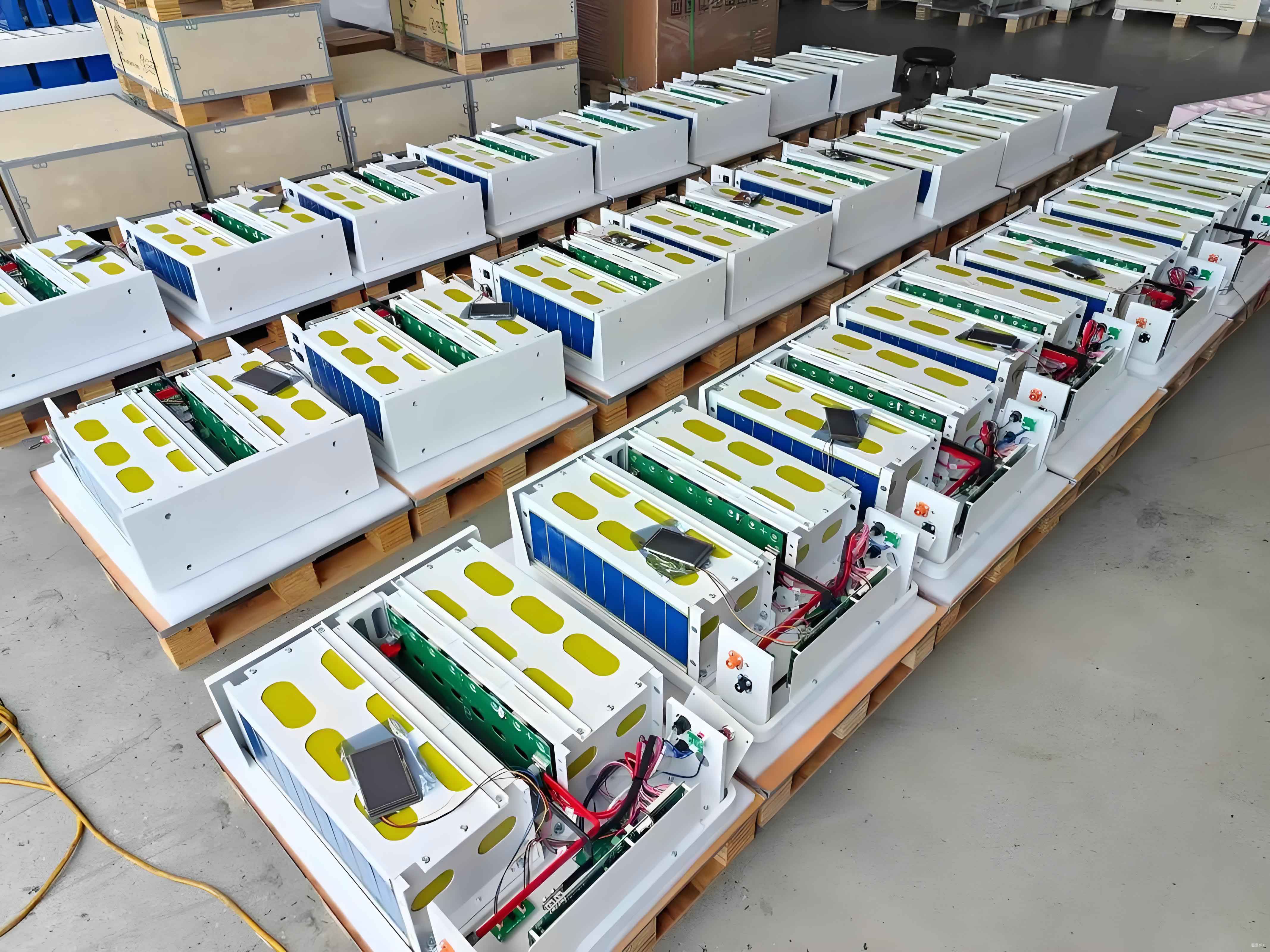
The experimental setup involved testing an 18-cell series-connected energy storage lithium battery pack with lithium iron phosphate (LFP) chemistry. The pack had a nominal voltage of 57.96 V and a capacity of 302 Ah. Key parameters of the cells and pack are summarized in Table 1 and Table 2. We used a dedicated test platform comprising a battery cycler, environmental chamber, and data acquisition system to simulate various operating conditions. Dynamic Stress Test (DST) profiles were applied to emulate real-world usage, with currents ranging from -300 A to 200 A. To simulate ISC faults, we connected external resistors in parallel with selected cells, mimicking the leakage current associated with internal shorts. This approach allows controlled and repeatable fault injection, enabling rigorous validation of our diagnostic method.
| Parameter | Value | Parameter | Value |
|---|---|---|---|
| Standard Capacity (Ah) | 302 | Cell Weight (kg) | ≤ 5.5 |
| Minimum Capacity (Ah) | 302 | Cell Cycle Life (Cycles) | ≥ 4,000 |
| Operating Voltage (V) | 2.50–3.65 | Standard Charge Current (C) | 0.5 |
| Max Continuous Charge Current (C) | 1 | Internal Resistance (mΩ) | 0.18 ± 0.05 |
| Max Continuous Discharge Current (C) | 1 | Operating Temperature (°C) | -35 to 65 |
| Parameter | Specification | Parameter | Value |
|---|---|---|---|
| Cell Specification | LFP 302 Ah | Pack Weight (kg) | < 130 |
| Series-Parallel Design | 1P18S | Pack Energy (kWh) | 17.503 |
In the single-cell fault scenario, we induced an ISC in cell 1 (edge cell) and cell 5 (central cell) separately using a 100 Ω resistor. The voltage data collected during DST cycles were processed to compute MN values. Figure 1 illustrates the voltage profiles of all cells, showing that the faulty cell’s voltage deviates over time. The raw MN values, calculated using the formula above, exhibit noise-induced fluctuations. After applying AEKF, the smoothed MN curves clearly show that the faulty cell’s values drop below a threshold of 0.5, while healthy cells remain above it. This threshold was determined empirically through multiple tests to minimize false alarms. For instance, when cell 1 was faulty, its MN value decreased to approximately -0.6, signaling a fault. Similarly, cell 5’s MN value showed a comparable deviation. The algorithm successfully identified these faults within minutes of occurrence, demonstrating its sensitivity and speed for energy storage lithium battery applications.
To assess the method’s robustness in complex scenarios, we simulated simultaneous ISC faults in cells 2, 10, and 15. The voltage data revealed multiple deviations, and the MN values for these cells diverged significantly from the pack average. After smoothing with AEKF, all three faulty cells exhibited MN values below the threshold, while healthy cells maintained stable values. This confirms that our method can handle multiple faults without compromising accuracy. The computational efficiency of the MN-based approach makes it suitable for real-time implementation in BMS for energy storage lithium battery packs. Moreover, the method’s adaptability to different fault locations and severities enhances its practicality. For example, in cases of self-recovering soft shorts, the MN values return to normal once the fault ceases, allowing the system to reset alarms automatically.
The advantages of our MN-based method are manifold. Firstly, it eliminates the need for complex battery models, reducing computational overhead. Secondly, it leverages readily available voltage data, making it integrable with existing BMS hardware. Thirdly, the use of Kalman filtering ensures robustness against measurement noise, a common issue in energy storage lithium battery systems. However, limitations exist. The method primarily focuses on ISC faults and may not detect other failure modes like external shorts or degradation. Future work will explore integrating thermal data and machine learning techniques to enhance fault quantification and multi-fault diagnosis. Additionally, expanding the method to parallel-connected energy storage lithium battery packs could broaden its applicability.
In conclusion, we have developed and validated a fault diagnosis method for energy storage lithium battery packs using Mean Normalization values and Adaptive Extended Kalman Filtering. This approach effectively identifies internal short-circuit faults in both single and multiple cell scenarios, offering a practical solution for improving battery safety. The method’s simplicity and efficiency make it a promising tool for real-world energy storage applications, contributing to the advancement of reliable lithium battery technologies. As the adoption of energy storage lithium battery systems continues to grow, such diagnostic innovations will play a crucial role in ensuring their safe and efficient operation.
Further research could investigate the integration of this method with other sensor data, such as temperature and current, to create a comprehensive fault detection system. Additionally, adaptive threshold techniques could be developed to dynamically adjust to varying operating conditions in energy storage lithium battery packs. The scalability of the method to larger battery arrays and different chemistries also warrants exploration. By continuously refining these approaches, we can address the evolving challenges in energy storage lithium battery management and contribute to a sustainable energy future.