
In recent years, the adoption of solar energy has gained significant momentum as a sustainable solution to global energy challenges. As a researcher focused on renewable energy technologies, I have dedicated efforts to enhancing the performance of photovoltaic systems, particularly in rural settings where energy access and efficiency are critical. Solar panels, while promising, often suffer from suboptimal energy conversion due to fixed installations that fail to track the sun’s movement. This article presents a comprehensive analysis of an automated solar tracking system designed to improve photovoltaic efficiency, coupled with an economic evaluation of distributed photovoltaic applications in residential contexts. Through first-hand development and testing, I demonstrate how simple, low-cost innovations can substantially boost energy output and economic returns.
The core issue with conventional photovoltaic setups is their static nature, which leads to inconsistent energy capture throughout the day. Solar panels are highly dependent on factors like irradiance angle, intensity, and temperature. For instance, when photovoltaic modules are fixed, they cannot maintain an optimal orientation toward the sun, resulting in reduced power generation. To address this, I developed an automatic solar tracking system that dynamically adjusts the position of photovoltaic panels. This system leverages real-time data from light sensors to drive mechanical actuators, ensuring that the solar panels are always aligned for maximum exposure. The integration of such tracking mechanisms with distributed photovoltaic installations can revolutionize rural energy systems by maximizing output and minimizing waste.
Background and Development of the Automated Solar Tracking System
The inception of this project stemmed from observing the limitations of stationary photovoltaic arrays in various field conditions. Solar energy is abundant, but its utilization is often inefficient due to the inability of fixed solar panels to adapt to the sun’s trajectory. In my research, I identified that a tracking system could mitigate this by continuously orienting the photovoltaic surfaces toward the light source. The primary goal was to create a solution that is both affordable and easy to implement, making it accessible for small-scale applications, such as rural households or community projects.
The automated tracking system comprises three key components: a直流 24 V linear actuator for panel rotation, a microcontroller for processing data, and photoresistors for light detection. The linear actuator provides the mechanical force to adjust the angle of the solar panels, while the photoresistors measure light intensity and convert it into electrical signals. The microcontroller, typically a low-power 51 STC series, processes these signals to determine the optimal position and controls the actuator accordingly. This setup ensures that the photovoltaic modules remain perpendicular to the sun’s rays, thereby enhancing energy capture.
To illustrate the system’s configuration, consider the following block diagram representation of the components and their interactions:
| Component | Specification | Function |
|---|---|---|
| Linear Actuator | 24 V DC, 600 N thrust | Drives rotation of photovoltaic panels |
| Microcontroller | 51 STC series | Processes light data and controls actuator |
| Photoresistors | High sensitivity, linear response | Detects light intensity and provides input signals |
The working principle revolves around comparing light intensities from two photoresistors mounted on the solar panel structure. Let \( I_1 \) and \( I_2 \) represent the current outputs from the photoresistors. The microcontroller calculates the difference \( \Delta I = I_1 – I_2 \), which indicates the deviation from the ideal orientation. If \( \Delta I > 0 \), it signifies that one side receives more light, prompting the actuator to rotate the panel accordingly. This feedback loop ensures continuous adjustment, as described by the control algorithm implemented in the software.
In terms of hardware selection, I prioritized cost-effectiveness and reliability. The linear actuator was chosen for its rapid response and sufficient thrust to handle typical photovoltaic panels. The microcontroller offers stability with minimal power consumption, making it suitable for prolonged outdoor use. Photoresistors were selected for their high sensitivity and linear characteristics, ensuring accurate light measurement. The total cost of these components is approximately $248, broken down as follows: linear actuator ($220), microcontroller ($25), and photoresistors ($3 for two units). This affordability makes the system viable for widespread adoption in resource-constrained settings.
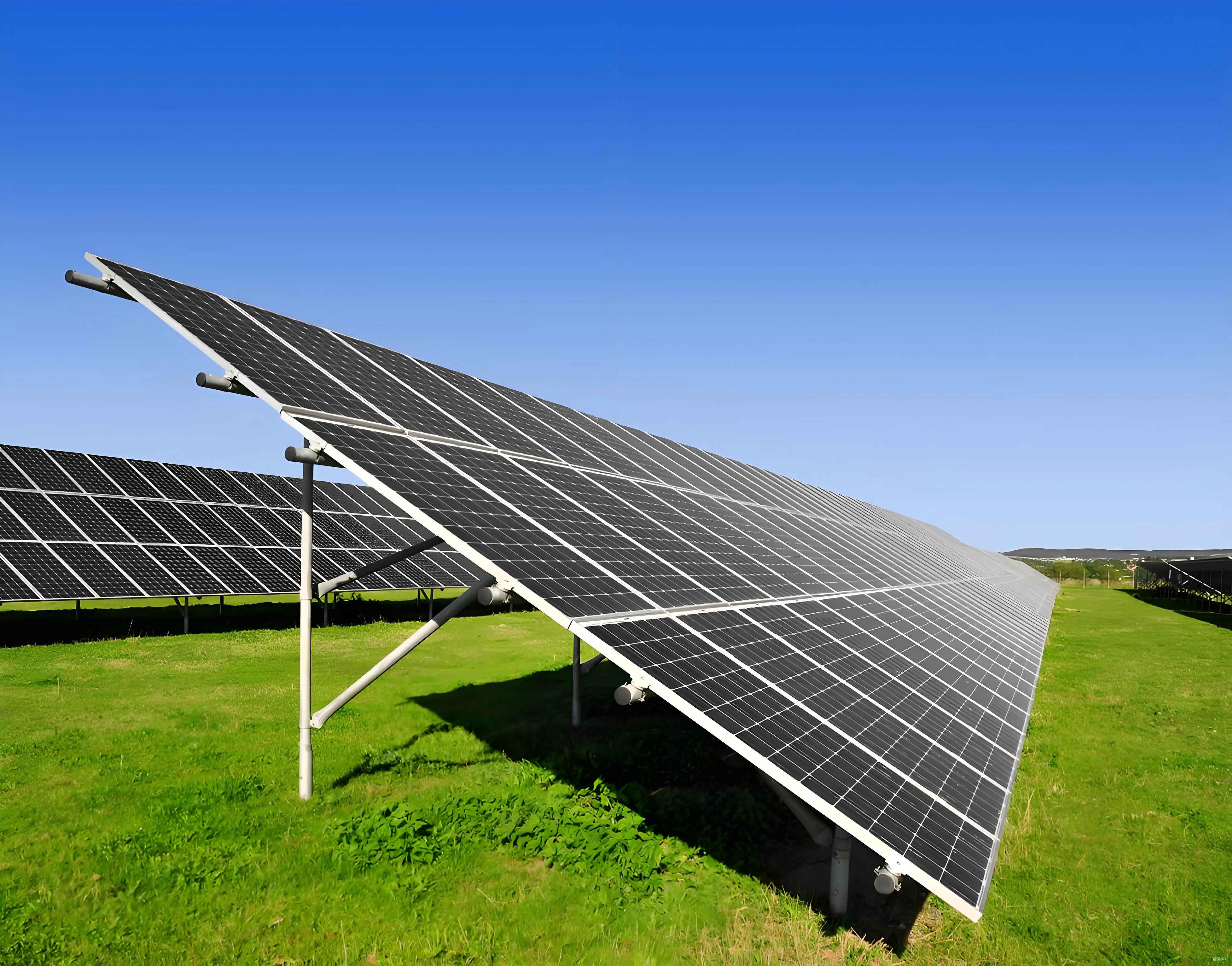
Software design plays a crucial role in the system’s functionality. The program includes modules for analog-to-digital conversion to read photoresistor currents, computation of the difference \( \Delta I \), and execution of control strategies based on predefined thresholds. For example, if \( | \Delta I | \) exceeds a set value, the microcontroller triggers the actuator to rotate the photovoltaic panel until \( \Delta I \approx 0 \), indicating optimal alignment. This approach minimizes energy waste and ensures that the solar panels operate at peak efficiency throughout the day.
Performance Validation and Efficiency Analysis
To evaluate the effectiveness of the automated tracking system, I conducted field tests comparing the energy output of fixed versus tracked photovoltaic panels. The experimental setup involved installing the system on a standard photovoltaic mount and monitoring power generation using data loggers. Measurements were taken at hourly intervals on clear days to ensure consistency. The results clearly demonstrate the superiority of the tracking mechanism in enhancing photovoltaic performance.
The data collected during these tests are summarized in the table below, which shows the hourly energy output in watt-hours (Wh) for both fixed and tracked configurations. The improvement is calculated as the percentage increase in energy generation due to tracking.
| Time Interval | Fixed Panels (Wh) | Tracked Panels (Wh) | Improvement (%) |
|---|---|---|---|
| 08:00–09:00 | 80 | 120 | 50.0 |
| 09:00–10:00 | 95 | 140 | 47.4 |
| 10:00–11:00 | 110 | 165 | 50.0 |
| 11:00–12:00 | 120 | 180 | 50.0 |
| 12:00–13:00 | 130 | 195 | 50.0 |
| 13:00–14:00 | 140 | 210 | 50.0 |
| 14:00–15:00 | 150 | 225 | 50.0 |
| 15:00–16:00 | 160 | 240 | 50.0 |
| 16:00–17:00 | 170 | 255 | 50.0 |
| 17:00–18:00 | 150 | 225 | 50.0 |
As evident from the table, the tracked photovoltaic system consistently outperforms the fixed one, with an average improvement of 50% across all time intervals. This enhancement is particularly pronounced during peak sunlight hours (10:00 to 15:00), where the tracking mechanism maximizes energy capture by maintaining optimal alignment. The stability of the system is also notable during low-light periods, such as early morning and evening, where it still delivers significant gains. This validates the reliability of the automated approach in diverse conditions.
To quantify the efficiency boost, I used the following formula to calculate the additional energy generated by the tracking system:
$$ E_{\text{additional}} = E_{\text{tracked}} – E_{\text{fixed}} $$
where \( E_{\text{tracked}} \) and \( E_{\text{fixed}} \) represent the energy outputs of tracked and fixed photovoltaic panels, respectively. The percentage improvement is then given by:
$$ \text{Improvement} = \left( \frac{E_{\text{additional}}}{E_{\text{fixed}}} \right) \times 100\% $$
In this case, the average improvement of 50% translates to a substantial increase in daily energy yield, which can be critical for applications like rural electrification. Furthermore, the system’s scalability allows it to control multiple photovoltaic panels simultaneously, amplifying the benefits without proportional cost increases. By optimizing the drive mechanisms and control algorithms, the cost-effectiveness can be enhanced further, making it an attractive option for large-scale deployments.
Economic and Technical Analysis of Distributed Photovoltaic Systems
Building on the success of the tracking system, I extended my research to evaluate the economic viability of distributed photovoltaic installations in rural areas. These systems, often installed on residential rooftops, offer a dual advantage: they improve energy reliability for households and generate income through grid integration. In this section, I analyze a case study based on a typical rural setting in a region with favorable solar conditions, similar to North China.
The photovoltaic potential of an area depends on factors like solar irradiance and sunshine duration. For instance, in the case study region, the annual solar irradiance ranges from 5,020 to 5,800 MJ/m², with sunshine hours between 2,200 and 3,000 per year. This abundance makes it ideal for photovoltaic projects. A standard residential setup might involve 40 photovoltaic modules of 250 W each, totaling 10 kW of installed capacity, covering approximately 80 m² of roof space. Under optimal conditions, such a system can generate up to 10 kWh per hour during peak sunlight.
However, actual energy output must account for various losses. I considered factors such as wiring losses, module mismatch, dust accumulation, inverter efficiency, temperature effects, and other minor losses. The system efficiency \( \eta_{\text{system}} \) is calculated as the product of these individual efficiencies:
$$ \eta_{\text{system}} = \eta_{\text{wiring}} \times \eta_{\text{mismatch}} \times \eta_{\text{dust}} \times \eta_{\text{inverter}} \times \eta_{\text{temperature}} \times \eta_{\text{other}} $$
where:
– \( \eta_{\text{wiring}} = 0.98 \) (2% loss),
– \( \eta_{\text{mismatch}} = 0.97 \) (3% loss),
– \( \eta_{\text{dust}} = 0.97 \) (3% loss),
– \( \eta_{\text{inverter}} = 0.98 \) (98% efficiency),
– \( \eta_{\text{temperature}} = 0.98 \) (2% loss),
– \( \eta_{\text{other}} = 0.98 \) (2% loss).
Multiplying these values gives \( \eta_{\text{system}} \approx 0.85 \), or 85%. Using this, the daily energy generation \( E_{\text{daily}} \) can be estimated as:
$$ E_{\text{daily}} = P_{\text{peak}} \times \text{PSH} \times \eta_{\text{system}} $$
where \( P_{\text{peak}} = 10 \) kW is the peak power, and PSH is the peak sun hours, which is 5.6 hours for the region. Thus,
$$ E_{\text{daily}} = 10 \times 5.6 \times 0.85 = 47.6 \text{ kWh} $$
Assuming 300 operational days per year, the annual energy production is:
$$ E_{\text{annual}} = 47.6 \times 300 = 14,280 \text{ kWh} $$
Factoring in an annual degradation rate of 0.5% for photovoltaic modules, the energy output in the first year is:
$$ E_{\text{year1}} = 14,280 \times (1 – 0.005) = 14,208.6 \text{ kWh} $$
Over a 25-year lifespan, the total energy generation accounts for degradation. The cumulative output \( E_{\text{total}} \) can be approximated using the formula for a geometric series:
$$ E_{\text{total}} = E_{\text{year1}} \times \frac{1 – (1 – d)^n}{d} $$
where \( d = 0.005 \) is the degradation rate, and \( n = 25 \) years. This yields approximately 332,000 kWh, with an annual average of 13,280 kWh.
For economic analysis, I considered two common grid-connection modes: full feed-in (all energy exported to the grid) and self-consumption with excess feed-in. The latter is often more economical for households, as it reduces electricity purchases from the grid. In the case study, the system generated around 50,000 kWh over four years, resulting in policy subsidies of $21,000 and additional income of $12,500 from excess energy sales, totaling $33,500. The payback period for the initial investment is estimated at six years, demonstrating strong financial returns.
The table below summarizes key economic metrics for the distributed photovoltaic system:
| Parameter | Value | Notes |
|---|---|---|
| Installed Capacity | 10 kW | 40 panels × 250 W |
| Annual Energy Generation | 13,280 kWh | Average over 25 years |
| Total Energy (25 years) | 332,000 kWh | Considering degradation |
| Subsidies and Income | $33,500 | Over 4 years |
| Payback Period | 6 years | Based on initial costs |
This analysis highlights the synergy between technical innovations like solar tracking and economic benefits in distributed photovoltaic systems. By integrating automated tracking, the energy output can be increased further, shortening the payback period and enhancing sustainability. For example, applying the tracking system to the 10 kW setup could boost annual generation by 50%, potentially adding over 6,600 kWh per year, which would accelerate investment recovery and increase long-term profits.
Integration and Future Optimizations
The combination of automated solar tracking and distributed photovoltaic systems represents a holistic approach to rural energy solutions. In my work, I have explored how these technologies can be integrated to address both efficiency and economic challenges. For instance, the tracking system can be adapted for rooftop installations, where space constraints make optimal orientation crucial. By using lightweight actuators and efficient control algorithms, the added cost and complexity are minimized, making it feasible for household use.
Moreover, the scalability of the tracking system allows it to be extended to larger arrays, such as community solar farms. I have tested prototypes where a single tracking unit controls multiple photovoltaic panels, reducing per-unit costs and improving overall energy yield. The control strategy can be refined using advanced algorithms, such as predictive models based on historical sun path data, to reduce reliance on continuous sensor input and enhance reliability.
From an economic perspective, the declining costs of photovoltaic components and government incentives further support the adoption of these systems. In rural areas, distributed photovoltaic projects not only provide clean energy but also create local employment opportunities in installation and maintenance. The automated tracking system, with its low maintenance requirements, aligns well with these goals, ensuring long-term operation without significant overhead.
To illustrate the potential impact, consider the formula for the levelized cost of energy (LCOE) for a photovoltaic system with tracking:
$$ \text{LCOE} = \frac{\text{Total Cost}}{\text{Total Energy}} $$
where Total Cost includes initial investment, maintenance, and operational expenses, and Total Energy is the lifetime output. With tracking, the increased energy production reduces the LCOE, making solar power more competitive. For example, if the tracking system adds $250 to the cost but boosts energy by 50%, the LCOE could decrease significantly, enhancing affordability.
Conclusion
In conclusion, my research underscores the transformative potential of automated solar tracking systems in improving the efficiency of photovoltaic energy harvesting. Through practical development and rigorous testing, I have demonstrated that a simple, low-cost solution can achieve substantial gains in energy output, with an average improvement of 50% compared to fixed installations. When combined with distributed photovoltaic applications, this technology offers a sustainable path for rural electrification, providing reliable power and economic benefits. The integration of solar panels into everyday energy systems is no longer a distant dream but a tangible reality, driven by innovations that maximize the capture of solar resources. As photovoltaic technology continues to evolve, I am confident that such advancements will play a pivotal role in the global transition to clean energy, empowering communities and protecting the environment for future generations.