
As the global demand for clean energy intensifies due to rising energy consumption and environmental concerns, solar energy has emerged as a pivotal renewable source. Photovoltaic systems, particularly solar panels, have experienced rapid growth, with cumulative installed capacity reaching significant levels worldwide. However, photovoltaic panels are susceptible to various defects during manufacturing, transportation, installation, and long-term operation in harsh environments. These defects can lead to reduced efficiency, safety hazards, and premature failure. Infrared thermography (IRT) has become a widely adopted non-destructive testing method for defect detection in photovoltaic panels, leveraging thermal imaging to identify anomalies such as hot spots. This article reviews recent advances in infrared imaging techniques for photovoltaic panel defect detection, covering fault types, causes, image processing algorithms, challenges, and future directions. We emphasize the integration of unmanned aerial vehicles (UAVs) and machine learning to enhance automation and accuracy in large-scale photovoltaic systems.
Infrared thermography operates on the principle that defects in photovoltaic panels alter the thermal distribution on their surface. When a photovoltaic panel is under operational stress, faulty areas often exhibit localized heating, known as “hot spots,” which can be captured using infrared cameras. Two primary infrared imaging methods are employed: electroluminescence (EL) and infrared thermal imaging (IRT). EL imaging involves applying a forward bias to the photovoltaic panel, where the emitted light intensity correlates with voltage, revealing electrically inactive regions as shadows. In contrast, IRT captures the thermal field on the panel surface during operation, requiring no additional sensors and being suitable for real-time monitoring. The advent of UAVs equipped with thermal cameras has revolutionized data acquisition, enabling efficient inspection of vast photovoltaic farms. This technology not only reduces costs but also facilitates rapid, large-scale assessments, making it indispensable for modern photovoltaic maintenance.
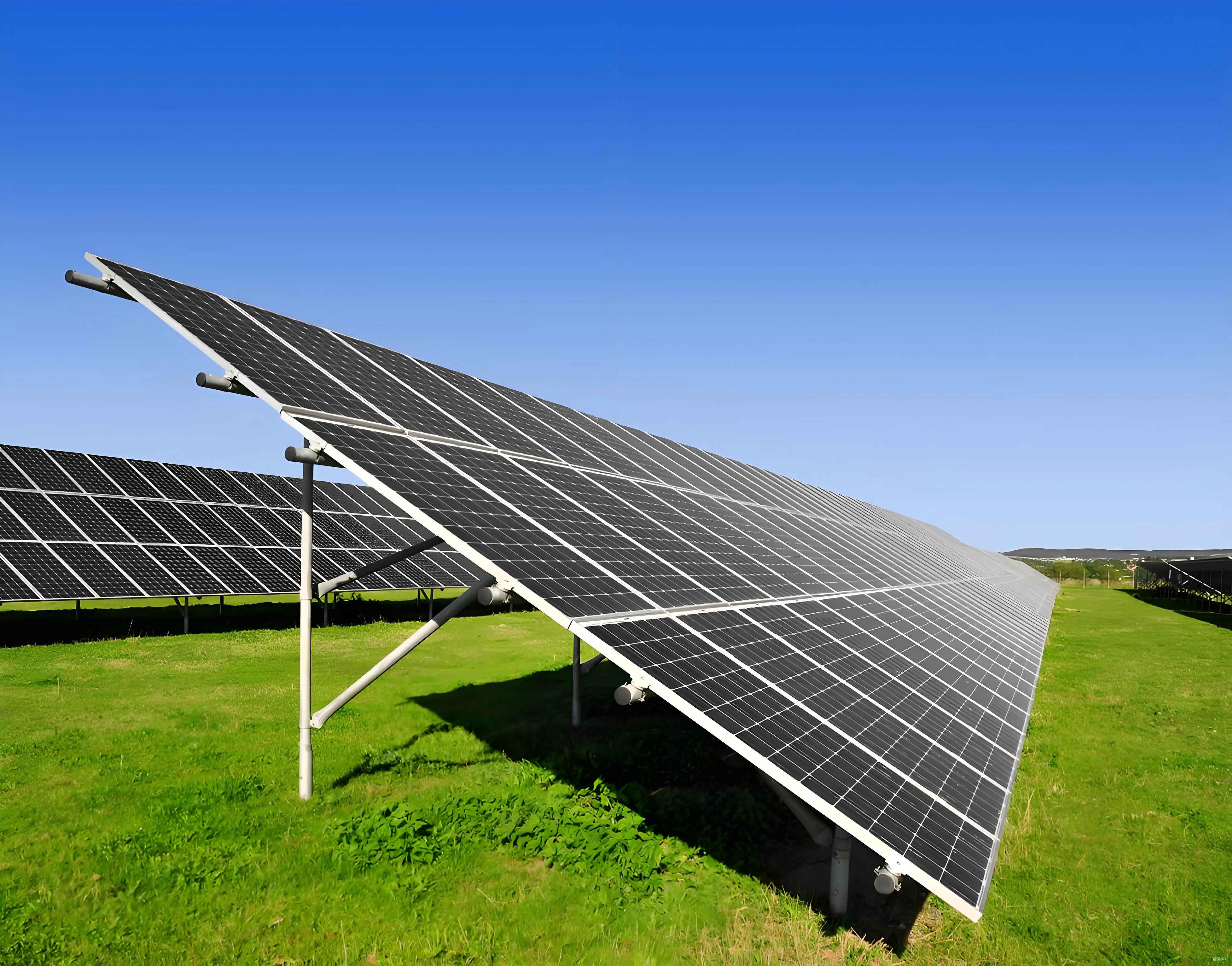
Photovoltaic panels are prone to a range of faults that can be categorized into optical degradation, electrical mismatch and degradation, and other failures. Optical degradation includes delamination, bubble formation, encapsulant discoloration, and safety glass breakage, often caused by environmental factors like temperature fluctuations, humidity, and UV radiation. For instance, delamination occurs when adhesion between layers is compromised, leading to reduced thermal conductivity and localized temperature rises of 1–5 K. Electrical mismatch faults, such as cracks, snail trails, broken interconnects, and shading, result from partial cell shading, aging, or production defects. These can cause significant power losses, with studies indicating that micro-cracks precede snail trails and contribute to over 5% power reduction. Other faults, like potential-induced degradation (PID) and bypass diode failures, arise from high-voltage operation or mechanical stress, leading to current leakage and thermal anomalies. PID, for example, is influenced by internal factors like cell and glass quality and external conditions such as humidity and temperature, causing gradual performance decline without visible damage.
To quantify the impact of faults, consider the power loss due to a broken interconnect in a photovoltaic module. If $P_{\text{normal}}$ is the power output under normal conditions, the power loss $\Delta P$ can be modeled as:
$$ \Delta P = P_{\text{normal}} – P_{\text{faulty}} $$
where $P_{\text{faulty}}$ accounts for the reduced efficiency. For instance, with 10% of interconnects broken, the maximum power reduction ranges from -1.34% to -2.75%, while 20% breakage leads to -2.83% to -5.64% loss. Similarly, the temperature rise $\Delta T$ in a hot spot can be described by the heat transfer equation:
$$ \frac{\partial T}{\partial t} = \alpha \nabla^2 T + \frac{q}{k} $$
where $\alpha$ is thermal diffusivity, $k$ is thermal conductivity, and $q$ is heat generation rate per unit volume. This equation helps in analyzing thermal profiles from IRT images.
| Fault Category | Specific Faults | Causes | Impact on Photovoltaic Panels |
|---|---|---|---|
| Optical Degradation | Delamination, bubbles, encapsulant discoloration, glass breakage | Environmental factors (temperature, humidity, UV), low-quality materials | Energy loss up to 10%, localized temperature rise of 1–5 K |
| Electrical Mismatch and Degradation | Cracks, snail trails, broken interconnects, shading, short circuits | Partial shading, aging, production defects | Power loss up to 5%, hot spots with ΔT of 15–45 K |
| Other Faults | PID, bypass diode failure, open circuits | High-voltage operation, mechanical stress | Performance decline, thermal anomalies |
Infrared thermography defect detection techniques have evolved significantly, with a focus on automation and integration with other data sources. Early methods relied on manual inspection and basic image preprocessing, such as Gaussian filtering and edge detection, to enhance IRT images. For example, studies applied median filters to reduce noise and used gradient-based algorithms to highlight defect boundaries. However, these approaches were limited by low image resolution and environmental interference. Recent advancements incorporate UAV-based aerial thermography, which allows for rapid, large-scale data collection. In one study, a UAV equipped with thermal and optical sensors generated orthomosaic images of photovoltaic arrays, enabling automated fault localization through statistical tests like Grubbs’ Test and Dixon’s Q test. This method achieved high accuracy in identifying defective modules by comparing temperature distributions across panels.
Moreover, the fusion of IRT with electrical characterization has improved diagnostic precision. By correlating thermal signatures with current-voltage (I-V) curves, researchers can obtain a comprehensive view of photovoltaic health. For instance, a hybrid system might use I-V data to detect electrical anomalies and IRT to pinpoint thermal hotspots, reducing false positives. The integration of GPS data with IRT images facilitates georeferencing, enabling precise fault mapping in large photovoltaic plants. This is crucial for maintenance, as it allows operators to quickly locate and address issues. Additionally, machine learning algorithms have been employed to classify faults based on thermal patterns. A fuzzy rule-based system, for example, uses thermal pixel counting to distinguish between EVA discoloration and delamination, achieving over 90% accuracy by weighting specific rules.
Image processing algorithms for photovoltaic IRT data have progressed from traditional techniques to deep learning-based methods. Traditional approaches include preprocessing steps like grayscale transformation, color quantization, and edge detection to isolate defect regions. For example, discrete wavelet transforms can reveal subsurface defects by analyzing temperature correlations in the frequency domain. In one study, continuous wavelet transforms were applied to IRT images to detect cracks at various depths, leveraging the multi-resolution analysis of wavelets. The process can be represented mathematically as:
$$ W(a,b) = \frac{1}{\sqrt{a}} \int_{-\infty}^{\infty} f(t) \psi \left( \frac{t-b}{a} \right) dt $$
where $W(a,b)$ is the wavelet coefficient, $a$ is the scale, $b$ is the translation, $f(t)$ is the signal, and $\psi$ is the wavelet function. This helps in identifying subtle defects that are not visible in raw images.
With the rise of artificial intelligence, convolutional neural networks (CNNs) have become dominant for automatic defect detection. Lightweight CNNs, for instance, can process electroluminescence images with high accuracy, achieving over 93% recognition rates on solar cell datasets. These models require minimal computational resources, making them suitable for real-time applications on standard hardware. Transfer learning has also been explored, where pre-trained architectures are fine-tuned on photovoltaic IRT datasets, improving generalization to new fault types. In one approach, a region-based CNN was unified for detecting both photovoltaic panels and hotspots, though it focused solely on localization without fault classification. To address data scarcity, generative adversarial networks (GANs) have been used to synthesize high-resolution IRT images, enhancing training datasets for better model performance.
| Algorithm Type | Methods | Applications | Performance Metrics |
|---|---|---|---|
| Traditional Processing | Gaussian filtering, median filtering, edge detection, wavelet transforms | Noise reduction, defect highlighting, subsurface analysis | Improved image clarity, accurate edge localization |
| Machine Learning | Naive Bayes classifiers, random forests, scale-invariant feature transform (SIFT) | Fault classification based on texture and histogram features | Up to 94.1% accuracy, reduced computational cost |
| Deep Learning | CNNs, region-based CNNs, transfer learning, GANs | Automated defect detection and classification | Over 93% accuracy, real-time processing capabilities |
The photovoltaic fault detection industry faces several challenges that must be addressed to enhance reliability and scalability. First, the cost-effectiveness of detection methods is critical, as they often require specialized hardware and software. For widespread adoption, solutions must minimize expenses while maintaining high performance, especially for large-scale photovoltaic farms. Second, there is a growing demand for efficient, user-friendly technologies that provide rapid and accurate diagnoses across diverse photovoltaic panel types and environmental conditions. Algorithms must be robust to variations in weather, shading, and panel aging to avoid false alarms. Third, emerging faults, such as new forms of PID or interconnect failures, pose detection difficulties with current techniques, necessitating continuous research and adaptation. For instance, some faults may not manifest visibly or thermally until significant damage occurs, highlighting the need for predictive models.
Future directions in photovoltaic infrared imaging defect detection are geared toward intelligent automation and multi-modal data integration. Automated fault classification using deep learning will become more prevalent, with systems capable of distinguishing between specific defect types like micro-cracks and delamination. UAVs will play a central role in this evolution, enabling autonomous inspections through path planning and real-time data analysis. Moreover, combining IRT with other sensing modalities, such as electrical measurements and environmental sensors, will provide a holistic assessment of photovoltaic health. For example, data fusion techniques can correlate thermal anomalies with I-V curve deviations, improving diagnostic accuracy. The development of standardized datasets and benchmarks will also drive innovation, facilitating the comparison of algorithms across studies. Ultimately, these advancements will support the transition to smart photovoltaic farms, where continuous monitoring and predictive maintenance optimize energy output and lifespan.
In conclusion, infrared thermography has proven to be a valuable tool for defect detection in photovoltaic panels, offering non-invasive, real-time insights into fault conditions. The integration of advanced image processing, particularly deep learning, has significantly improved detection accuracy and efficiency. However, challenges related to cost, adaptability, and emerging faults remain. By focusing on automated systems, multi-sensor fusion, and collaborative research, the photovoltaic industry can overcome these hurdles and achieve sustainable growth. As solar energy continues to expand, infrared imaging technologies will be essential for ensuring the reliability and performance of photovoltaic systems worldwide.