
In recent years, the rapid expansion of the photovoltaic industry has led to a significant increase in the deployment of solar panels worldwide. However, the end-of-life management of these photovoltaic modules poses both environmental and economic challenges. The recycling and remanufacturing of solar panels not only hold substantial socio-economic value but are also crucial for the sustainable development of the photovoltaic industry and environmental protection. This paper designs a two-stage supply chain network that integrates recycling and remanufacturing processes, focusing on the impact of subsidy strategies on operational decisions. The network includes manufacturers, domestic photovoltaic power plants, remanufacturers, and overseas markets. We develop optimization models for each stage to maximize overall supply chain profit, derive optimal pricing and profit decisions, and analyze the effects of recycling rates and subsidies through numerical experiments.
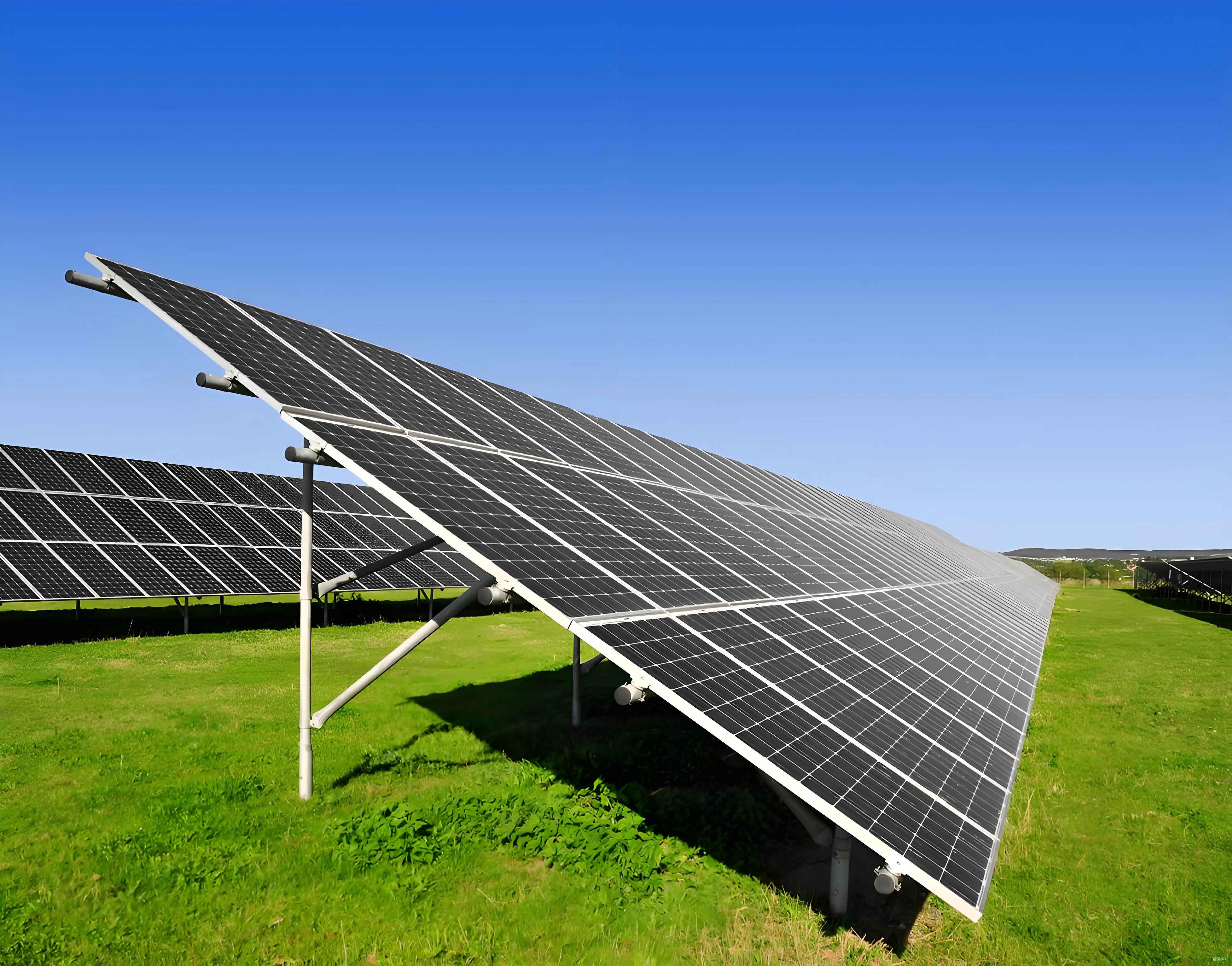
The two-stage supply chain model is structured as follows: In Stage 1, solar panels are manufactured using new raw materials and distributed to overseas markets and domestic photovoltaic power plants. A subsidy is provided to the power plants to encourage investment and stabilize demand. In Stage 2, as panels reach their end-of-life, a recycling and remanufacturing process is introduced. Retired solar panels are collected, classified by quality, and processed—high-quality panels are refurbished for overseas sales, while low-quality ones are dismantled for raw material recovery. Subsidies are extended to remanufacturers to promote recycling, and penalties are imposed on manufacturers using new raw materials to incentivize the use of recycled materials. Key parameters and decision variables are summarized in Table 1.
| Parameter | Description |
|---|---|
| $\gamma$ | Proportion of high-quality solar panels sold overseas |
| $\mu$ | Subsidy per unit for remanufacturers in Stage 2 |
| $\alpha_L, \alpha_H$ | Lower and upper bounds of recycled panel quality |
| $\lambda$ | Remanufacturing rate for recycled materials into new panels |
| $f$ | Environmental fee per unit for new raw material usage |
| $C_m$ | Raw material cost for solar panels |
| $C_{pv}$ | Manufacturing cost per solar panel |
| $C_r$ | Remanufacturing cost per recycled panel |
| $M_{pvi}$ | Overseas market size in Stage $i$ |
| $R_{pv}$ | Revenue per panel for photovoltaic power plants |
| $q_{pvi}$ | Demand from power plants in Stage $i$ |
| $C_n$ | Utility per unit of electricity generated |
| $\eta$ | Subsidy rate for domestic power plants |
| $\theta$ | Recycling rate of end-of-life solar panels |
| $P_i$ | Market price of new solar panels in Stage $i$ |
| $P_{su2}$ | Price of remanufactured panels in Stage 2 |
| $P_{dsc2}$ | Recycling price of panels in Stage 2 |
In Stage 1, the supply chain operates without recycling. The demand for solar panels from overseas markets is modeled as $Q_f = M_{pv1} \left(1 – \frac{P_1}{C_n}\right)$, reflecting that higher panel prices reduce demand. The total demand is $q_1 = q_{n1} = Q_f + q_{pv1}$, where $q_{n1}$ is the quantity produced using new raw materials. The total profit of the supply chain, $\pi_{tol}$, is given by:
$$\pi_{tol} = \pi_{m1} + \pi_{pv1} = q_{n1}(P_1 – C_m – C_{pv}) + q_{pv1}(R_{pv} – P_1 + \eta P_1)$$
Substituting the demand functions, we obtain:
$$\pi_{tol} = -\frac{M_{pv1}}{C_n} P_1^2 + \left( \frac{M_{pv1}(C_m + C_{pv})}{C_n} + M_{pv1} + \eta q_{pv1} \right) P_1 – (M_{pv1} + q_{pv1})(C_m + C_{pv}) + q_{pv1} R_{pv}$$
This is a quadratic function in $P_1$, and maximizing it yields the optimal price:
$$P_1^* = \frac{M_{pv1}(C_m + C_{pv} + C_n) + C_n \eta q_{pv1}}{2 M_{pv1}}$$
The corresponding maximum profit is:
$$\pi_{tol}^* = \frac{[M_{pv1}(C_m + C_{pv} + C_n) + C_n \eta q_{pv1}]^2}{4 C_n M_{pv1}} – (M_{pv1} + q_{pv1})(C_m + C_{pv}) + q_{pv1} R_{pv}$$
Table 2 summarizes the optimal profits and pricing for the manufacturer and power plant in Stage 1.
| Entity | Optimal Price | Optimal Profit |
|---|---|---|
| Manufacturer | $P_1^* = \frac{M_{pv1}(C_m + C_{pv} + C_n) + C_n \eta q_{pv1}}{2 M_{pv1}}$ | $\pi_{m1}^* = \frac{[M_{pv1}(C_m + C_{pv} + C_n) + C_n \eta q_{pv1}]^2 – 2[M_{pv1}(C_m + C_{pv} + C_n)]^2 – 2 \eta C_n^2 q_{pv1}^2}{-4 C_n M_{pv1}} + \frac{1}{2} (C_m + C_{pv} + C_n) q_{pv1} (1 + \eta) – (M_{pv1} + q_{pv1})(C_m + C_{pv})$ |
| Power Plant | N/A | $\pi_{pv1}^* = \frac{q_{pv1} [M_{pv1}(2 R_{pv} + (C_m + C_{pv} + C_n)(\eta – 1)) + C_n \eta q_{pv1} (\eta – 1)]}{2 M_{pv1}}$ |
In Stage 2, the recycling and remanufacturing processes are incorporated. The quantity of recycled solar panels is $q_{r2} = \theta q_{pv1}$, with quality $\alpha$ uniformly distributed in $[\alpha_L, \alpha_H]$. High-quality panels (proportion $\beta$) are refurbished, while low-quality panels (proportion $1 – \beta$) are dismantled. The quantity of high-quality panels is $q_{h2} = \beta q_{r2}$, and low-quality panels is $q_{l2} = (1 – \beta) q_{r2}$. A fraction $\gamma$ of high-quality panels is sold overseas at price $P_{su2} = Q_{pv} P_2$, where $Q_{pv} = \frac{1}{2} (2 \alpha_H – \gamma \beta (\alpha_H – \alpha_L))$ is the average quality. The remaining panels are used as recycled materials, with $q_{old2} = \lambda (q_{l2} + q_{h2} (1 – \gamma))$ representing panels made from recycled materials. The demand for new panels is $q_2 = M_{pv2} \left(1 – \frac{P_2}{C_n}\right) + q_{pv2} – \gamma q_{h2}$, and the quantity from new raw materials is $q_{n2} = q_2 – q_{old2}$.
The profit functions for Stage 2 are as follows. For the manufacturer:
$$\pi_{m2} = q_2 P_2 – q_2 C_{pv} – q_{n2} C_m – q_{old2} C_m – f q_{n2}$$
For the remanufacturer:
$$\pi_r = q_{old2} C_m + q_{su2} P_{su2} – q_{old2} C_r – q_{r2} P_{dsc2} + \mu q_{r2}$$
where $P_{dsc2} = \frac{\alpha_H + \alpha_L}{6} P_2$. For the power plant:
$$\pi_{pv2} = q_{pv2} (R_{pv} – P_2 + \eta P_2) + q_{r2} P_{dsc2}$$
We consider two cases in Stage 2. In Case A, the power plant is stable and does not pose risks to the supply chain. The combined profit of the manufacturer and remanufacturer is maximized:
$$\pi_b = \pi_{m2} + \pi_r = -\frac{M_{pv2}}{C_n} P_2^2 + \left( \frac{(C_m + f + C_{pv}) M_{pv2}}{C_n} + M_{pv2} + q_{pv2} + \theta q_{pv1} \left( \gamma \beta (Q_{pv} – 1) – \frac{1}{6} (\alpha_H + \alpha_L) \right) \right) P_2 + \lambda \theta q_{pv1} (1 – \beta \gamma)(C_m – C_r + f) + \mu \theta q_{pv1} – (M_{pv2} + q_{pv2} – \gamma \beta \theta q_{pv1})(C_m + C_{pv} + f)$$
The optimal price is:
$$P_{a2}^* = \frac{(C_m + f + C_{pv} + C_n) M_{pv2} + C_n \left( q_{pv2} + \theta q_{pv1} \left( \gamma \beta (Q_{pv} – 1) – \frac{1}{6} (\alpha_H + \alpha_L) \right) \right)}{2 M_{pv2}}$$
And the maximum profit is:
$$\pi_b^a = \frac{ \left[ (C_m + f + C_{pv} + C_n) M_{pv2} + C_n \left( q_{pv2} + \theta q_{pv1} \left( \gamma \beta (Q_{pv} – 1) – \frac{1}{6} (\alpha_H + \alpha_L) \right) \right) \right]^2 }{4 C_n M_{pv2}} + \lambda \theta q_{pv1} (1 – \beta \gamma)(C_m – C_r + f) + \mu \theta q_{pv1} – (M_{pv2} + q_{pv2} – \gamma \beta \theta q_{pv1})(C_m + C_{pv} + f)$$
Table 3 details the optimal decisions for Case A.
| Entity | Optimal Price | Optimal Profit |
|---|---|---|
| Manufacturer | $P_{a2}^* = \frac{(C_m + f + C_{pv} + C_n) M_{pv2} + C_n \left( q_{pv2} + \theta q_{pv1} \left( \gamma \beta (Q_{pv} – 1) – \frac{1}{6} (\alpha_H + \alpha_L) \right) \right)}{2 M_{pv2}}$ | $\pi_{m2}^{a*} = \frac{ \left[ (C_m + f + C_{pv} + C_n) M_{pv2} + C_n \left( q_{pv2} + \theta q_{pv1} \left( \gamma \beta (Q_{pv} – 1) – \frac{1}{6} (\alpha_H + \alpha_L) \right) \right) \right]^2 – 4 C_n M_{pv2} \left[ (C_m + f + C_{pv} + C_n) M_{pv2} + C_n (q_{pv2} – \gamma \beta \theta q_{pv1}) \right] }{ -4 C_n M_{pv2} } + \frac{ (C_m + f + C_{pv} + C_n) M_{pv2} + C_n q_{pv2} + C_n \theta q_{pv1} \left( \gamma \beta (Q_{pv} – 1) – \frac{1}{6} (\alpha_H + \alpha_L) \right) }{ 2 C_n M_{pv2} } \cdot \left( (C_m + f + C_{pv} + C_n) M_{pv2} + C_n (q_{pv2} – \gamma \beta \theta q_{pv1}) \right) – (M_{pv2} + q_{pv2} – \gamma \beta \theta q_{pv1})(C_m + C_{pv} + f) + \lambda f \theta q_{pv1} (1 – \beta \gamma)$ |
| Remanufacturer | $P_{su2}^{a*} = \frac{(C_m + f + C_{pv} + C_n) Q_{pv} M_{pv2} + Q_{pv} C_n \left( q_{pv2} + \theta q_{pv1} \left( \gamma \beta (Q_{pv} – 1) – \frac{1}{6} (\alpha_H + \alpha_L) \right) \right)}{2 M_{pv2}}$ | $\pi_r^{a*} = \frac{ \theta q_{pv1} \left( \gamma \beta Q_{pv} – \frac{1}{6} (\alpha_H + \alpha_L) \right) \left[ C_n \theta q_{pv1} \left( \gamma \beta (Q_{pv} – 1) – \frac{1}{6} (\alpha_H + \alpha_L) \right) + C_n q_{pv2} \right] }{ 2 M_{pv2} } + \frac{1}{2} \theta q_{pv1} \left( \gamma \beta Q_{pv} – \frac{1}{6} (\alpha_H + \alpha_L) \right) (C_m + f + C_{pv} + C_n) + \lambda \theta q_{pv1} (1 – \beta \gamma)(C_m – C_r) + \mu \theta q_{pv1}$ |
In Case B, the power plant is considered risky, and the supply chain profit includes all three entities. The total profit is:
$$\pi_b = \pi_{m2} + \pi_r + \pi_{pv2} = -\frac{M_{pv2}}{C_n} P_2^2 + \left( \frac{(C_m + f + C_{pv} + C_n) M_{pv2}}{C_n} + \eta q_{pv2} + \theta q_{pv1} \gamma \beta (Q_{pv} – 1) \right) P_2 + \lambda \theta q_{pv1} (1 – \beta \gamma)(C_m – C_r + f) + q_{pv2} R_{pv} + \mu \theta q_{pv1} – (M_{pv2} + q_{pv2} – \gamma \beta \theta q_{pv1})(C_m + C_{pv} + f)$$
The optimal price is:
$$P_{b2}^* = \frac{(C_m + f + C_{pv} + C_n) M_{pv2} + C_n (\eta q_{pv2} + \theta q_{pv1} \gamma \beta (Q_{pv} – 1))}{2 M_{pv2}}$$
And the maximum profit is:
$$\pi_b^b = \frac{ \left[ (C_m + f + C_{pv} + C_n) M_{pv2} + C_n (\eta q_{pv2} + \theta q_{pv1} \gamma \beta (Q_{pv} – 1)) \right]^2 }{4 C_n M_{pv2}} + \lambda \theta q_{pv1} (1 – \beta \gamma)(C_m – C_r + f) + q_{pv2} R_{pv} + \mu \theta q_{pv1} – (M_{pv2} + q_{pv2} – \gamma \beta \theta q_{pv1})(C_m + C_{pv} + f)$$
Table 4 provides the optimal decisions for Case B.
| Entity | Optimal Price | Optimal Profit |
|---|---|---|
| Manufacturer | $P_{b2}^* = \frac{(C_m + f + C_{pv} + C_n) M_{pv2} + C_n (\eta q_{pv2} + \theta q_{pv1} \gamma \beta (Q_{pv} – 1))}{2 M_{pv2}}$ | $\pi_{m2}^{b*} = \frac{ \left[ (C_m + f + C_{pv} + C_n) M_{pv2} + C_n (\eta q_{pv2} + \theta q_{pv1} \gamma \beta (Q_{pv} – 1)) \right]^2 – 4 C_n M_{pv2} \left[ (C_m + f + C_{pv} + C_n) M_{pv2} + C_n (q_{pv2} – \gamma \beta \theta q_{pv1}) \right] }{ -4 C_n M_{pv2} } + \frac{ M_{pv2} (C_m + f + C_{pv} + C_n)^2 }{ 2 C_n } + \frac{ (\eta q_{pv2} + \theta q_{pv1} \gamma \beta (Q_{pv} – 1)) C_n (q_{pv2} – \gamma \beta q_{pv1}) }{ 2 M_{pv2} } + \frac{ (C_m + f + C_{pv} + C_n) (q_{pv2} (\eta + 1) + \theta q_{pv1} \gamma \beta (Q_{pv} – 2)) }{ 2 } – (M_{pv2} + q_{pv2} – \gamma \beta \theta q_{pv1})(C_m + C_{pv} + f) + \lambda f \theta q_{pv1} (1 – \beta \gamma)$ |
| Remanufacturer | $P_{su2}^{b*} = \frac{(C_m + f + C_{pv} + C_n) Q_{pv} M_{pv2} + Q_{pv} C_n (\eta q_{pv2} + \theta q_{pv1} \gamma \beta (Q_{pv} – 1))}{2 M_{pv2}}$ | $\pi_r^{b*} = \frac{ \theta q_{pv1} \gamma \beta Q_{pv} \left( \gamma \beta Q_{pv} – \frac{1}{6} (\alpha_H + \alpha_L) \right) (C_m + f + C_{pv} + C_n) }{ 2 } + \frac{ \theta C_n q_{pv1} \left( \gamma \beta Q_{pv} – \frac{1}{6} (\alpha_H + \alpha_L) \right) (\eta q_{pv2} + \theta q_{pv1} \gamma \beta (Q_{pv} – 1)) }{ 2 M_{pv2} } + \lambda \theta q_{pv1} (1 – \beta \gamma)(C_m – C_r) + \mu \theta q_{pv1}$ |
| Power Plant | $P_{dsc2}^{b*} = \frac{(\alpha_H + \alpha_L) (C_m + f + C_{pv} + C_n) M_{pv2} + C_n (\eta q_{pv2} + \theta q_{pv1} \gamma \beta (Q_{pv} – 1)) (\alpha_H + \alpha_L)}{12 M_{pv2}}$ | $\pi_{pv2}^{b*} = q_{pv2} R_{pv} + \left( q_{pv2} (\eta – 1) + \frac{1}{6} \theta q_{pv1} (\alpha_H + \alpha_L) \right) \frac{ (C_m + f + C_{pv} + C_n) }{ 2 } + \frac{ C_n (\eta q_{pv2} + \theta q_{pv1} \gamma \beta (Q_{pv} – 1)) \left( q_{pv2} (\eta – 1) + \frac{1}{6} \theta q_{pv1} (\alpha_H + \alpha_L) \right) }{ 2 M_{pv2} }$ |
The recycling rate $\theta$ plays a critical role in the supply chain’s profitability and sustainability. In Case A, the profit $\pi_b^a$ is a quadratic function of $\theta$:
$$\pi_b^a = \frac{ C_n \theta^2 q_{pv1}^2 \left( \gamma \beta (Q_{pv} – 1) – \frac{1}{2} (\alpha_H + \alpha_L) \right)^2 }{ 4 M_{pv2} } + \frac{ \theta q_{pv1} \left( \gamma \beta (Q_{pv} – 1) – \frac{1}{2} (\alpha_H + \alpha_L) \right) \left[ (C_m + f + C_{pv} + C_n) M_{pv2} + C_n q_{pv2} + 2 M_{pv2} (\mu + \lambda (1 – \beta \gamma)(C_m – C_r + f) + \gamma \beta (C_m + C_{pv} + f)) \right] }{ 2 M_{pv2} } + \frac{ \left[ (C_m + f + C_{pv} + C_n) M_{pv2} + C_n q_{pv2} \right]^2 – 4 C_n M_{pv2} (M_{pv2} + q_{pv2})(C_m + C_{pv} + f) }{ 4 C_n M_{pv2} }$$
This function is convex in $\theta$, and the profit-maximizing $\theta$ depends on the parameters. For instance, if certain conditions hold, profit is maximized at $\theta = 1$, leading to:
$$\pi_b^{a*} = \frac{ \left[ (C_m + f + C_{pv} + C_n) M_{pv2} + C_n q_{pv2} + C_n q_{pv1} \left( \gamma \beta (Q_{pv} – 1) – \frac{1}{2} (\alpha_H + \alpha_L) \right) \right]^2 }{ 4 C_n M_{pv2} } – (M_{pv2} + q_{pv2} – q_{pv1} \gamma \beta)(C_m + C_{pv} + f) + q_{pv1} (\mu + \lambda (1 – \beta \gamma)(C_m – C_r + f))$$
Similarly, in Case B, $\pi_b^b$ is also quadratic in $\theta$:
$$\pi_b^b = \frac{ C_n (q_{pv1} \gamma \beta (Q_{pv} – 1))^2 }{ 4 M_{pv2} } \theta^2 + \theta q_{pv1} \left[ \mu + \frac{1}{2} (Q_{pv} – 1) \left( \frac{1}{M_{pv2}} C_n \eta q_{pv2} \gamma \beta + (C_m + f + C_{pv} + C_n) \right) + \gamma \beta (C_m + C_{pv} + f) + \lambda (1 – \beta \gamma)(C_m – C_r + f) \right] + \frac{1}{4 M_{pv2}} C_n \eta q_{pv2} \eta q_{pv2} + \frac{1}{4} (C_m + f + C_{pv} + C_n) \left( 2 \eta q_{pv2} + \frac{1}{C_n} M_{pv2} (C_m + f + C_{pv} + C_n) \right) + q_{pv2} R_{pv} – (M_{pv2} + q_{pv2})(C_m + C_{pv} + f)$$
Again, the optimal $\theta$ can be derived based on parameter values, influencing the overall supply chain profit and pricing.
To validate the models, numerical experiments were conducted using the following parameters: $C_m = 800$, $f = 100$, $C_{pv} = 200$, $C_r = 100$, $R_{pv} = 6000$, $C_n = 4000$, $M_{pv1} = 20000$, $M_{pv2} = 40000$, $\alpha_H = 0.85$, $\alpha_L = 0.35$, $\beta = 0.5$, $q_{pv1} = 10000$, $q_{pv2} = 20000$, $\gamma = 0.8$, $\lambda = 0.75$, and $\mu = 80$. The subsidy rate $\eta$ was varied from 0 to 0.5 to analyze its impact.
In Stage 1, increasing $\eta$ raised the optimal profits for both the manufacturer and power plant, with the power plant’s profit increasing by approximately 29%. The optimal price $P_1^*$ also increased with $\eta$, demonstrating that subsidies can enhance profitability and stabilize demand. In Stage 2, for Case B, $\eta$ had a pronounced effect on the power plant’s profit but minimal impact on recycling prices, ensuring that remanufacturers are not disadvantaged. The recycling rate $\theta$ was varied from 0 to 1. In Case A, higher $\theta$ increased remanufacturer profit but decreased manufacturer profit due to reduced demand for new panels. In Case B, $\theta$ boosted overall supply chain profit and power plant profit, while optimal prices remained relatively stable, supporting sustainable operations.
In conclusion, subsidy strategies significantly improve the profitability of the photovoltaic supply chain across both stages. The recycling rate not only enhances total profit but also redistributes profits among members, ensuring stability. These findings provide valuable insights for designing sustainable solar panel recycling and remanufacturing networks, emphasizing the importance of tailored subsidies and recycling incentives in the photovoltaic industry.