
In modern microgrids, the integration of distributed energy resources and loads often leads to power imbalances due to their stochastic and fluctuating nature. Battery energy storage systems (BESS) play a critical role in mitigating these imbalances by providing rapid charging and discharging capabilities. However, the high cost and limited lifespan of BESS necessitate efficient power allocation strategies that minimize lifetime degradation while maintaining adequate power regulation capacity. This paper proposes a novel distributed power allocation strategy for BESS that leverages a competitive-cooperative mechanism and an improved bipartite consistency algorithm (IBCA) to achieve low loss and balanced power distribution. The strategy focuses on enhancing state of charge (SOC) equilibrium among battery units, reducing lifespan损耗, and ensuring fast and accurate power tracking in microgrid applications.
The proposed approach begins with the development of an event-driven grouping model for BESS, which dynamically partitions battery units into charging and discharging groups based on SOC levels. This model promotes SOC balance and improves the adjustable capacity of the BESS. Furthermore, a competitive-cooperative mechanism is designed to optimize power allocation by prioritizing the dominant group during power tracking, thereby reducing frequent charging-discharging transitions and associated lifespan损耗. The power allocation model incorporates four distinct modes based on the magnitude of power commands and the response capabilities of the groups, ensuring efficient cooperation and competition between groups.
To implement the power allocation strategy in a distributed manner, we introduce an improved bipartite consistency algorithm (IBCA) that accounts for communication delays. The IBCA integrates a state feedback mechanism, a power allocation weighting matrix, and a gauge transformation matrix to enhance convergence speed, robustness, and memory efficiency. The algorithm ensures that battery units converge to a consistent power allocation state while mitigating the effects of communication delays and external disturbances. Simulation results based on a typical daily unbalanced power profile from a microgrid demonstrate the effectiveness of the proposed strategy in reducing BESS lifespan loss, promoting SOC equilibrium, and achieving rapid power allocation. Experimental validation using a hardware platform further confirms the strategy’s practical applicability.
Introduction
Microgrids are autonomous systems that integrate distributed generation, loads, and energy storage devices to maintain internal power balance. However, their low inertia and limited disturbance resistance make them vulnerable to power imbalances caused by fluctuating renewable sources and variable loads. Battery energy storage systems (BESS) are widely employed to suppress these imbalances due to their fast response times. Despite their advantages, BESS face challenges related to high costs and finite lifespan, which underscores the need for effective power allocation strategies. Traditional methods often involve centralized control or simple grouping techniques, which may lead to excessive lifespan损耗 or reduced regulation capacity. This paper addresses these issues by proposing a distributed power allocation strategy that combines a competitive-cooperative mechanism with an advanced consensus algorithm.
Existing research on BESS power allocation can be categorized into system-wide allocation and grouped allocation. System-wide allocation involves all battery units simultaneously tracking power commands, which simplifies control but increases the frequency of charging-discharging transitions and accelerates lifespan degradation. Grouped allocation, where units are divided into charging and discharging groups, has gained attention for its potential to reduce lifespan loss. However, conventional grouping methods often neglect SOC equilibrium or rely on rigid models that limit adaptability. For instance, some approaches sort units by SOC but fail to account for dynamic changes over time, leading to suboptimal performance. Additionally, power allocation within groups typically employs equal distribution, which does not consider SOC variations and can impair the BESS’s adjustable capacity.
To overcome these limitations, we propose an event-driven grouping model that triggers re-grouping based on SOC thresholds and group SOC deviations. This model ensures timely updates to group compositions, promoting SOC balance without imposing excessive computational burdens on the control system. Furthermore, the competitive-cooperative mechanism introduced in this work optimizes power allocation by allowing groups to “compete” for dominance during power tracking, thereby minimizing state transitions and enhancing SOC recovery. The implementation of this strategy relies on a distributed algorithm that can handle communication delays and disturbances, which are common in real-world microgrids.
The main contributions of this paper are threefold: (1) the development of an event-driven BESS grouping model that enhances SOC equilibrium and adjustable capacity; (2) the design of a competitive-cooperative power allocation model that reduces lifespan loss and improves power tracking performance; and (3) the introduction of an improved bipartite consistency algorithm (IBCA) that ensures fast, robust, and memory-efficient distributed power allocation. The remainder of this paper is organized as follows: Section 2 details the BESS grouping and power allocation models, Section 3 describes the IBCA and its application to power allocation, Section 4 presents simulation and experimental results, and Section 5 concludes the paper.
BESS Grouping and Power Allocation Models
The foundation of the proposed strategy lies in the grouping of battery units and the allocation of power commands based on a competitive-cooperative mechanism. This section elaborates on the event-driven grouping model and the power allocation model designed to optimize BESS performance.
Event-Driven BESS Grouping Model
To promote SOC equilibrium among battery units and enhance the adjustable capacity of the BESS, we establish an event-driven grouping model. This model dynamically partitions the battery units into charging and discharging groups based on real-time SOC values. The grouping is triggered by specific events to avoid continuous computation and reduce the computational load on the control center.
The triggering events are defined as follows:
Event A: This event occurs when any battery unit’s SOC exceeds the predefined limits. Mathematically, it is expressed as:
$$A = \left\{ \text{SOC}_i(t) \leq \text{SOC}_{\text{min}} \right\} \cup \left\{ \text{SOC}_i(t) \geq \text{SOC}_{\text{max}} \right\}$$
where $\text{SOC}_i(t)$ is the SOC of the $i$-th battery unit at time $t$, and $\text{SOC}_{\text{min}}$ and $\text{SOC}_{\text{max}}$ are the lower and upper SOC limits, set to 0.1 and 0.9, respectively.
Event B: This event is triggered when the average SOC of the charging and discharging groups are close, but the SOC standard deviation of one group exceeds a threshold. It is defined as:
$$B = B_1 \cap B_2$$
where
$$B_1 = \left\{ \left| \overline{\text{SOC}}_c(t) – \overline{\text{SOC}}_d(t) \right| < \phi \right\}$$
$$B_2 = \left\{ \delta_c(t) > \beta \right\} \cup \left\{ \delta_d(t) > \beta \right\}$$
Here, $\overline{\text{SOC}}_c(t)$ and $\overline{\text{SOC}}_d(t)$ are the average SOC of the charging and discharging groups at time $t$, $\delta_c(t)$ and $\delta_d(t)$ are the SOC standard deviations of the groups, $\phi$ is the average SOC deviation threshold (set to 0.01), and $\beta$ is the standard deviation offset coefficient (set to 0.02).
When either Event A or B is detected, the battery units are re-sorted by their SOC values and equally divided into new charging and discharging groups. This process ensures that the groups remain balanced and adaptive to changing conditions, thereby improving the overall performance of the battery energy storage system.
Competitive-Cooperative Power Allocation Model
The power allocation model is designed to minimize lifespan loss and maintain SOC equilibrium by incorporating a competitive-cooperative mechanism. This mechanism allows groups to cooperate in tracking power commands while competing for dominance to reduce state transitions and enhance SOC recovery.
The power allocation modes are categorized based on the power command $P_{\text{ref}}(t)$ and the rated powers of the groups. Let $P_{c,N}$ and $P_{d,N}$ denote the rated powers of the charging and discharging groups, respectively, and $P_N$ be the total rated power of the BESS. The four allocation modes are:
| Mode | Condition | Responding Groups |
|---|---|---|
| ① | $0 < P_{\text{ref}}(t) \leq P_{c,N}$ | Charging group only |
| ② | $-P_{d,N} \leq P_{\text{ref}}(t) < 0$ | Discharging group only |
| ③ | $P_{c,N} < P_{\text{ref}}(t) \leq P_N$ | Charging group (dominant) + Discharging group |
| ④ | $-P_N \leq P_{\text{ref}}(t) < -P_{d,N}$ | Discharging group (dominant) + Charging group |
In modes ① and ②, a single group handles the power command, while in modes ③ and ④, both groups cooperate, with one group taking the dominant role. The dominant group is allocated a larger share of the power to minimize state transitions in the non-dominant group, thereby reducing power冲击 and lifespan损耗.
The power allocation objectives for each mode are formulated as optimization problems. For charging power allocation:
- Mode ①: Minimize the SOC standard deviation of the charging group at the next time step:
$$\min f_1 = \delta_c(t+1)$$
- Mode ③: Minimize a weighted sum of the SOC standard deviations of both groups, with higher weight for the charging group:
$$\min f_2 = \omega_c \delta_c(t+1) + \omega_d \delta_d(t+1)$$
where $\omega_c > 1$ and $\omega_d < 1$ are competitive weights that emphasize the dominance of the charging group.
For discharging power allocation:
- Mode ②: Minimize the SOC standard deviation of the discharging group:
$$\min f_3 = \delta_d(t+1)$$
- Mode ④: Minimize a weighted sum of the SOC standard deviations, with higher weight for the discharging group:
$$\min f_4 = \omega_d \delta_d(t+1) + \omega_c \delta_c(t+1)$$
where $\omega_d > 1$ and $\omega_c < 1$.
The competitive weights $\omega_c$ and $\omega_d$ are determined using a competition coefficient $\alpha$, defined as:
$$\alpha = 1 + \frac{\overline{\text{SOC}}_c(t)}{\overline{\text{SOC}}_d(t)}$$
This coefficient adjusts the weights based on the relative SOC levels of the groups, ensuring that the group with higher average SOC gains dominance during competition.
The power allocation is subject to constraints on SOC and power limits:
$$\text{SOC}_{\text{min}} \leq \text{SOC}_i(t) \leq \text{SOC}_{\text{max}}$$
$$-P_{\text{max}} \leq P_{b,i}(t) \leq P_{\text{max}}$$
where $P_{b,i}(t)$ is the power allocated to the $i$-th battery unit, and $P_{\text{max}}$ is the maximum power per unit.
This competitive-cooperative mechanism ensures that the battery energy storage system can effectively track power commands while prolonging lifespan and maintaining SOC balance.
Improved Bipartite Consistency Algorithm for Distributed Power Allocation
To implement the power allocation strategy in a distributed manner, we propose an improved bipartite consistency algorithm (IBCA) that addresses communication delays, enhances convergence speed, and improves robustness. This section describes the algorithm and its application to BESS power allocation.
Algorithm Design
The bipartite consistency algorithm (BCA) is suitable for systems with competitive relationships, such as the charging and discharging groups in BESS. In a graph representation, battery units are nodes, and communication links are edges with weights that can be positive or negative to represent cooperation or competition. The traditional BCA, however, suffers from slow convergence and sensitivity to delays.
We enhance the BCA by incorporating a state feedback mechanism, a power allocation weighting matrix, and a gauge transformation matrix. The state equation of the IBCA is:
$$x(k+1) = M x(k) + W^{-1} u(k)$$
where $x(k)$ is the state vector at iteration $k$, $M$ is the system matrix, $W$ is the weighting matrix, and $u(k)$ is the state feedback control input. The matrix $M$ is defined as:
$$M = I – \epsilon L$$
where $I$ is the identity matrix, $\epsilon$ is the iteration step size, and $L$ is the transformed Laplacian matrix given by:
$$L = W D L D$$
Here, $D$ is the gauge transformation matrix that ensures non-negative elements in the transformed adjacency matrix, facilitating convergence to a positive steady state.
The state feedback control $u(k)$ is derived using a single-value predictive control approach to minimize computational complexity and memory usage. The objective function for optimization is:
$$J = \Delta x_c^T Q \Delta x_c + u^T R u$$
where $\Delta x_c$ is the state deviation vector, and $Q$ and $R$ are weight matrices. The optimal control input is computed as:
$$u(k) = – \left( R + (E W)^T Q (E W) \right)^{-1} (E W)^T Q E M x_p(k)$$
where $E$ is an adjustment matrix, and $x_p(k)$ is the predicted state vector. This formulation ensures robustness against disturbances and reduces memory overhead.
The weighting matrix $W$ is designed based on the competitive-cooperative mechanism. For example, during charging power allocation:
- In mode ①, the weight for unit $i$ is:
$$w_{1,i}(t) = \gamma_1 – \gamma_2 \cdot \arctan(\gamma_3 (\text{SOC}_i(t) – \gamma_1))$$
- In mode ③, the weight is adjusted by the competition coefficient:
$$w_{2,i}(t) = w_{1,i}(t) \cdot \alpha^{\text{sgn}(a_{i,c})}$$
where $a_{i,c}$ is the communication weight between unit $i$ and the charging group, and $\text{sgn}(\cdot)$ is the sign function. Similar formulations apply to discharging modes.
The convergence condition for IBCA is ensured by selecting the step size $\epsilon$ within the range:
$$0 < \epsilon < \frac{2}{\rho(W D L D)}$$
where $\rho(\cdot)$ denotes the spectral radius. Communication delays are accounted for by constraining the delay $\tau$ to be less than a maximum value derived from the system eigenvalues.
Power Allocation Strategy Implementation
The power allocation strategy using IBCA involves the following steps:
- At each time step, the power command $P_{\text{ref}}(t)$ is obtained from the microgrid energy management system.
- Battery units are grouped based on the event-driven model, and communication weights are set accordingly.
- The initial state vector $x^0$ is initialized using the power command and the weighting matrix:
$$x^0 = D^{-1} W^{-1} P^0$$
where $P^0$ is the initial power allocation vector.
- The IBCA iterates until convergence, updating the state vector using the state feedback control.
- The final power allocation is computed as:
$$P^{\text{end}} = D W x^{\text{end}}$$
where $x^{\text{end}}$ is the converged state vector.
This process ensures that the power allocation meets the constraints and optimizes the objectives defined in the power allocation model. The distributed nature of IBCA allows for scalable and resilient operation of the battery energy storage system.
Simulation Results and Analysis
To validate the proposed strategy, we conduct simulations using a microgrid with a BESS rated at 250 kW/0.5 MWh, consisting of 10 battery units each rated at 25 kW/50 kWh. The initial SOC values of the units are set as shown in Table 1.
| Battery Unit | Initial SOC |
|---|---|
| 1-5 | 0.57, 0.60, 0.62, 0.48, 0.51 |
| 6-10 | 0.53, 0.54, 0.39, 0.42, 0.43 |
The power command $P_{\text{ref}}(t)$ is derived from a typical daily unbalanced power profile using a low-pass filter, as shown in Figure 1. The sampling time is 1 minute.
We compare the performance of IBCA with three alternative algorithms: traditional BCA (Scheme 1), weighted DCA (Scheme 2), and state-feedback DCA (Scheme 3). The evaluation metrics include convergence speed, robustness, and memory usage.
Convergence Speed
Figure 2 shows the iteration curves of the four algorithms for a single power allocation instance. IBCA achieves convergence in 0.42 seconds, while Scheme 1, Scheme 2, and Scheme 3 require 0.636 s, 0.549 s, and 0.57 s, respectively. Over the entire scheduling period, IBCA reduces the total iteration time by 33.95% compared to Scheme 1, 23.51% compared to Scheme 2, and 26.31% compared to Scheme 3. This demonstrates the superior convergence speed of IBCA, which is crucial for rapid power tracking in microgrids.
Robustness
To test robustness, we introduce an interference vector during iteration. As shown in Figure 3, all algorithms eventually converge, but IBCA exhibits the smallest steady-state deviation (0.017 kW) and the least increase in iteration time (8.71%) after interference. In contrast, Scheme 1, Scheme 2, and Scheme 3 show deviations of 0.111 kW, 0.091 kW, and 0.03 kW, and time increases of 20.75%, 18.60%, and 14.74%, respectively. This confirms that IBCA maintains high accuracy and stability under disturbances.
Memory Usage
Memory usage is evaluated by counting the number of data stored during a single allocation process. IBCA reduces memory usage by 37% compared to Scheme 1, 21% compared to Scheme 2, and 63% compared to Scheme 3, as illustrated in Figure 4. The efficiency gain is attributed to the single-value predictive control and optimized matrix operations in IBCA.
Power Allocation Performance
We further compare the proposed power allocation strategy with three alternative schemes: non-grouped allocation (Scheme 4), equal distribution within groups (Scheme 5), and SOC-balanced grouped allocation (Scheme 6). The results are summarized below.
Grouping Effectiveness: The proposed strategy ensures that the charging group primarily handles charging commands and the discharging group handles discharging commands, with cooperation in high-power scenarios. In contrast, Scheme 6 frequently involves both groups in power allocation, leading to unnecessary state transitions. Figure 5 illustrates the power responses of the groups under the proposed strategy, highlighting the dominance of the charging group in mode ③ and the discharging group in mode ④.
Lifespan Loss Reduction: The lifespan loss of BESS is evaluated using a degradation model. The proposed strategy results in a lifespan loss of 0.020 kWh per cycle, which is 63.64% lower than Scheme 4 (0.055 kWh), 35.48% lower than Scheme 5 (0.031 kWh), and 13.04% lower than Scheme 6 (0.023 kWh). The expected service life of BESS under the proposed strategy is 13.69 years, compared to 12.27 years for Scheme 6, 10.45 years for Scheme 5, and 8.91 years for Scheme 4, as shown in Figure 6.
SOC Equilibrium and Recovery: The initial and final SOC values are analyzed to assess equilibrium. The proposed strategy achieves a final SOC standard deviation of $2.107 \times 10^{-5}$, significantly lower than Scheme 4 (0.0781), Scheme 5 (0.0433), and Scheme 6 ($1.197 \times 10^{-4}$). The average SOC remains close to the initial value (0.509 vs. 0.5088), indicating effective SOC recovery. Figure 7 displays the SOC trajectories of all units under the proposed strategy, demonstrating balanced evolution and occasional re-grouping triggered by events.
Power Tracking Accuracy: The BESS output closely matches the power command, with a tracking accuracy of 99.8%. Scheme 4, Scheme 5, and Scheme 6 achieve accuracies of 99.2%, 99.5%, and 99.4%, respectively. Figure 8 shows the power tracking performance, confirming the effectiveness of the proposed strategy in suppressing microgrid power fluctuations.
Experimental Validation
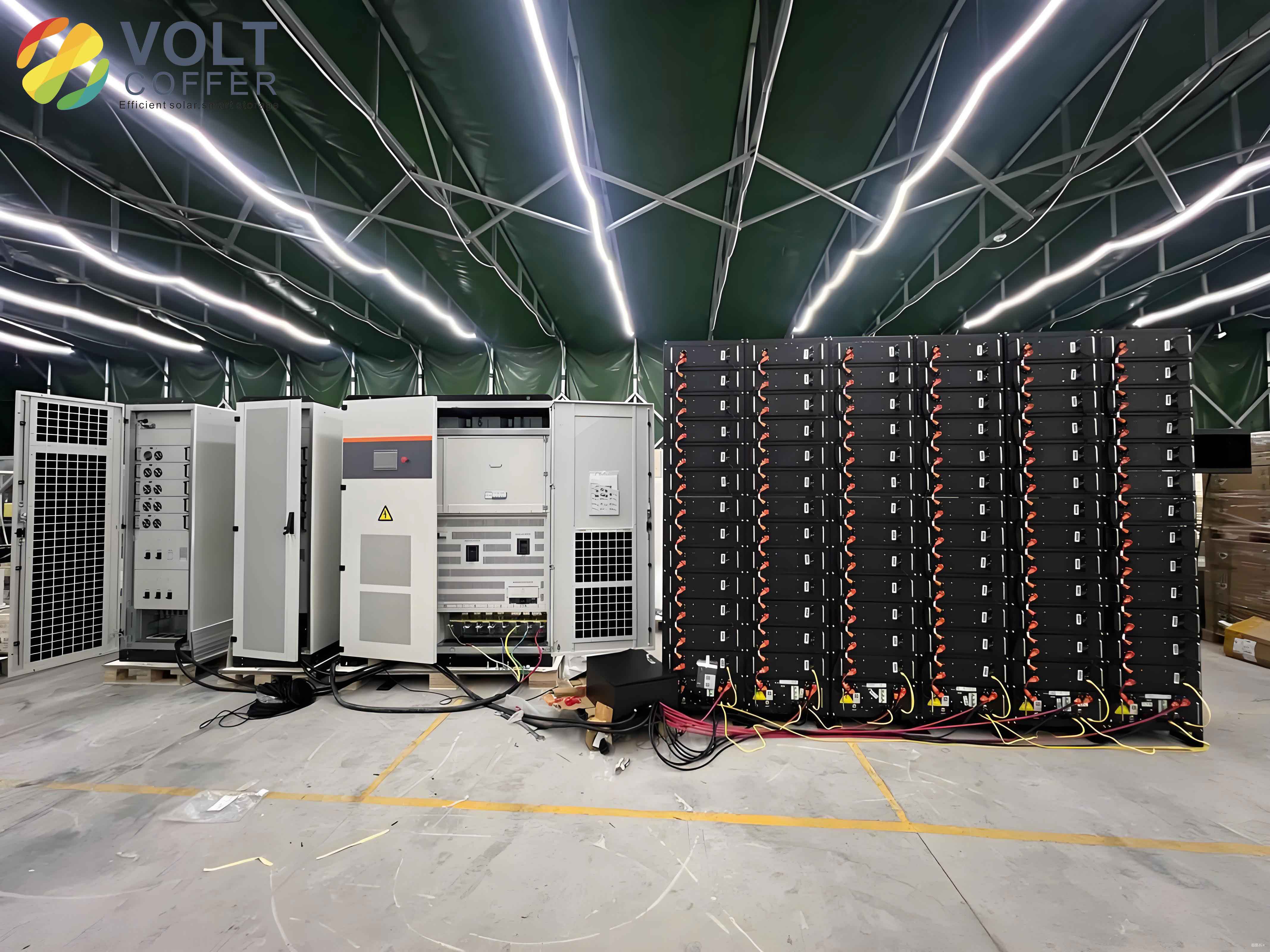
We built a hardware platform comprising a 15 kW/15 kWh BESS with six battery units, a bidirectional converter, and an energy management system implementing the proposed strategy. The initial SOC values of the units are 0.42, 0.43, 0.45, 0.48, 0.51, and 0.53. The experiment runs for 10 minutes with a sampling time of 5 seconds.
The results show a lifespan loss of $4.58 \times 10^{-6}$ kWh per cycle, corresponding to an expected service life of 12.47 years. The SOC trajectories in Figure 9 exhibit equilibrium and event-driven re-grouping. The power responses in Figure 10 confirm the dominant role of the charging group during charging commands and the discharging group during discharging commands. The power tracking accuracy is 99.7%, consistent with simulation results.
Conclusion
This paper presents a distributed power allocation strategy for battery energy storage systems that combines a competitive-cooperative mechanism with an improved bipartite consistency algorithm. The event-driven grouping model dynamically adjusts battery units to promote SOC equilibrium, while the competitive-cooperative power allocation model reduces lifespan loss by minimizing state transitions. The IBCA algorithm ensures fast, robust, and memory-efficient distributed implementation, even in the presence of communication delays.
Simulation and experimental results demonstrate that the proposed strategy significantly enhances the performance of BESS in microgrid applications. It reduces lifespan loss by up to 63.64% compared to non-grouped allocation, improves SOC equilibrium by over 82.4% compared to SOC-balanced grouped allocation, and achieves power tracking accuracy of 99.8%. The expected service life of BESS increases to 13.69 years, underscoring the practical benefits of the strategy.
Future work will explore the integration of additional energy storage technologies and the application of the strategy to larger-scale microgrids with heterogeneous resources. The flexibility and robustness of the proposed approach make it a promising solution for enhancing the stability and efficiency of modern power systems.