
In my analysis of modern energy storage solutions, I have observed that the rapid adoption of renewable energy sources like wind and solar power has highlighted the critical need for reliable battery energy storage systems (BESS). These systems, particularly those based on lithium-ion technology, are essential for stabilizing power grids due to the intermittent nature of clean energy. However, the inherent risks associated with lithium-ion batteries, such as thermal runaway and fire hazards, demand innovative fire protection approaches. In this paper, I explore the design and implementation of targeted fire protection equipment for lithium-ion battery energy storage systems, emphasizing early warning mechanisms, intelligent firefighting robots, and advanced suppression technologies. My research integrates data from various studies to propose a comprehensive framework that enhances the safety and efficiency of BESS installations.
The global deployment of battery energy storage systems has surged, with lithium-ion batteries dominating the market due to their high energy density and declining costs. According to industry reports, the worldwide capacity of new energy storage projects exceeds 8.7 GW, with an average storage duration of over 2.1 hours. Lithium-ion batteries account for approximately 95% of this capacity, underscoring their prevalence. The performance of a battery energy storage system is influenced by factors such as charge-to-mass ratio, which I express mathematically as:
$$ \frac{q}{m} $$
where \( q \) represents the charge and \( m \) the mass. For lithium ions, this ratio is favorable, allowing efficient energy storage through reversible intercalation reactions in electrode materials. The following table summarizes key global production data for lithium-ion batteries in 2024, highlighting the scale of BESS integration:
| Parameter | Value | Remarks |
|---|---|---|
| Global Shipments | 1.5 TWh | Dominant in BESS applications |
| Production in Key Regions | 1170 GWh | Leading contributor to BESS growth |
| Market Value | 1.2 trillion USD | Reflecting BESS expansion |
As I delve into the fire risks associated with battery energy storage systems, it is crucial to understand that lithium-ion batteries can enter thermal runaway, a self-sustaining exothermic reaction. This process can be modeled using a simplified energy balance equation:
$$ \frac{dT}{dt} = \frac{1}{\rho C_p} \left( P_{\text{gen}} – P_{\text{diss}} \right) $$
where \( T \) is temperature, \( t \) is time, \( \rho \) is density, \( C_p \) is specific heat capacity, \( P_{\text{gen}} \) is the heat generation rate due to reactions, and \( P_{\text{diss}} \) is the heat dissipation rate. In a battery energy storage system, mitigating this risk requires multi-layered early warning mechanisms. I have designed a hierarchical alert system based on sensor data, such as temperature and voltage, which I summarize in the table below:
| Warning Level | Indicator Flash Rate (flashes/s) | Buzzer Frequency (Hz) | Interpretation |
|---|---|---|---|
| Level 1 | 60 | 50 | Immediate action required; high risk of thermal runaway in BESS |
| Level 2-3 | 30-40 | 30-40 | Moderate risk; monitor BESS parameters closely |
| Level 4-5 | 20 | N/A | Low risk; routine inspection of battery energy storage system advised |
In my approach to enhancing the safety of battery energy storage systems, I incorporate intelligent firefighting robots equipped with sensors and control modules. These robots autonomously detect fires in BESS environments using flame sensors that operate effectively under low illumination (≤30 Lux). The operational workflow involves data acquisition from sensors, processing by a central control unit, and execution of灭火 actions. For instance, the robot’s movement and灭火 mechanisms can be described by kinematic equations, such as:
$$ v = \frac{dx}{dt} $$
where \( v \) is velocity and \( x \) is position, ensuring precise navigation within a battery energy storage system facility. Additionally, I leverage machine vision and sound recognition to locate trapped individuals, improving rescue efficiency in BESS-related incidents.
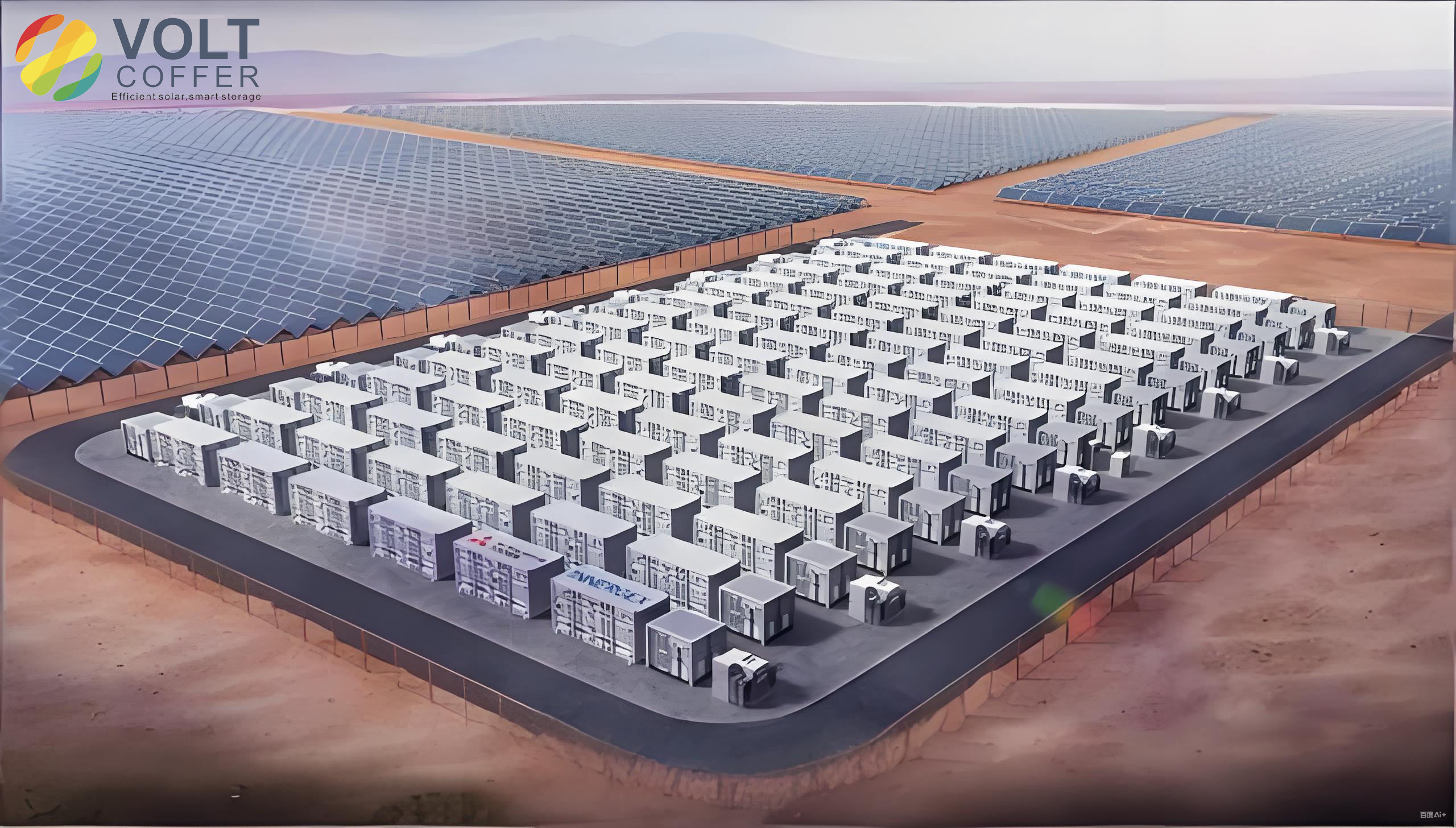
Another critical aspect of my research focuses on specialized fire suppression systems for lithium-ion battery energy storage systems. I propose a dual-agent system using perfluorohexanone and heptafluoropropane, which are stored separately and controlled via zone-level electromagnetic valves. The fluid dynamics of the nozzle networks in a battery energy storage system can be optimized using the Bernoulli equation for incompressible flow:
$$ P + \frac{1}{2} \rho v^2 + \rho gh = \text{constant} $$
where \( P \) is pressure, \( \rho \) is density, \( v \) is velocity, \( g \) is gravity, and \( h \) is height. This ensures targeted delivery of suppressants to fire hotspots in the BESS. Experimental validations, conducted in a 40-foot standard container setup with simulated battery racks, demonstrate that the system achieves pressure responses exceeding 0.5 MPa at the most remote nozzles, confirming its efficacy in battery energy storage system applications.
Moreover, I emphasize the integration of smart technologies in battery energy storage system fire protection. By deploying IoT sensors and AI algorithms, my designed systems continuously monitor parameters like smoke density and temperature, enabling predictive analytics for early fire detection in BESS. The data processing can be represented by a statistical model for anomaly detection:
$$ z = \frac{x – \mu}{\sigma} $$
where \( z \) is the z-score, \( x \) is the observed value, \( \mu \) is the mean, and \( \sigma \) is the standard deviation. Values beyond a threshold trigger alerts, enhancing the responsiveness of the battery energy storage system safety protocols. The table below compares traditional and smart warning systems for BESS, illustrating the advantages of digitalization:
| System Type | Key Features | Response Time | Suitability for BESS |
|---|---|---|---|
| Traditional | Basic smoke and heat detectors | Seconds to minutes | Moderate; may miss early BESS anomalies |
| Smart AI-Based | Multi-sensor data fusion and machine learning | Milliseconds to seconds | High; enables proactive BESS management |
In terms of灭火 technologies, I have evaluated various agents for battery energy storage system fires. Perfluorohexanone is particularly effective for lithium-ion battery fires due to its clean nature and minimal residue, while heptafluoropropane suits electrical fires. The selection criteria involve thermodynamic properties, such as heat absorption capacity, which I quantify as:
$$ Q = m c \Delta T $$
where \( Q \) is heat absorbed, \( m \) is mass, \( c \) is specific heat, and \( \Delta T \) is temperature change. This ensures rapid cooling in a battery energy storage system during incidents. Additionally, water mist and foam systems are adapted for large-scale BESS installations, providing versatile coverage.
Looking ahead, I identify several challenges in battery energy storage system fire safety, such as the corrosion potential of certain suppressants. Future work should focus on material innovations and system optimizations to enhance the longevity and reliability of BESS. My conclusions underscore the importance of targeted fire protection equipment in facilitating the safe expansion of battery energy storage systems globally, driven by continuous technological advancements.