
In modern renewable energy systems, solar inverters play a pivotal role in converting direct current (DC) from photovoltaic (PV) panels into alternating current (AC) for grid integration. As a design engineer specializing in power electronics, I have observed that non-isolated solar inverters, while efficient, often face challenges related to environmental adaptability, leading to performance degradation or failure in diverse conditions. This paper presents a comprehensive optimized design approach for non-isolated solar inverters, focusing on enhancing insulation monitoring, lightning protection, high-altitude operation, and potential-induced degradation (PID) mitigation. By integrating advanced circuitry and robust components, this design aims to improve the reliability and longevity of solar inverters across various applications. Throughout this discussion, the terms “solar inverter” and “solar inverters” will be emphasized to underscore their centrality in photovoltaic systems.
The operational principle of a solar inverter involves multiple stages: a control system manages overall functionality, an inverter circuit converts DC to AC, an oscillator generates alternating waveforms, a coil steps up voltage to form square waves, and a rectifier shapes these into sinusoidal AC output. However, environmental factors such as humidity, altitude, and electrical surges can compromise these stages. Our optimized design addresses these issues through meticulous engineering, incorporating insulation detection, dual-level lightning protection, altitude-adjusted clearances, and PID recovery mechanisms. This approach not only meets international standards like NB/T 32004-2018 and IEC 62305 but also leverages mathematical models and empirical data to ensure robustness. In the following sections, I will delve into each aspect, supported by tables and equations, to illustrate how these innovations elevate the performance of solar inverters.
Insulation Monitoring Design
Insulation resistance monitoring is critical for non-isolated solar inverters to prevent electric shock or fire hazards caused by DC-side ground faults. In such inverters, a ground fault can create a direct path for current flow between the fault point and the grid, necessitating immediate disconnection. Ground faults are categorized into direct (metallic) and indirect (non-metallic) types, depending on the resistance to earth. Direct grounding occurs when the resistance approaches zero, potentially causing circuit breaker malfunctions, while indirect grounding involves resistances below a threshold that could still pose risks based on system sensitivity.
To comply with NB/T 32004-2018, which mandates insulation resistance measurement before system startup, our design incorporates a dual asymmetric bridge method for real-time monitoring. This method overcomes limitations of traditional balanced bridges, which fail to detect simultaneous drops in positive and negative bus resistances. The minimum insulation resistance required is calculated based on the maximum PV array voltage. For instance, with a maximum input voltage of 1100 V, the resistance must exceed:
$$ R_{\text{min}} = \frac{U_{\text{maxpv}}}{30 \times 10^{-3}} = \frac{1100}{0.03} \approx 36,667 \, \Omega \approx 36 \, \text{k}\Omega $$
The dual asymmetric bridge circuit, as implemented, uses two sets of resistors and solid-state relays to switch between configurations, allowing accurate computation of positive and negative bus resistances. The governing equations for the resistances \( R_Z \) (positive bus) and \( R_f \) (negative bus) are derived from voltage samples across bridge resistors. Let \( R_1 \) and \( R_2 \) represent the bridge resistances, and \( k \) denote the switching state (1 or 2). The voltage \( V_j \) across resistor \( R_j \) is measured for each state, leading to the system:
$$ \begin{cases} V_{j1} = f(R_Z, R_f, R_1, R_2) \\ V_{j2} = g(R_Z, R_f, R_1, R_2) \end{cases} $$
Solving these equations yields precise values for \( R_Z \) and \( R_f \), enabling detection of insulation degradation. The circuit design ensures longevity and reliability, with components rated for extreme temperatures. Table 1 summarizes the key parameters for the insulation monitoring module.
| Parameter | Value | Description |
|---|---|---|
| Maximum Input Voltage (\( U_{\text{maxpv}} \)) | 1100 V | PV array maximum voltage |
| Minimum Insulation Resistance | 36 kΩ | Calculated based on standard |
| Monitoring Method | Dual Asymmetric Bridge | Detects direct and indirect faults |
| Switching Element | Solid-State Relay | Ensures fast and durable operation |
This design not only enhances safety but also allows the solar inverter to resume operation once insulation levels are restored, minimizing downtime in photovoltaic systems.
AC and DC Lightning Protection Design
Lightning strikes and surges pose significant risks to solar inverters, particularly in outdoor installations. Our design adheres to IEC 62305 standards, implementing Type 2 surge protective devices (SPDs) on both DC and AC sides to handle direct and indirect lightning effects. For DC-side protection, the SPDs are tailored to PV systems, as per IEC 61643 and EN 50539-11, while AC-side SPDs follow general requirements for grid-connected equipment.
On the DC side, the SPD must dissipate high-energy transients without compromising system performance. The voltage protection level, response time, and current ratings are optimized for non-isolated solar inverters. Similarly, AC-side SPDs safeguard against grid-induced surges. The design calculations consider the maximum discharge current and voltage clamping capabilities. For example, the energy handling capacity can be modeled using the integral of power over time:
$$ E = \int I(t) \cdot V(t) \, dt $$
where \( I(t) \) is the surge current and \( V(t) \) is the voltage across the SPD. Tables 2 and 3 detail the specifications for DC and AC SPDs, respectively, ensuring comprehensive protection for solar inverters in diverse environments.
| Technical Parameter | Value |
|---|---|
| Protection Level | Type 2 |
| Maximum Continuous Operating Voltage | 1500 Vdc |
| Rated Short-Circuit Current | 1000 A |
| Maximum Discharge Current | 20 kA |
| Voltage Protection Level | ≤4.5 kV |
| Rated Discharge Current | 10 kA |
| Response Time | ≤25 ns |
| Operating Temperature | -40°C to +80°C |
| Protection Rating | IP20 |
| Technical Parameter | Value |
|---|---|
| Protection Level | Type 2 |
| Maximum Continuous Operating Voltage | 750 Vac |
| Maximum Discharge Current | 20 kA |
| Voltage Protection Level | 3.0 kV |
| Rated Discharge Current | 10 kA |
| Response Time | ≤25 ns |
| Operating Temperature | -40°C to +80°C |
| Protection Rating | IP20 |
By integrating these SPDs, the solar inverter achieves robust surge immunity, reducing failure rates and maintenance costs in photovoltaic installations.
High-Altitude Adaptation Design
Operating solar inverters at high altitudes presents challenges due to reduced air density, which affects electrical insulation and heat dissipation. According to NB/T 32004-2018, inverters installed above 2000 meters must account for decreased dielectric strength and increased electrical clearances. Our design addresses this through enhanced insulation gaps and optimized cooling systems.
The minimum electrical clearance for functional, basic, or supplementary insulation depends on the working voltage and pollution degree. For instance, at sea level, a voltage of 1500 V requires a clearance of 0.5 mm for pollution degree 2. However, as altitude increases, the clearance must be multiplied by a correction factor to compensate for lower atmospheric pressure. The relationship between altitude and electrical clearance can be expressed as:
$$ C_h = C_0 \times k_h $$
where \( C_h \) is the corrected clearance at altitude \( h \), \( C_0 \) is the sea-level clearance, and \( k_h \) is the multiplier from standard tables. Table 4 outlines the correction factors for altitudes up to 6000 meters, based on normal atmospheric pressure.
| Altitude (m) | Atmospheric Pressure (kPa) | Multiplier Factor (\( k_h \)) |
|---|---|---|
| 2000 | 80.0 | 1.00 |
| 3000 | 70.0 | 1.14 |
| 4000 | 62.0 | 1.29 |
| 5000 | 54.0 | 1.48 |
| 6000 | 47.0 | 1.70 |
Additionally, thermal management is crucial at high altitudes where convective cooling is less efficient. Our solar inverter employs a forced-air cooling system with intelligent fan control, ensuring adequate heat dissipation. The heat transfer equation for convection is:
$$ Q = h \cdot A \cdot \Delta T $$
where \( Q \) is the heat flux, \( h \) is the convective heat transfer coefficient (which decreases with altitude), \( A \) is the surface area, and \( \Delta T \) is the temperature difference. By designing the cooling system with excess capacity, the solar inverter maintains full power output up to 4000 meters and derated performance beyond that, as verified through type testing.
PID Protection and Recovery
Potential-induced degradation (PID) is a major cause of power loss in PV modules, especially in humid conditions. PID occurs when a voltage potential between the solar cells and ground leads to ion migration, degrading the module’s performance. For non-isolated solar inverters, this can result in significant efficiency drops over time. Our design integrates a PID mitigation module that elevates the DC-side negative terminal voltage relative to ground, effectively neutralizing the偏压.
The principle involves controlling the PV-to-ground voltage to be non-negative, thus preventing or reversing PID. The module operates in two modes: protection during normal operation and recovery during idle periods. In protection mode, when the DC voltage exceeds 100 V, the module adjusts the PV-ground voltage to 0 V. In recovery mode, activated via an app when the inverter is standby and DC voltage is below 50 V, it applies a positive voltage (default 500 V) to the negative terminal, repairing degraded modules. The voltage adjustment follows the equation:
$$ V_{\text{PV-}} \geq 0 $$
This approach eliminates the need for external PID boxes, reducing cost and complexity. The design also specifies requirements for transformers and cables to ensure compatibility, such as ungrounded neutral points and enhanced insulation. To illustrate the circuit topology, consider the following diagram integrated into the solar inverter’s PID module.
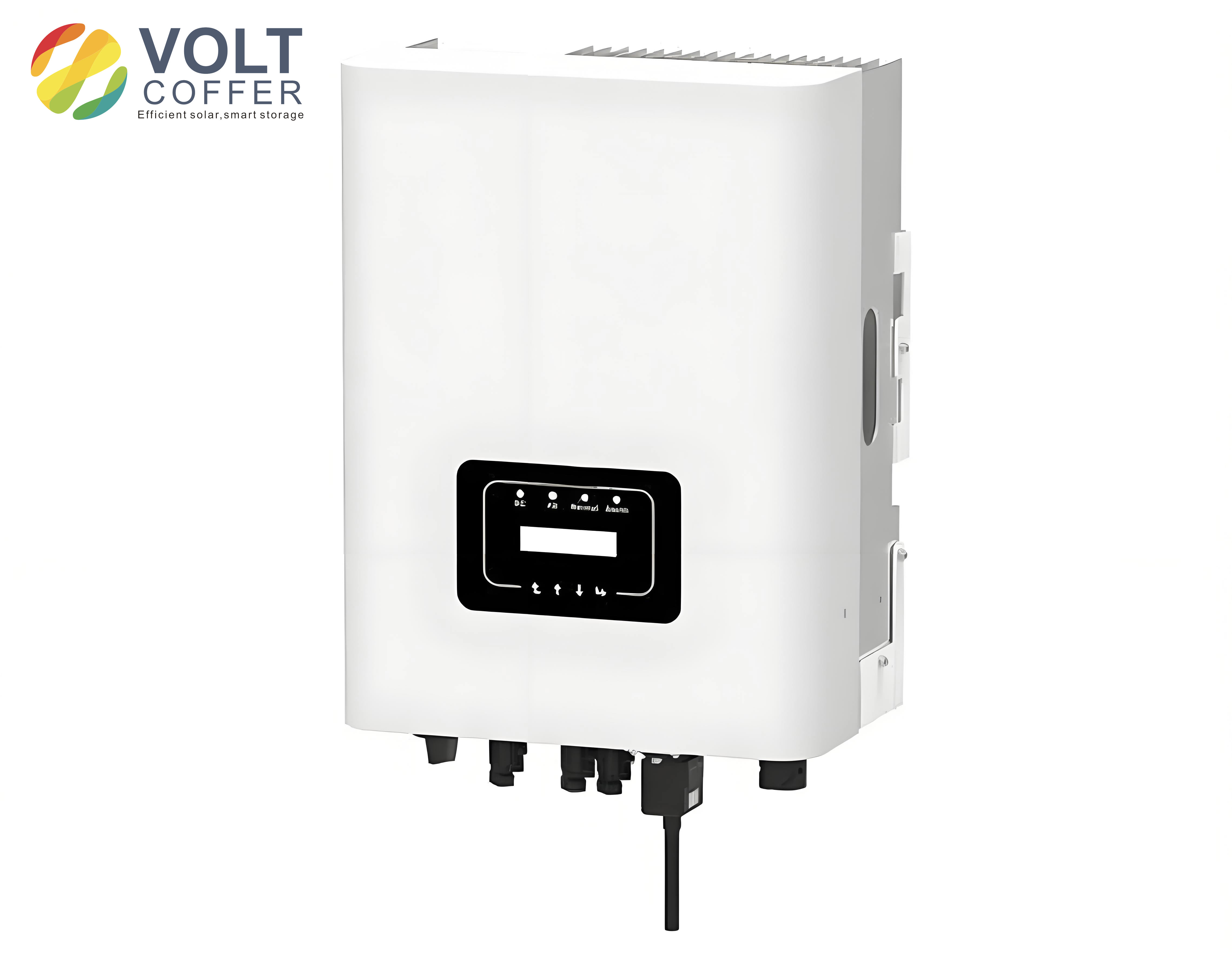
This integrated solution has been tested in various environments, demonstrating effective PID recovery and prolonged module life, making it ideal for solar inverters in demanding applications.
Conclusion
In summary, this optimized design for non-isolated solar inverters addresses critical environmental challenges through innovative insulation monitoring, lightning protection, high-altitude adaptation, and PID mitigation. By leveraging mathematical models, standard-compliant components, and real-world testing, we have developed a robust solution that enhances the reliability and efficiency of photovoltaic systems. The repeated emphasis on “solar inverter” and “solar inverters” throughout this paper highlights their essential role in renewable energy. As the demand for clean electricity grows, such advancements will be crucial for maximizing the performance and lifespan of solar power installations, contributing to a sustainable energy future.