
As the scale of photovoltaic power generation continues to expand, the issue of resonance in centrally configured string solar inverter clusters has become increasingly prominent, severely impacting grid-connected power quality and system stability. In this article, I analyze string solar inverters, investigate the causes and hazards of resonance, develop a real-time monitoring mechanism for resonance frequency and amplitude based on system transfer functions, and propose an adaptive resonance suppression method. This approach effectively mitigates both inherent and interactive resonance, enhances system damping, and offers a novel solution for large-scale grid integration of string solar inverters. The widespread deployment of solar inverters in modern power systems necessitates robust control strategies to address emerging challenges like resonance, which can compromise the reliability of renewable energy integration.
String solar inverters are critical components in photovoltaic systems, where multiple solar panels are connected in series to form strings, each interfaced with a dedicated string solar inverter. In large-scale solar power plants, numerous string solar inverters are often connected in parallel to meet power requirements. The centralized layout of these solar inverters helps reduce AC line losses and simplifies maintenance. However, this configuration introduces complexities due to the interaction between multiple solar inverters and the grid impedance. To quantify the impact of various system parameters, I summarize key parameter ranges for typical string solar inverter systems in the following table.
| Parameter Type | Parameter Name | Typical Value | Range | Impact on Resonance |
|---|---|---|---|---|
| LCL Filter | Inverter-side Inductance (mH) | 1.2 | 0.8–1.6 | Influences resonance frequency |
| Grid-side Inductance (mH) | 0.3 | 0.2–0.5 | Affects impedance characteristics | |
| Filter Capacitance (μF) | 10 | 5–20 | Determines resonance frequency | |
| System Parameters | Rated Power (kW) | 50 | 30–80 | Influences resonance behavior |
| Number of Inverters | 10 | 5–20 | Affects coupling strength |
The LCL filter is a vital part of string solar inverters, and its design directly affects the system’s resonance frequency and impedance characteristics. By modeling the LCL filter and conducting frequency-domain analysis, I can determine the range of self-resonance frequencies and impedance variations. Additionally, in parallel operations of multiple solar inverters, coupling effects between inverters must be considered. Constructing an equivalent impedance model for parallel-coupled solar inverters helps illustrate the interactive mechanisms, providing a theoretical basis for resonance suppression strategies.
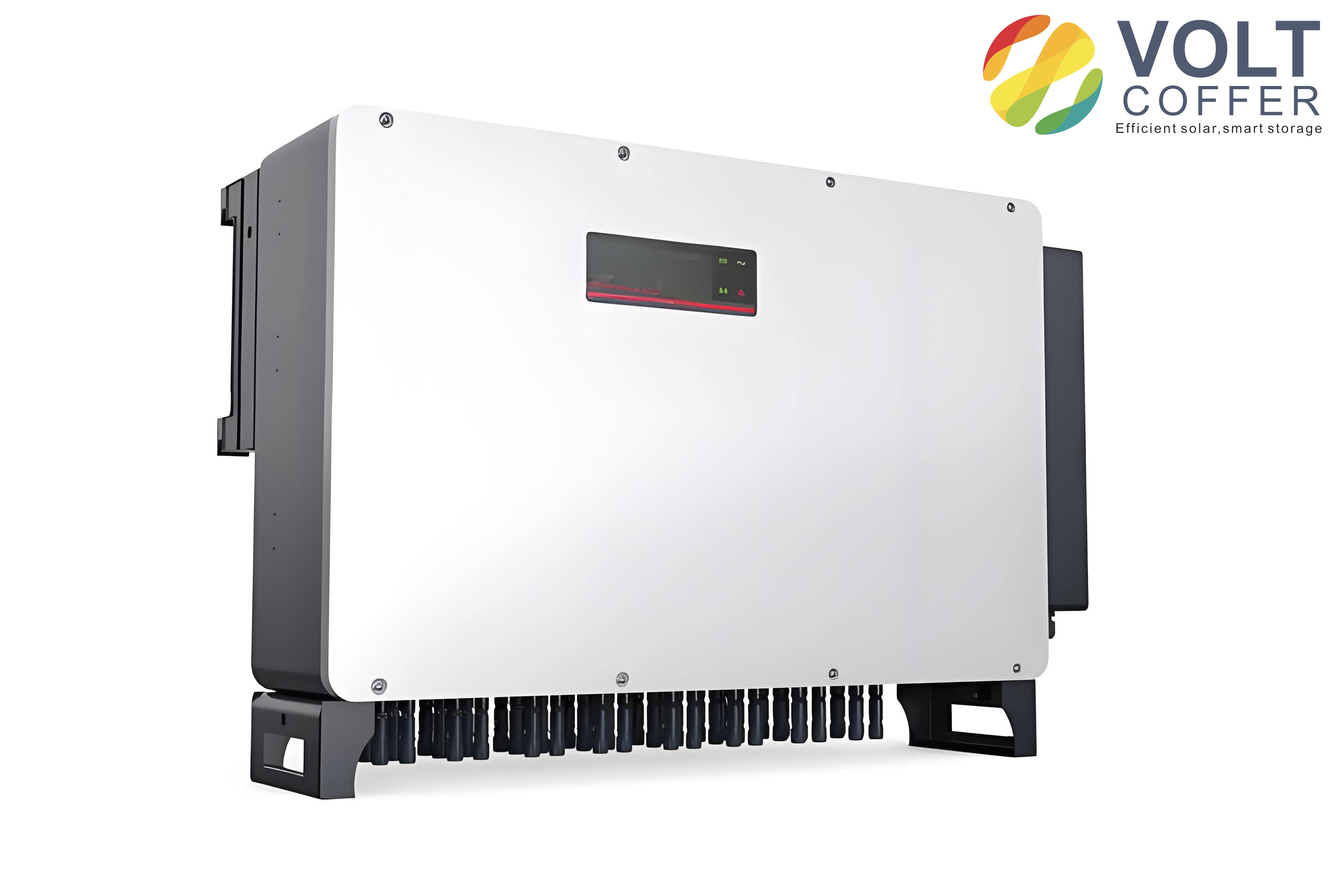
Resonance in string solar inverter clusters can be categorized into inherent resonance and interactive resonance. Inherent resonance arises primarily from the parameters of the LCL filter itself, with resonance frequencies typically in the higher frequency range. Frequency-domain analysis of the LCL filter allows me to identify these inherent resonance frequencies. Interactive resonance, on the other hand, results from the parallel operation of multiple solar inverters and variations in grid impedance. When several solar inverters are connected in parallel to the grid, the interaction between the output impedance of the solar inverters and the grid impedance can alter the impedance at the point of common coupling (PCC), potentially triggering resonance. Factors influencing resonance frequency and amplitude include grid impedance, control parameters of the solar inverters, and output power. Analyzing how these factors affect resonance characteristics guides the optimization of suppression methods.
The hazards of resonance in string solar inverter clusters are significant. Resonance can cause severe distortion in the grid-connected current from solar inverters, exceeding standards for power quality and leading to non-compliance. It may also result in frequent circuit breaker tripping, disrupting the normal operation of the photovoltaic system. In extreme cases, resonance can provoke large-scale disconnection of solar power plants, posing risks to grid stability. Therefore, it is imperative to develop effective and reliable resonance suppression methods for string solar inverter clusters to ensure safe and stable operation.
To address these issues, I propose an adaptive resonance suppression method for string solar inverter clusters. The first step involves real-time detection of resonance conditions. I establish a monitoring mechanism based on frequency-domain analysis of the system transfer function. By sampling the output current of the solar inverters and the voltage at the PCC, and employing time-frequency analysis tools like short-time Fourier transform, I extract feature information across different frequency bands. This allows me to compute the real-time resonance frequency and amplitude using the system transfer function model. The transfer function for a single solar inverter with an LCL filter can be expressed as:
$$G(s) = \frac{i_g(s)}{v_{inv}(s)} = \frac{1}{L_1 L_2 C s^3 + (L_1 + L_2) s}$$
where \( i_g \) is the grid current, \( v_{inv} \) is the inverter output voltage, \( L_1 \) and \( L_2 \) are the inverter-side and grid-side inductances, respectively, and \( C \) is the filter capacitance. For multiple solar inverters, the equivalent impedance at the PCC must consider the parallel combination, leading to a more complex model.
Building on this, I develop an adaptive suppression parameter estimation model that accounts for inverter parameters, filter parameters, and grid impedance. This model adaptively estimates optimal suppression parameters. To handle uncertainties in LCL filter parameters, I incorporate online parameter identification algorithms. By injecting perturbation signals and analyzing the system response, I identify equivalent inductance and capacitance values of the LCL filter, refining the suppression parameters. The estimated parameters are then fed back to the resonance suppression controller for adaptive updates, ensuring effective resonance mitigation and system stability.
The core suppression methods include negative virtual capacitance compensation, adaptive notch filtering, and impedance reshaping. Each method targets different aspects of resonance in solar inverters.
First, the negative virtual capacitance method addresses inherent resonance in string solar inverter clusters by equivalently introducing a negative capacitance in the control system to counteract the resonant effects of the filter capacitor. This approach alters the equivalent capacitance, thereby adjusting the resonance frequency and enhancing damping. The implementation involves modifying the current inner-loop controller by adding a compensation term. The equivalent capacitance with negative virtual capacitance \( C_{virtual} \) is given by:
$$C_{eq} = C – C_{virtual}$$
where \( C \) is the physical filter capacitance. The compensation term in the controller generates a voltage component that opposes the capacitor’s effect, increasing system damping. This method is simple to implement and requires no additional hardware, making it cost-effective for solar inverter applications. However, its performance may degrade under significant resonance frequency drift or multiple resonance points, especially in light-load conditions where stability must be carefully monitored.
Second, adaptive notch control is employed to suppress resonance by incorporating a notch filter into the control system of the solar inverters. This filter creates a low-impedance path around the resonance frequency, effectively filtering out resonant components. Unlike fixed-frequency notch filters, the adaptive version dynamically adjusts the notch frequency and bandwidth based on real-time resonance detection. I use spectrum analysis techniques, such as fast Fourier transform (FFT) on the grid current, to identify the frequency component with the highest amplitude as the current resonance frequency. The transfer function of a second-order notch filter is:
$$H(s) = \frac{s^2 + \omega_z^2}{s^2 + \frac{\omega_0}{Q} s + \omega_0^2}$$
where \( \omega_0 \) is the notch frequency, \( \omega_z \) is the zero frequency, and \( Q \) is the quality factor. By continuously updating \( \omega_0 \) to match the detected resonance frequency, the notch filter maintains effective suppression. To improve detection accuracy and response speed, I apply sliding window averaging and threshold judgment. This method excels in environments where resonance frequency varies considerably, though it increases system complexity.
Third, impedance reshaping focuses on preventing resonance by actively adjusting the output impedance characteristics of the solar inverters. This method ensures that the overall grid-connected system avoids impedance matching conditions that lead to resonance. The equivalent impedance at the PCC is calculated as:
$$Z_{pcc} = \frac{Z_{inv} Z_{grid}}{Z_{inv} + Z_{grid}}$$
where \( Z_{inv} \) is the output impedance of the solar inverter and \( Z_{grid} \) is the grid impedance. By introducing virtual impedance into the control system, I modify the inverter’s output impedance as follows:
$$Z_{inv,new} = Z_{inv} + Z_{virtual}$$
where \( Z_{virtual} \) is the virtual impedance, typically implemented through the voltage outer-loop controller by adding a virtual impedance voltage drop. Common forms of virtual impedance include virtual resistance, virtual inductance, or a combination, such as:
$$Z_{virtual} = R_{virtual} + s L_{virtual}$$
where \( R_{virtual} \) and \( L_{virtual} \) are the virtual resistance and inductance, respectively. Proper design of these parameters reshapes the system’s impedance curve, avoiding resonance regions. This approach is highly robust against system parameter changes and is suitable for large-scale parallel solar inverter systems. However, it requires comprehensive understanding of system impedance characteristics and may conflict with power control objectives in certain scenarios, necessitating careful trade-offs.
In practice, I propose a hierarchical comprehensive suppression strategy that integrates all three methods to balance effectiveness, cost, and reliability. The negative virtual capacitance method serves as the foundational layer, providing basic suppression for stable resonance conditions. Adaptive notch control acts as an intermediate layer, handling dynamic resonance frequency variations. Impedance reshaping forms the top layer, offering systemic prevention of resonance. This stratified approach ensures that solar inverter clusters can adapt to diverse operating conditions while maintaining grid stability. For instance, in a system with 10 parallel solar inverters, the strategy can be tuned based on real-time parameter estimates, as shown in the following table summarizing the suppression methods’ characteristics.
| Suppression Method | Key Mechanism | Advantages | Limitations | Suitable Scenarios |
|---|---|---|---|---|
| Negative Virtual Capacitance | Equivalent negative capacitance to cancel filter capacitor effects | Simple implementation, low cost | Limited under frequency drift; stability concerns in light load | Stable resonance conditions in solar inverters |
| Adaptive Notch Control | Notch filter with adjustable frequency and bandwidth | High adaptability, strong suppression | Increased complexity | Dynamic resonance in solar inverters |
| Impedance Reshaping | Virtual impedance to alter system impedance characteristics | Systemic prevention, high robustness | Complex design, potential control conflicts | Large-scale solar inverter clusters |
To illustrate the interaction between these methods, consider the overall system damping improvement. The damping ratio \( \zeta \) for a solar inverter system with LCL filter can be enhanced through these suppression techniques. For example, with negative virtual capacitance, the effective damping is increased by reducing the peak impedance at resonance. The generalized system equation incorporating all methods can be represented as:
$$G_{total}(s) = G_{base}(s) \cdot H_{notch}(s) \cdot Z_{virtual}(s)$$
where \( G_{base}(s) \) is the base transfer function of the solar inverter, \( H_{notch}(s) \) is the adaptive notch filter transfer function, and \( Z_{virtual}(s) \) accounts for the impedance reshaping effects. This integrated approach ensures comprehensive resonance management across various operating points of the solar inverters.
In conclusion, the adaptive resonance suppression method for string solar inverter clusters effectively addresses resonance issues through a combination of negative virtual capacitance compensation, adaptive notch control, and impedance reshaping. By optimizing control strategies and coordinating with power and voltage control objectives, this method enhances the stability and reliability of solar power generation systems. The hierarchical strategy provides a flexible framework for different scales of solar inverter deployments, contributing to the advancement of photovoltaic technology and its integration into modern power grids. Future work could focus on real-time implementation and validation in large-scale solar farms to further refine these techniques for solar inverters.