
With the increasing adoption of renewable energy, photovoltaic (PV) systems have become a key technology for harnessing solar power. Solar inverters play a critical role in converting DC power from PV arrays to AC power for grid integration. However, the reliability of solar inverters is often compromised by failures in insulated gate bipolar transistors (IGBTs), which are core components. Open-circuit faults in IGBTs can lead to reduced efficiency, system instability, and even safety hazards. Traditional fault diagnosis methods for solar inverters, such as wavelet transforms or support vector machines, rely heavily on manual feature extraction and may lack robustness in noisy environments. To address these limitations, this paper proposes a novel fault diagnosis approach for three-phase grid-connected solar inverters using Markov Transition Field (MTF) and Convolutional Neural Networks (CNN). The method converts one-dimensional current signals from the solar inverter into two-dimensional images via MTF encoding, which preserves temporal dependencies, and then employs a CNN model for automatic feature extraction and classification. Experimental results demonstrate that this approach achieves high accuracy, rapid diagnosis, and strong noise immunity, outperforming conventional techniques.
The MTF technique encodes time-series data into images by considering the transition probabilities between quantiles of the data. Given a time series $X = \{x_1, x_2, \dots, x_n\}$, it is first divided into $Q$ quantiles. Each data point $x_i$ is mapped to a corresponding quantile $q_i$ where $i \in [1, Q]$. A Markov transition matrix $W$ of size $Q \times Q$ is constructed, with elements $w_{ij}$ representing the probability of transitioning from quantile $q_i$ to $q_j$. The matrix is defined as:
$$W = \begin{bmatrix}
P(x \in q_1 | x \in q_1) & \cdots & P(x \in q_1 | x \in q_Q) \\
\vdots & \ddots & \vdots \\
P(x \in q_Q | x \in q_1) & \cdots & P(x \in q_Q | x \in q_Q)
\end{bmatrix}$$
To capture temporal correlations, the MTF extends this matrix to a Markov transition field $M$ of size $n \times n$, where each element $m_{ij}$ corresponds to the transition probability from the quantile of $x_i$ to that of $x_j$. This results in an image that visually represents the time series, maintaining the integrity of fault-related information. The MTF encoding process ensures that features from the solar inverter current signals are effectively transformed into discriminative patterns for CNN-based diagnosis.
Convolutional Neural Networks are well-suited for image classification tasks due to their ability to automatically learn hierarchical features. The AlexNet architecture, which includes multiple convolutional layers, pooling layers, and fully connected layers, is employed in this study. The network uses ReLU activation functions for non-linearity, max-pooling for dimensionality reduction, and dropout layers to prevent overfitting. The final layer utilizes a Softmax classifier for multi-class fault diagnosis in solar inverters. The CNN model processes MTF-generated images to identify open-circuit faults in IGBTs, leveraging its deep learning capabilities to achieve high diagnostic accuracy.
In a typical grid-connected PV system, solar inverters convert DC power from PV arrays to AC power. The system includes a boost converter for voltage elevation, an inverter bridge with IGBTs, and an LCL filter for grid connection. The two-level inverter topology is commonly used in solar inverters due to its simplicity and efficiency. It consists of six IGBTs (S1 to S6) that switch to generate three-phase AC output. Open-circuit faults in any single IGBT can distort the output current, leading to performance degradation. For instance, a fault in S1 may cause asymmetrical currents in the phases, which can be detected through current waveform analysis.
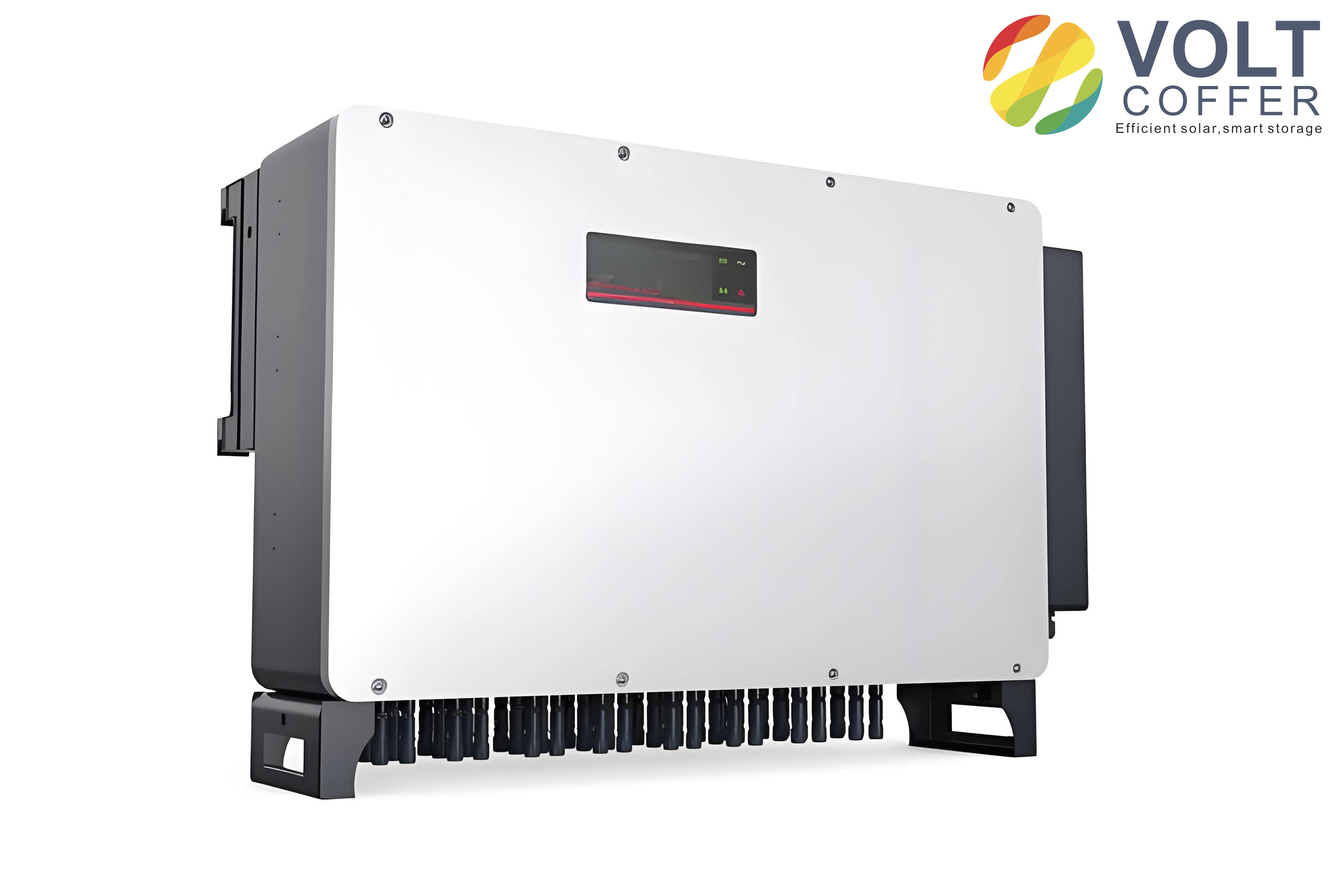
To simulate faults, a 10 kW PV system model was built in MATLAB/Simulink, with a DC link voltage of 700 V and grid frequency of 50 Hz. Open-circuit faults were introduced in each IGBT (e.g., S1 to S6), and the three-phase output currents were recorded. The current signals from the solar inverter were sampled over 0.02 s (one grid cycle) to capture 2000 data points per sample. These one-dimensional signals were then encoded into MTF images, creating a dataset for training and testing the CNN model.
The proposed MTF-CNN diagnosis method involves several steps: First, current signals from the solar inverter under various fault conditions are collected. These signals are segmented into cycles and converted into MTF images. The dataset is split into training (70%), testing (30%), and validation sets. The CNN model, based on AlexNet, is trained on these images to extract features and classify faults. The model parameters include an input image size of 224×224×3, a learning rate of 0.001, batch size of 32, and 100 epochs. The Adam optimizer is used for efficient training. This approach automates fault detection, reducing reliance on manual analysis and enhancing the reliability of solar inverters.
For experimental validation, 5600 MTF images were generated from simulation data, covering seven states: normal operation and six single IGBT open-circuit faults. The CNN model achieved a training accuracy of 98.2% and a testing accuracy of 98.5% after 100 epochs. The confusion matrix for the validation set (1680 images) showed an overall accuracy of 98.9%, with minimal misclassifications. For example, S1 faults were occasionally confused with S2 faults, but the model demonstrated high precision in distinguishing between different fault types in solar inverters.
To evaluate robustness, Gaussian white noise and random noise were added to the test data. The model maintained accuracies above 98.5% under noise levels of 25 dB to 40 dB, as shown in Table 1. This indicates that the MTF-CNN method is resilient to noise, making it suitable for real-world solar inverter applications where signal interference is common.
| Iterations | 25 dB Accuracy (%) | 30 dB Accuracy (%) | 40 dB Accuracy (%) |
|---|---|---|---|
| 10 | 91.2 | 97.0 | 93.1 |
| 20 | 98.5 | 98.9 | 99.0 |
| 30 | 99.4 | 99.6 | 99.7 |
| 40 | 99.5 | 99.8 | 99.8 |
| 50 | 99.6 | 100 | 99.9 |
Additionally, the MTF encoding was compared to other time-series image methods like Gramian Angular Field (GAF) and Recurrence Plots (RP). The MTF-based approach outperformed these methods in diagnostic accuracy for solar inverter faults, as summarized in Table 2. The superiority of MTF lies in its ability to preserve temporal information, which is crucial for capturing fault characteristics in solar inverter currents.
| Encoding Method | Accuracy (%) |
|---|---|
| GADF | 92.3 |
| GASF | 94.7 |
| MTF | 98.9 |
| RP | 90.1 |
| WT+SVM | 88.5 |
The performance of the CNN model can be analyzed through the loss function and accuracy curves. The cross-entropy loss $L$ for multi-class classification is given by:
$$L = -\frac{1}{N} \sum_{i=1}^{N} \sum_{c=1}^{C} y_{i,c} \log(\hat{y}_{i,c})$$
where $N$ is the number of samples, $C$ is the number of classes (fault types), $y_{i,c}$ is the true label, and $\hat{y}_{i,c}$ is the predicted probability. The model minimizes this loss during training, leading to high accuracy in solar inverter fault diagnosis.
In conclusion, the MTF-CNN method provides an effective solution for diagnosing open-circuit faults in IGBTs of three-phase solar inverters. By converting current signals into images and leveraging deep learning, it achieves high accuracy and robustness against noise. Future work could extend this approach to multiple IGBT faults and three-level solar inverters, further enhancing the reliability of PV systems. This research underscores the potential of AI-driven techniques in maintaining the performance and safety of solar energy infrastructure.