
In recent years, solar power generation has gained widespread attention as a clean and sustainable energy source, with extensive research and applications globally. Solar inverters play a critical role in this context, converting the direct current (DC) produced by photovoltaic panels into alternating current (AC) for grid integration. Among these, the 1500V solar inverter stands out due to its higher voltage rating and enhanced conversion efficiency, making it a core component in large-scale solar power plants. However, as operational hours accumulate and environmental factors take their toll, the control units of these solar inverters often experience failures, leading to system downtime or reduced efficiency. Therefore, effective fault diagnosis and repair techniques are essential to ensure the stable operation of solar inverters. This study delves into the key technologies for fault diagnosis and repair of 1500V solar inverter control units, aiming to provide theoretical support and practical guidance for engineers and technicians in the field.
The 1500V solar inverter primarily functions to convert DC electricity from solar panels into AC electricity suitable for grid distribution. Its control unit comprises several critical components, including the power control board, current sensors, power modules, and cooling systems. For instance, the Infineon F3L400R10W3S7_B11 module, which utilizes EasyPACKTM 3B 950 V, 400 A ANPC (Active Neutral Point Clamped) IGBT technology, is widely adopted in high-voltage solar inverters. This module incorporates TRENCHSTOPTM IGBT7 technology, enabling high switching frequencies while minimizing losses, thereby boosting overall system efficiency. The core control structure of such solar inverters involves real-time monitoring of parameters like current and voltage, allowing for adjustments to maintain power quality compliant with grid standards.
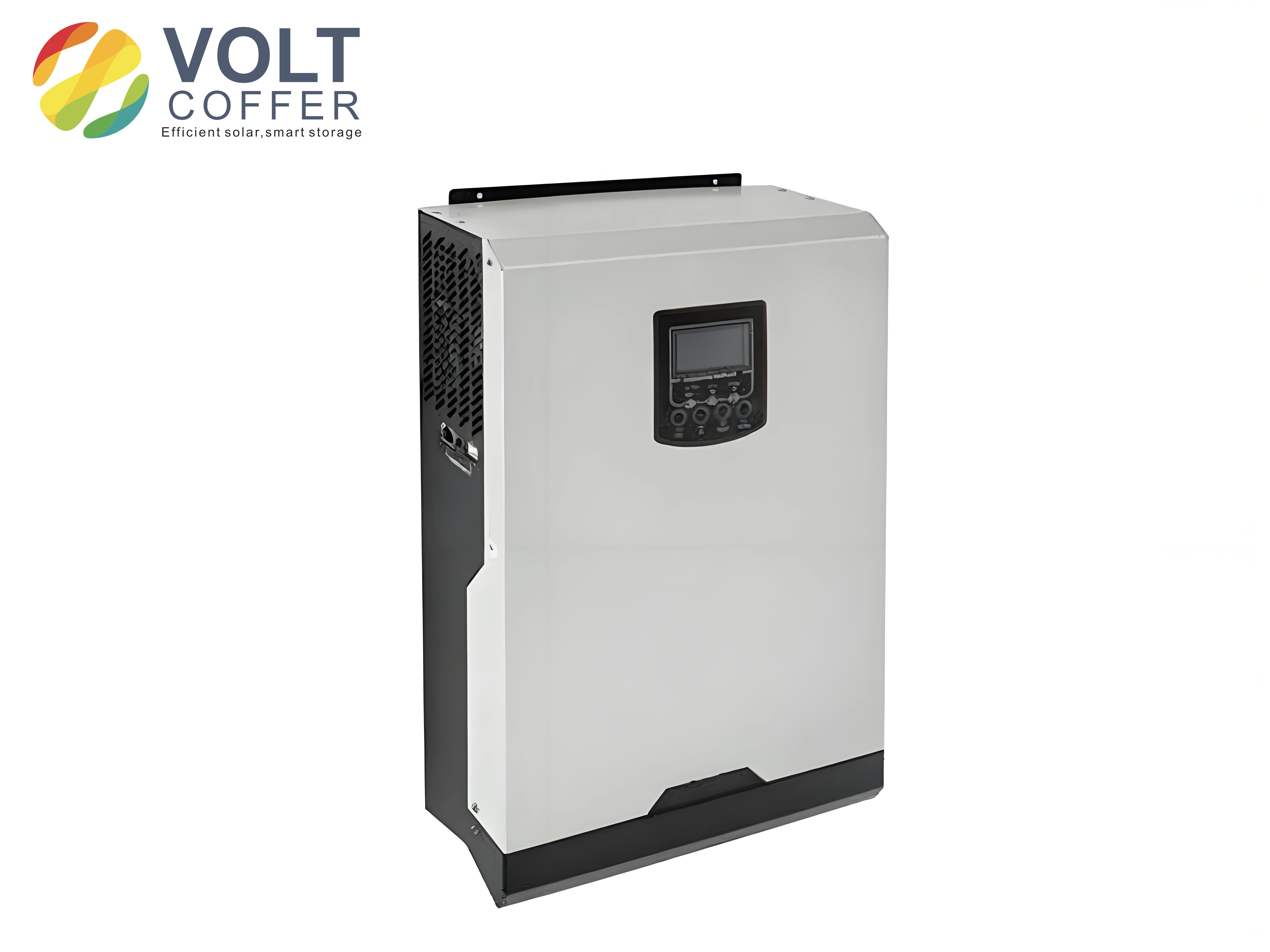
Solar inverter control units are integral to the performance of solar power systems. The power control board manages real-time operations, regulating output power and voltage, and ensuring grid synchronization. Current sensors monitor fluctuations in current, providing feedback to maintain stability. Power modules, such as the EasyPACKTM 3B IGBT module, execute the actual power conversion, leveraging advanced technologies like TRENCHSTOPTM IGBT7 and emitter-controlled diodes to ensure reliability under high temperatures and voltages. Additionally, the cooling system is vital, as solar inverters generate significant heat during operation; efficient heat dissipation prolongs equipment lifespan and reduces failure rates. Understanding these components is crucial for diagnosing faults in solar inverters.
Fault diagnosis in solar inverter control units can be approached through mathematical modeling and signal processing. By analyzing changes in the internal states of components, output signals exhibit variations that, when interpreted using diagnostic models, allow for accurate fault identification and localization. For solar inverters, common issues include power instability, efficiency degradation, and frequent shutdowns. To address these, we developed several diagnostic models based on empirical data and theoretical principles.
First, the fault characteristic coefficient model quantifies anomalies in the output current waveform of solar inverters. The formula is given by:
$$ F_{diag} = \left[ \frac{1}{T} \int_0^T |I_{out}(t) – I_{ideal}(t)| dt \right] \times \left[ \sum_{i=1}^n W_i \theta_i \right] $$
Here, \( F_{diag} \) represents the fault characteristic coefficient, \( I_{out}(t) \) is the actual output current of the solar inverter, \( I_{ideal}(t) \) denotes the ideal output current under normal conditions, \( T \) is the time window for analysis, \( n \) is the number of fault types, \( W_i \) is the weighting coefficient for the i-th fault type, and \( \theta_i \) is the weight factor associated with the i-th fault type. This equation computes the error between actual and ideal currents, integrating weighted factors to assess the severity of faults in solar inverters.
Second, the IGBT module fault model describes power output instability in solar inverters due to IGBT failures. The expression is:
$$ P_{fault} = \eta_{IGBT} \times V_{in} \times I_{out} \times e^{-\lambda t} $$
In this formula, \( P_{fault} \) is the power output under fault conditions, \( \eta_{IGBT} \) is the fault coefficient of the IGBT module indicating power loss, \( V_{in} \) is the input voltage of the solar inverter, \( I_{out} \) is the output current, \( \lambda \) is the fault attenuation coefficient representing the rate of power decay over time, and \( t \) is the time variable. This model shows that IGBT faults in solar inverters lead to exponential decay in power output, with the decay rate influenced by the attenuation coefficient.
Third, the control unit fault detection model evaluates instability in solar inverters by measuring feedback errors. The formula is:
$$ E_{ctrl} = |V_{out}(t) – K \times V_{in}(t)| \times \frac{\gamma}{\delta_{feedback}} $$
Where \( E_{ctrl} \) is the feedback error of the control unit, reflecting system stability, \( V_{out}(t) \) is the output voltage of the solar inverter, \( V_{in}(t) \) is the input voltage, \( K \) is the proportionality constant for ideal voltage ratio, \( \gamma \) is the fault impact factor of the control unit, and \( \delta_{feedback} \) is the stability coefficient of the control feedback. This equation assesses control unit faults in solar inverters by calculating the deviation between output and input voltages, adjusted for feedback stability.
Common fault types in solar inverter control units include IGBT module failures, control unit malfunctions, and overheating issues. For IGBT module faults, symptoms like power fluctuations, increased noise, and overheating are prevalent. Repair strategies involve detection via current and voltage waveform analysis, thermal imaging for hotspot identification, and replacement with identical modules. Control unit faults manifest as unstable output or frequent shutdowns due to circuit issues or signal distortion; repairs entail circuit analysis, component replacement, and system recalibration. Overheating faults, often from inadequate cooling, require inspection of fans and heat sinks, cleaning, and temperature sensor calibration to restore solar inverter efficiency.
To validate these technologies, a case study was conducted on a solar power plant using 1500V solar inverters with Infineon F3L400R10W3S7_B11 modules. The plant, located in a region with high solar irradiance, had been operational for over three years and exhibited frequent shutdowns and power output instability. Diagnostic tests were performed using the aforementioned models, with data collected over several days.
| Test Date | Output Current (A) | Ideal Output Current (A) | Output Voltage (V) | Current Waveform Error (%) | Fault Diagnosis Coefficient \( F_{diag} \) |
|---|---|---|---|---|---|
| 03-15 | 32.4 | 33.1 | 1499 | 2.1 | 0.092 |
| 03-16 | 30.9 | 33.1 | 1485 | 6.7 | 0.120 |
| 03-17 | 28.7 | 33.1 | 1470 | 13.2 | 0.180 |
The data in the table above illustrates a gradual increase in current waveform error and fault diagnosis coefficient, indicating deteriorating performance of the solar inverter. For instance, on March 17, the current error reached 13.2%, and \( F_{diag} \) rose to 0.180, signaling significant control unit issues. Further analysis pinpointed IGBT module degradation and current sensor inaccuracies as primary causes, consistent with the fault models for solar inverters.
Repair procedures involved disassembling the solar inverter, confirming faults through thermal imaging, and replacing the faulty IGBT module and current sensor with equivalent components. Post-repair, system calibration was performed to ensure optimal performance. The results, summarized in the table below, demonstrate a marked improvement in solar inverter stability and efficiency.
| Test Date | Output Current (A) | Output Voltage (V) | Current Waveform Error (%) | Fault Diagnosis Coefficient \( F_{diag} \) | Post-Repair Efficiency (%) |
|---|---|---|---|---|---|
| 03-18 | 33.1 | 1499 | 0.5 | 0.022 | 99.5 |
| 03-19 | 33.1 | 1500 | 0.3 | 0.016 | 99.8 |
After repairs, the solar inverter’s output current stabilized at 33.1A, with current waveform error dropping below 0.5% and \( F_{diag} \) decreasing significantly to 0.016. Efficiency recovered to nearly 100%, highlighting the effectiveness of the diagnostic and repair techniques for solar inverters. This case underscores that IGBT module aging and sensor distortions are common issues in solar inverters, and timely replacement coupled with precise calibration can restore system reliability. The experience from this study offers valuable insights for maintaining solar power plants, emphasizing the importance of proactive fault management in solar inverters.
In conclusion, this research on 1500V solar inverter control units has demonstrated the efficacy of mathematical models and practical repair strategies in enhancing system performance. By accurately diagnosing faults through characteristic coefficients and power output analyses, solar inverters can be maintained at peak efficiency. The case study confirms that post-repair, solar inverters exhibit improved stability and reduced error rates, contributing to the long-term viability of solar energy systems. Future work could focus on integrating machine learning for predictive maintenance of solar inverters, further advancing the reliability of renewable energy infrastructure.