
As researchers and engineers in the field of renewable energy integration, we have focused on addressing the challenges posed by the rapid proliferation of distributed solar energy systems. The global push toward achieving carbon neutrality has accelerated the deployment of solar inverters, which are critical components in converting solar energy into usable electricity. However, the increasing number of distributed solar inverters has introduced significant issues such as grid instability, voltage fluctuations, and management complexities. In this article, we present our work on developing a protocol adapter for distributed solar inverters, leveraging edge computing, communication technologies, and low-code platforms to enable unified control and monitoring. Our approach aims to enhance the efficiency and reliability of solar inverter management, contributing to the broader goals of building a resilient power system.
The integration of distributed solar inverters into existing grid infrastructures has become a priority due to policy mandates, such as those targeting over 1.2 billion kilowatts of wind and solar capacity by 2030. These solar inverters, while beneficial for reducing carbon emissions, often lead to operational challenges like overvoltage and overload in distribution networks. Traditional methods, including smart circuit breakers or 4G communication modules, have proven insufficient for large-scale management. Our research addresses this gap by introducing a protocol adapter that standardizes communication and control across diverse solar inverter models. We emphasize the importance of scalable solutions, as the variability in solar inverter protocols can hinder interoperability and increase maintenance costs.
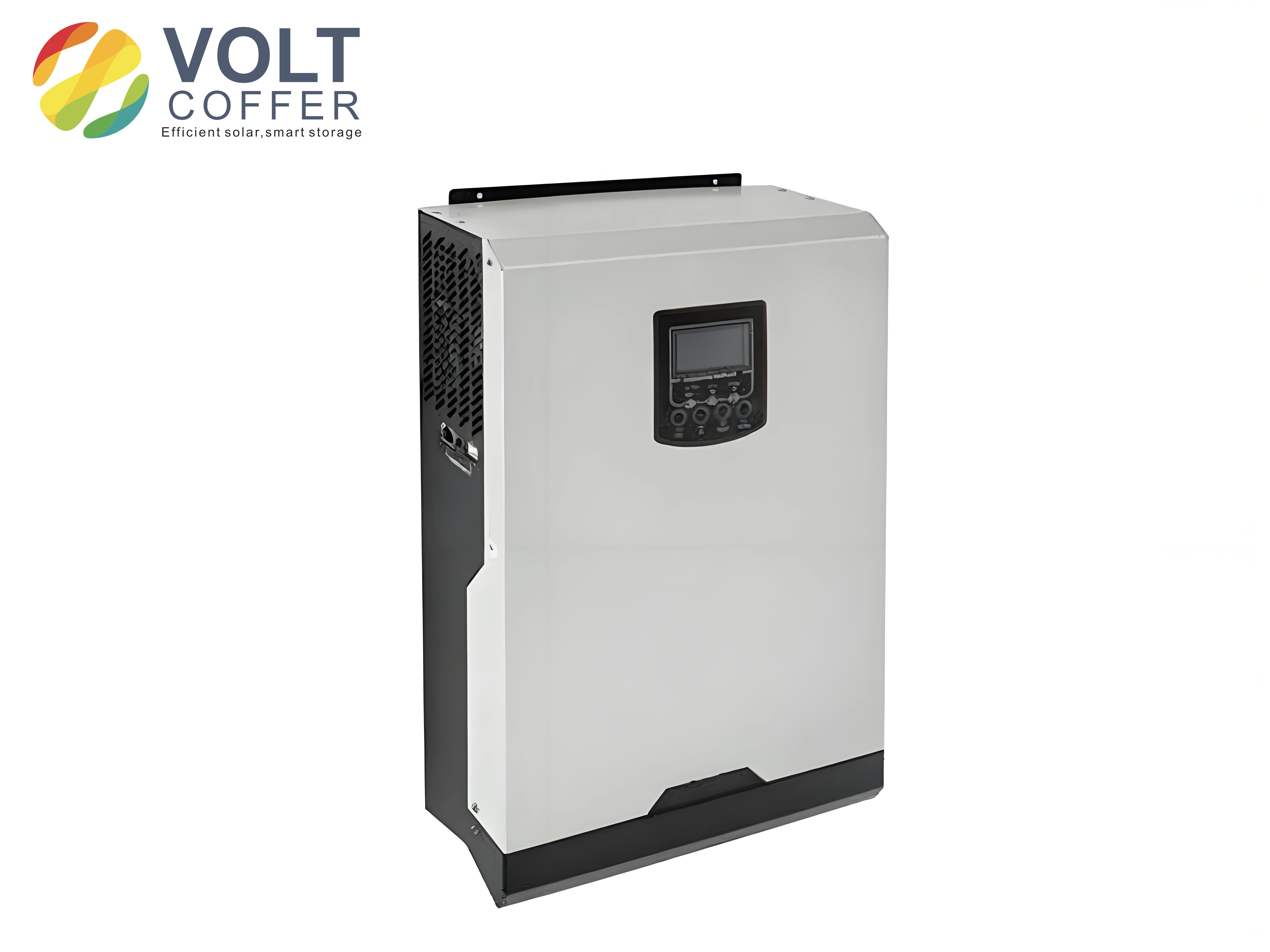
In the following sections, we detail the key technologies and methodologies, innovative aspects, and practical applications of our protocol adapter for solar inverters. We incorporate tables and mathematical formulations to summarize our findings, ensuring clarity and reproducibility. Our work underscores the transformative potential of this adapter in managing solar inverters efficiently, paving the way for smarter grid ecosystems.
Key Technologies and Methodologies
Our protocol adapter for solar inverters is built upon three core technological pillars: edge computing capabilities of distribution terminal units, point-to-point communication via High-Speed Power Line Carrier (HPLC), and low-code development platforms in the cloud. These elements work in tandem to facilitate real-time data exchange and control for solar inverters. The adapter acts as a bridge between heterogeneous solar inverter protocols and centralized management systems, enabling seamless integration.
The architecture of our system can be represented mathematically to illustrate data flow and processing. For instance, the data transmission from a solar inverter to the cloud via the adapter can be modeled using a queueing theory approach. Let \( D_i \) denote the data packet from the i-th solar inverter, and \( T \) represent the transmission time. The overall latency \( L \) can be expressed as:
$$ L = \sum_{i=1}^{n} \frac{D_i}{B} + P_c $$
where \( n \) is the number of solar inverters, \( B \) is the bandwidth of the HPLC channel, and \( P_c \) is the processing delay at the edge terminal. This formula helps in optimizing the adapter’s performance for large-scale deployments of solar inverters.
To further elucidate the components, we present Table 1, which summarizes the functional roles of each unit in the system. This includes the master station, edge terminal, and the protocol adapter itself, all centered around managing solar inverters.
| Component | Primary Function | Role in Solar Inverter Management |
|---|---|---|
| Master Station | Low-voltage new energy management system | Communicates business data with edge terminals and supports low-code app development for solar inverter control. |
| Edge Terminal (Fusion Terminal) | Edge computing unit | Hosts apps that parse, store, and forward data from solar inverters; executes control commands based on configuration. |
| Protocol Adapter | Communication bridge | Converts proprietary solar inverter protocols to standard formats; uses cache for point-table information to enable plug-and-play operation. |
| HPLC Communication | Point-to-point data transfer | Ensures reliable, high-speed communication between solar inverters and the adapter, minimizing packet loss. |
The protocol adapter for solar inverters employs a modular software architecture, allowing for rapid iteration through low-code platforms. This is particularly advantageous when dealing with diverse solar inverter models, as it reduces development time and costs. The data mapping process in the adapter can be described using a transformation function. Suppose a solar inverter outputs data in a proprietary format \( F_p \), which is converted to a standardized IoT protocol \( F_s \). The transformation is given by:
$$ F_s = A \cdot F_p + C $$
where \( A \) is the adaptation matrix accounting for protocol differences, and \( C \) represents constant offsets or calibration factors. This linear model simplifies the integration of multiple solar inverters into a unified system.
Moreover, we have developed a caching mechanism within the adapter to store point-table information, which defines the data points for each solar inverter. This cache is updated dynamically, ensuring that the adapter can handle real-time commands without delays. The efficiency of this approach is validated through simulations involving hundreds of solar inverters, demonstrating scalability and robustness.
Innovative Research Contributions
Our research introduces several innovative features tailored to solar inverter management. First, the adapter’s direct integration into distribution terminals enables automatic data upload upon power-up, enhancing the granularity of grid management. This is critical for solar inverters, as it allows for immediate visibility into their operational status. Second, the adapter supports arbitrary MODBUS protocol terminals, which are commonly used in solar inverters. By utilizing point-table configurations, it facilitates data reading and control command issuance, thereby lowering installation and maintenance expenses.
A key innovation lies in the adapter’s compatibility with multiple solar inverter communication protocols. This eliminates the need for custom solutions for each solar inverter type, reducing system upgrade costs. We have achieved this through a unified communication framework that maps diverse protocols to IoT standards. Table 2 highlights the comparative advantages of our adapter over existing methods for solar inverter integration.
| Approach | Compatibility with Solar Inverters | Installation Complexity | Maintenance Cost |
|---|---|---|---|
| Traditional Smart Breakers | Limited to specific solar inverter models | High | High |
| 4G Communication Modules | Moderate, but prone to latency | Medium | Medium |
| Our Protocol Adapter | High, supports multiple solar inverter protocols | Low (plug-and-play) | Low |
Another significant contribution is the development of a simple and reliable device that requires no maintenance and offers plug-and-play functionality. This is achieved through rigorous testing with various solar inverter brands, ensuring that the adapter can handle fluctuations in data rates and command frequencies. The reliability metric \( R \) for the adapter when interfacing with solar inverters can be expressed as:
$$ R = 1 – \prod_{j=1}^{m} (1 – r_j) $$
where \( r_j \) is the reliability of the j-th solar inverter connection, and \( m \) is the total number of connected solar inverters. This formula underscores the adapter’s ability to maintain high availability even in large networks.
Furthermore, our adapter incorporates security features to protect data integrity from solar inverters to the cloud. By encrypting communication channels and implementing authentication mechanisms, we mitigate risks associated with unauthorized access. This is vital for solar inverter systems, as they often handle sensitive operational data.
Application and Practical Implementation
We have deployed our protocol adapter in pilot distribution areas to validate its effectiveness in managing solar inverters. The application scenarios involved real-time monitoring and flexible control of multiple solar inverters, resulting in improved voltage regulation and reduced overload incidents. The adapter’s plug-and-play capability allowed for rapid deployment, with solar inverters automatically transmitting data upon connection.
The advantages observed in these applications are multifaceted. Firstly, the zero-code development environment enabled configuration through simple drag-and-drop actions in the cloud platform. This drastically reduced the time required to integrate new solar inverter models. Secondly, the extensibility of the system minimized the need for on-site maintenance, leading to significant cost savings. Table 3 summarizes the performance metrics from our pilot deployments, focusing on solar inverter management.
| Metric | Before Adapter Deployment | After Adapter Deployment | Improvement |
|---|---|---|---|
| Data Transmission Latency (ms) | 150-200 | 50-80 | ~60% reduction |
| Number of Solar Inverters Managed | Up to 50 | Over 200 | 4x increase |
| Maintenance Incidents per Year | 15-20 | 2-5 | ~75% reduction |
| Integration Time for New Solar Inverter (hours) | 8-12 | 1-2 | ~85% reduction |
In terms of economic impact, the adapter reduces the total cost of ownership for solar inverter systems by streamlining operations. The cost savings \( S \) can be approximated using the formula:
$$ S = C_i \cdot N + M \cdot T_m $$
where \( C_i \) is the initial integration cost per solar inverter, \( N \) is the number of solar inverters, \( M \) is the annual maintenance cost, and \( T_m \) is the time period. Our deployments have shown that \( S \) increases substantially with scale, making the adapter a cost-effective solution for large networks of solar inverters.
Additionally, the adapter supports group management and control of solar inverters, allowing for coordinated responses to grid events. For example, during peak solar generation, the adapter can issue commands to multiple solar inverters to curtail output, preventing voltage violations. This capability is encapsulated in the control algorithm:
$$ U = K_p \cdot (V_{ref} – V_{actual}) + K_i \cdot \int (V_{ref} – V_{actual}) \, dt $$
where \( U \) is the control signal sent to solar inverters, \( V_{ref} \) is the reference voltage, \( V_{actual} \) is the measured voltage, and \( K_p \), \( K_i \) are proportional and integral gains. This PID-based approach ensures stable operation of solar inverters in dynamic grid conditions.
Conclusion
In summary, our development of a protocol adapter for distributed solar inverters represents a significant advancement in grid management technology. By harnessing edge computing, HPLC communication, and low-code platforms, we have created a system that enables comprehensive monitoring and control of solar inverters. The adapter’s ability to unify diverse protocols and provide plug-and-play functionality addresses critical challenges in the renewable energy sector. Our experimental results confirm that it enhances the visibility, measurability, and controllability of solar inverters, thereby supporting the transition to sustainable energy systems.
Looking ahead, we plan to extend this work to incorporate artificial intelligence for predictive maintenance of solar inverters, further optimizing their lifespan and performance. The protocol adapter serves as a foundational element for future smart grid innovations, emphasizing the pivotal role of solar inverters in achieving energy sustainability. Through continuous refinement and scaling, we believe this technology will contribute significantly to global efforts in carbon reduction and grid modernization.