
As a renewable energy professional, I have dedicated significant effort to improving the reliability and efficiency of solar power systems. Solar inverters play a pivotal role in these systems by converting direct current (DC) from photovoltaic panels into alternating current (AC) suitable for grid integration. However, internal faults in solar inverters can lead to reduced performance, unexpected downtime, and financial losses. In this article, I present a comprehensive fault diagnosis method based on current waveform analysis, which enables rapid detection and precise localization of issues within solar inverters. By leveraging high-frequency data acquisition, feature extraction, and intelligent pattern recognition, this approach enhances maintenance strategies and ensures stable operation. Throughout this discussion, I will emphasize the importance of monitoring solar inverters and provide detailed insights supported by formulas, tables, and practical examples.
Solar inverters are essential components in photovoltaic systems, responsible for maximizing energy harvest through maximum power point tracking (MPPT) and ensuring grid compliance. A typical voltage-source solar inverter comprises power switches like IGBTs, DC-link capacitors, AC-side filters, and control systems. During operation, the inverter’s control unit generates pulse-width modulation (PWM) signals to switch the IGBTs, producing a sinusoidal AC output. Despite their robustness, solar inverters are susceptible to various internal faults due to thermal stress, aging, or environmental factors. Common issues include DC-link capacitor degradation, IGBT driver failures, and filter circuit abnormalities, all of which manifest as distortions in the output current waveform. For instance, a faulty solar inverter might exhibit current asymmetry, harmonic distortions, or amplitude deviations, signaling underlying problems that require immediate attention.
To systematically address these challenges, I have developed a fault diagnosis framework that analyzes current waveforms from solar inverters. The methodology involves three key stages: data acquisition and feature extraction, abnormal waveform pattern recognition, and fault localization. First, current waveforms are sampled at high frequencies (e.g., 10 kHz or higher) using precision sensors, such as Hall-effect devices. The raw data is then preprocessed to remove noise and normalize values. Critical features, including peak current, root mean square (RMS) value, total harmonic distortion (THD), and harmonic components, are extracted and compared against predefined thresholds. For example, the THD for a healthy solar inverter should remain below 3%, while deviations beyond 5% in peak current indicate potential faults. The formula for THD is given by:
$$THD = \frac{\sqrt{\sum_{h=2}^{\infty} I_h^2}}{I_1} \times 100\%$$
where \( I_1 \) is the fundamental current amplitude and \( I_h \) represents the harmonic components. Additionally, the DC component ratio, denoted as \( \eta \), is calculated to assess voltage ripple effects:
$$\eta = \frac{V_{dc}}{V_{ac}} \times 100\%$$
Here, \( V_{dc} \) is the DC offset amplitude, and \( V_{ac} \) is the AC component RMS value. A value of \( \eta \) exceeding 5% often points to DC-side capacitor issues in solar inverters.
In the pattern recognition stage, the measured current waveform is compared to an ideal sinusoidal reference using correlation analysis. A correlation coefficient below 0.9 signifies significant deviation. By examining the distortion characteristics—such as sharp peaks during switching transitions or asymmetry between positive and negative half-cycles—the method identifies probable fault modes. For instance, asymmetrical waveforms may indicate DC-link capacitor aging, while high-frequency oscillations suggest filter inductor or capacitor faults. To aid in this process, I have compiled a knowledge base of fault patterns specific to solar inverters, which facilitates quick preliminary identification.
The final stage, fault localization, employs case-based reasoning and data mining to pinpoint defective components. Historical data from similar solar inverter failures are referenced to refine the diagnosis. For example, if current waveforms show elevated 5th harmonic content, the system might flag the DC-side capacitors or IGBT modules as likely culprits. The following table summarizes key current waveform parameters and their implications for fault detection in solar inverters:
| Feature Parameter | Normal Range | Warning Threshold | Fault Indicator |
|---|---|---|---|
| Peak Current | ±5% of rated value | ±10% of rated value | ±15% of rated value |
| THD | ≤ 2% | 2% – 3% | > 3% |
| 5th Harmonic Content | ≤ 0.5% of fundamental | 0.5% – 1.5% | > 1.5% |
| 7th Harmonic Content | ≤ 0.3% of fundamental | 0.3% – 1% | > 1% |
| DC Component Ratio (η) | ≤ 1% | 1% – 2% | > 2% |
This tabular representation helps maintenance teams quickly assess the health of solar inverters and take corrective actions. Moreover, integrating real-time monitoring systems allows for continuous evaluation, reducing the risk of unexpected failures.
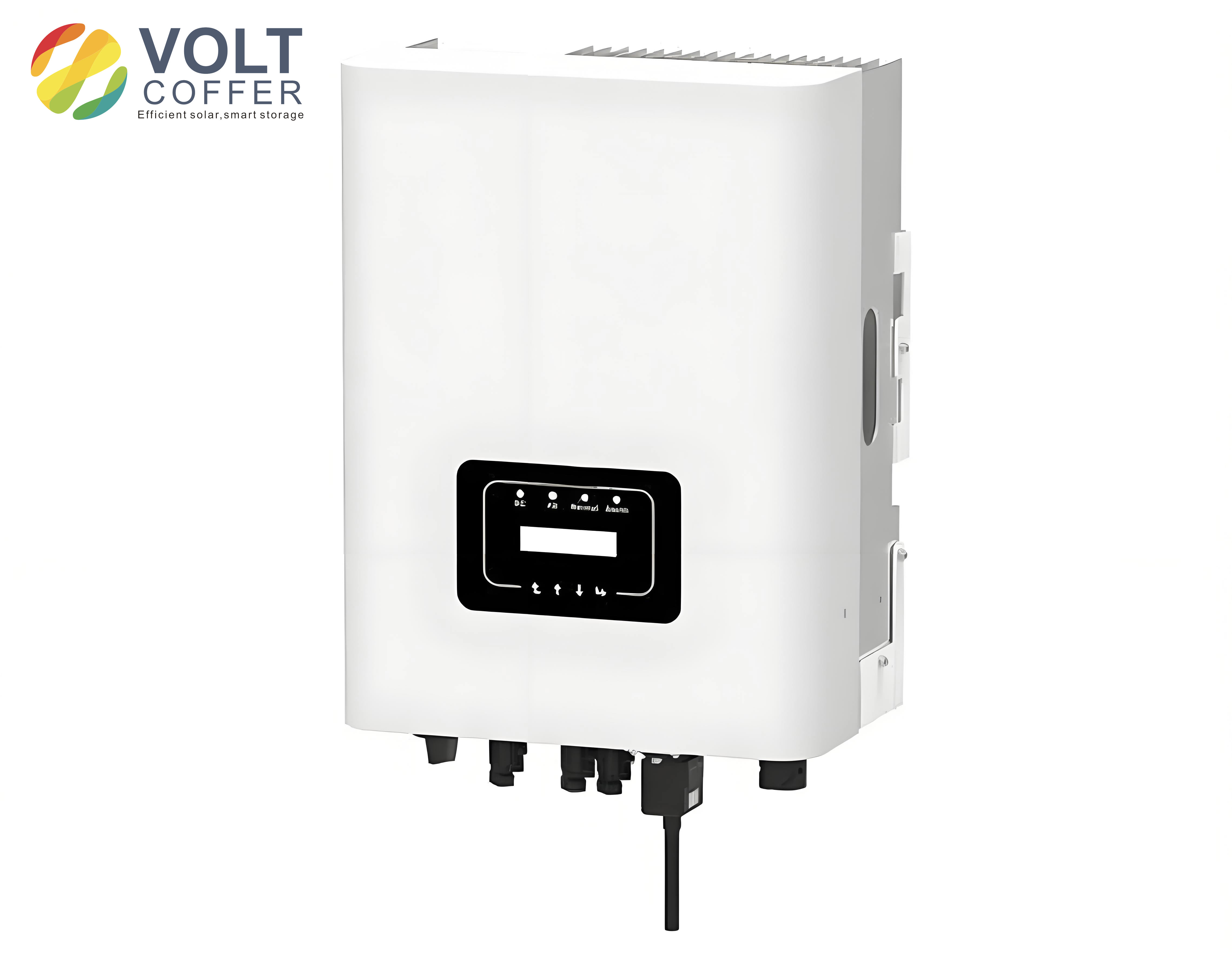
To validate this diagnosis method, I applied it to a case study involving a 500 kW centralized solar inverter in a large-scale photovoltaic plant. This solar inverter featured a three-phase bridge topology with six IGBT switches, two 2200 μF DC-link capacitors, and output filter inductors. During routine inspections, the solar inverter exhibited power fluctuations and reduced output compared to peers. Current waveform analysis revealed a THD of 8.2%, far exceeding the 3% threshold, along with significant 5th harmonic content at 4.3% of the fundamental. The waveform displayed flat-topped peaks and asymmetry, with the negative half-cycle peak 15% lower than the positive half-cycle. Using the diagnostic steps outlined earlier, I identified DC-link capacitor aging as the root cause, confirmed by a DC voltage ripple peak of 35 V and a DC component ratio η of 6.8%. After replacing the capacitors and adjusting control parameters, the solar inverter’s performance improved markedly, as shown in the table below:
| Parameter | Before Diagnosis | After Diagnosis |
|---|---|---|
| Fundamental Current Amplitude (A) | 166 | 245 |
| THD (%) | 8.2 | 1.9 |
| 5th Harmonic Content (%) | 4.3 | 0.8 |
| 7th Harmonic Content (%) | 2.6 | 0.5 |
| DC Component Ratio η (%) | 6.8 | 0.7 |
This case underscores the effectiveness of current waveform analysis in diagnosing solar inverter faults. By implementing this method, operators can achieve faster response times and lower maintenance costs. Furthermore, the approach is scalable to various types of solar inverters, including string and micro-inverters, with adjustable thresholds based on capacity and design. For example, larger solar inverters might have a slightly higher THD tolerance, up to 4%, to account for operational variances.
In conclusion, the fault diagnosis technique described here leverages current waveform analysis to enhance the reliability of solar inverters. Through high-frequency sampling, feature extraction, and intelligent pattern matching, it enables early detection and precise localization of internal faults. As solar energy continues to grow, such advanced methods will be crucial for optimizing the performance and longevity of solar inverters. Future work could integrate machine learning algorithms to predict faults before they occur, further advancing the resilience of photovoltaic systems. Ultimately, this contribution aims to support the global transition to sustainable energy by ensuring that solar inverters operate at their highest potential.