
In the operation of photovoltaic (PV) systems, solar inverters are critical components that convert direct current (DC) from solar panels into alternating current (AC) for grid integration. However, parallel resonance phenomena can occur due to interactions among multiple solar inverters, leading to significant operational challenges. Resonance in solar inverter clusters causes current waveform distortion, increased energy losses, excessive heating of equipment, and potential malfunction of protection devices, which may result in system shutdowns or damage. These issues underscore the importance of developing effective resonance suppression techniques to enhance the stability and reliability of large-scale PV systems. String solar inverters, known for their modular characteristics, offer a promising platform for implementing adaptive control strategies. This paper presents a novel adaptive suppression method for resonance in string solar inverter clusters, focusing on机理 analysis, efficient suppression techniques, and experimental validation to address existing limitations in conventional approaches.
Conventional methods for resonance suppression in solar inverter clusters often rely on maximum power point tracking (MPPT) to eliminate low-order harmonics. However, these approaches are susceptible to dual-feedback协同 control effects, leading to high harmonic distortion rates. To overcome this, the proposed method emphasizes a comprehensive understanding of resonance mechanisms and incorporates adaptive parameters to dynamically adjust to varying operating conditions. The key contributions include the development of an adaptive parameter estimation model and a strategic suppression framework that reduces computational complexity while improving reliability. By leveraging the inherent properties of string solar inverters, this approach aims to minimize resonance risks in PV systems, ensuring smoother operation and extended equipment lifespan.
The resonance in solar inverter clusters primarily arises from impedance interactions and harmonic injections within the network. Factors such as grid impedance variations, switching frequencies, and load changes can exacerbate these resonances. Traditional suppression techniques, including passive filtering and fixed control parameters, often fail to adapt to dynamic environments, resulting in inadequate performance. In contrast, the proposed adaptive method continuously monitors system parameters and adjusts suppression actions in real-time. This not only enhances the suppression effectiveness but also reduces the need for complex hardware modifications, making it suitable for large-scale deployments of solar inverters.
To implement the adaptive suppression, the first step involves constructing a parameter estimation model that accounts for harmonic components in the solar inverter output voltage. This model divides the three-phase components and analyzes characteristic control parameters to avoid over-complication. According to Kirchhoff’s Current Law (KCL), the three-phase static relationships are established, followed by a Clarke transformation to derive the inverter adaptive suppression equation in the stationary coordinate system. The reference voltage equation is given by:
$$ U_{ref} = U_R – U_{OK} $$
where \( U_R \) represents the adaptive suppression target vector, and \( U_{OK} \) denotes the resonant dynamic control parameter. This equation forms the basis of the adaptive suppression parameter estimation model, which effectively regulates inverter output voltage, filter capacitance, and other critical parameters. The model’s structure ensures reliable control by integrating feedback mechanisms that respond to harmonic disturbances, thereby enhancing the overall performance of solar inverters in cluster configurations.
The adaptive suppression strategy addresses the issue of steady-state tracking error and reduces resonance fluctuations by calculating the solar inverter output current \( I \) based on idealized parameter relationships. The formula for the output current is:
$$ I = I_S + K \cdot q \cdot (T – T_{ref}) $$
Here, \( I_S \) is the adaptive resonant current, \( K \) is a operational constant, \( q \) represents the total load, and \( T \) is the output reference value. This calculation enables the derivation of the adaptive suppression topology for solar inverter clusters, which facilitates the generation of effective suppression signals. The topology incorporates multiple switching states to define harmonic control vectors and adjustment voltages, as expressed by:
$$ U_{Ao} = S_A \cdot \frac{U_{dc}}{2} $$
$$ U_{Bo} = S_B \cdot \frac{U_{dc}}{2} $$
$$ U_{Co} = S_C \cdot \frac{U_{dc}}{2} $$
$$ U_{oN} = -\frac{1}{3} [S_A + S_B + S_C] \cdot \frac{U_{dc}}{2} $$
In these equations, \( U_{Ao} \), \( U_{Bo} \), and \( U_{Co} \) are the harmonic control vectors for the solar inverter, \( U_{oN} \) is the adjustment voltage, \( U_{dc} \) is the combined suppression parameter, and \( S_A \), \( S_B \), \( S_C \) represent the adaptive suppression modes under different switching states. This strategy clarifies the suppression objectives, simplifies computations, and improves the efficiency of resonance control in solar inverter clusters.
To validate the proposed method, an experimental setup was configured using MATLAB/Simulink simulation software and a TMS320F2812 digital signal processor for processing experimental spectra. The platform featured components such as DC capacitors, power supplies, and control boards, with a layered control program to handle experimental parameters. The initial operating conditions for the solar inverters were set with a power factor of 1 and a current RMS value of 29 A. Modulation indices were adjusted accordingly, and the suppression performance was evaluated under varying output power levels.
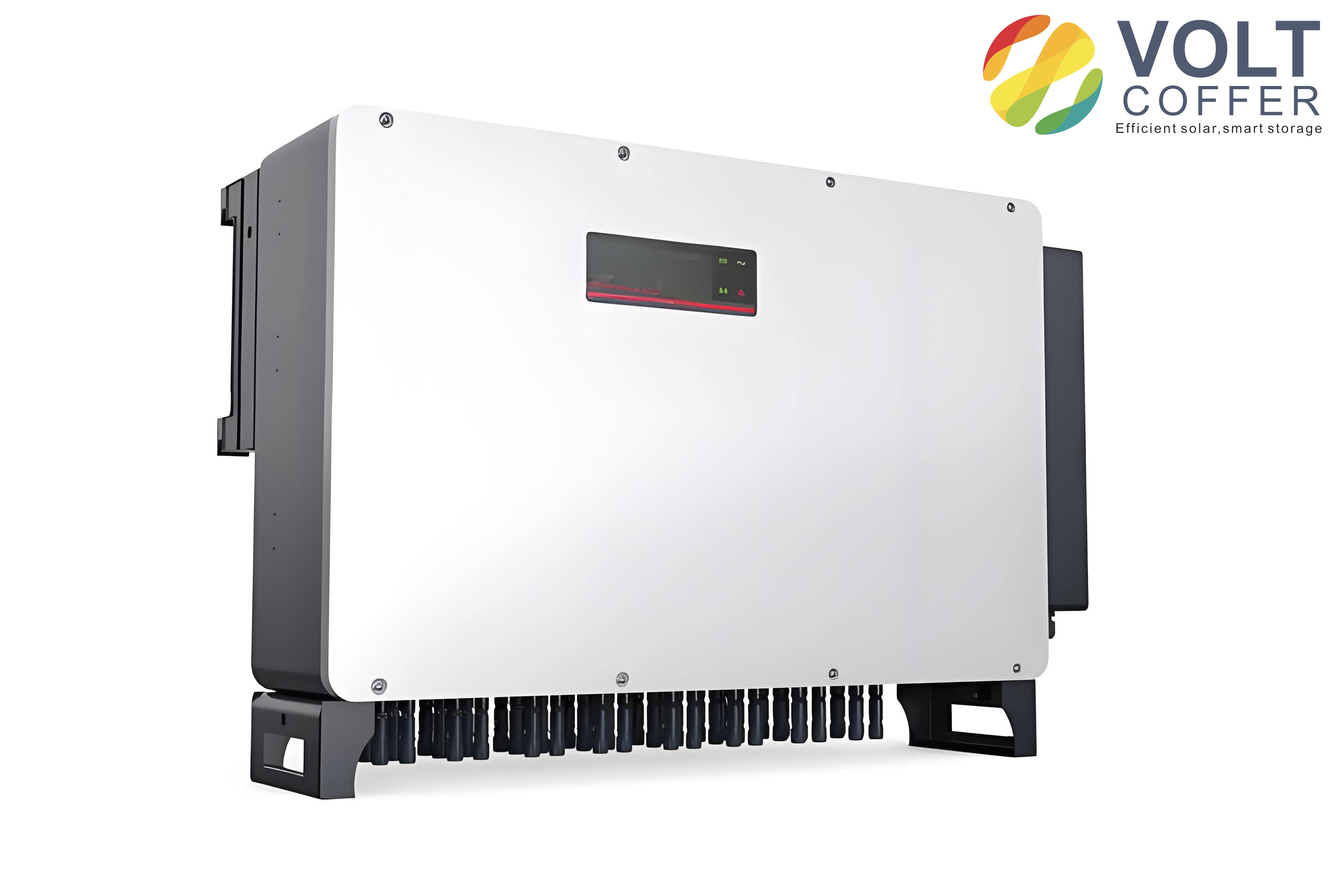
The experimental results demonstrated the effectiveness of the adaptive suppression method for solar inverter clusters. The harmonic distortion rates were measured at different output power percentages (30%, 50%, 70%, and 100%) and DC voltage levels, as summarized in the following tables. For comparison, results from conventional methods are also included to highlight the advantages of the proposed approach.
| DC Voltage (V) | 30% Output Power | 50% Output Power | 70% Output Power | 100% Output Power |
|---|---|---|---|---|
| 200 | 1.58% | 1.45% | 2.32% | 1.11% |
| 250 | 1.43% | 2.87% | 1.54% | 2.32% |
| 300 | 1.69% | 1.12% | 1.14% | 2.52% |
| 350 | 2.87% | 2.36% | 2.39% | 2.45% |
| 400 | 2.45% | 2.95% | 1.62% | 1.32% |
| 450 | 1.24% | 1.87% | 2.42% | 2.96% |
| 500 | 1.36% | 2.14% | 1.36% | 1.65% |
The above table shows that the proposed adaptive suppression method maintains low harmonic distortion rates across all tested conditions, with values generally below 3%. This consistency underscores the reliability of the method in managing resonance in solar inverter clusters, even as operational parameters vary.
| DC Voltage (V) | 30% Output Power | 50% Output Power | 70% Output Power | 100% Output Power |
|---|---|---|---|---|
| 200 | 10.15% | 15.15% | 15.41% | 15.52% |
| 250 | 15.24% | 14.36% | 14.23% | 11.14% |
| 300 | 14.32% | 11.25% | 11.63% | 12.21% |
| 350 | 11.14% | 12.41% | 12.54% | 13.32% |
| 400 | 12.36% | 13.23% | 13.12% | 16.63% |
| 450 | 13.52% | 16.65% | 16.36% | 15.59% |
| 500 | 16.43% | 15.23% | 15.46% | 14.45% |
In contrast, Conventional Method A exhibits significantly higher harmonic distortion rates, often exceeding 10%, which indicates inadequate resonance suppression. This method’s performance is compromised by its inability to adapt to dynamic grid conditions, leading to elevated risks for solar inverter clusters.
| DC Voltage (V) | 30% Output Power | 50% Output Power | 70% Output Power | 100% Output Power |
|---|---|---|---|---|
| 200 | 15.48% | 15.15% | 12.45% | 15.14% |
| 250 | 14.51% | 14.23% | 11.14% | 14.15% |
| 300 | 11.23% | 11.65% | 12.22% | 11.19% |
| 350 | 12.65% | 12.41% | 13.58% | 12.36% |
| 400 | 13.65% | 13.25% | 16.06% | 13.58% |
| 450 | 16.41% | 16.39% | 15.85% | 16.75% |
| 500 | 19.25% | 15.68% | 14.13% | 15.23% |
Similarly, Conventional Method B shows high distortion rates, particularly at higher DC voltages, with values reaching up to 19.25%. This further validates the superiority of the proposed adaptive suppression method for solar inverter clusters, as it consistently maintains low distortion levels, ensuring stable operation.
The experimental spectra analysis revealed that the proposed method resulted in lower harmonic amplitudes compared to conventional approaches. This is attributed to the adaptive parameter estimation and suppression strategy, which dynamically adjusts to resonance conditions in solar inverters. The use of real-time monitoring and control allows for precise harmonic cancellation, reducing the overall impact on the PV system. Additionally, the method’s scalability makes it suitable for various configurations of solar inverter clusters, from small-scale installations to large grid-connected systems.
In conclusion, the adaptive suppression method for string solar inverter clusters presented in this paper effectively addresses resonance issues by integrating a robust parameter estimation model and a strategic control framework. The experimental results confirm that this approach achieves low harmonic distortion rates across different operating conditions, outperforming conventional methods. By enhancing the stability and reliability of solar inverters, this method contributes to the overall efficiency of photovoltaic systems, supporting the transition to renewable energy sources. Future work will focus on optimizing the adaptive algorithms for broader applications and conducting field tests to further validate the method’s practicality in real-world solar inverter deployments.
The development of such adaptive techniques is crucial for the advancement of solar energy technologies, as solar inverters play a pivotal role in grid integration. As the demand for clean energy grows, ensuring the resilient operation of solar inverter clusters will become increasingly important. This research underscores the potential of adaptive control strategies to mitigate resonance-related challenges, paving the way for more sustainable and reliable PV systems.