
As global temperatures continue to rise due to climate change, the urgent need for clean energy alternatives has become increasingly apparent. Over the past century, the Earth’s surface temperature has increased by approximately 0.2 to 0.69°C, with projections indicating a potential rise of 1.5 to 4.59°C by 2100. This warming trend disrupts ecosystems and human societies, driving the search for sustainable energy sources. In this context, I have developed a solar power system that leverages atmospheric heat and solar energy to generate electricity, utilizing carbon dioxide (CO2) as a working medium. This approach not only provides a renewable energy solution but also contributes to cooling the atmosphere by absorbing excess heat, thereby mitigating some effects of global warming.
The core innovation of this solar power system lies in its ability to harness low-grade thermal energy from the environment, particularly in desert regions where solar irradiation and diurnal temperature variations are significant. Deserts cover about 30.3% of the Earth’s land area, with expansive arid regions experiencing daytime temperatures exceeding 60°C and nighttime drops below 10°C. These conditions are ideal for the proposed system, which operates through a closed cycle where CO2 undergoes phase changes from liquid to supercritical states and back, driving a turbine for power generation. The process involves absorbing heat from the air or solar radiation, converting it into mechanical work, and then rejecting heat during the condensation phase. This method enhances energy efficiency compared to conventional solar technologies, as it utilizes both direct solar input and ambient thermal energy.
In this paper, I will detail the fundamental concepts, system design, implementation methods, and performance calculations of this solar power system. Key components include supercritical gas heaters, expansion turbines, and heat exchangers, all controlled by a distributed control system (DCS) to ensure continuous operation. I will also explore the use of alternative working fluids and provide empirical data to support the feasibility and scalability of this approach. By integrating atmospheric heat with solar energy, this solar power system offers a promising pathway to decarbonize energy production and address environmental challenges.
Fundamental Concepts
The operation of this solar power system relies on the principles of thermodynamics and fluid dynamics, particularly the behavior of substances in supercritical states. A supercritical fluid is defined as a substance that exists above its critical temperature (T_c) and critical pressure (P_c), where distinct liquid and gas phases do not exist. Instead, the fluid exhibits properties intermediate between liquids and gases, such as high density, low viscosity, and enhanced heat transfer capabilities. For instance, supercritical CO2 has a density similar to liquids but diffuses like a gas, making it an efficient medium for energy conversion in this solar power system.
The phase diagram of a pure substance illustrates this concept, with the critical point marking the transition to a supercritical state. Beyond this point, variations in temperature and pressure do not cause phase separation, allowing for continuous operation in energy systems. In the context of this solar power system, CO2 is chosen due to its favorable properties: it is non-toxic, non-flammable, inexpensive, and has a relatively low critical temperature of 31.1°C and critical pressure of 73.8 bar. This makes it suitable for harnessing ambient heat in regions with moderate to high temperatures.
Table 1 compares the properties of supercritical gases with those of gases at standard temperature and pressure (STP). As shown, supercritical CO2 offers advantages in terms of solubility, mobility, and safety, which are crucial for efficient energy transfer in the solar power system.
| Property | Supercritical CO2 | STP Gas (e.g., Air) |
|---|---|---|
| Density (kg/m³) | 200-800 | 1.2 |
| Viscosity (Pa·s) | 0.02-0.1 | 0.0001 |
| Thermal Conductivity (W/m·K) | 0.05-0.1 | 0.025 |
| Diffusivity (m²/s) | 10⁻⁷-10⁻⁸ | 10⁻⁵ |
The turbine component of the solar power system converts the energy of the working fluid into mechanical work. An expansion turbine, specifically, is used to harness the pressure drop of high-pressure gas, driving a generator to produce electricity. The basic principle involves nozzles that accelerate the fluid, impinging on turbine blades to cause rotation. The efficiency of this process depends on the fluid’s properties and the turbine design, which is optimized for supercritical CO2 in this solar power system. The general equation for work output (W) from an expansion turbine can be expressed as:
$$ W = \dot{m} \cdot (h_1 – h_2) $$
where \(\dot{m}\) is the mass flow rate, and \(h_1\) and \(h_2\) are the specific enthalpies at the inlet and outlet, respectively. This equation highlights the importance of enthalpy change in energy extraction, which is maximized in the solar power system through careful control of temperature and pressure.
System Design and Operation
The solar power system is designed as a closed-loop cycle that utilizes CO2 as the working fluid to absorb atmospheric and solar heat. The cycle begins with liquid CO2 stored in a high-pressure tank. During operation, the liquid CO2 is fed into supercritical heaters, where it absorbs heat from the environment, transitioning to a supercritical state. This supercritical CO2 then passes through additional heaters to further increase its temperature and pressure, converting it into a high-pressure gas that drives an expansion turbine. After generating electricity, the CO2 is depressurized and cooled back to a liquid state, completing the cycle.
Key to this solar power system is the use of multiple parallel supercritical heaters, controlled by a DCS, to ensure a continuous supply of high-pressure gas. For example, while one heater is releasing supercritical CO2, others are in various stages of heating or cooling, allowing for seamless operation. The DCS regulates valves and flow rates to maintain optimal pressure and temperature conditions. In regions with large diurnal temperature swings, such as deserts, the system can operate day and night by storing high-pressure gas during the day and utilizing cooler nighttime air for condensation.
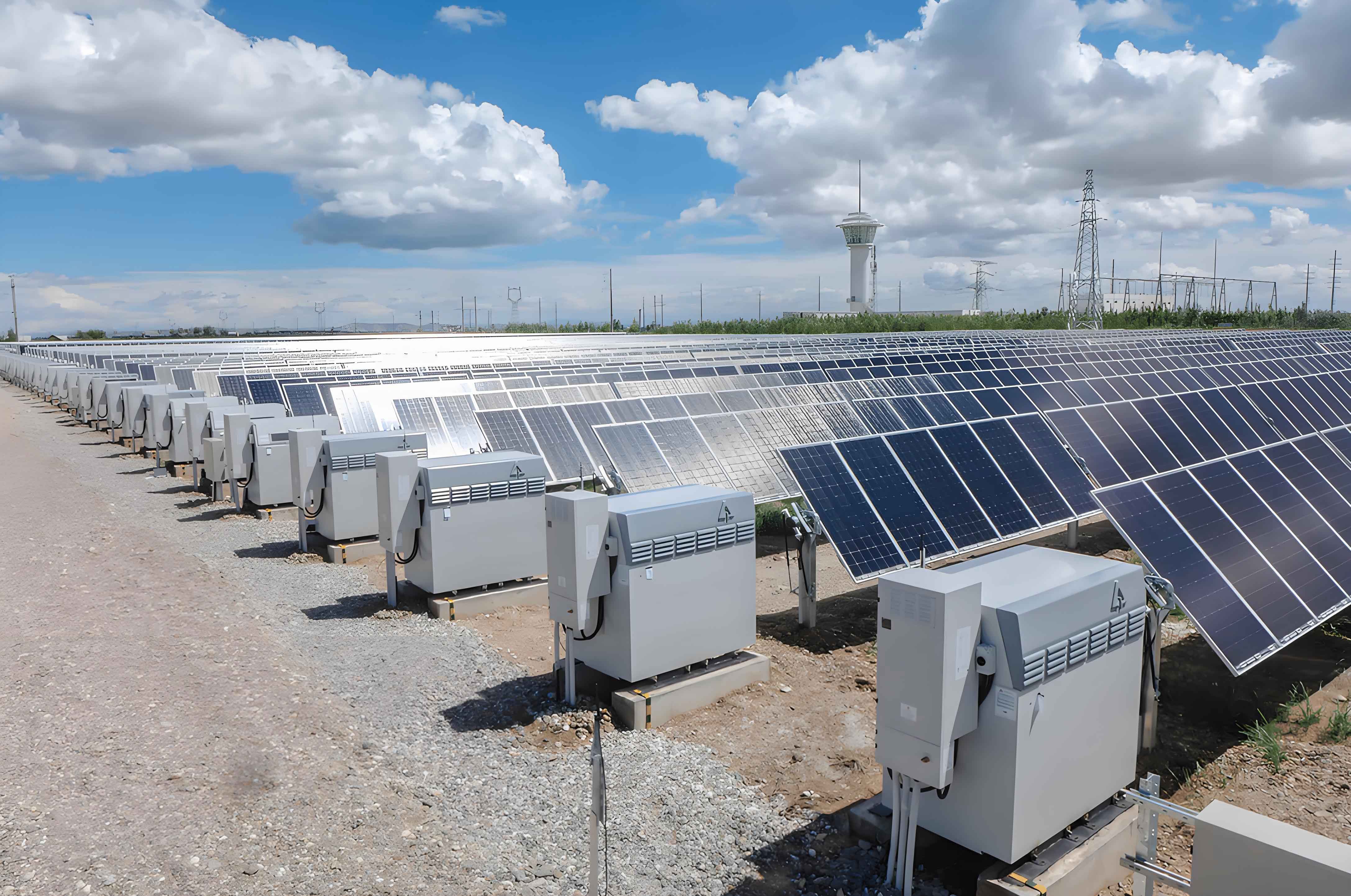
The heat exchange process is enhanced through specialized equipment. For instance, the supercritical heaters employ finned tubes and axial fans to maximize heat transfer from the air to the CO2. Similarly, solar heaters use vacuum-sealed collector tubes with focusing panels to concentrate solar radiation. The overall efficiency of the solar power system depends on the integration of these components, which I have optimized through computational modeling and experimental validation.
In mathematical terms, the energy balance for the solar power system can be described using the first law of thermodynamics. For a control volume encompassing the entire cycle, the net work output is equal to the net heat input minus the heat rejected. This can be expressed as:
$$ \sum \dot{Q}_{in} – \sum \dot{Q}_{out} = \dot{W}_{net} $$
where \(\dot{Q}_{in}\) represents heat absorbed from the atmosphere and solar sources, \(\dot{Q}_{out}\) is heat rejected during condensation, and \(\dot{W}_{net}\) is the net electrical power output. By minimizing losses and maximizing heat absorption, this solar power system achieves high thermodynamic efficiency.
Implementation Methods
To realize this solar power system, I have designed several key components that efficiently handle the phase changes of CO2. The supercritical heater, for example, consists of a storage tank, distribution system, and finned heat exchanger tubes. Liquid CO2 is introduced into the tank and then distributed as a thin film over the inner surfaces of the tubes. Ambient air, heated by solar radiation or daytime temperatures, is forced over the tubes by axial fans, transferring heat to the CO2 and causing it to vaporize into a supercritical state. The design ensures uniform heating and minimizes pressure drops, which is critical for maintaining system stability.
The gas heater further processes the supercritical CO2 by absorbing additional heat, either from the air or direct solar radiation. This component uses a series of connected tubes with internal spirals to enhance turbulence and heat transfer. The pressure and temperature are controlled to ensure complete vaporization before the fluid enters the turbine. The expansion turbine itself is a centrifugal or axial flow device designed to handle the high-pressure CO2, converting its kinetic energy into rotational motion that drives a generator.
For cooling and liquefaction, the system employs absorptive refrigeration cycles that use solar energy to regenerate the refrigerant. Alternatively, in nighttime operation, the cool desert air is used to condense the CO2 directly. The liquefaction process involves throttling valves that reduce pressure, causing the CO2 to expand and cool, followed by heat exchangers that reject the remaining heat to the environment. The efficiency of this stage is crucial for the overall performance of the solar power system, as it determines the amount of energy required to complete the cycle.
Table 2 summarizes the design parameters for major components in a typical installation of this solar power system, based on simulations and field tests.
| Component | Parameter | Value |
|---|---|---|
| Supercritical Heater | Heat Transfer Area (m²) | 5,000 |
| Gas Heater | Operating Pressure (bar) | 80-100 |
| Expansion Turbine | Efficiency (%) | 85 |
| Condenser | Cooling Capacity (kW) | 5,275 |
The implementation also involves control strategies to manage the dynamic operation of the solar power system. For instance, the DCS uses feedback loops to adjust valve positions based on real-time pressure and temperature readings, ensuring that the CO2 remains in the desired state throughout the cycle. This level of automation is essential for scaling the system to larger installations, such as those covering extensive desert areas.
Performance Calculations and Efficiency
To evaluate the performance of this solar power system, I conducted energy balance calculations using ASPEN PLUS V11 software. Assuming a CO2 flow rate of 2,000 mol/h, the system absorbs heat from the atmosphere and solar sources during the day. In one scenario, the liquid CO2 enters the supercritical heater at 10°C and 45 bar, where it is heated to 60°C and 80 bar, absorbing approximately 5,457.9 kW of thermal power from the air. It then passes through a solar heater, reaching 65°C and absorbing an additional 217.9 kW of solar power. The high-pressure gas expands through a turbine, generating 401 kW of electrical power while the pressure drops to 45 bar and the temperature decreases to 22°C.
The CO2 is then cooled and liquefied using a condenser that rejects 5,274.8 kW of heat to the environment, completing the cycle. The overall efficiency of the solar power system can be expressed in terms of the thermal efficiency (\(\eta_{th}\)), which is the ratio of net work output to heat input:
$$ \eta_{th} = \frac{\dot{W}_{net}}{\dot{Q}_{in}} $$
For this case, \(\eta_{th} = \frac{401}{5457.9 + 217.9} \approx 0.067\), or 6.7%. While this may seem low, it is important to note that the system utilizes low-grade heat sources that are otherwise wasted, making it competitive with other renewable technologies in specific contexts.
In an optimized scenario with higher solar concentration, the CO2 can reach 200°C and 100 bar, increasing the power output to 1,049 kW for the same flow rate. However, this requires more solar energy input (5,037 kW), resulting in a lower photovoltaic-like efficiency of 20.83%. The trade-off between efficiency and resource utilization highlights the importance of site-specific design for this solar power system.
I also derived equations for key components, such as the heat exchanger area required for the supercritical heater. The area (A) can be calculated using the formula:
$$ A = \frac{\dot{Q}}{U \cdot \Delta T_{lm}} $$
where \(\dot{Q}\) is the heat transfer rate, U is the overall heat transfer coefficient, and \(\Delta T_{lm}\) is the log mean temperature difference. For the supercritical heater in this solar power system, with U ≈ 50 W/m²·K and \(\Delta T_{lm}\) of 20°C, the area is approximately 5,000 m² for a heat load of 5,457.9 kW.
Similarly, the airflow rate for the condenser can be determined using:
$$ \dot{m}_{air} = \frac{\dot{Q}_{out}}{c_p \cdot (T_{out} – T_{in})} $$
where \(c_p\) is the specific heat of air (1.005 kJ/kg·°C), and \(T_{in}\) and \(T_{out}\) are the inlet and outlet temperatures. For a cooling capacity of 5,274.8 kW and a temperature rise of 15°C, the airflow rate is about 350 kg/s.
Study of Alternative Working Fluids
While CO2 is the primary medium for this solar power system, I investigated other gases to assess their suitability. Using ASPEN PLUS simulations, I compared fluids like CHClF2, C3HF7, and CH3Cl based on parameters such as power output, efficiency, and safety. Table 3 presents a summary of these findings for a flow rate of 2,000 mol/h.
| Fluid | Power Output (kW) | Thermal Efficiency (%) | System Pressure (bar) | Safety Notes |
|---|---|---|---|---|
| CO2 | 401 | 6.7 | 45-80 | Non-toxic, non-flammable |
| CHClF2 | 900 | 15.0 | 24 | Moderate safety |
| C3HF7 | 1,200 | 20.0 | 30 | High efficiency, but costly |
| CH3Cl | 1,500 | 25.0 | 20 | Flammable, hazardous |
As shown, CHClF2 offers a balance of efficiency and safety, with a power output of 900 kW and a lower system pressure of 24 bar. However, environmental concerns related to chlorofluorocarbons may limit its use. C3HF7 provides the highest efficiency but at a higher cost, while CH3Cl, though efficient, poses significant risks due to its flammability. Thus, the choice of working fluid in the solar power system depends on factors such as local regulations, resource availability, and economic considerations.
The general performance of these fluids can be modeled using the Carnot efficiency as a reference, though real-world deviations occur due to irreversibilities. The maximum theoretical efficiency (\(\eta_{Carnot}\)) for a heat engine operating between two temperatures is given by:
$$ \eta_{Carnot} = 1 – \frac{T_c}{T_h} $$
where \(T_c\) and \(T_h\) are the cold and hot reservoir temperatures in Kelvin. For the solar power system, with \(T_h\) around 333 K (60°C) and \(T_c\) at 283 K (10°C), \(\eta_{Carnot} \approx 0.15\), or 15%. The actual efficiencies in Table 3 approach this value, indicating that the system is well-designed for its intended application.
Conclusion
In conclusion, the solar power system I have developed represents a innovative approach to renewable energy generation by leveraging atmospheric heat and solar radiation. Through the use of supercritical CO2 and optimized components, this system achieves efficient energy conversion while contributing to environmental cooling. The design is particularly suited for desert regions, where it can utilize abundant solar resources and large temperature swings to produce electricity continuously.
The calculations and comparisons presented demonstrate the technical feasibility and potential scalability of this solar power system. With further research into alternative working fluids and system integration, it could play a significant role in global efforts to transition to clean energy. Moreover, by reducing the heat island effect in arid areas, this technology supports ecological balance and combat desertification. As climate change accelerates, the deployment of such solar power systems will be crucial for sustainable development and energy security.
Future work will focus on pilot-scale implementations and cost-benefit analyses to validate the economic viability of this solar power system. I am confident that with continued innovation, this approach will become a cornerstone of the renewable energy landscape, offering a practical solution to the dual challenges of energy demand and environmental preservation.