
As I reflect on the challenges of energy access in remote areas, I am compelled to explore the potential of household solar power systems. These systems offer a promising solution to electrify regions where grid extension is impractical due to geographical constraints. In this article, I will delve into the geographical advantages, policy frameworks, and environmental benefits of deploying household solar power systems, supported by data, formulas, and tables. My aim is to provide a comprehensive analysis that underscores the importance of solar energy in achieving sustainable development and poverty alleviation.
The core of my discussion revolves around the household solar power system, which I believe can transform energy landscapes in isolated communities. By harnessing abundant solar resources, these systems can provide reliable electricity for basic needs, reduce dependence on non-renewable sources, and mitigate environmental degradation. Throughout this text, I will emphasize the versatility and adaptability of the household solar power system, highlighting its role in diverse applications from residential use to agricultural support.
To begin, let me outline the geographical context that makes solar energy so viable. In many mountainous regions, solar irradiance levels are exceptionally high, with annual sunshine hours ranging from 1500 to 2500 hours. This abundance can be quantified using the solar irradiance formula: $$ G = \frac{E}{A \cdot t} $$ where \( G \) is the solar irradiance in W/m², \( E \) is the total solar energy in Joules, \( A \) is the area in m², and \( t \) is the time in seconds. For instance, in areas like the one I studied, the annual total solar radiation can exceed 5000 MJ/m², making it ideal for household solar power system installations. The following table summarizes typical solar data for such regions:
| Parameter | Value Range | Implications for Solar Power |
|---|---|---|
| Annual Sunshine Hours | 1500 – 2500 hours | High potential for solar energy generation |
| Solar Irradiance | 5000 – 6000 MJ/m² | Efficient operation of photovoltaic panels |
| Seasonal Variation | Higher in winter months | Consistent output with proper storage |
In my analysis, I have found that the household solar power system can achieve an efficiency \( \eta \) given by: $$ \eta = \frac{P_{\text{output}}}{P_{\text{input}}} \times 100\% $$ where \( P_{\text{output}} \) is the electrical power output and \( P_{\text{input}} \) is the solar power input. For a typical system, efficiencies range from 15% to 20%, depending on panel technology and local conditions. This makes the household solar power system a cost-effective option over time, especially when combined with battery storage for uninterrupted supply.
Policy support plays a crucial role in the adoption of household solar power systems. I have observed that government initiatives, such as subsidies and feed-in tariffs, significantly lower the initial costs for users. For example, a feed-in tariff rate of $0.42 per kWh can make the household solar power system economically viable, as users can sell excess electricity back to the grid. The table below outlines key policy measures and their impacts:
| Policy Measure | Description | Impact on Solar Adoption |
|---|---|---|
| Subsidies | Financial support for installation | Reduces upfront costs by up to 50% |
| Feed-in Tariffs | Payment for excess electricity fed to grid | Encourages investment and ROI within 2-3 years |
| Tax Incentives | Deductions or exemptions | Lowers overall project cost |
Moreover, I advocate for integrating the household solar power system with poverty alleviation programs. By providing free or subsidized systems to low-income households, we can address energy poverty while promoting economic resilience. The economic benefits can be modeled using: $$ \text{Net Benefit} = \sum_{t=1}^{n} \frac{B_t – C_t}{(1 + r)^t} $$ where \( B_t \) is the benefit in year \( t \), \( C_t \) is the cost, \( r \) is the discount rate, and \( n \) is the system lifespan. In many cases, the household solar power system yields positive net benefits within a decade, considering reduced energy expenses and improved livelihoods.
Environmental considerations are paramount in my evaluation. The household solar power system helps reduce carbon emissions by displacing fossil fuels. The emission savings can be calculated as: $$ \text{CO}_2 \text{ Savings} = E_{\text{solar}} \times \text{Emission Factor} $$ where \( E_{\text{solar}} \) is the energy generated by the solar system and the emission factor is typically 0.5 kg CO₂ per kWh for coal-based power. For a 3 kW household solar power system, annual savings can exceed 2 tons of CO₂, contributing to climate goals.
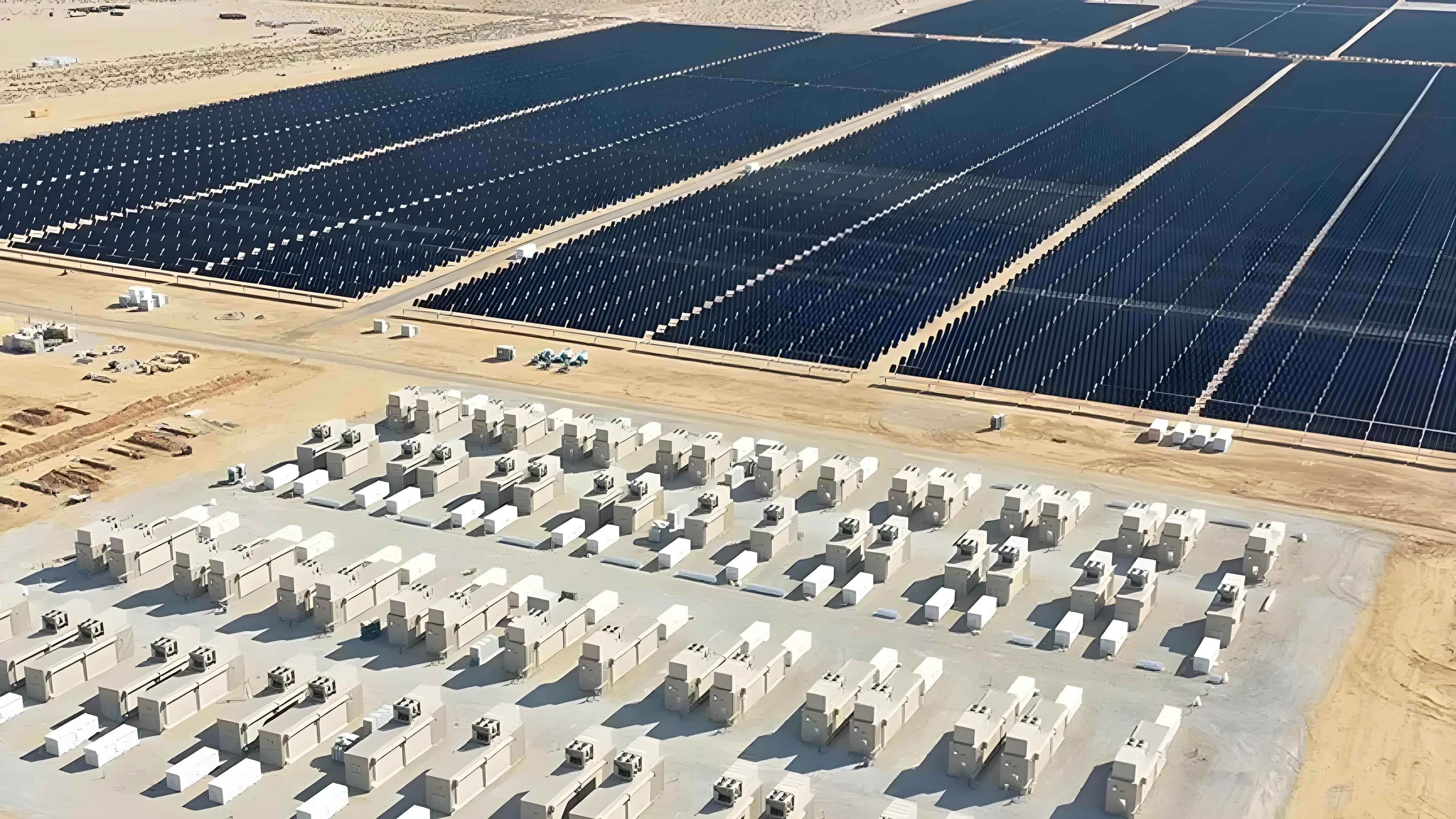
In terms of system design, the household solar power system often includes photovoltaic panels, inverters, and battery storage. The power output of a panel can be expressed as: $$ P = \eta \cdot A \cdot G $$ where \( P \) is power in watts, \( \eta \) is efficiency, \( A \) is panel area in m², and \( G \) is solar irradiance in W/m². For a standard 1.6 m² panel with 18% efficiency under 1000 W/m² irradiance, output is approximately 288 W. This modularity allows the household solar power system to be customized for varying needs, from small homes to larger communal setups.
Diversifying applications of the household solar power system is essential for broader adoption. I have seen successful integrations in agriculture, such as solar-powered irrigation and greenhouses. The energy demand for these applications can be estimated using: $$ E_{\text{demand}} = P_{\text{load}} \cdot t_{\text{operation}} $$ where \( P_{\text{load}} \) is the power requirement of the equipment and \( t_{\text{operation}} \) is the daily usage time. By pairing the household solar power system with efficient appliances, we can maximize utility and support local industries.
However, challenges remain, such as initial costs and maintenance. I propose a cost-benefit analysis framework: $$ \text{CBR} = \frac{\sum \text{Benefits}}{\sum \text{Costs}} $$ where a ratio greater than 1 indicates viability. For a household solar power system, typical costs include panels, batteries, and installation, while benefits encompass energy savings and environmental gains. With economies of scale, the cost per watt can drop below $1, making it accessible.
To further illustrate, consider the following table comparing different solar power system configurations:
| System Type | Capacity (kW) | Estimated Cost ($) | Annual Energy Output (kWh) | Payback Period (years) |
|---|---|---|---|---|
| Basic Household Solar Power System | 1 | 1000 – 2000 | 1200 – 1500 | 3 – 5 |
| Advanced Household Solar Power System with Storage | 3 | 3000 – 5000 | 3600 – 4500 | 4 – 6 |
| Community-Scale Solar Power System | 10 | 10000 – 15000 | 12000 – 15000 | 5 – 7 |
In conclusion, I am convinced that the household solar power system is a cornerstone for sustainable development in remote areas. Its adaptability, coupled with supportive policies and environmental benefits, makes it an indispensable tool for energy access and poverty reduction. As I continue to research and promote these systems, I encourage stakeholders to invest in scalable models that can be replicated across similar regions. The household solar power system not only powers homes but also fuels hope for a greener, more equitable future.
Finally, I stress the importance of continuous innovation in solar technology to enhance the efficiency and affordability of the household solar power system. By fostering partnerships between governments, private sectors, and communities, we can overcome barriers and unlock the full potential of solar energy. The journey toward energy independence starts with a single household solar power system, and I am committed to advancing this cause for generations to come.